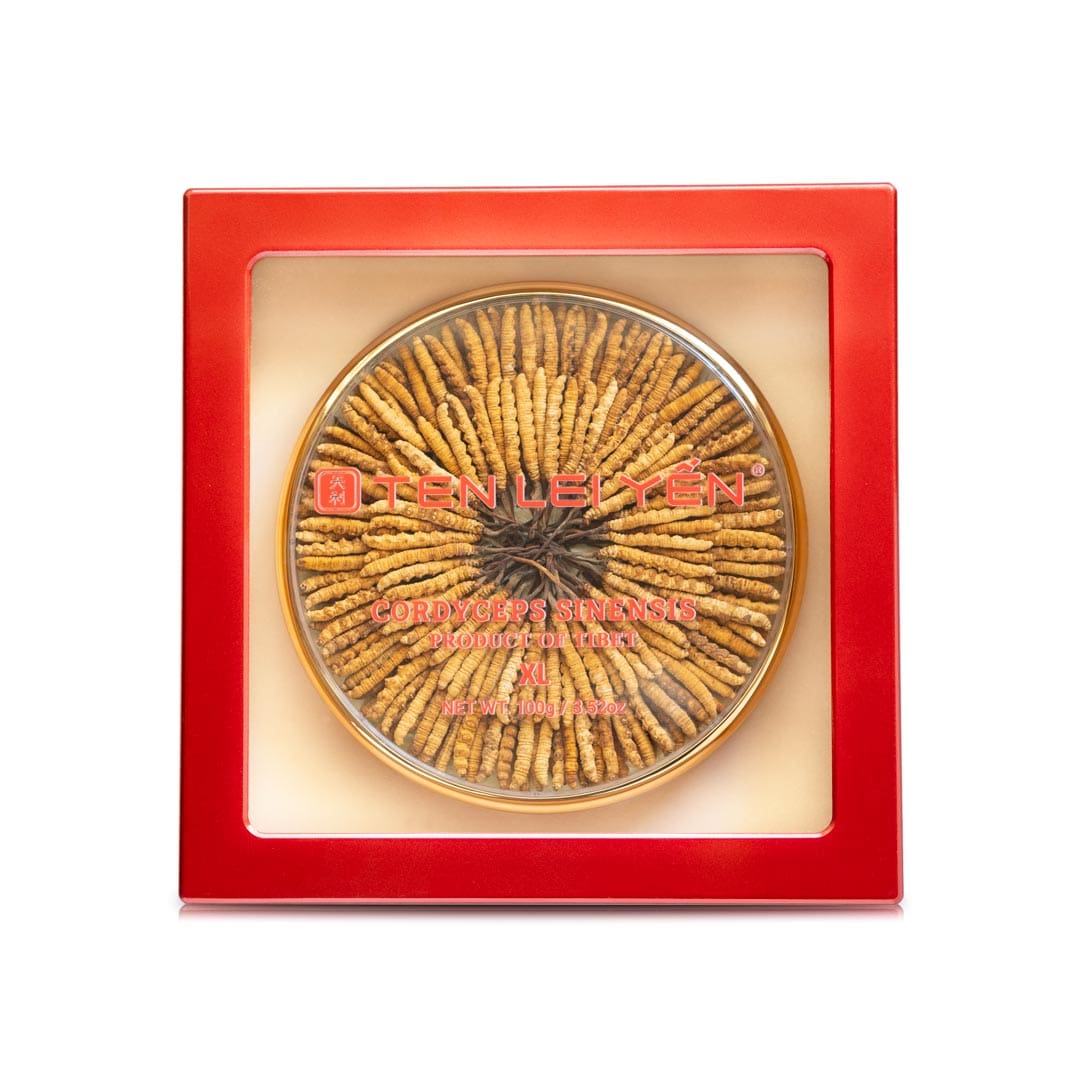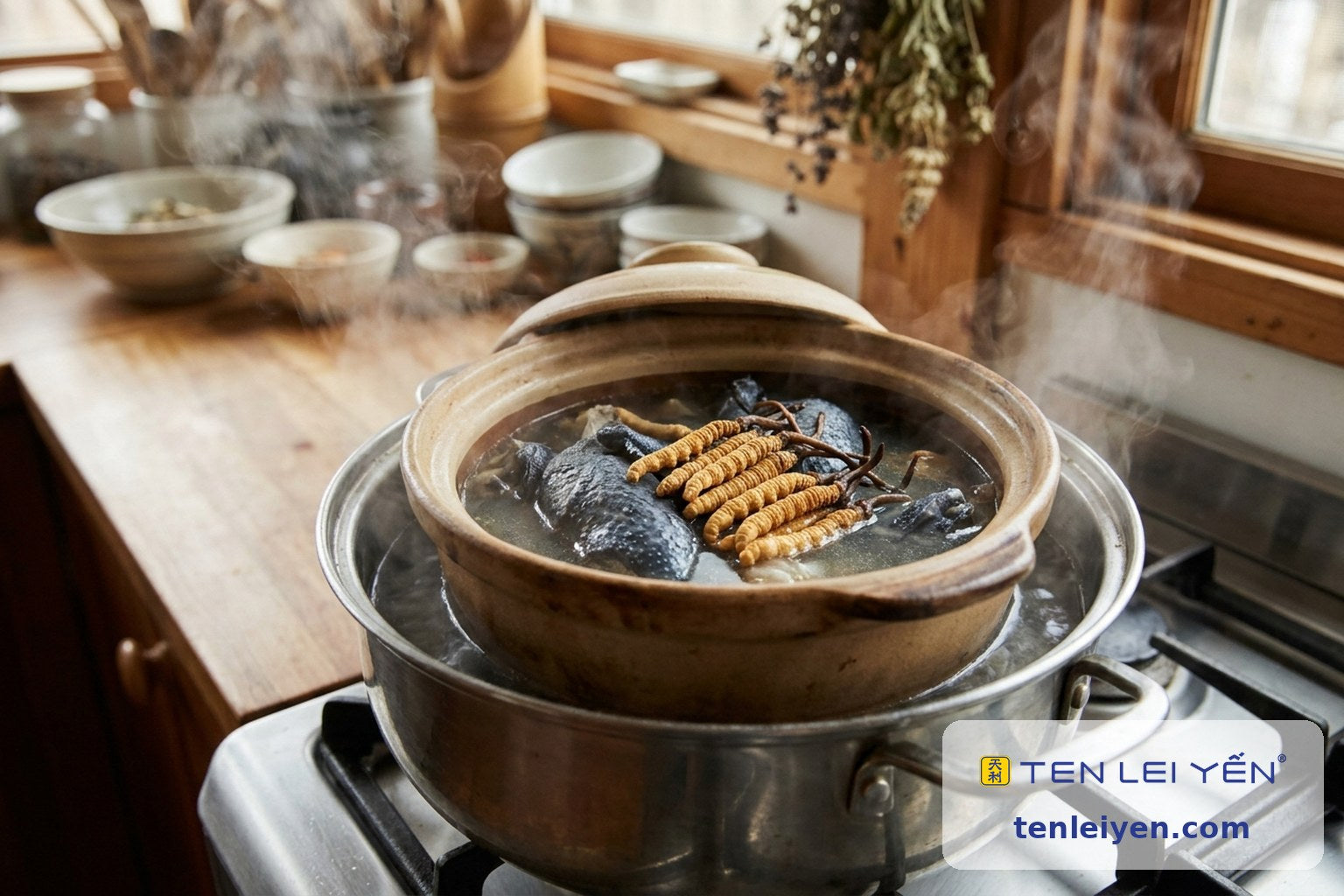
Wild Cordyceps sinensis from Nagqu, Tibet — the caterpillar fungus harvested above 4,000 meters — is prepared differently from everything else in this series. This is not everyday cooking. It is a deliberate preparation for one of the most expensive ingredients in Asian culinary tradition, and the double-boil method is the standard for a clear reason: it extracts more from the ingredient while preventing the thermal degradation that direct heat would cause.
Silkie chicken (乌骨鸡, literally “dark-boned chicken”) has been the traditional pairing for wild cordyceps sinensis across Chinese culinary history. The combination appears in classical texts, restaurant menus from Hong Kong to Chengdu, and family kitchens across Southeast Asia. The match makes culinary sense: silkie chicken has a mild flavor and delicate texture that does not overpower the cordyceps, and the collagen-rich broth draws depth from both ingredients simultaneously.
What Makes Nagqu Wild Cordyceps Sinensis Different
Cordyceps sinensis grows only at high altitude — in the grasslands and tundra of the Qinghai-Tibet Plateau above 3,500 meters. Nagqu refers to the prefecture in northeastern Tibet where some of the most sought-after wild sinensis comes from, known for consistent size, shape, and characteristic amber coloring of the stalk.
What separates wild sinensis from Cordyceps militaris (the orange-stalked mushroom used in everyday soups) is source, rarity, and the ecosystem it grows in. Militaris is cultivated indoors in reliable quantities. Wild sinensis is limited by altitude, host insect availability, and a narrow seasonal harvest window. That is what drives the price differential.
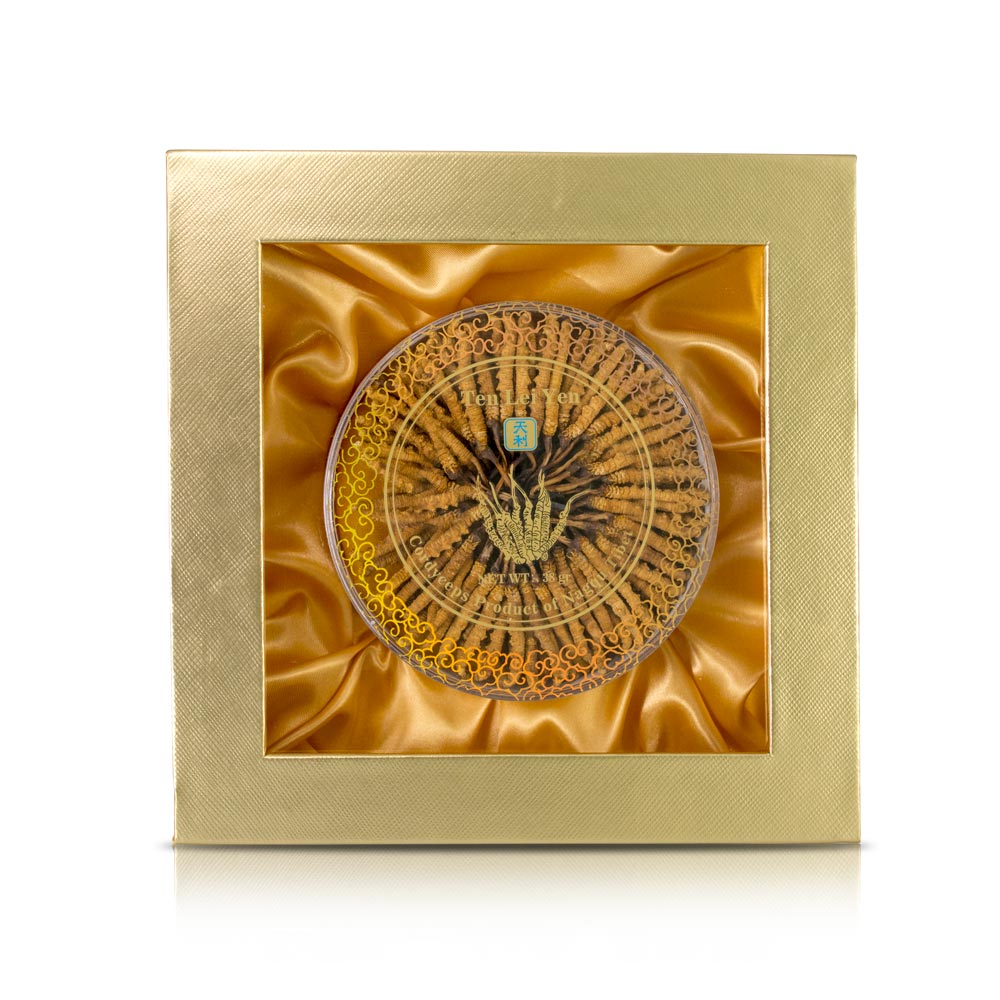
Ten Lei Yen sources Wild Cordyceps Sinensis directly from Nagqu, Tibet, available as Wild Cordyceps Sinensis Nagqu Tibet in 4-gram packs — the right quantity for a single serving preparation.
Ingredients (1–2 Servings)
- 3–4 g Ten Lei Yen Wild Cordyceps Sinensis Nagqu (approximately 3–6 individual specimens)
- 300 g silkie chicken pieces (thighs or drumsticks), rinsed
- 2 cups filtered water or very light chicken broth
- 4 dried red dates (jujube), rinsed and pitted
- 3–4 slices fresh ginger
- 3–5 g American ginseng slices (optional, for depth)
- Small piece of rock sugar (optional, to taste)
- Salt, pinch to finish
The Double-Boil Method
Double-boiling (隔水肟, “steam-cooking inside a ceramic cup”) is the standard preparation for wild cordyceps and other premium tonics. You place all ingredients in a lidded ceramic pot, set it inside a larger pot of simmering water, and cook indirectly for 60–90 minutes. The temperature inside the ceramic pot never exceeds the boiling point of water, which creates a gentler and more even extraction than direct flame heat.
- Briefly blanch the silkie chicken pieces in boiling water for 2–3 minutes to remove surface impurities. Discard the blanching water and rinse the chicken clean.
- Rinse the cordyceps gently under cold running water. Do not soak wild sinensis — soaking disperses surface compounds into the water rather than retaining them for the broth. Drain briefly.
- Place chicken, cordyceps, red dates, ginger, and ginseng (if using) into a ceramic double-boiling pot. Add water or light broth until ingredients are just covered.
- Cover the ceramic pot tightly. Set it inside a larger pot. Fill the outer pot with water until it reaches halfway up the sides of the inner pot. Bring the outer pot to a steady, gentle simmer.
- Double-boil for 60–90 minutes, checking the outer water level every 30 minutes and topping up as needed. The broth in the inner pot will gradually deepen to a clear amber-gold color.
- Add rock sugar and a pinch of salt in the final 10 minutes. Taste and adjust.
- Serve hot — broth first as a sipping soup, then chicken and cordyceps separately.
Using the Ten Lei Yen C Steamer
If you own a Ten Lei Yen C Steamer, it has a dedicated Cordyceps setting that replicates the double-boil automatically with correct temperature and timing. Set the timer for 60 minutes and the C Steamer handles the rest — no monitoring required.

Frequently Asked Questions
What is the difference between wild Cordyceps sinensis and Cordyceps militaris?
Wild Cordyceps sinensis is the true caterpillar fungus, hand-harvested on the Tibetan Plateau above 3,500 meters. It has the characteristic caterpillar body fused with a dark stalk. Cordyceps militaris is a different species cultivated indoors, sold as bright-orange stalks called “cordyceps flower.” They are sometimes used interchangeably in everyday cooking, but for a traditional double-boil with silkie chicken, wild sinensis is the historically correct ingredient.
Can I use Cordyceps militaris in this recipe instead?
The double-boil method will work with militaris, but the result is a fundamentally different preparation. Militaris is lighter and more affordable — excellent for everyday soups and broths. For a traditional silkie chicken double-boil, wild sinensis is the correct choice based on how this preparation developed historically.
How many pieces of wild Cordyceps sinensis do I use per serving?
3–5 individual specimens, approximately 3–4 grams per serving, is the typical range. Wild sinensis varies in size by harvest — a 4-gram pack from Ten Lei Yen contains roughly 3–6 individual pieces. Start at the lower end for a first preparation and adjust based on your preference.
Why silkie chicken and not regular chicken?
Silkie chicken has a history of use alongside premium tonics in Chinese cooking. Its flavor is mild and slightly sweet, and it does not overpower the cordyceps. Regular chicken breast or thigh works if silkie is unavailable — the broth will taste somewhat different but the preparation method remains the same.
How should I store unused Wild Cordyceps Sinensis?
Store in a sealed, airtight container in a cool, dry place away from light and humidity. Properly dried and stored wild sinensis typically keeps for 1–2 years. Do not refrigerate unless your environment is extremely humid; temperature swings can introduce condensation moisture into the container.