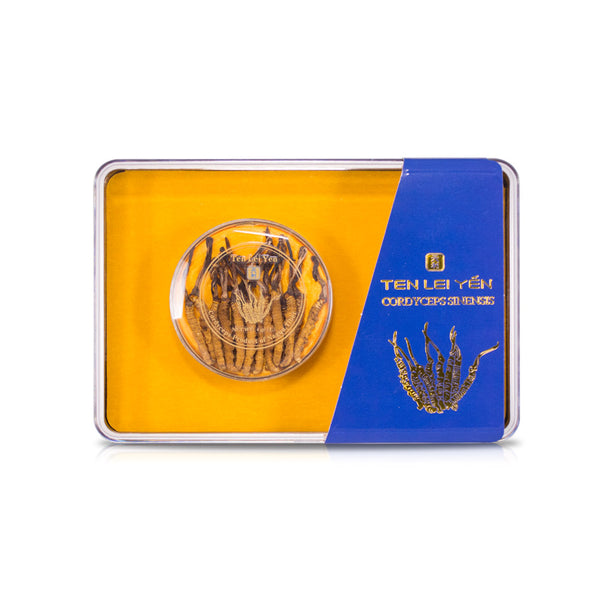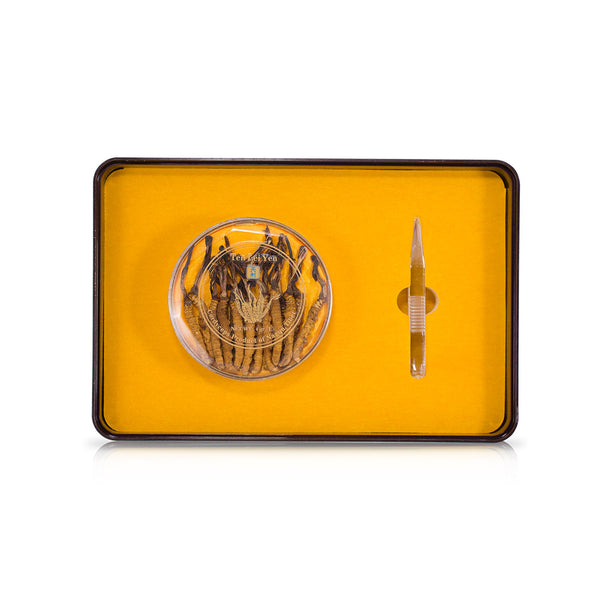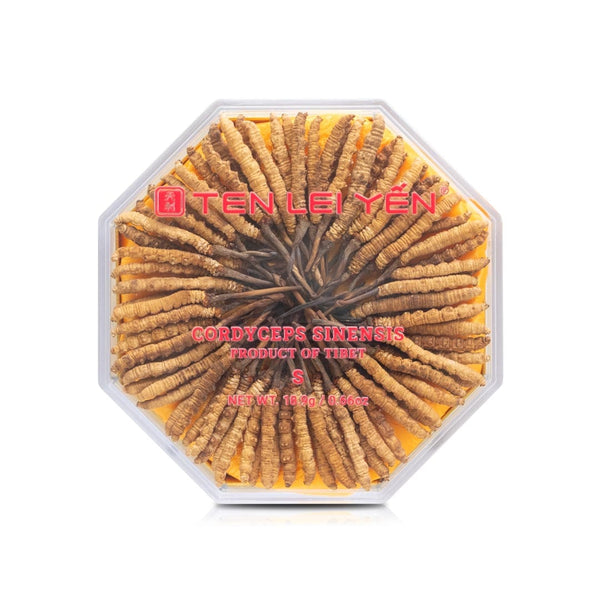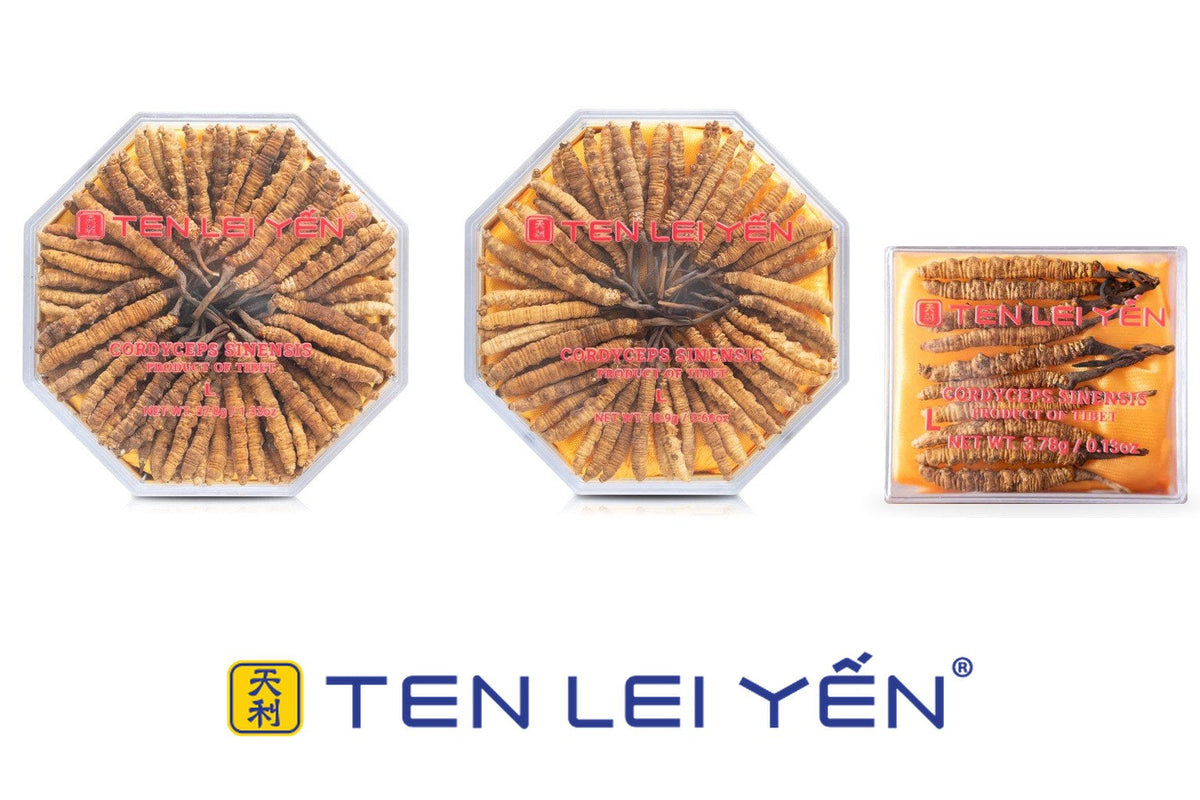
Size mainly changes two things in the pot: how quickly cultivated cordyceps gives up its flavour into liquid, and how well it holds its shape once it's there. Smaller pieces release faster and soften sooner; larger pieces hold longer and read better as a piece on the plate.
- Ten Lei Yen's cultivated Tibet cordyceps comes in Small, Medium, Large, and Extra Large, packed at 3.78 g, 18.9 g, 37.8 g, 50 g, and 100 g.
- Smaller pieces flavour a broth faster but soften and lose shape sooner over a long cook.
- Larger pieces take longer to release flavour but stay intact and visible in the bowl for longer.
- Size is a matter of piece grading, not a claim about which is "better" — the right size depends on the dish.
- Cultivated and wild cordyceps are different products; this article is about the cultivated line specifically.
Alina @ TLY
The Size Tiers
Ten Lei Yen's cultivated Tibet cordyceps is graded into four size tiers — Small, Medium, Large, and Extra Large — and sold across a range of pack weights, from a 3.78 g starter pack up to 100 g. A Small 18.9 g pack currently runs $480, and a Small 3.78 g pack is $110; larger tiers and pack sizes are priced accordingly. The size tier describes the individual piece, not the pack — a Small piece from an 18.9 g pack and a Small piece from a 100 g pack are the same size, just different quantities.
How Quickly Pieces Give Up Flavour
Smaller pieces have more surface area relative to their mass, so they release flavour into a broth or braising liquid faster than larger pieces do. In a shorter double-boil, that can mean a smaller piece reaches its full flavour contribution sooner, while a larger piece is still gently releasing at the point the pot comes off the heat. This isn't a reason to always choose small — it just means the smaller tiers suit shorter cooks and quicker infusions, while larger pieces need a bit more time to do the same work.
How Size Affects Shape Over Time
The same surface-area difference works in reverse for texture. A smaller piece softens sooner in hot liquid and, left too long, can start to lose its shape — fine in a broth where the piece isn't meant to be the visual centre, less ideal if you want it to still look distinct in the bowl. A larger piece holds its structure for longer under the same heat, which makes it the better choice when cordyceps needs to still read clearly as a piece by the time the dish is served, rather than having mostly dissolved into the liquid around it.
What This Means for Presentation
If cordyceps is meant to be seen — laid over a finished dish, floated in a clear cup of broth, presented as a garnish rather than folded into a big pot — a Large or Extra Large piece holds up better under the heat and looks more deliberate on the plate. For a bigger batch of soup where the pieces are simply part of the pot rather than a visual centrepiece, Small or Medium pieces cook through faster and flavour the batch efficiently without needing the extra cooking time larger pieces call for.
Cultivated Is Not Wild
It's worth being direct about this: cultivated and wild cordyceps are different products, grown under different conditions, and this size guide applies specifically to Ten Lei Yen's cultivated Tibet line. We're not arguing here for one over the other — that comparison is covered fully in Wild vs Cultivated Cordyceps: How to Choose, which is worth reading if you're still deciding between the two lines before you get to sizing.


 或