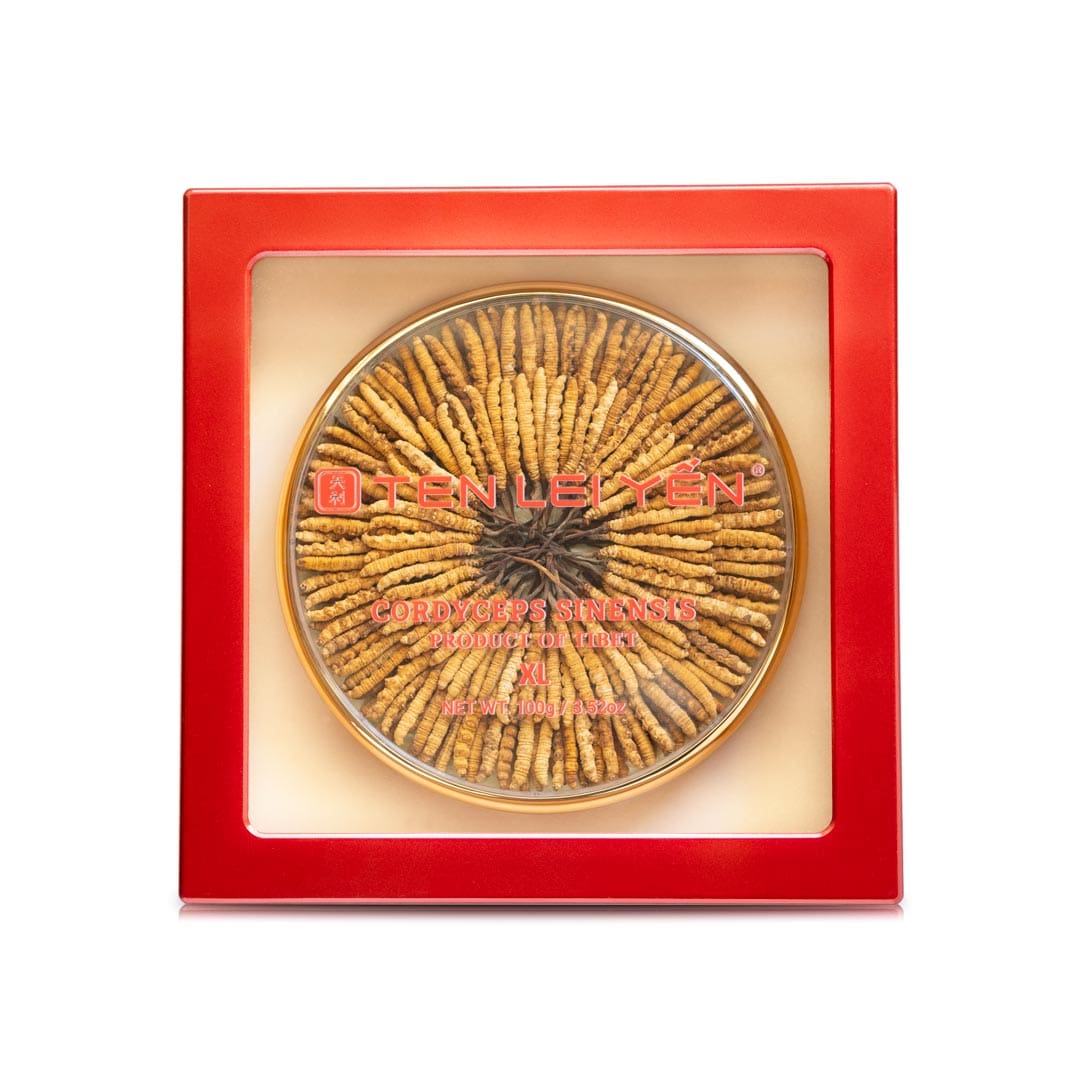
Wild and cultivated cordyceps are not ranked on one scale: cultivated wins on steady supply, uniform pieces and price, while wild wins on rarity and wild provenance. "Cultivated cordyceps" on the market means three different things: farmed Cordyceps militaris, fermented mycelium products, or Ophiocordyceps sinensis raised under controlled conditions in Tibet. Ten Lei Yen, a family-run cordyceps and bird's nest specialist in Westminster, California (Little Saigon) since 2007, sells wild Nagqu sinensis and a cultivated sinensis line.
By the Ten Lei Yen team, Westminster, CA. Updated October 2026.
Are cultivated cordyceps as good as wild cordyceps?
It depends on what "good" means to you. Judged on rarity, wild provenance and appearance, wild cordyceps is in a class of its own. Judged on steady supply, consistent pieces and price, cultivated wins. At Ten Lei Yen we compare the two only on those terms: rarity, origin, appearance, consistency and price. We make no medical comparisons, and medical questions belong with a physician.
The reason people talk past each other is that the word "cultivated" is used loosely. The next section sorts it out.
What does "cultivated cordyceps" actually mean?
It means one of three different products, and a buyer should always ask which one they are getting.
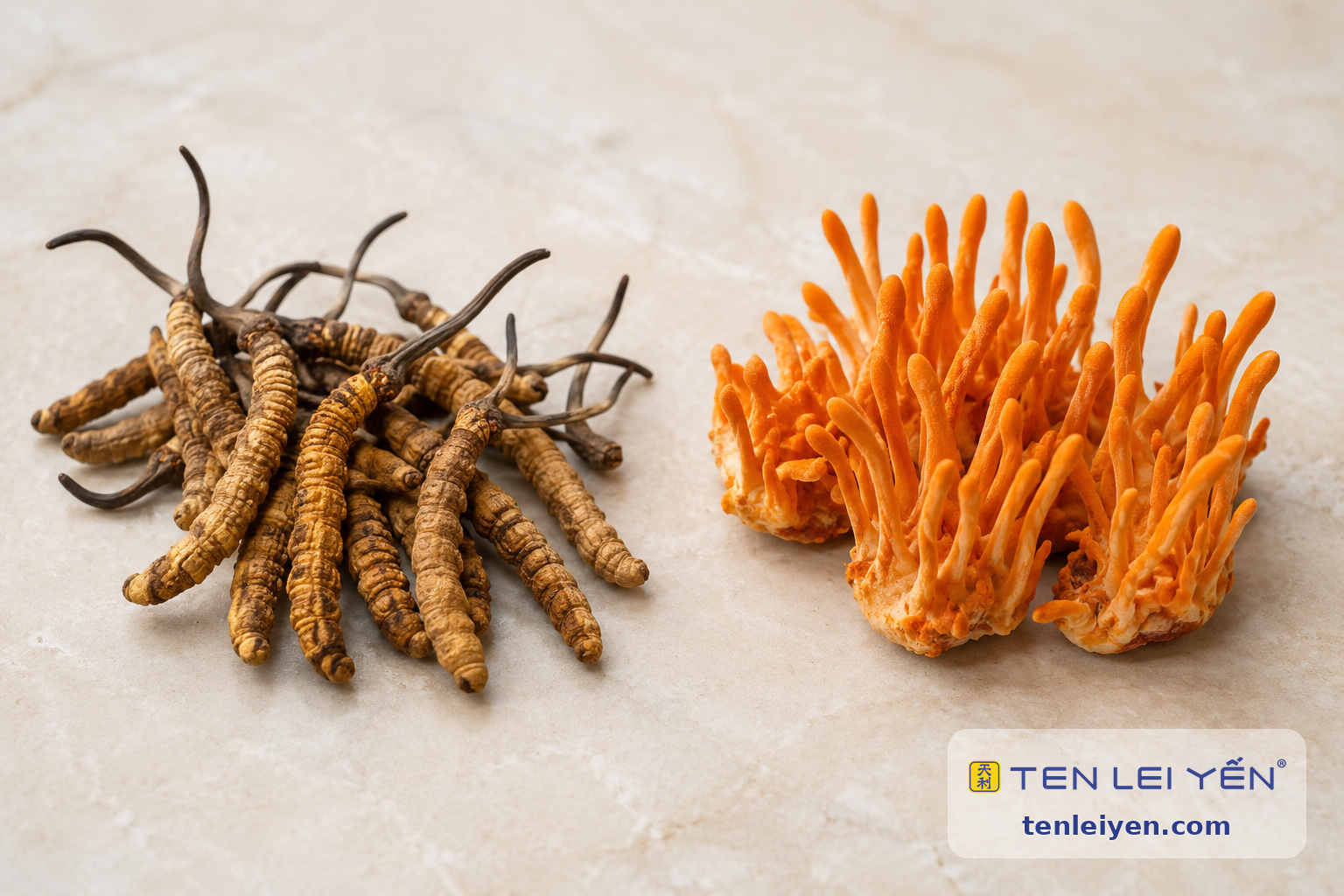
- Cordyceps militaris. A bright orange, club-shaped mushroom, a different species, fully farmed on grain or rice. This is the form grown at scale, in volumes far larger than the wild harvest.
- Fermented mycelium products. Mycelium grown in tanks or on grain, sold as powders, capsules or extracts. The well-known "Cs-4" ingredient was long labeled C. sinensis but is a related fungus (Paecilomyces / Samsoniella hepiali). Products sold as "cordyceps" in the US may be any of these three organisms, so the species name on the label is what tells you which one you are buying.
- Controlled or semi-wild Ophiocordyceps sinensis. The same species as wild, raised under controlled or semi-wild conditions within its native Tibetan range. This is what Ten Lei Yen's cultivated line is.
The first two are fully farmed and are not O. sinensis fruiting bodies. The third is the same species as wild but is not identical to a fully wild piece. O. sinensis is not mass-farmed indoors the way militaris is, which is why the label "cultivated sinensis" deserves a plain explanation.
What is Ten Lei Yen's "Cultivated Cordyceps Sinensis – Tibet"?
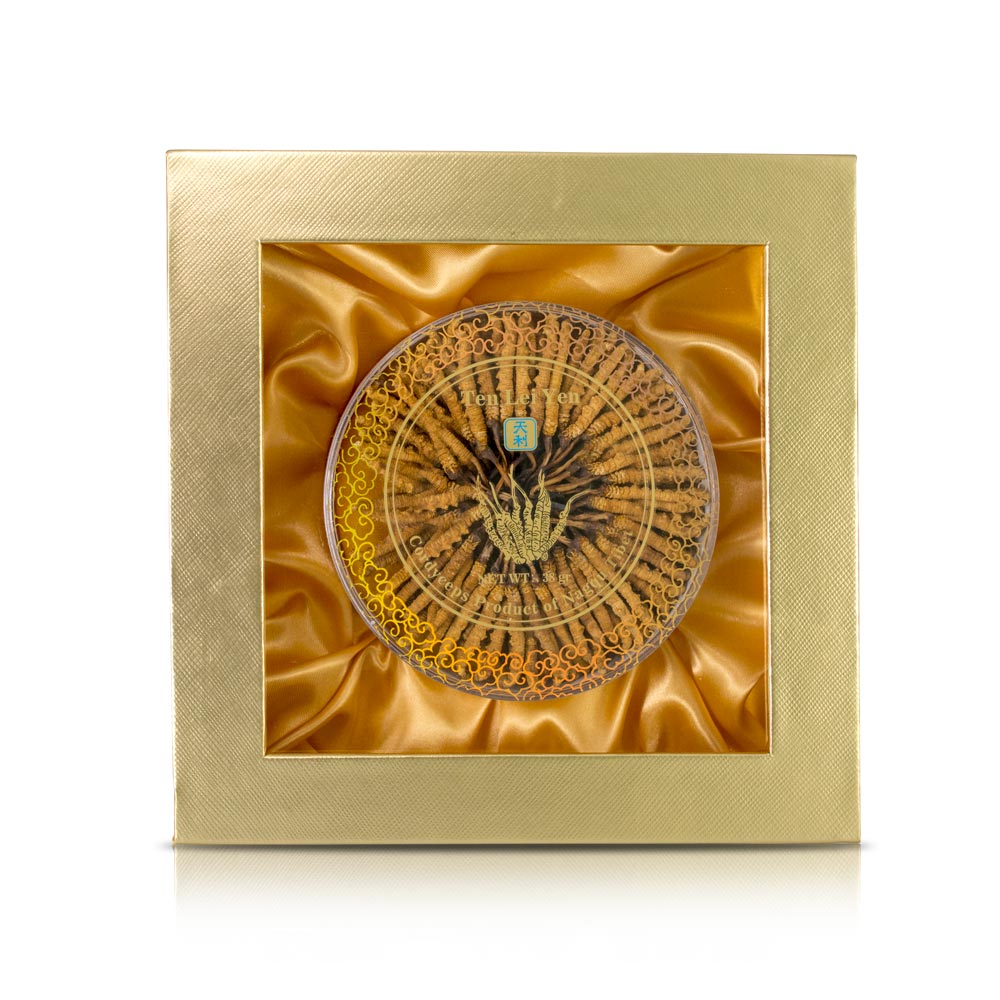
It is Ophiocordyceps sinensis, the same species as our wild line, raised under controlled or semi-wild conditions in its native Tibetan range. We do not claim it is identical to wild. Compared with wild, the pieces are smaller and more uniform, supply is steadier and the price is lower.
| Product | Size | Price |
|---|---|---|
| Wild Cordyceps Sinensis, Nagqu, Tibet, Large | 38 g | $1,800 |
| Wild Cordyceps Sinensis, Nagqu, Tibet, Large | 4 g | $220.50 |
| Cultivated Cordyceps Sinensis, Tibet, Small | 18.9 g | $480 |
At those prices, wild Large 38 g works out to about $47 per gram and Cultivated Small 18.9 g to about $25 per gram, though the piece sizes differ. In our Westminster store, the question we hear most is "is cultivated the real thing?" Our answer: it is the real species, labeled for what it is, and a different product from wild. Browse the cultivated cordyceps collection.
What is wild cordyceps?
Wild cordyceps is Ophiocordyceps sinensis (reclassified from Cordyceps sinensis in 2007). It forms when the fungus colonizes the larva of a ghost moth in cold, high-altitude alpine meadows, roughly 3,000–5,000 m (about 10,000–16,000 ft) on the Tibetan Plateau. The fungus mummifies the caterpillar over winter and pushes a dark, grass-like fruiting body up through the soil in spring. That is the origin of the Chinese name dōng chóng xià cǎo (冬虫夏草), "winter worm, summer grass" (Vietnamese: đông trùng hạ thảo; Tibetan: yartsa gunbu).
- Appearance: a dried larva with a single slender, dark stalk growing from its head.
- Harvesting: hand-dug by Tibetan herding families over a short spring season.
- Supply: genuinely scarce. Total wild production is estimated at 80–175 tonnes a year, and the species was listed Vulnerable on the IUCN Red List in 2020.
How do wild and cultivated cordyceps compare side by side?
| Wild Tibetan O. sinensis | Cultivated sinensis (controlled / semi-wild) | Cultivated militaris or mycelium | |
|---|---|---|---|
| Species | Ophiocordyceps sinensis | Ophiocordyceps sinensis | Cordyceps militaris, or mycelium / P. hepiali |
| Origin | Hand-harvested, Tibetan Plateau (3,000–5,000 m) | Raised in native Tibetan range | Grown indoors on grain/rice or in tanks |
| Appearance | Dried larva + dark grass-like fruiting body | Same structure, smaller and more uniform pieces | Orange club-shaped mushroom, or powder/extract |
| Supply | Scarce; varies by year | Steadier | Abundant and scalable |
| Consistency | Varies by harvest, location, altitude | More uniform | Standardized, batch to batch |
| Price | Wild retail roughly $20,000–35,000/kg; top Beijing retail has reportedly exceeded $140,000/kg | Lower than wild (our Small 18.9 g: $480) | Roughly $15–100/kg |
The kilogram figures are trade estimates, not Ten Lei Yen prices.
Why does Nagqu, Tibet origin matter?
Because origin is the main reason one wild piece costs more than another. Nagqu (Naqu), at altitudes around 4,500 m and above, is widely regarded in the trade as the top-producing region. At that elevation the growth cycle is longer, and specimens are prized for being plump and firm with a short stalk, which is why Nagqu material commands the highest prices. Our wild line is Nagqu, Tibet, and every product is labeled by what it is, so you always know which of the three kinds you are buying.
How is wild cordyceps graded?
By size first: the number of pieces per unit weight, often per jīn (500 g) or per kg. Fewer, larger pieces mean a higher grade and a higher price. Graders also look at color, firmness, larva size, the ratio of fruiting body to larva, and intactness (caterpillar and stalk still joined). Well-dried material is typically kept below about 13% moisture. Our 38 g and 4 g Large listings are sold by piece size on this basis; see wild cordyceps grades.
How do you avoid fake cordyceps?
Buy whole, intact pieces from a seller who states plainly whether the product is wild or cultivated, which species, and the origin. Because wild cordyceps is so valuable, it is one of the most adulterated products in the trade. Documented tactics include:
- Added weight: thin sticks, wires or even lead inserted into pieces, or soaking in mineral or lead solutions, which is fraudulent and potentially unsafe.
- Fabricated "caterpillars": shapes molded from flour and yellow or orange dye, sometimes with a real stalk attached, reported as the most common fake in the Hong Kong market.
- Species swaps: cheaper fungi, including C. militaris, sold as wild sinensis, or mycelium sold as whole fruiting body.
A genuine specimen shows the real caterpillar's body segments; suspiciously heavy pieces can hide inserts, and the trade snaps pieces open or x-rays lots to check. Laboratories confirm identity by DNA (ITS) barcoding. More in what real cordyceps looks like.
How should you choose between wild and cultivated cordyceps?
Choose wild (Nagqu, Tibet) if provenance, tradition and whole pieces for a gift or special occasion matter most and the premium fits your budget. Choose cultivated sinensis for the same species in smaller, more uniform pieces at a lower price. Choose militaris or a mycelium product for steady supply at a much lower cost. Whole wild pieces are usually rinsed and simmered gently in soups or broths, or steeped; powders and extracts are stirred into hot water or tea. Store cordyceps airtight, away from heat, moisture and light, and keep whole dried pieces sealed and dry until use.
Sources: Ophiocordyceps sinensis, Wikipedia; the American Botanical Council's Cordyceps Botanical Adulterants Prevention Bulletin (2024); Stanford Report on overharvesting of the species.
Frequently asked questions
Why is wild cordyceps so expensive?
It is scarce (about 80–175 tonnes a year), grows only at high altitude and is hand-collected over a short season. Top retail specimens in Beijing have reportedly exceeded $140,000/kg, while cultivated militaris or mycelium runs roughly $15–100/kg.
Related reading
- Cordyceps militaris vs sinensis
- What real cordyceps looks like
- Wild cordyceps grades, size count, origin and price
- Is cordyceps a good gift?
Visit Ten Lei Yen at 9741 Bolsa Ave, Suite 107, Westminster, or see both lines at tenleiyen.com.