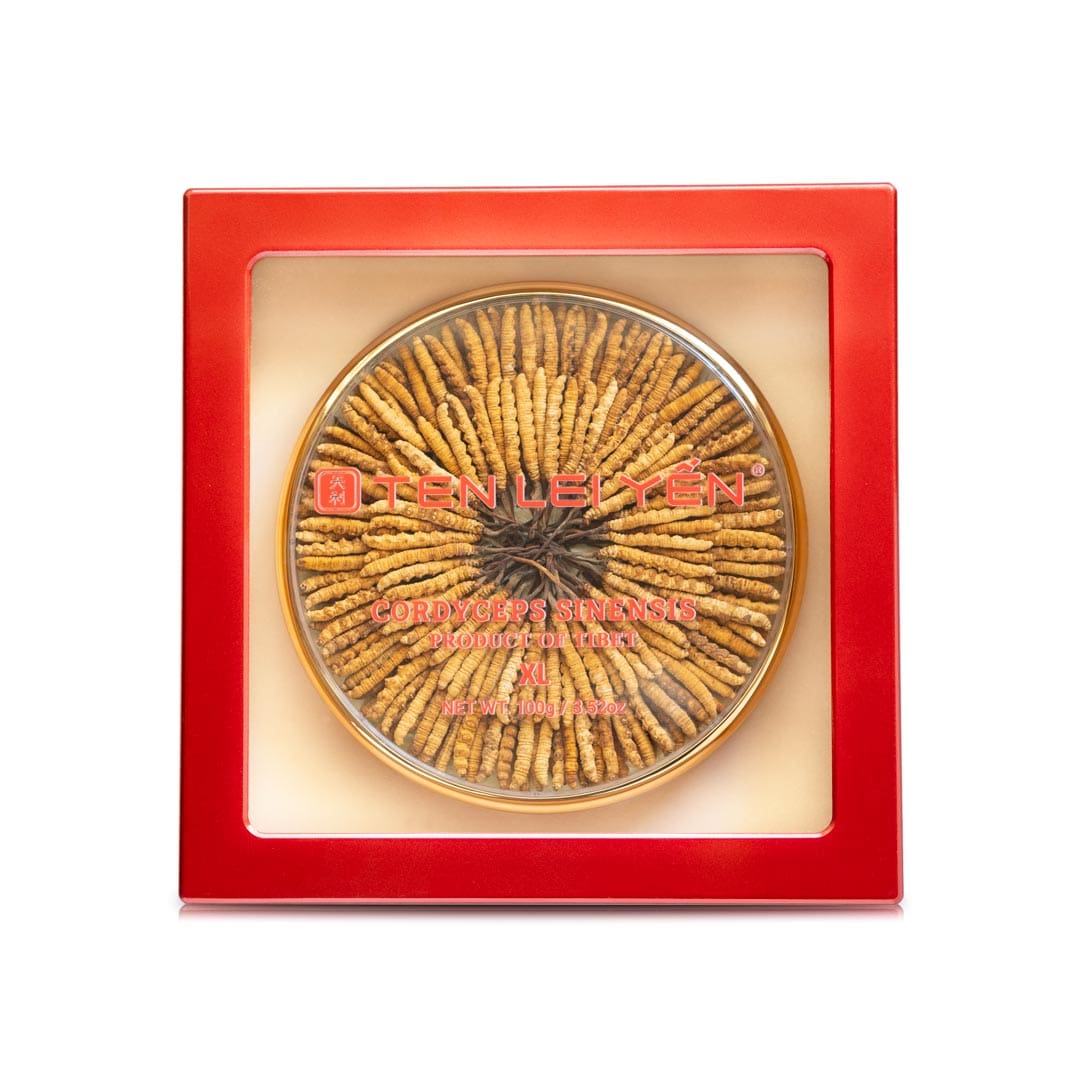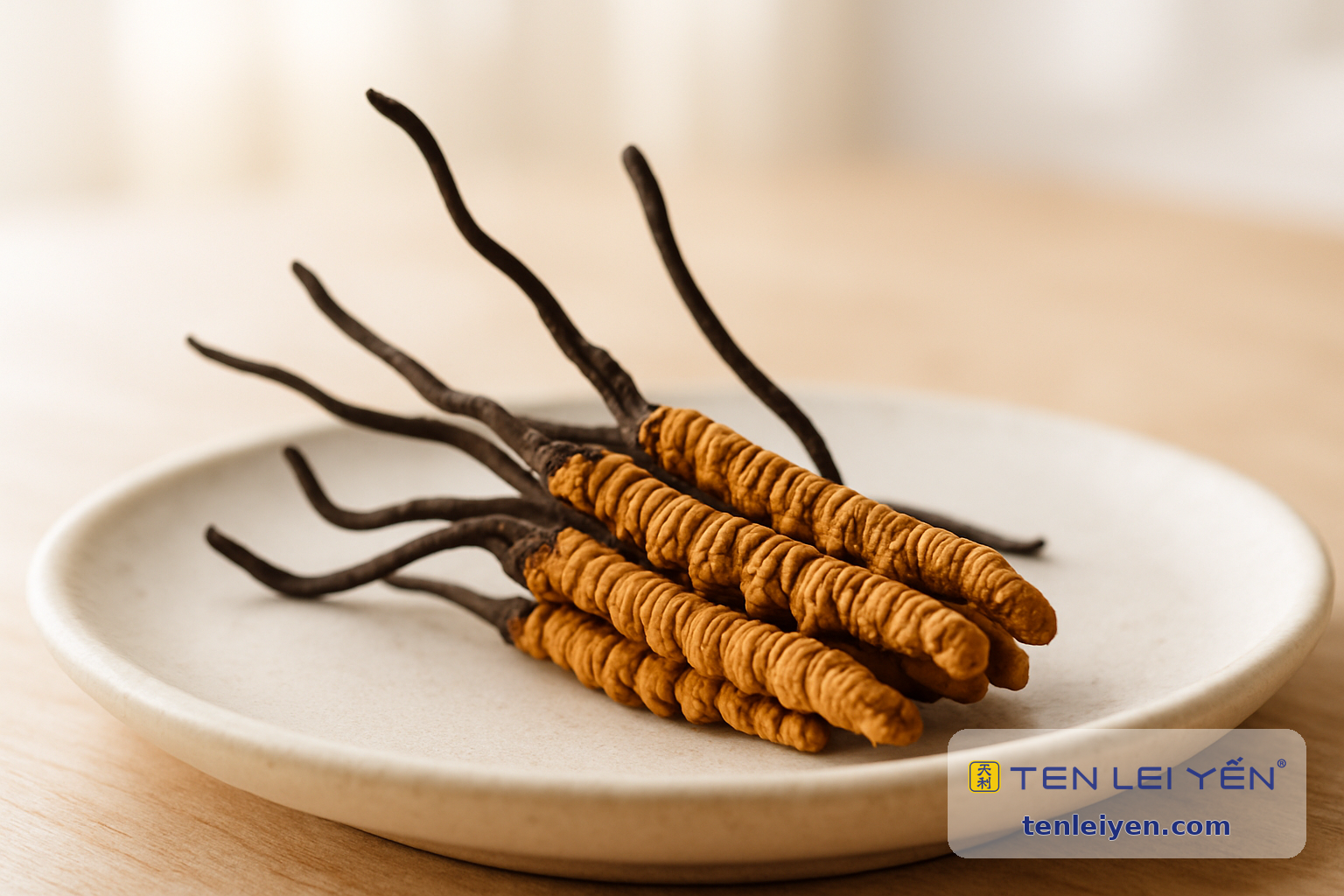
Cordyceps sinensis (Ophiocordyceps sinensis), also called Yartsa Gunbu in Tibetan and Dong Chong Xia Cao in Chinese, is a wild-harvested "caterpillar fungus" that grows on the high-altitude Tibetan Plateau. It is one of the most recognizable and sought-after ingredients in the traditional Asian dried-goods trade, valued for its rarity and distinctive appearance.
Key takeaways
- Cordyceps sinensis is a fungus that grows from the body of a caterpillar larva, producing a single elongated, grass-like stalk.
- It is found at roughly 3,000–5,000 meters (9,800–16,400 ft) on the Tibetan Plateau and neighboring Himalayan regions.
- Authentic wild Cordyceps sinensis is hand-collected; large-scale farming of this exact species is not yet practical, so most affordable products are cultivated alternatives.
- It is among the most expensive natural products by weight, graded mainly by size, completeness, color, and dryness.

What is Cordyceps sinensis?
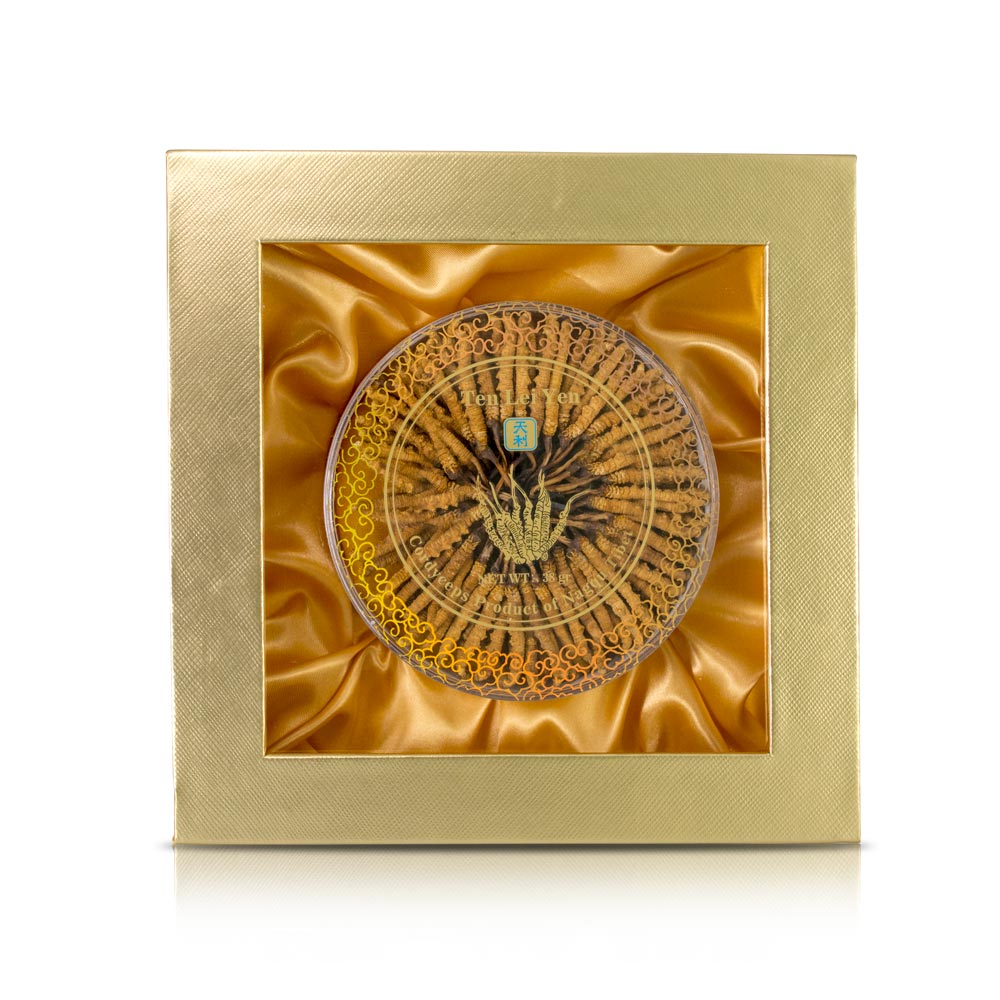
Cordyceps sinensis is a fungus that develops inside the underground larvae of ghost moths. Over the winter, the fungus fills the body of the caterpillar. In late spring or early summer, a slender, dark, grass-like fruiting body (the stroma) emerges from the head of the caterpillar and grows above the soil. This two-part structure — the preserved caterpillar body with a stalk rising from its head — is the source of the poetic name "winter worm, summer grass." A finished specimen is sold whole, with both the caterpillar-shaped base and the stalk intact.
Where and how it grows
Cordyceps sinensis grows in cold, high-altitude alpine meadows, typically between 3,000 and 5,000 meters (9,800–16,400 ft) above sea level. Ten Lei Yen's wild cordyceps comes from Nagqu, Tibet. The environment at these elevations is cold, low in oxygen, and high in ultraviolet light. Specimens from Nagqu, Tibet are especially well known within the trade.
How it is harvested
Collection takes place once a year, roughly from late April to June. Collectors search the high pastures on foot and dig each specimen out by hand using a small knife or spade, taking care to keep the caterpillar body and the stalk connected. Because the terrain is remote and the season is short, gathering is slow and labor-intensive. This difficulty is one of the main reasons the wild ingredient commands such a high price.
Wild vs. cultivated
Authentic Cordyceps sinensis is wild-harvested; there is currently no large-scale farming that reproduces the exact wild species in its whole caterpillar-and-stalk form. More affordable products on the market are usually cultivated alternatives, such as Cordyceps militaris or lab-grown mycelium, which are sold as powders, capsules, or dried pieces rather than whole wild specimens. The two categories differ in origin, appearance, availability, and price. You can compare the two ranges on our wild Cordyceps collection and our cultivated Cordyceps collection.
How it is graded and priced
Wild Cordyceps sinensis is graded mainly by the size and weight of each piece, how complete and unbroken the caterpillar body is, its color, and how thoroughly it has been dried and cleaned. Larger, intact, well-formed specimens are counted into higher grades, and grade is often expressed as the number of pieces per gram or per 50 grams — fewer, larger pieces indicate a higher grade. Because supply is limited and demand is high, top grades can reach thousands of dollars per kilogram, placing it among the most expensive natural products sold by weight.
How it is sold, prepared, and stored
Wild Cordyceps sinensis is usually sold dried and by weight, either as loose whole pieces or in graded gift packaging. Whole pieces are commonly rinsed and then simmered in water or broth, or steeped, and the whole piece is typically eaten along with the liquid; some people grind dried pieces into powder. To store it, keep the dried pieces in a sealed container away from heat, light, and moisture, and keep them dry to avoid mold.
Frequently asked questions
Is Cordyceps sinensis an animal or a plant?
Neither. It is a fungus that grows from the body of a caterpillar larva, so a finished specimen combines a fungal stalk with the caterpillar-shaped base.
What is the difference between Cordyceps sinensis and Cordyceps militaris?
Cordyceps sinensis is the wild Tibetan Plateau species sold as whole caterpillar-and-stalk pieces. Cordyceps militaris is a different species that is commonly cultivated and sold as orange fruiting bodies, powders, or capsules.
Author: Ten Lei Yen