Alina @ TLY
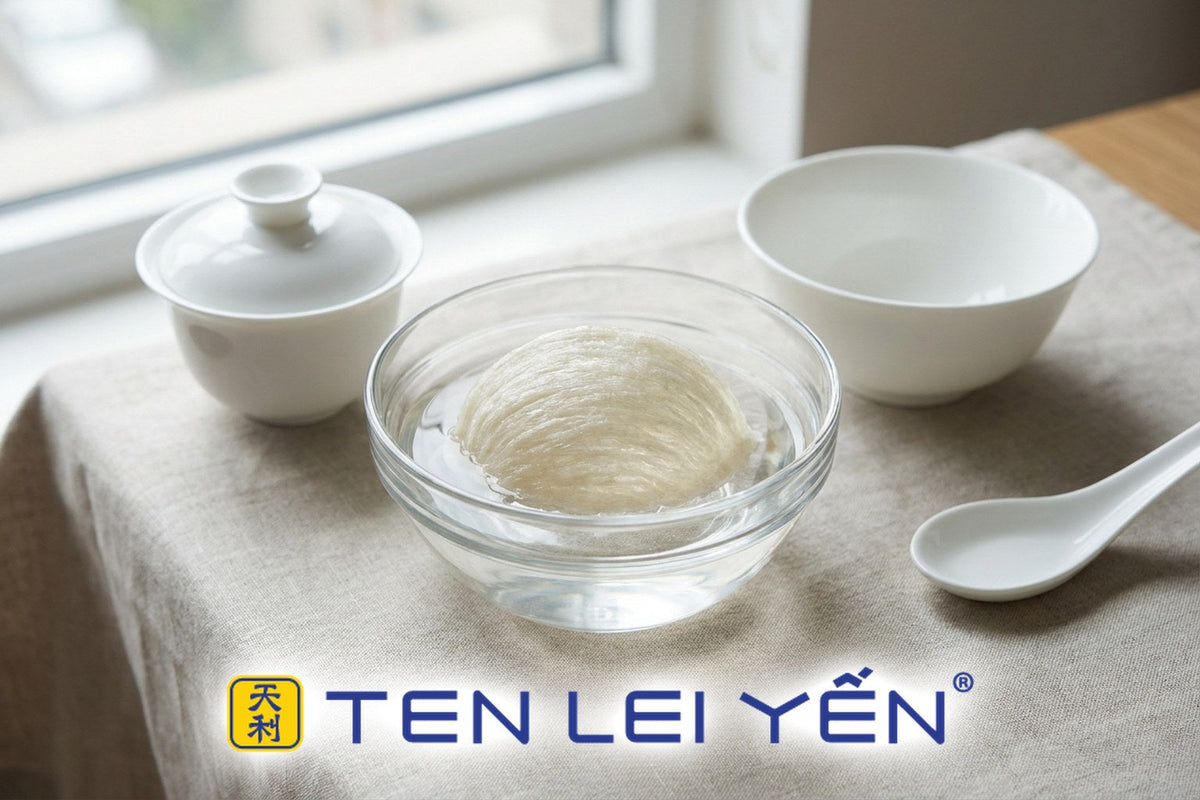
White porcelain is the traditional choice for bird's nest because it is neutral, does not react with the nest or its cooking liquid, and shows the pale strands clearly so you can judge doneness by sight. Size follows the serving: a small bowl suits a 3–5 g standard serving, a larger one suits a whole-nest portion, and the only real exception to porcelain is clear glass, used briefly during soaking so you can see the water.
Key Takeaways
- White porcelain is neutral and non-reactive, and it does not tint or flavour the nest or its liquid.
- A bowl for a 3–5 g standard serving needs only enough capacity for the nest plus a shallow pool of liquid.
- A whole-nest bowl needs more room since one whole nest is 2–4 standard servings once expanded.
- Lidded bowls suit double-boiling; open bowls suit serving.
- Clear glass is useful only for soaking, where seeing the water matters more than anything else.
Why Porcelain, Specifically
Bird's nest is delicate in both flavour and appearance, and porcelain does nothing to interfere with either. It does not absorb odours from previous use, does not react with the mild sweeteners typically used, and its smooth glaze cleans easily between uses. White is the practical colour choice on top of that: the pale, faintly translucent strands are much easier to see and judge against white than against a patterned or coloured surface, which matters when you are checking that the nest has softened evenly during a double-boil.
Sizing for a Standard Serving
A 3–5 g standard serving does not need a large bowl. Once soaked, that amount of dry nest expands 3–4 times in volume, so a small bowl — roughly the size used for a single dessert course — holds the expanded nest plus enough liquid to cover it by a finger's width. Oversizing the bowl for a small serving does not help the nest cook any better; it just means more liquid than necessary and a less full-looking bowl at the table.
Sizing for a Whole-Nest Bowl
A whole nest is 2–4 standard servings once expanded, so a whole-nest bowl needs meaningfully more capacity — closer to a small soup bowl than a dessert cup. This size suits a banquet-style or main-course presentation, where the bowl itself is part of the occasion rather than a quick daily portion. If you are unsure how much room a whole nest will take up once soaked, see TLY's guide on how much dried bird's nest expands when soaked before choosing your bowl.
Lidded vs Open: Matching the Bowl to the Step
For the double-boil itself, a lidded bowl — or a bowl covered with a small plate — helps hold in steam and keeps condensation from dripping back into the liquid and thinning it. Once the nest is cooked, serve it in an open bowl, since a lid at the table only traps heat unnecessarily and does not add anything once cooking is finished. If you use TLY's EZ Steamer or C Steamer, the method already accounts for this — individual covered bowls sit inside the steaming vessel during the cook, then come out uncovered to serve.
The One Case for Clear Glass
Clear glass has exactly one job in this process: letting you see the soaking water. During a 4–6 hour or overnight soak, glass lets you check that the water still looks clean, gauge how much the nest has softened, and see when it is time to change the water if needed. Once soaking is done and you move to double-boiling and serving, porcelain takes back over — glass is a soaking-stage tool, not a cooking or serving vessel for this ingredient.

Frequently Asked Questions
Can I use a coloured or patterned porcelain bowl instead of white?
You can, but white makes it easier to see the strands clearly and judge how the nest looks as it cooks, which is why it remains the practical default rather than a strict requirement.
For the soaking step this size guidance supports, see How to Soak and Clean Edible Bird's Nest. For storing what you don't finish, see How to Store Edible Bird's Nest. If you are scaling servings for a group, see Scaling a Double-Boil From One Bowl to Eight. Browse current grades in the Blue Label collection.