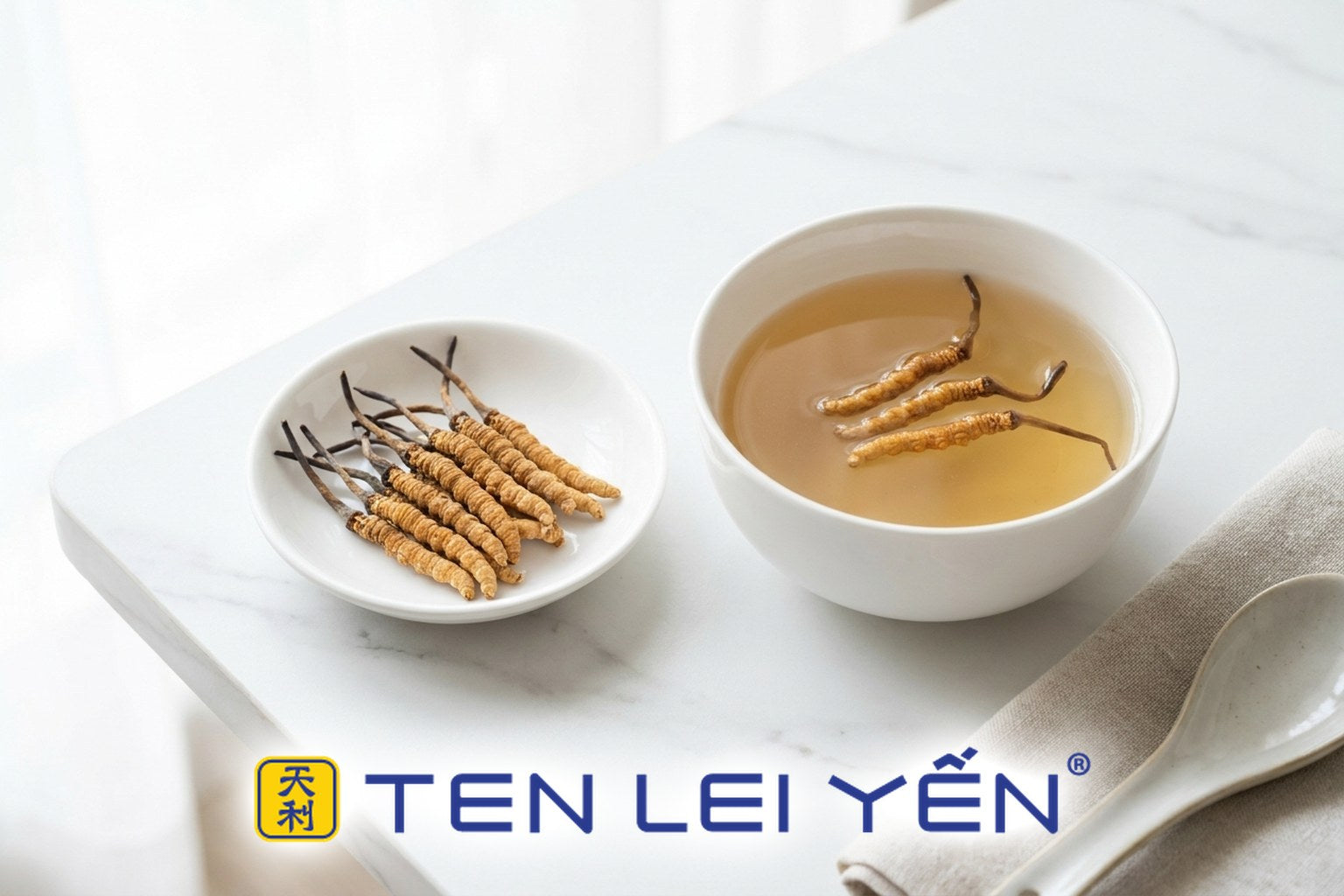
Wild cordyceps (Cordyceps sinensis) appears in traditional Chinese cooking most often as a prized addition to slow, double-boiled clear soups, where a few whole pieces are added near the end of cooking. It is closely tied to Cantonese banquet cuisine and festive tables, valued for its rarity, its gentle earthy aroma, and the prestige of setting it before guests on a special occasion.
Key takeaways
- Wild cordyceps is used mainly in double-boiled clear soups, paired with poultry or pork.
- Whole pieces are added near the end of cooking to keep their shape and delicate aroma.
- The softened pieces are eaten with the soup, and can often be reused for a second pot.
- Because it is rare and costly, it is traditionally reserved for banquets and festive occasions.
What wild cordyceps looks like on the table
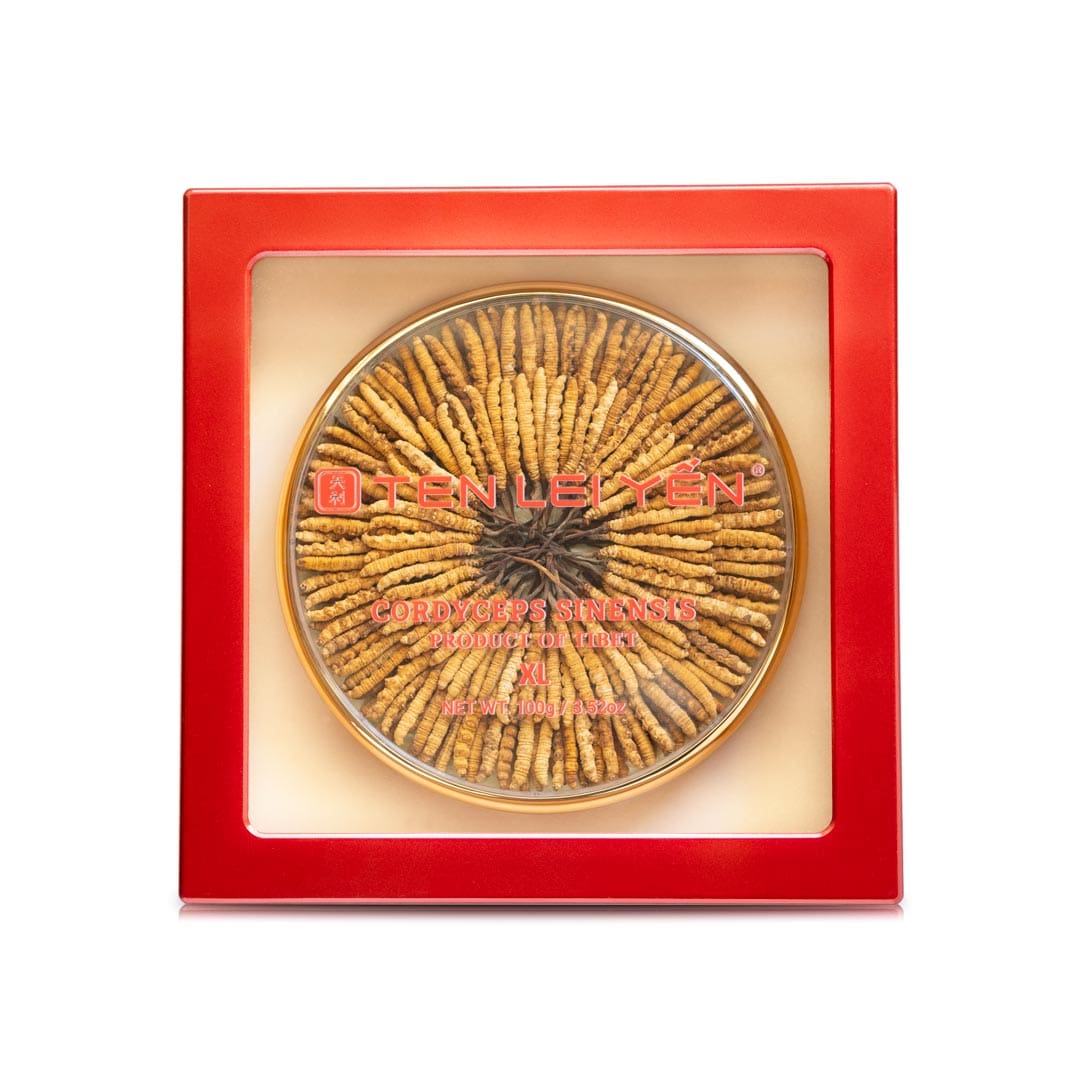
A single piece of wild Cordyceps sinensis has two parts: a tan to golden-brown, caterpillar-shaped body and a single slender, darker stalk growing from one end. It is sold as whole dried pieces, hand-harvested on the Tibetan plateau in regions such as Nagqu. Cooks prize intact, evenly colored pieces, and only a small amount is used at a time. You can browse whole graded pieces in our wild cordyceps collection.

The classic preparation: the double-boiled clear soup
The signature way to cook wild cordyceps is dun (炖), or double-boiling. The ingredients go into a lidded inner pot, which sits inside a larger pot of simmering water. Over several gentle hours, this indirect heat draws a clear, light-colored broth from the meat and aromatics without a hard boil that would cloud the soup or knock the pieces apart.
Why the cordyceps goes in whole, near the end
Cooks rinse the dry pieces gently to remove any surface grit, then add them whole in the last stretch of cooking. Adding them late keeps each piece intact and preserves its faint, mushroom-like aroma rather than letting it cook away over hours. When the soup is served, the softened pieces are eaten along with the broth, and thrifty households often save them to simmer a second, lighter pot.
Pairings and the banquet table
Wild cordyceps is almost always paired with a mild protein that lets its aroma come forward: whole chicken, black-skinned silkie chicken, lean pork, or pork ribs are the classics. A few slices of ginger and a splash of rice wine are common, and other dried ingredients may join the pot on grander occasions. The finished soup is gentle and clear rather than heavy, which is exactly the point at a formal Cantonese meal.
These soups traditionally appear at weddings, family reunions, Lunar New Year tables, and meals that honor elders or important guests. Serving wild cordyceps is a quiet gesture of care and respect, which is a large part of why it earns a place at celebratory tables.
Why it is reserved for special occasions
Wild cordyceps is gathered by hand during a short high-altitude season, which makes it one of the rarest and most expensive culinary ingredients in the Chinese kitchen. A little goes a long way, so a small quantity flavors a whole pot. For everyday cooking, many households reach for more affordable cultivated cordyceps instead, and save wild pieces for occasions that call for something special.
Frequently asked questions
What is the difference between wild and cultivated cordyceps in cooking?
Both are prepared in similar ways, but wild Cordyceps sinensis is rarer and costlier and is usually saved for banquets, while cultivated cordyceps is a practical choice for everyday soups and steeping.