By Alina @ TLY
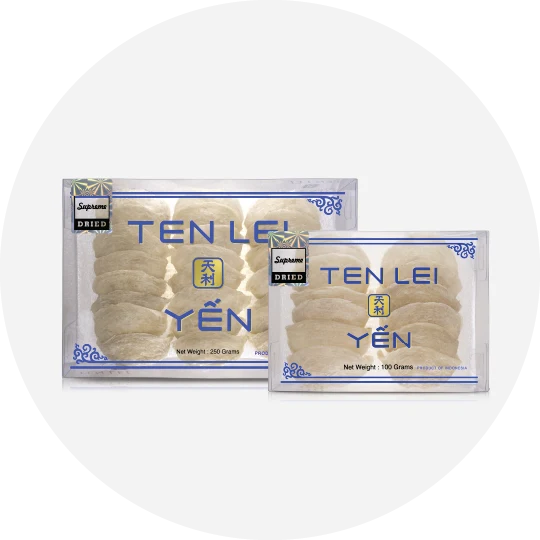
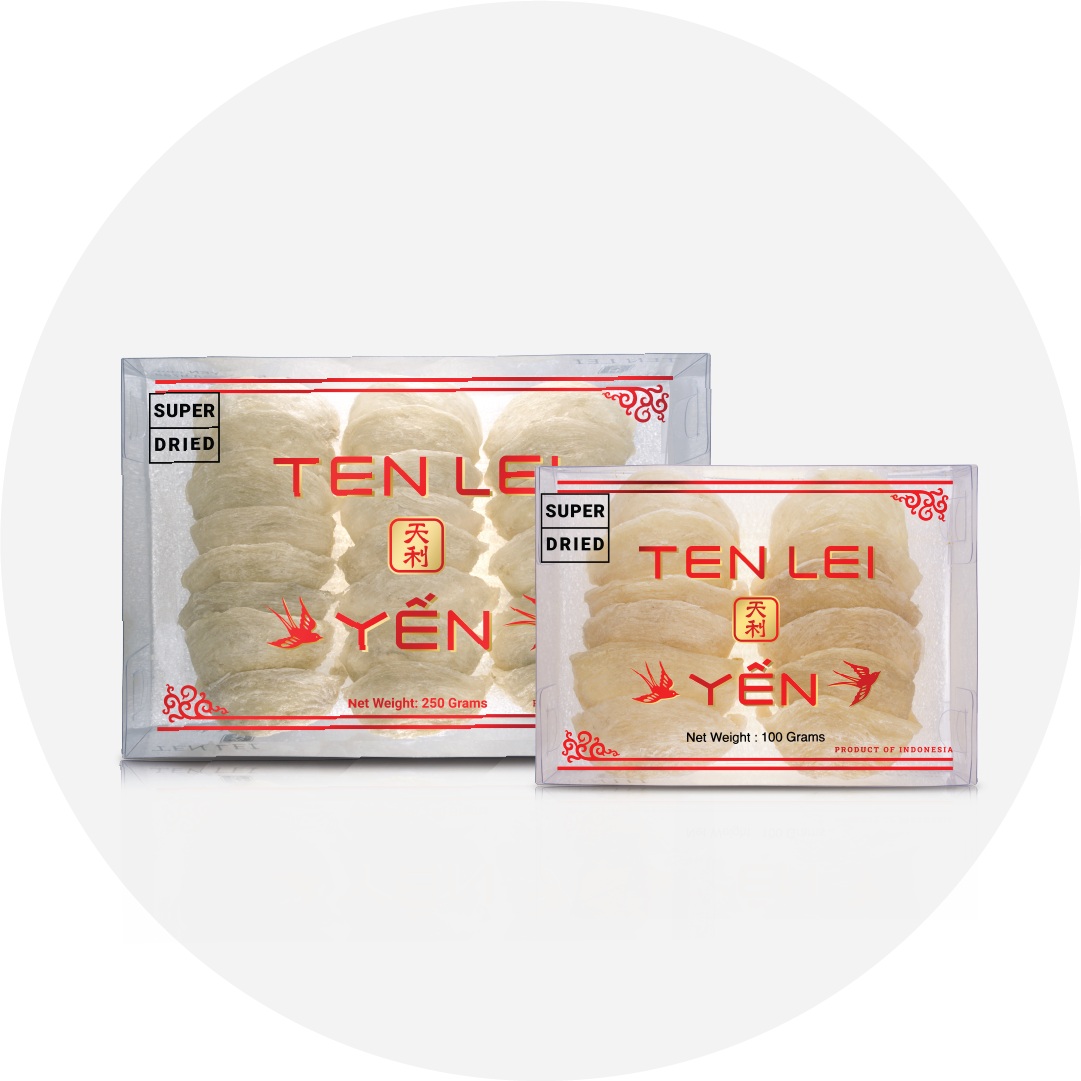
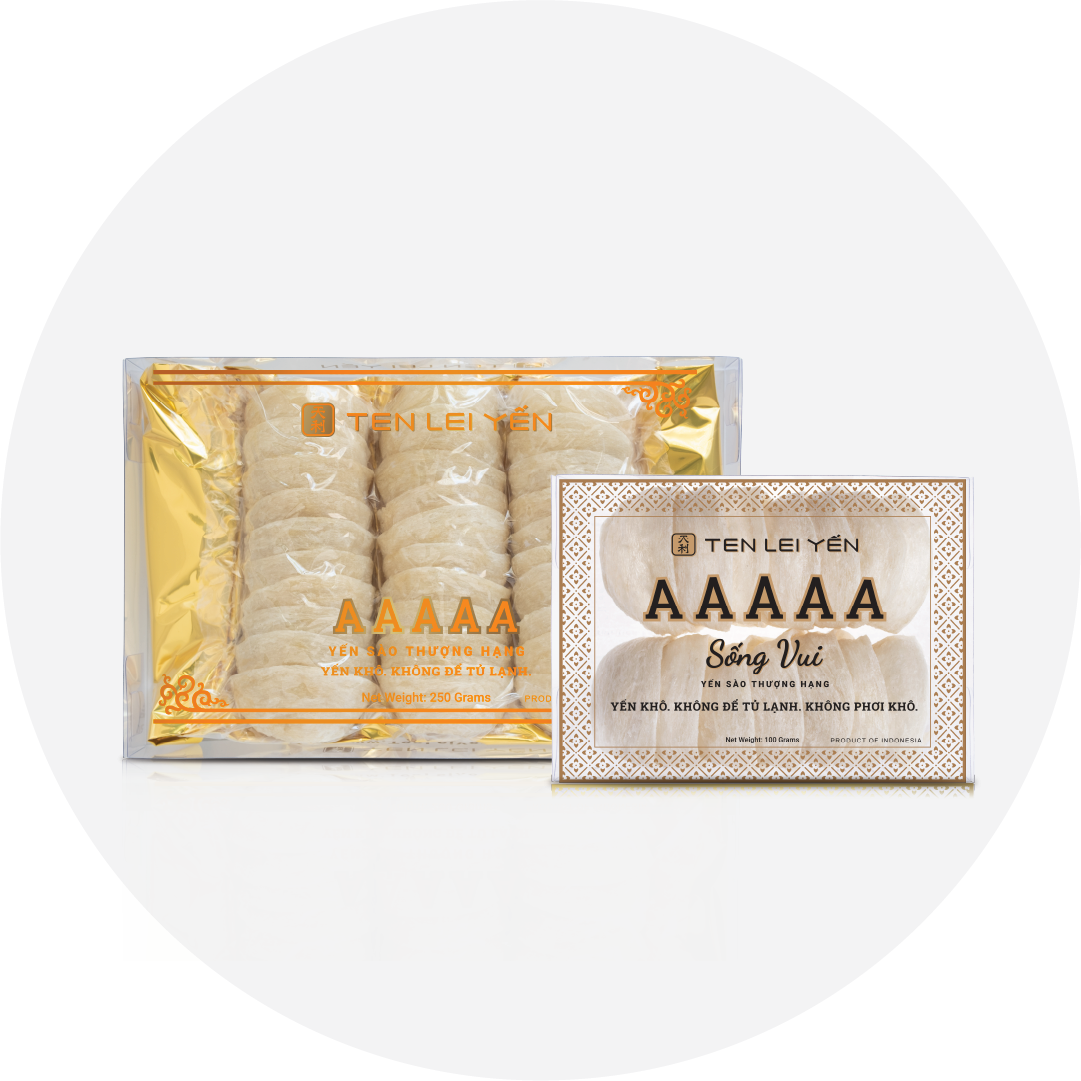
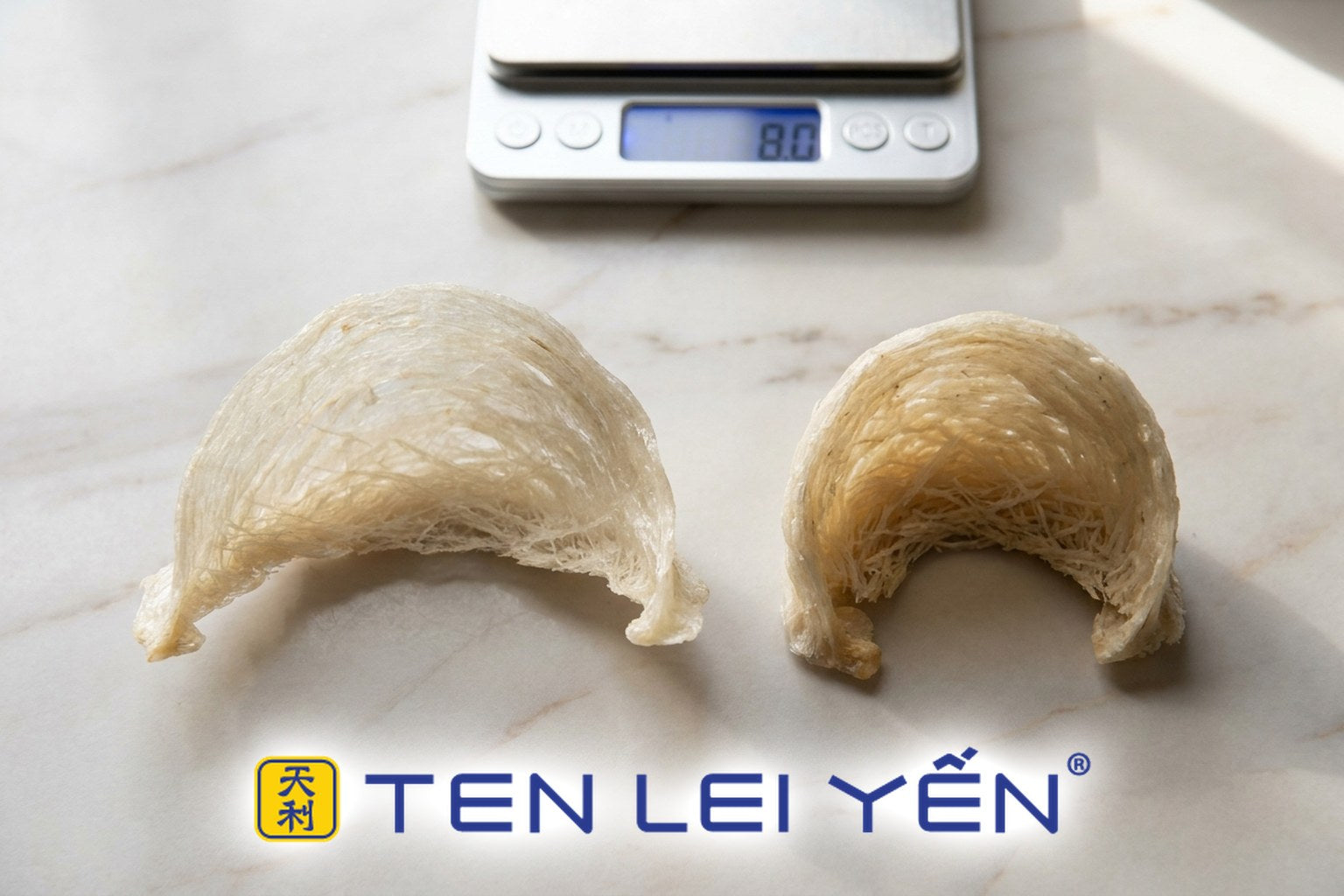
Two boxes of edible bird's nest can share the exact same gram weight and still look nothing alike when opened. The reason isn't fraud — it's physics. Strand thickness, cup depth, how tightly the swiftlet wove the nest, and how it was dried all change how much visual space the same number of grams takes up.
Key Takeaways
- Gram weight measures mass, not volume — two nests at the same weight can look very different in size.
- Strand thickness is the biggest visual factor: finer strands look bigger and airier at the same weight.
- Cup depth and shape (a shallow "boat" vs. a deeper "cup") change how full a box looks on opening.
- How tightly the nest was woven, and how it was dried, both affect final density.
- Size alone is not a quality signal — grade and sourcing matter more than visual volume.

Why Doesn't Gram Weight Match What You See?
A kitchen scale measures mass, not the shape it's spread across. Edible bird's nest is built from fine strands of dried swiftlet saliva, and how those strands are arranged determines the finished shape far more than the total weight does.
Strand Thickness
Finer, almost hair-thin strands layered loosely trap more air between layers, so the nest looks larger and more voluminous for its weight. Thicker, more ribbon-like strands compact into less visual space at the same weight, since each strand carries more mass per centimeter.
Cup Depth and Shape
Nests naturally form as a shallow half-cup or boat shape, with two small hardened "feet" where the nest anchored to the surface it was built on. A wider, shallower shape spreads the same weight across more surface area and reads as bigger. A narrower, deeper cup concentrates the same weight into a smaller footprint, which can look modest even though nothing is missing.
How Tightly the Nest Was Woven
A swiftlet builds its nest strand by strand, moving its head back and forth in short passes. Some nests come out tightly and densely woven; others are looser, with more space between strands. A tight weave looks smaller and more solid at a given weight; a looser weave of the same weight looks bigger and airier, even though both can be equally genuine.

Drying Method
After harvesting and cleaning, nest is dried before it's sold. Slower, gentler drying tends to preserve a more open structure. Faster drying pulls strands closer together as moisture leaves quickly, shrinking the piece into a smaller, denser shape. Two nests dried differently can land at the same final weight but look like they came from different-sized birds.
Same Weight, Different Look: A Quick Comparison
| Factor | What varies | Effect on apparent size at the same weight |
|---|---|---|
| Strand thickness | Fine, hair-thin strands vs. thicker, ribbon-like strands | Finer strands trap more air and look bigger and airier |
| Cup depth & shape | Shallow, wide "boat" vs. deep, narrow cup | Wide and shallow reads as bigger; deep and narrow looks smaller |
| Weave density | Loosely layered strands vs. tightly packed strands | A denser weave fits more mass into a smaller footprint |
| Drying method | Slow, gradual drying vs. faster drying | Slower drying keeps a more open structure; faster drying compacts the piece |
Does This Affect Soaking and Cooking?
Not in any way that changes the outcome. A typical whole dry nest runs about 8-14 grams, and it expands to roughly 3-4 times its dry size once soaked, whether it looked thin and wide or thick and compact in the box. Soak dry nest 4-6 hours or overnight, then double-boil for about 40 minutes until tender. A denser piece may need a few extra minutes to fully loosen.
So How Should You Judge a Box of Nest?
Look past size and check what actually indicates quality: strand color and clarity, how intact the cup shape is, and where the nest was sourced. Two genuine nests of the same grade can look different simply because of the natural variation above — that's normal, not a red flag. See our guide to Blue, Red, and 5A grades, and nest cups, boats, and strips explained.
Browse our current selections: Blue Label, Red Label, TLY 5A, and Specialty Nest.