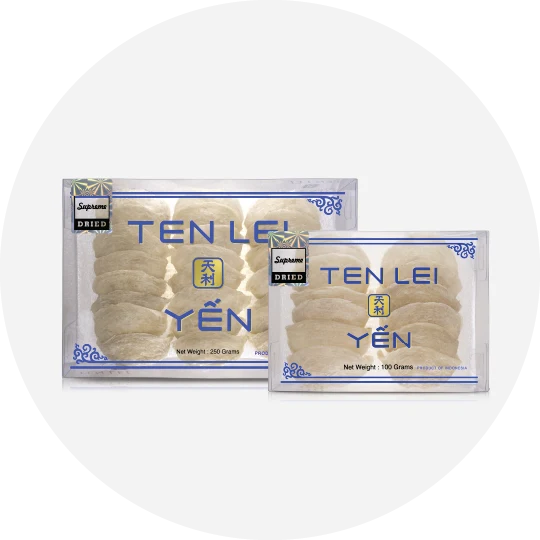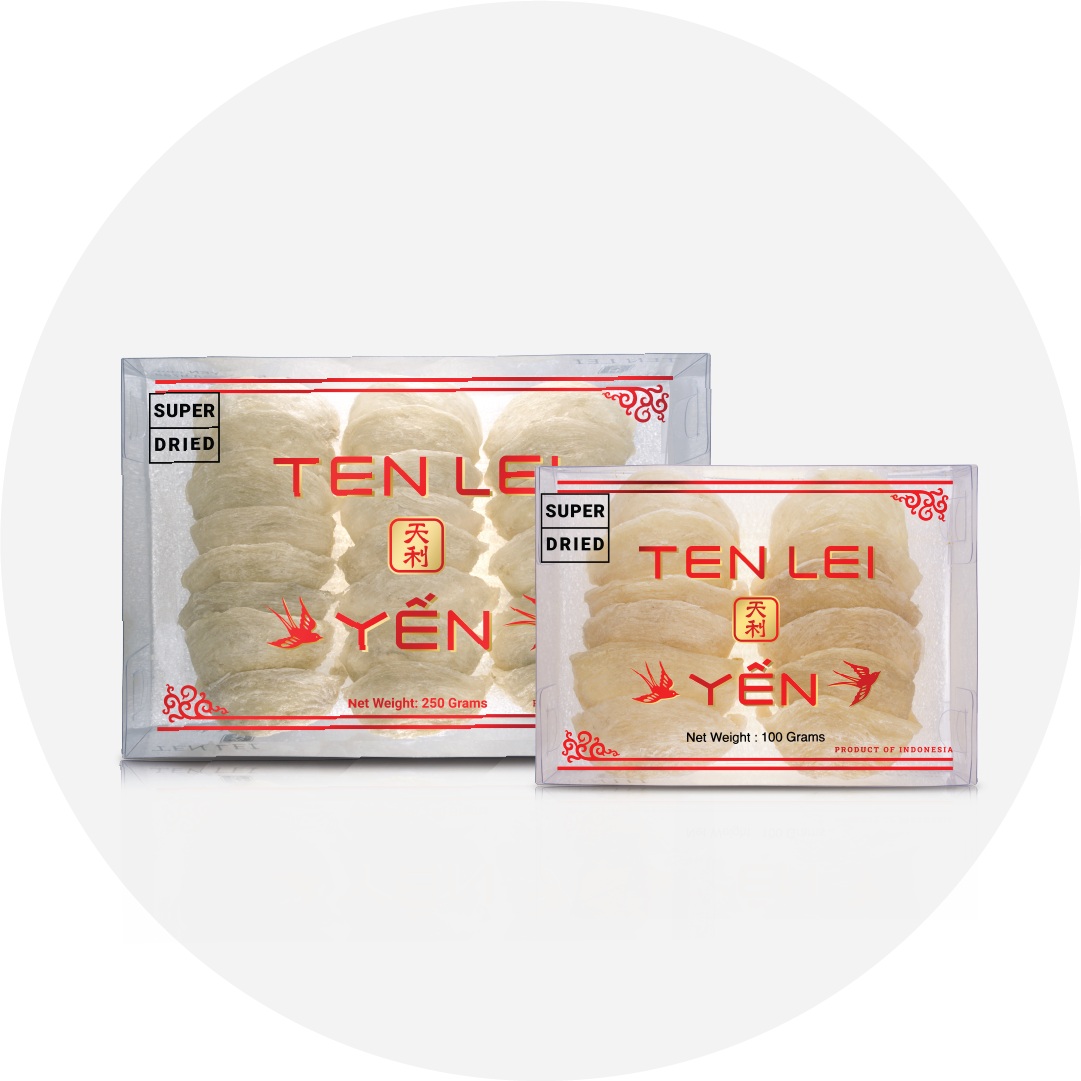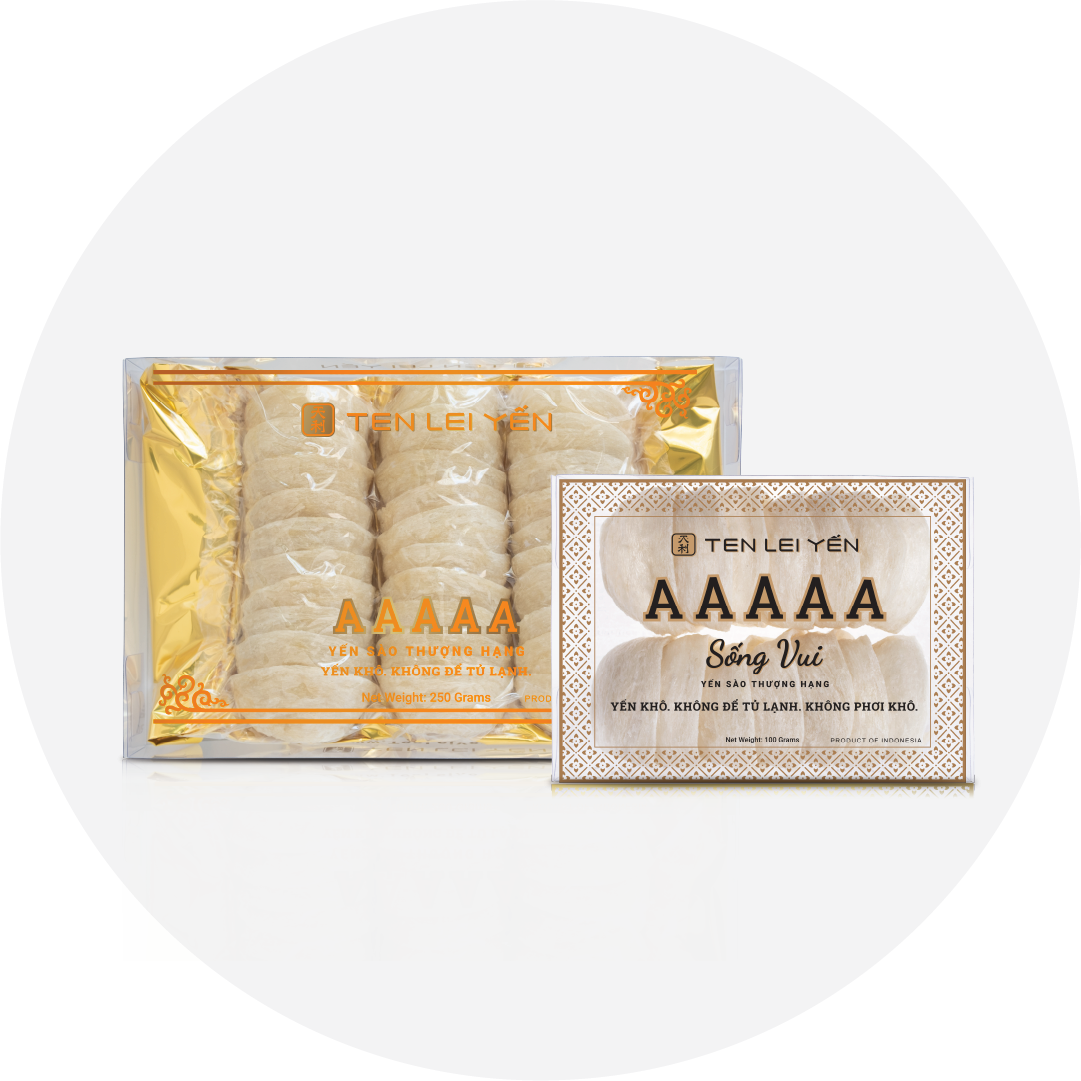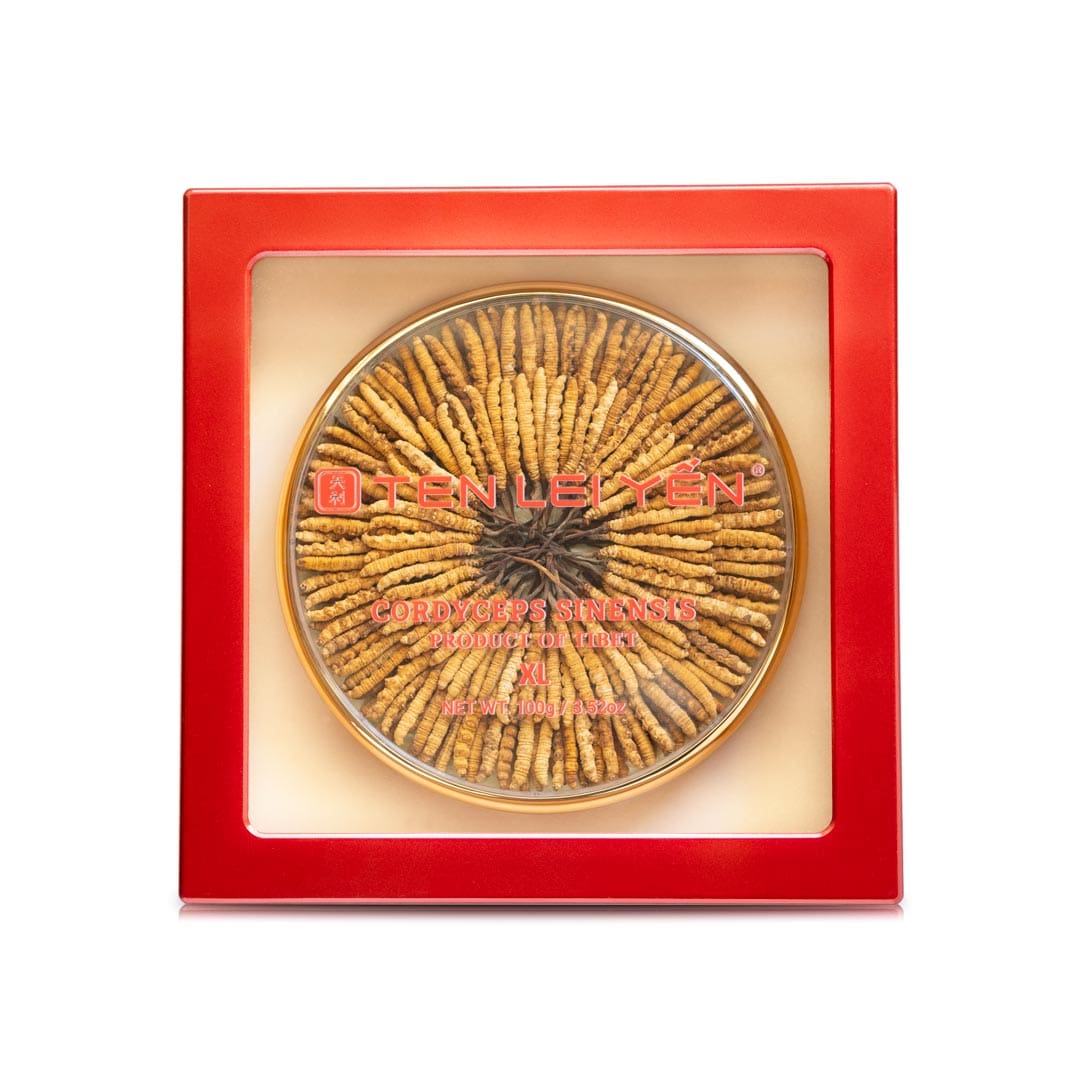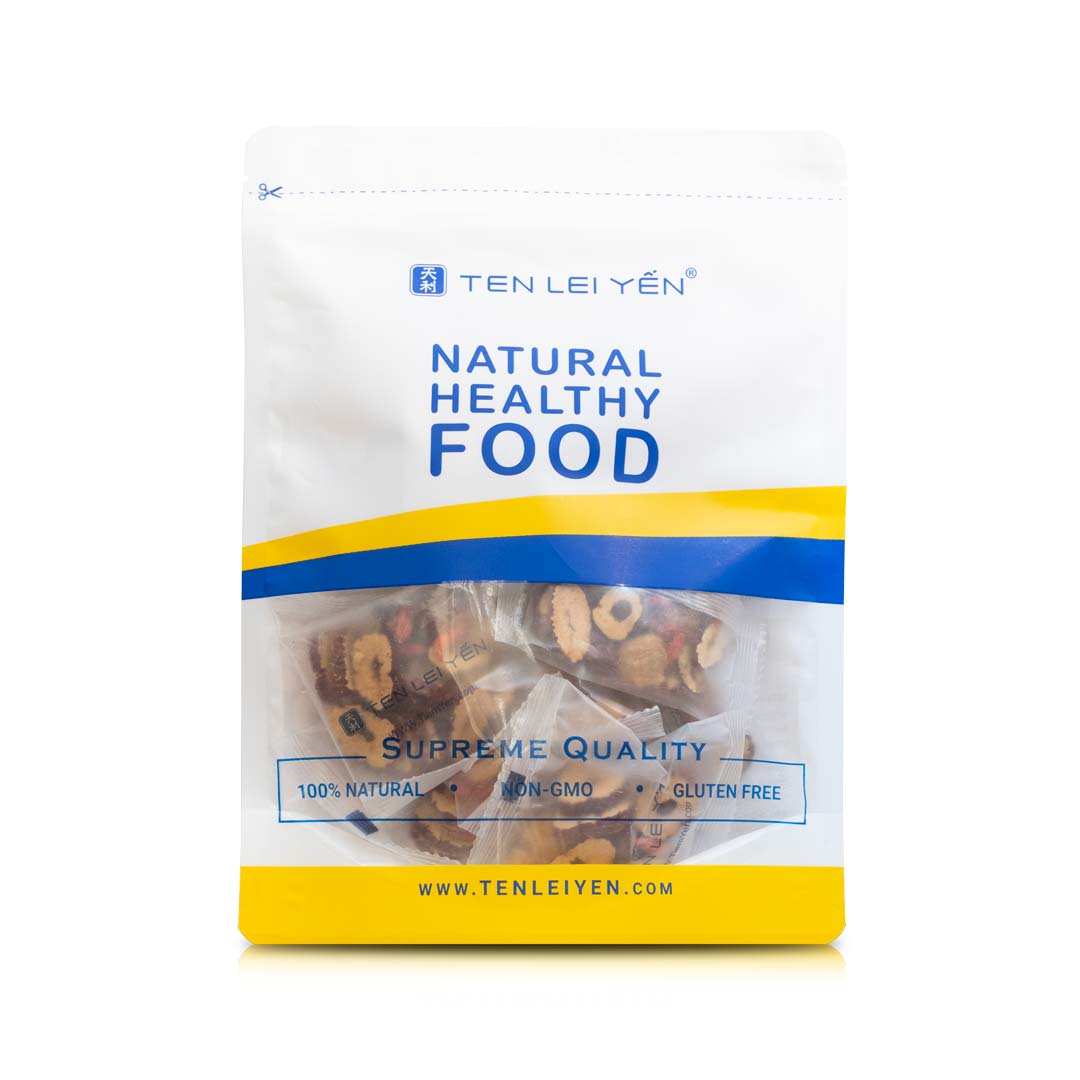
Good edible bird's nest costs about $45 to $102 per ounce, or roughly $726 to $1,633 per pound, at Ten Lei Yen, a family-run bird's nest and cordyceps specialist in Westminster, California (Little Saigon) since 2007. Small broken pieces are the lowest at $45 per ounce; whole 5A White nest is $54 per ounce, about $862 per pound. These are our September 2026 shelf prices, calculated from the box price.
By the Ten Lei Yen team, Westminster, CA. Updated October 2026.
How much does bird's nest cost per ounce or per pound?
In 2026 our range is $45 to $102 per ounce and about $726 to $1,633 per pound, depending on grade and on whether the nest is whole or broken. We sell by the 100 g and 250 g box, not by the pound, so every per-pound figure below is a conversion. Almost nobody buys a pound: a 250 g box is just over half a pound, and a 100 g box already lasts about a month of regular servings.
The math, once: 1 oz = 28.35 g and 1 lb = 453.6 g. Divide the box price by the grams in the box, then multiply. For our 5A White 250 g box: $475 ÷ 250 g = $1.90 per gram; × 28.35 = about $54 per ounce; × 453.6 = about $862 per pound. Every row below uses the same steps. Prices are our own retail prices as of September 29, 2026, in US dollars, before tax and shipping.
What does broken bird's nest cost per ounce and per pound?
Broken nest is the best price per gram we sell. It is the same cleaned nest as our whole boxes, in pieces, and it cooks into the same soup.
| Grade | Color | Box | Price | Per 100 g | Per oz | Per lb |
|---|---|---|---|---|---|---|
| Red Label Small Broken | White, Golden or Red | 250 g | $400 | $160 | $45 | $726 |
| Red Label Corner Cut (nest feet) | White | 250 g | $400 | $160 | $45 | $726 |
| Red Label Medium Broken | White, Golden or Red | 250 g | $425 | $170 | $48 | $771 |
| Red Label Large Broken | White, Golden or Red | 250 g | $450 | $180 | $51 | $816 |
| Red Label Small Broken | White or Golden | 100 g | $180 | $180 | $51 | $816 |
| Red Label Large Broken | White or Golden | 100 g | $225 | $225 | $64 | $1,021 |
If you are price-conscious, buy the Red Label Small Broken white nest, 250 g. At $1.60 a gram it is the lowest price per gram we sell. See all grades in the bird's nest collection.
What does whole bird's nest cost per ounce and per pound?
Whole nest runs $54 to $102 per ounce, or about $862 to $1,633 per pound. 5A (AAAAA) White 250 g is the best-value whole nest we sell; Blue Label is our top tier.
| Grade | Color | Box | Price | Per 100 g | Per oz | Per lb |
|---|---|---|---|---|---|---|
| 5A (AAAAA) | White | 100 g (3.5 oz) | $220 | $220 | $62 | $998 |
| 5A (AAAAA) | White | 250 g (8.8 oz) | $475 | $190 | $54 | $862 |
| 5A (AAAAA) | Golden | 250 g | $540 | $216 | $61 | $980 |
| Red Label Super Dried | White, Golden or Red | 100 g | $280 | $280 | $79 | $1,270 |
| Red Label Super Dried | White, Golden or Red | 250 g | $650 | $260 | $74 | $1,179 |
| Blue Label Supreme | White | 100 g | $320 | $320 | $91 | $1,452 |
| Blue Label Supreme | Golden or Red | 100 g | $330 | $330 | $94 | $1,497 |
| Blue Label Supreme | White | 250 g | $750 | $300 | $85 | $1,361 |
| Blue Label Supreme | Golden or Red | 250 g | $800 | $320 | $91 | $1,452 |
| Blue Label Timur | White | 250 g | $800 | $320 | $91 | $1,452 |
| Blue Label Kali | White | 250 g | $900 | $360 | $102 | $1,633 |
Ready-to-drink bottles, for comparison, hold a small amount of nest in liquid, so a bottle is a treat, not a serving of dry nest. Compare them by the grams of nest stated on the label, not by the bottle price.
What does a serving of bird's nest cost?
A standard serving is 3 to 5 g of dry nest, about a third to half of one whole nest (a whole nest is 8–14 g, or 2 to 4 standard servings). It swells 3–4 times after soaking. A 250 g box holds 50 to 83 standard servings, so a serving costs the box price divided by 83 (at 3 g) or by 50 (at 5 g). At our prices:
| Nest | Price per 100 g | Cost per 3 g serving | Cost per 5 g serving |
|---|---|---|---|
| Red Label Small Broken, 250 g | $160 | $4.80 | $8.00 |
| 5A White, 250 g | $190 | $5.70 | $9.50 |
| Red Label Super Dried, 250 g | $260 | $7.80 | $13.00 |
| Blue Label Supreme White, 250 g | $300 | $9.00 | $15.00 |
| Blue Label Kali, 250 g | $360 | $10.80 | $18.00 |
Per whole nest, 5A White is about $16 and Blue Label Supreme about $31, so no single per-nest price applies. In our Westminster store, the question we hear most is how long a box lasts: a 100 g box of 5A White, used at 3–5 g a serving, covers 20 to 33 servings.
Is edible bird's nest worth the money?
It is worth it if you value it as a cultural and culinary luxury or a gift, not as a necessity. On value alone, dry nest costs about $5.70 to $15 per standard serving (5A White to Blue Label Supreme), and every dollar goes to nest rather than liquid. We describe our nest by culinary role, origin and grading only; medical questions belong with a physician.
Here is what the price actually pays for:
- Hand-cleaning. Nest is naturally scarce, harvested in limited quantities and cleaned almost entirely by hand, with a low finished yield. That labor is most of what you pay for.
- Whole-strand grading. We grade by how clean, intact and uniform the nests are. Blue Label Supreme and Red Label Super Dried are our top tier; 5A is our A-grade whole nest.
- Origin. We import our nest directly from Indonesia, so you know where the box came from and can ask the family that sold it.
It suits people who enjoy it in dessert soups and double-boiled recipes, families who serve it at holidays, and gift-givers. It does not suit anyone wanting a low-cost everyday staple or buying it for a medical reason. If cost matters, broken nest at $4.80 to $8 a serving is the same cleaned nest for less.
What moves the price of bird's nest?
Four things move the price: whole versus broken, grade, box size and color. Whole versus broken is the biggest lever.
- Whole vs broken. Broken nest is the same cleaned nest that did not survive cleaning or shipping in one piece, sold in large, medium or small pieces. Same taste, same texture once cooked, about 20–40% cheaper per gram than whole Red Label Super Dried nest. Corner cut ("nest feet," chân yến) is the dense anchor end of the nest: chewier, the longest cooking time, and tied for our lowest price.
- Grade. Our labels describe how clean, intact and uniform the whole nests are. Blue Label Supreme and Red Label Super Dried are our top tier (S grade). 5A (AAAAA) is our A-grade whole nest: complete nests, good strands, slightly less uniform, and the best-value whole nest we sell. "5A" is not a top grade here, whatever it means elsewhere; our grade names are our own, and the tables above are the honest ranking by price.
- Box size. A 250 g box is 3–20% cheaper per gram than the same nest in 100 g.
- Color. White, golden and red (blood) nest describe appearance, tied to the swiftlet and the environment where the nest formed, not quality. At our store they sit within $10–$65 a box of each other.
How should you compare bird's nest prices between sellers?
Compare by price per gram of dry nest, and by grade and whole versus broken, not by box price or by the letters on the label. Divide any box price by its net dry weight in grams, then multiply by 28.35 for a per-ounce figure.
On that basis our Red Label Small Broken is $45 per ounce, our 5A whole nest $54 per ounce, and our S-grade whole nest $74–$102 per ounce. At Ten Lei Yen you can also walk into the store at 9741 Bolsa Ave, Suite 107, Westminster, CA 92683 and ask the family that has sold it since 2007.
Frequently asked questions
Why is 5A cheaper than Red Label at Ten Lei Yen?
Because our grade names are our own. 5A is our A-grade whole nest; Red Label Super Dried and Blue Label Supreme are S grade, cleaner and more uniform. Other sellers use "AAAAA" to mean their top grade, so compare by what is in the box, not by the letters.
Is broken bird's nest worth buying?
Yes, if you cook it into soup or drinks rather than serve a whole nest for show. It is the same cleaned nest at roughly 20–40% less per gram.
Is ready-to-drink bird's nest cheaper?
Per bottle it can look cheaper, but per gram of actual nest it is not, because a bottle contains a small amount of nest in liquid. Dry nest at about $4.80 to $18 per standard serving is the better value if you are eating it regularly.
Does red (blood) nest cost more?
At Ten Lei Yen, red costs the same as white in Red Label and broken boxes, and $10–$50 more in Blue Label Supreme, because color is appearance, not quality.
Related reading
- How our grades work
- How much bird's nest is a serving
- How to tell real nest from fake
- Dry nest vs ready-to-drink
Visit Ten Lei Yen at 9741 Bolsa Ave, Suite 107, Westminster, or browse current prices at tenleiyen.com; sale prices and most multi-box packs are lower per gram than the single-box prices above.