Cordyceps militaris — the cultivated orange fruitbody now available well beyond specialty grocers — is one of the more versatile ingredients to work with in a summer kitchen. It rehydrates quickly, responds well to high heat, and contributes a mild, umami-forward note that pairs cleanly with eggs, aromatics, tofu, and light broths. If you have dried fruitbodies and are not sure where to start, this guide walks through the full process.
What Cordyceps Militaris Looks and Tastes Like
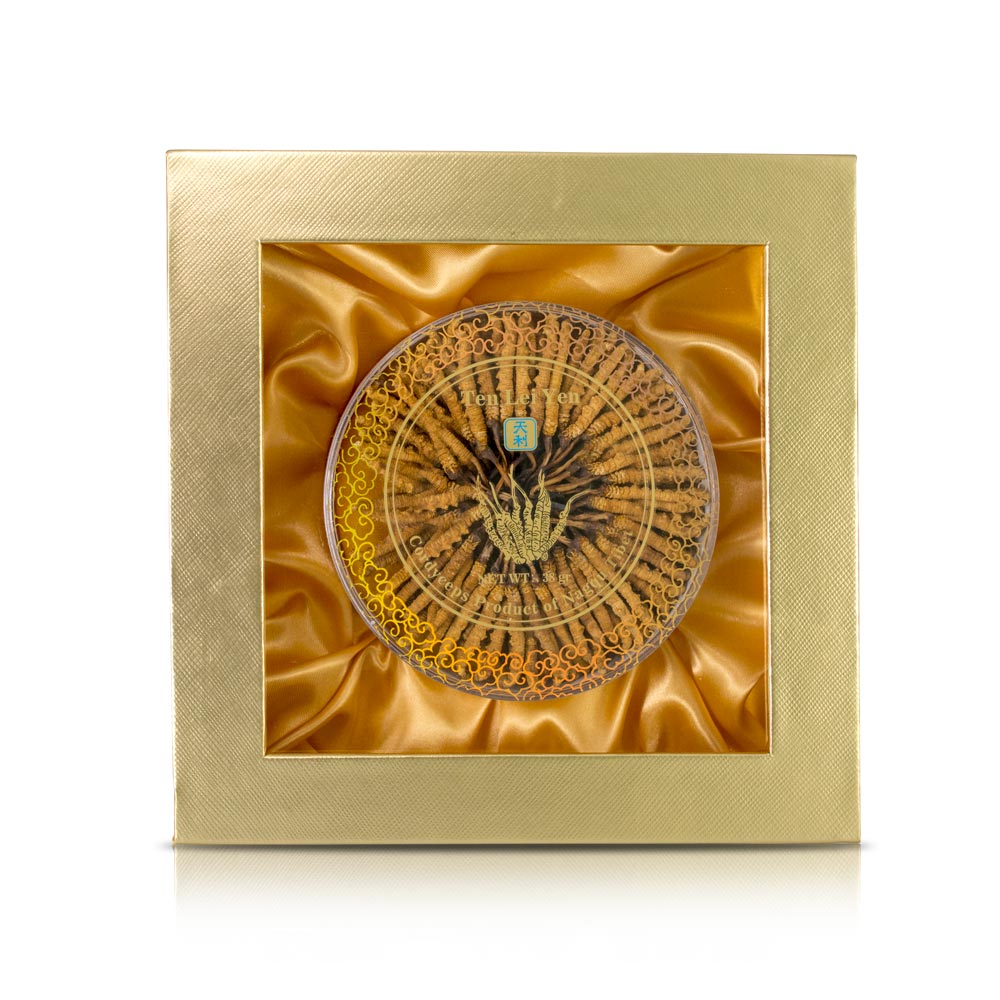
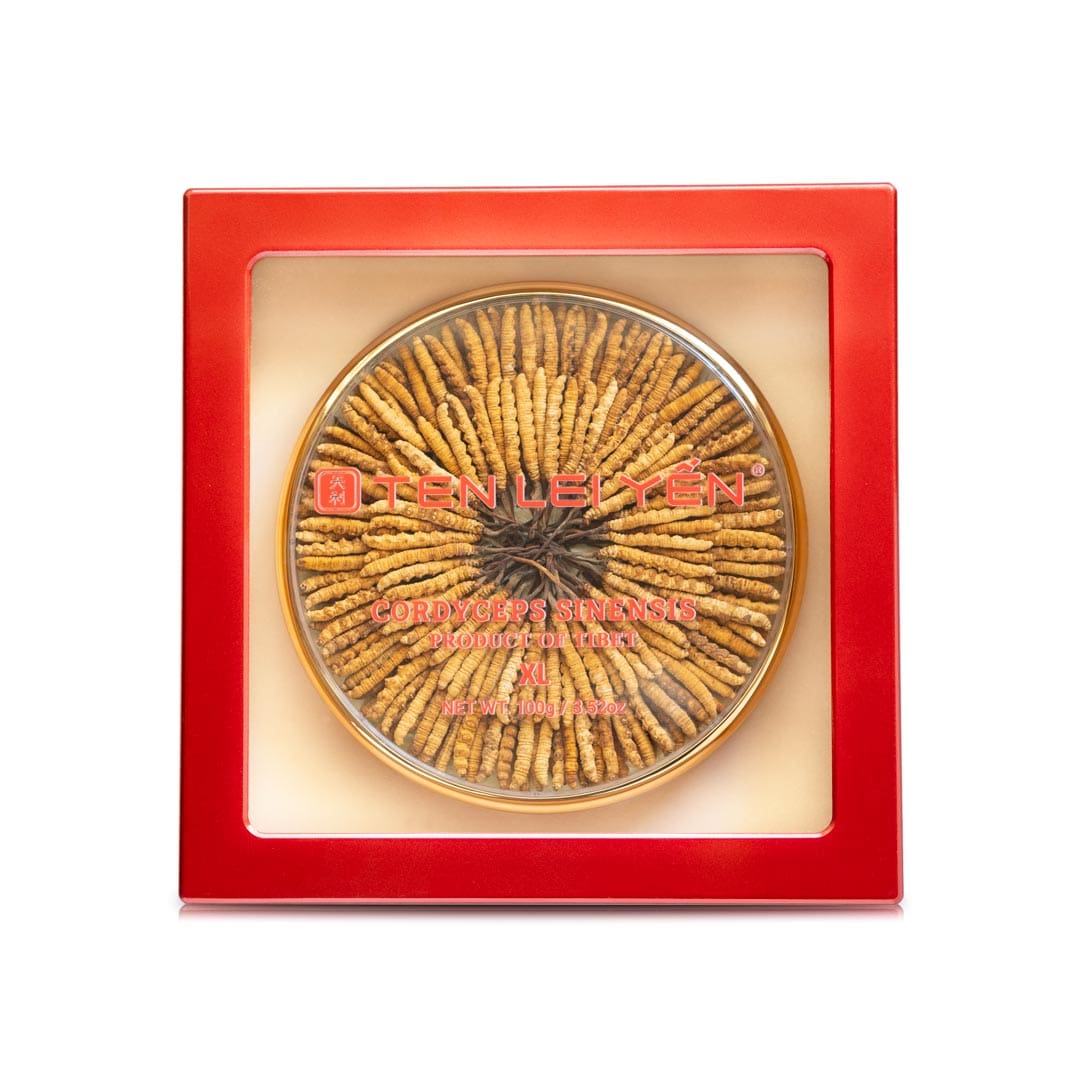
Cultivated Cordyceps militaris grows as finger-like stalks — typically orange to deep amber — in dense clusters. Dried fruitbodies for cooking are sold whole or broken, and a small amount goes a long way: three to five grams of dried militaris per person is the standard starting point for most dishes.
The flavor is mild and earthy, with a distinct umami quality and none of the bitterness sometimes associated with wild fungi. After soaking, the texture softens to a slightly chewy, fibrous consistency — firm enough to hold up in a hot pan, tender enough to work in a steamed preparation.
How to Prepare Dried Cordyceps Militaris

Most Cordyceps militaris sold for culinary use is in dried form. Unlike harder dried mushrooms, militaris rehydrates in under 30 minutes.
- Measure dried fruitbodies into a clean bowl.
- Cover with cool or room-temperature water. Avoid hot water for the initial soak — it can over-soften the outer layer while the center stays stiff.
- Soak for 15–20 minutes for stir-fry or high-heat applications; 30–45 minutes for simmered dishes or steam.
- Reserve the soaking liquid — it carries flavor and color useful in soups or braised dishes.
- Rinse once and pat dry before adding to a hot pan.
Three to five grams of dried militaris expands to roughly three times its dry weight after soaking.
Four Cooking Methods for Cordyceps Militaris
1. Stir-Fry (High Heat, 2–4 Minutes)
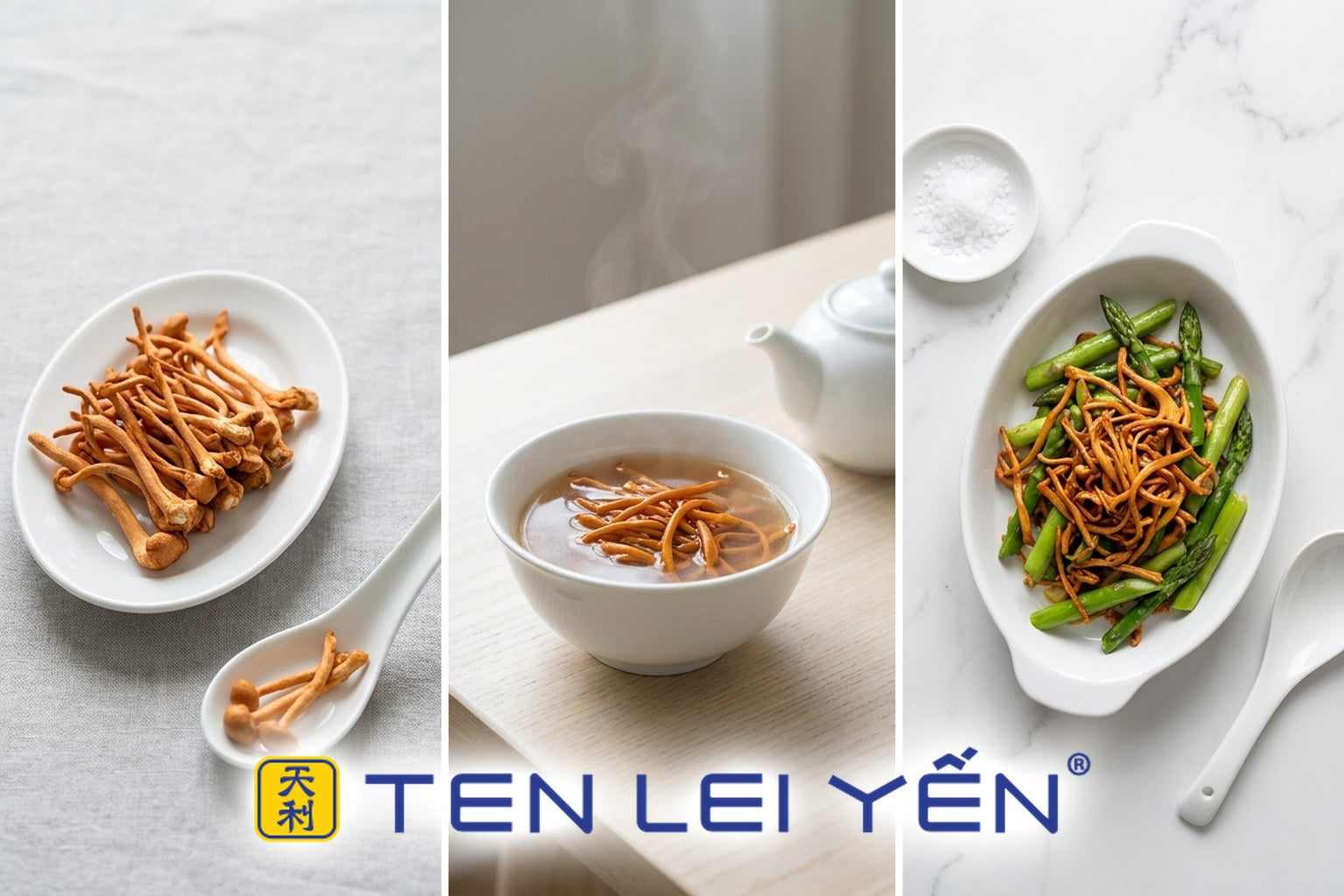
The most practical approach for a weeknight summer dinner. Pre-soaked militaris goes into a hot pan with a neutral oil and aromatics — scallion, garlic, a small amount of ginger — for two to four minutes over high heat. The fruitbodies develop color at the edges while staying tender at the center. Add militaris after aromatics are fragrant, not at the start of cooking.
2. Cold Infusion / Room-Temperature Steep
An underused method that suits warm weather particularly well. Place dried militaris in room-temperature water and steep for four to eight hours, or overnight in the refrigerator. The resulting liquid is pale gold and mild-flavored. Fruitbodies softened this way can be served cold — as a topping on cold rice or noodles, paired with sesame dressing and cucumber, or mixed into a chilled preparation.
3. Steam
Place soaked militaris in a small ceramic dish with a tablespoon of liquid — plain water, light stock, or the reserved soaking liquid — and steam for 8–12 minutes. This method preserves the shape of each fruitbody and suits presentations where appearance matters.
4. Braise / Low Simmer
Added to soups, congee, or braised dishes during the final 15–20 minutes of cooking. Extended high heat is not recommended — militaris added at the beginning of a long braise loses both texture and color.
Temperature and Heat — What Happens to Militaris as It Cooks
Cordyceps militaris fruitbodies are more heat-sensitive than denser fungi. Three key ranges:
- Below 80°C / 175°F: Texture softens gradually; color holds. The right range for cold-steep and low-temperature preparations.
- 80–100°C / 175–212°F: Full rehydration and optimal texture development. Ideal for soups, steaming, and simmered dishes.
- Above 160°C / 320°F (direct dry heat): Fruitbodies become brittle and the outer layer darkens quickly. Avoid prolonged contact with a very hot dry surface.
For stir-fry, the goal is brief, high-heat contact for color and fragrance — not an extended cook. Two to four minutes is sufficient.
Flavor Pairings for Summer Cooking
Militaris pairs cleanly with a range of ingredients common in summer cooking:
- Egg: The mild umami of militaris amplifies without competing — scrambled, steamed, or in a quick egg-drop preparation.
- Scallion and garlic: Standard aromatics that frame the earthiness without masking it.
- Ginger: A small amount brightens the dish and works particularly well in cold preparations.
- Firm or silken tofu: Neutral protein that absorbs the militaris flavor in braise and steam applications.
- Light broths: Chicken or vegetable, as a steaming medium or soup base.
- Cucumber and radish: The crunch contrast works well when militaris is served cold after a cold steep.
- Summer corn: A quick stir-fry pairing that reads cleanly — the sweetness of fresh corn against the earthy militaris is an unexpected match for July and August cooking.
Sourcing Quality Cultivated Militaris
Quality dried militaris fruitbodies are orange to amber throughout, uniform in size, dry to the touch with no stickiness, and free of dust or off-odors. Pale coloring at the base or a musty smell are signs of poor drying or storage conditions.
TLY's cultivated Cordyceps militaris is quality-verified before packaging. Browse the full range at TLY Cultivated Cordyceps.
- Do I need to cook Cordyceps militaris, or can it be eaten raw?
- Dried militaris must be rehydrated before eating and is best consumed cooked. Cooking improves both texture and palatability. Fresh fruitbodies, where available, can be consumed in small amounts without cooking, but most culinary preparations involve at least brief heat.
- What is the difference between fresh and dried Cordyceps militaris?
- Dried militaris requires rehydration but has a longer shelf life and more concentrated flavor. Fresh militaris can go directly into a hot pan without soaking and cooks in roughly 1–2 minutes in a stir-fry. Both have a similar flavor profile; the texture of fresh fruitbodies is slightly softer.
- How long can I store leftover cooked Cordyceps militaris?
- Refrigerate cooked militaris in a covered container and use within two days. Freezing is not recommended — the texture becomes mushy upon thawing.