By Alina @ TLY
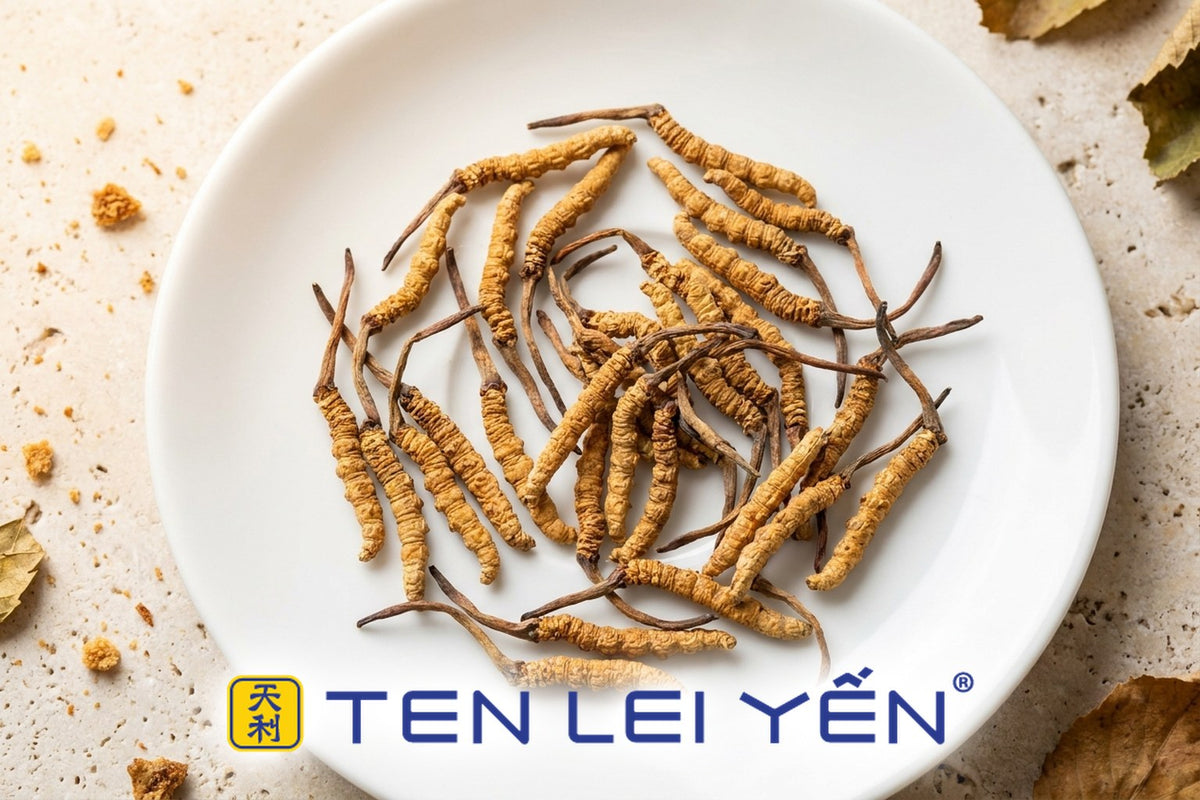
Properly dried wild cordyceps should feel firm and give a small, dry snap under gentle pressure near the thinner stalk end — not bend like a fresh stem or feel spongy. A piece that flexes instead of resisting is usually still holding onto moisture it shouldn't have. Because wild cordyceps is hand-collected and dried in small batches rather than machined to a uniform spec, dryness can vary piece to piece within the same pack, which is why a quick check at home is worth doing.
Key Takeaways
- Well-dried wild cordyceps feels firm and gives a light, dry snap near the stalk — it should not bend or feel leathery.
- One published study measuring wild and cultivated Cordyceps sinensis recorded a finished moisture content of 13.23% for properly dried product.
- Because wild cordyceps is priced and packed by weight (4 g, 8 g, 19 g, 38 g), pieces holding extra moisture read heavier on a scale without holding more usable product.
- Trade publications tracking cordyceps quality have flagged excess moisture and added weight as a known concern in the broader market.
- Dryness and storage life are directly connected: consistently dry pieces resist softening and mold far better once they're home.
Why Dryness Looks Different on a Wild, Hand-Collected Product
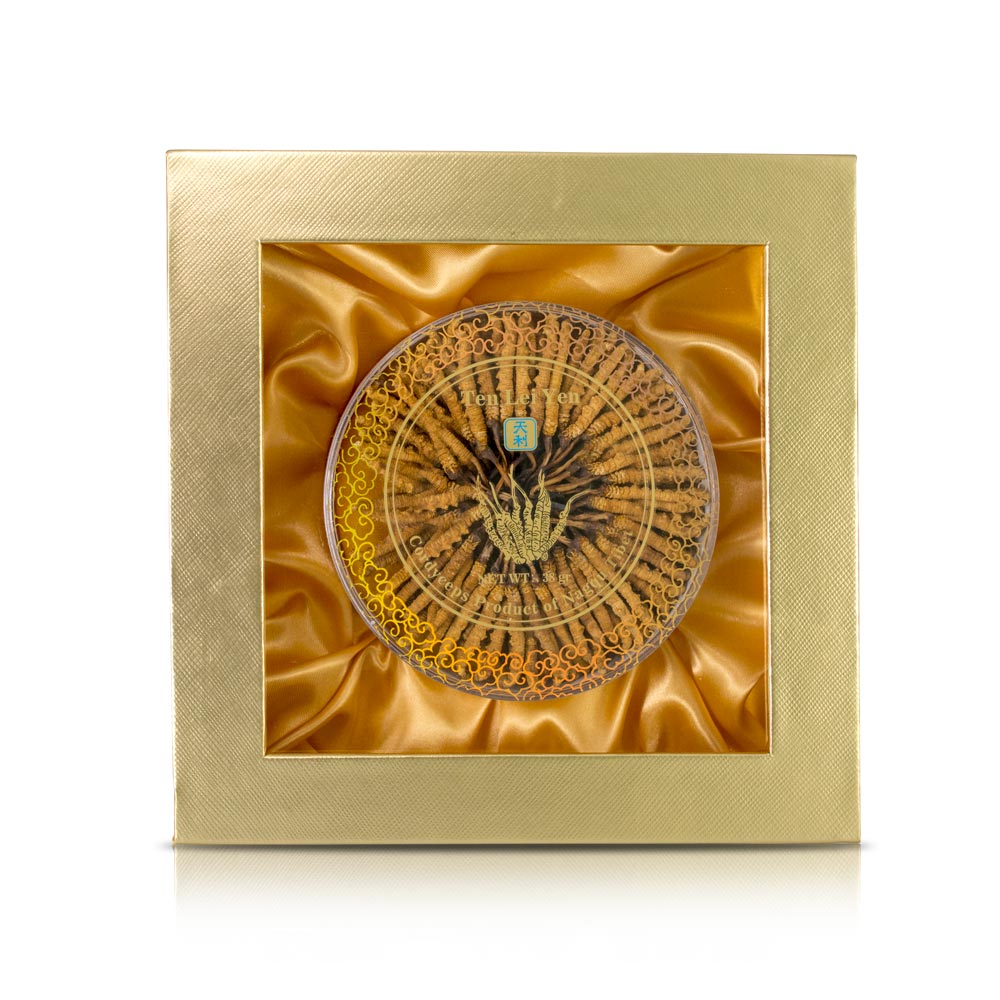
Wild cordyceps sold at Ten Lei Yen comes from Nagqu, Tibet, gathered by hand from high-altitude terrain rather than grown in a controlled facility. Pieces start out at slightly different sizes and are traditionally air-dried in batches, not run through one uniform industrial process. Two pieces in the same 4 g pack can finish at a slightly different point of dryness, even when the batch meets a proper drying standard — part of what separates a wild product from a cultivated one. See how wild cordyceps is graded by size, color, and pieces per gram for more on that variation. A single overall grade doesn't tell a buyer everything, which is why a hands-on check is worth a moment.

The Gentle Snap and Firmness Check
The simplest at-home test mirrors how dried goods are judged generally: hold a piece near its thinner, darker stalk end and apply light, gentle pressure. A properly dried piece resists and gives a small, dry snap rather than bending like a green stem. If a piece feels leathery, springs back instead of breaking, or has any noticeable give, it likely hasn't finished drying all the way through.
There's no need to test every piece — spot-checking one or two gives a good sense of the whole pack. A gentle flex near the stalk won't meaningfully affect a well-dried piece, since that spot is naturally the most brittle when drying is complete.
Why Damp Pieces Weigh Heavier — and Why That Matters When You're Paying by the Gram
Wild cordyceps is sold in small, precise pack sizes — 4 g, 8 g, 19 g, and 38 g — priced by weight rather than piece count alone. A piece that hasn't fully dried is still carrying water weight, and that water reads on a scale exactly like product weight, even though it isn't. Two pieces similar in size can weigh noticeably differently if one finished drying properly and the other didn't.
Trade publications covering the cordyceps market have flagged over-moist or artificially weighted product as a known concern in the broader trade. It's one more reason dryness is worth checking rather than assuming.
How Dryness Relates to Storage Life
Moisture is the main driver behind spoilage in any dried good: the lower and more consistent the moisture content, the less room mold and softening have to take hold once a pack is opened at home. A piece that started out under-dried has less margin before kitchen humidity pushes it toward spoilage, however carefully it's stored afterward. A properly dried piece is the foundation everything else — a cool, dark, airtight spot — builds on. See our guide to keeping dried cordyceps fresh for the full storage routine.
Autumn is when many households restock dried pantry staples before the cooler months, making it a fair time to run the snap test before a pack goes into longer-term storage. For the wider picture beyond dryness, see what to check before ordering cordyceps online, or browse current sizes in the Wild Cordyceps collection.