By Alina @ TLY
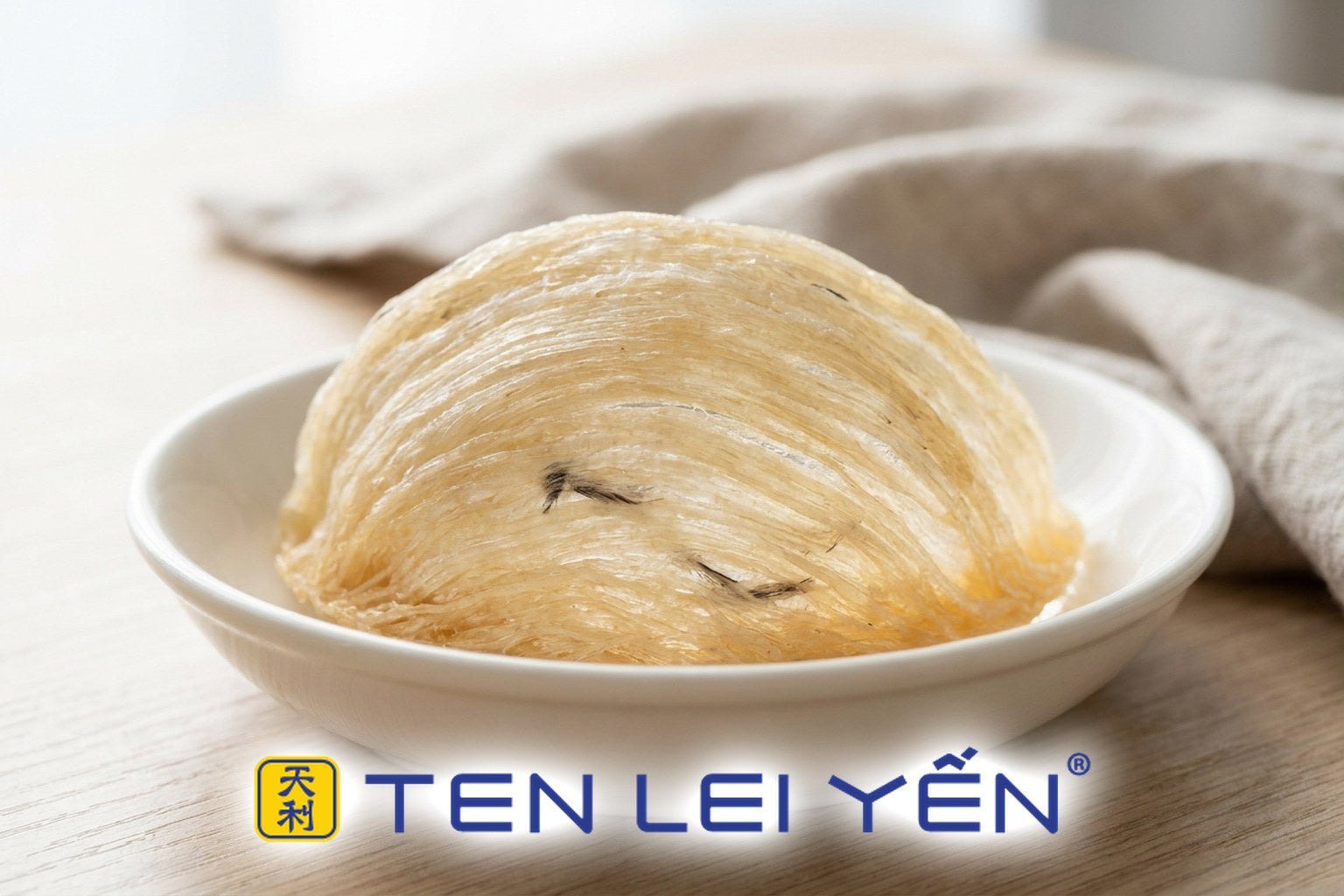
If you have ever soaked a piece of genuine dried bird's nest and noticed a few tiny dark flecks among the strands, here is the short answer: a small number of fine feathers is completely normal, and it is one of the more reassuring signs that a nest is real and only lightly processed. Edible bird's nest is built by swiftlets from their own saliva, and the birds live among their nests, so the occasional fine feather is simply part of a natural product. You rinse the last few out during soaking.
Key takeaways
- A few fine feather flecks in dried bird's nest are normal and point to minimal processing.
- Nest that looks perfectly white and flawless can sometimes be heavily cleaned or bleached, which may hide breakage or make it easier to add weight.
- Most remaining fine feathers loosen and float free during a four-to-six-hour soak; you lift out the last few with tweezers.
- Judge a nest by its strands, color, and smell together, not by the absence of every last feather.
Why genuine nest has a few feathers
Swiftlets weave their nests from strands of hardened saliva, high on cave walls or inside purpose-built swiftlet houses. Because the birds roost and raise their young there, a few of their own fine down feathers naturally become caught in the strands. After harvest, each nest is cleaned largely by hand, with workers picking out feathers and debris using fine tweezers under good light. It is painstaking work, and the goal is a clean nest that still looks like what it is.
A careful producer removes the visible feathers and larger debris, then leaves the nest close to its natural form. That approach usually means a handful of very fine feathers remain deep in the strands. Rather than a flaw, those last flecks tell you the nest has not been aggressively processed to erase every trace of its origin.
Why flawless is not always better
It is tempting to assume the whitest, most spotless nest is the best one. In practice, an unnaturally perfect, uniformly bright-white nest can be a sign of heavy cleaning or bleaching. Bleaching lightens the natural ivory-to-golden color and can decolorize any remaining feathers so they no longer show. The result looks pristine, but the process can also mask cracks and breakage, and a nest that has been soaked, reshaped, and re-dried is easier to pad with added weight. In other words, chasing a feather-free look can move you away from a natural, honestly presented product.

How to rinse the last feathers out
Handling those final feathers is simple and part of the normal routine. Place a dry nest (each piece is usually about 8 to 14 grams) in a bowl of cool water and soak it for four to six hours, or overnight, until it expands to roughly three to four times its dry size. As the strands loosen and separate, most fine feathers drift free and float to the surface, where you can skim or pour them off. For any stubborn flecks, work over a white bowl so they are easy to see, and lift them out one at a time with clean tweezers.
Once the nest is clean, drain it, then double-boil it gently for about forty minutes. Preparing it this way keeps the delicate strands intact while giving you a final chance to spot anything you missed. If you would like a fuller walk-through of soaking and grades, our Blue Label and Red Label nests each carry preparation notes, and our specialty nest selection shows the natural range of color and form you can expect.
Frequently asked questions
Are feathers a sign my bird's nest is fake?
No. The opposite is usually true. A few fine feathers indicate a natural nest that has been cleaned by hand rather than aggressively processed. Genuine nest is semi-translucent with a natural parallel grain, and a stray feather fits that picture.