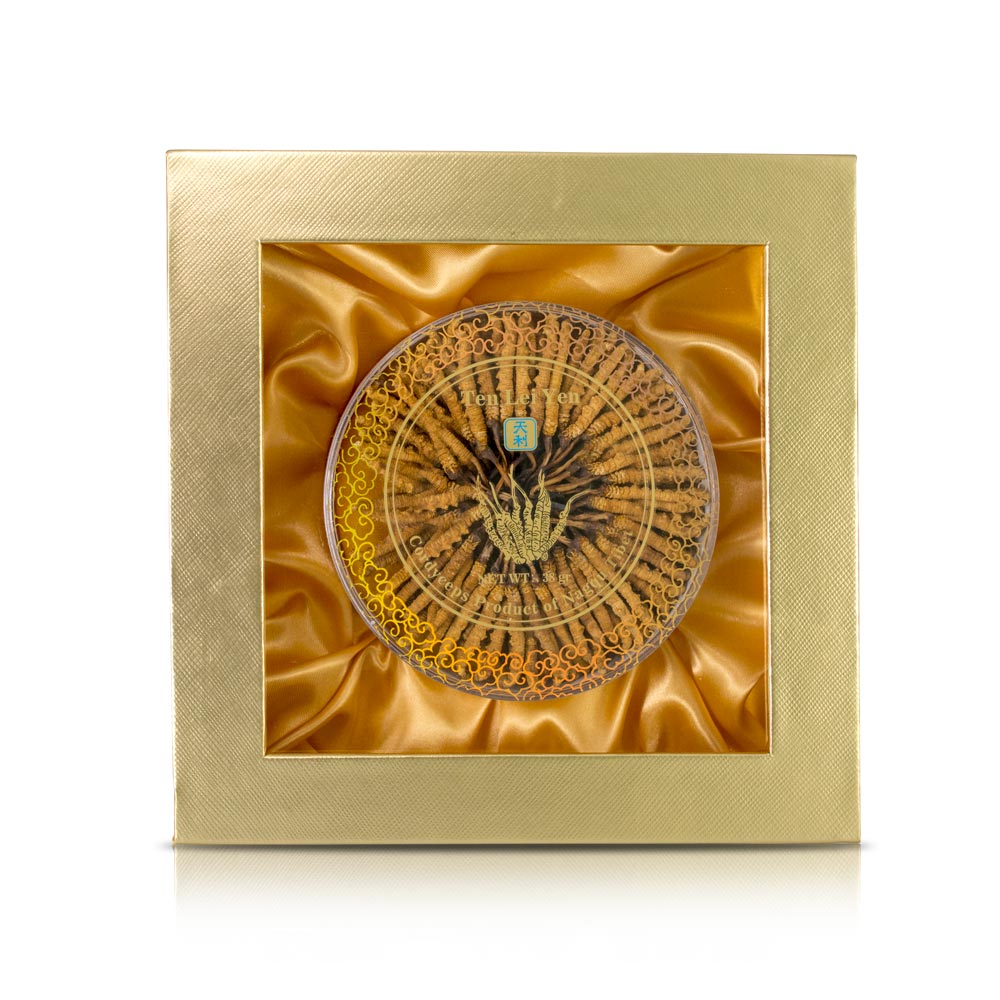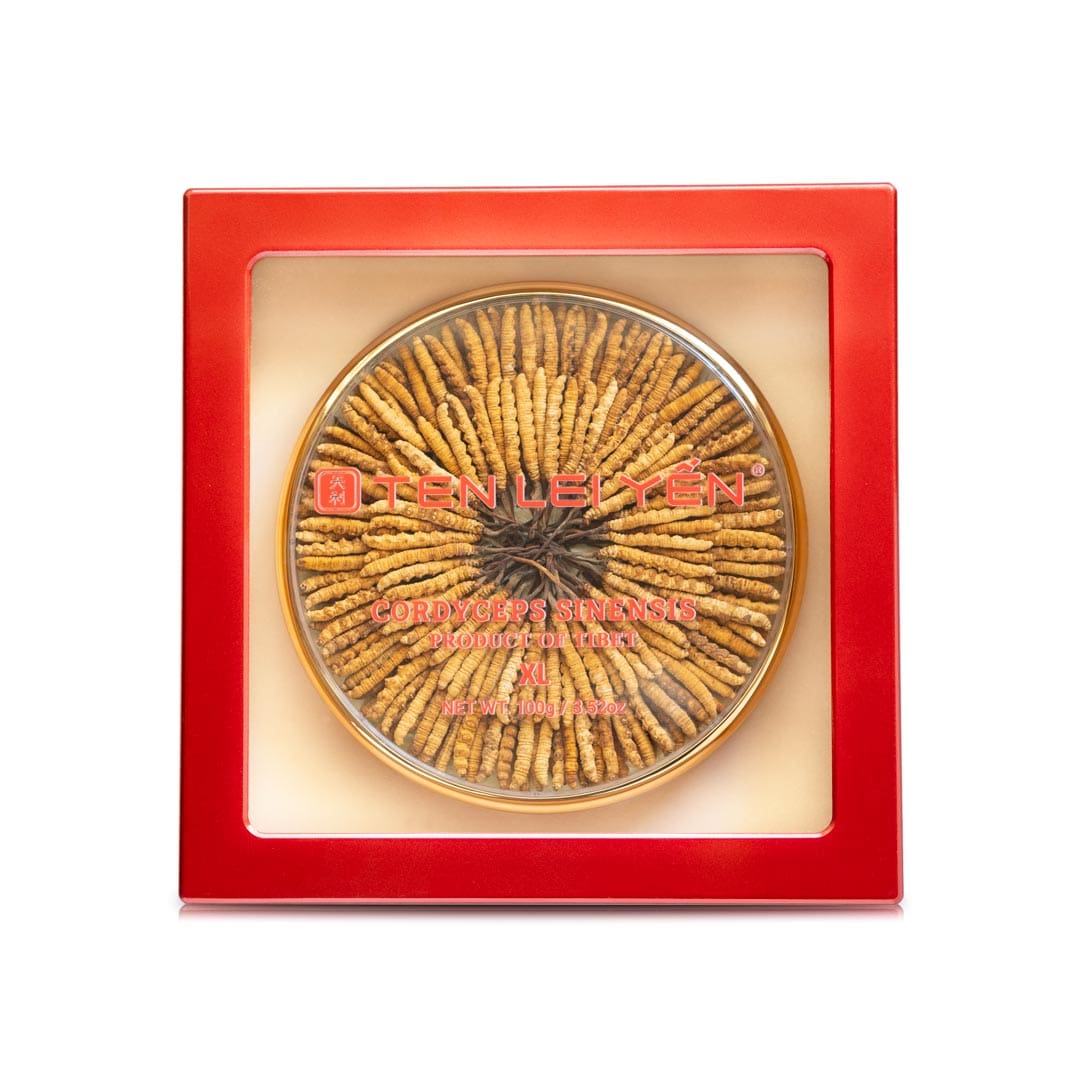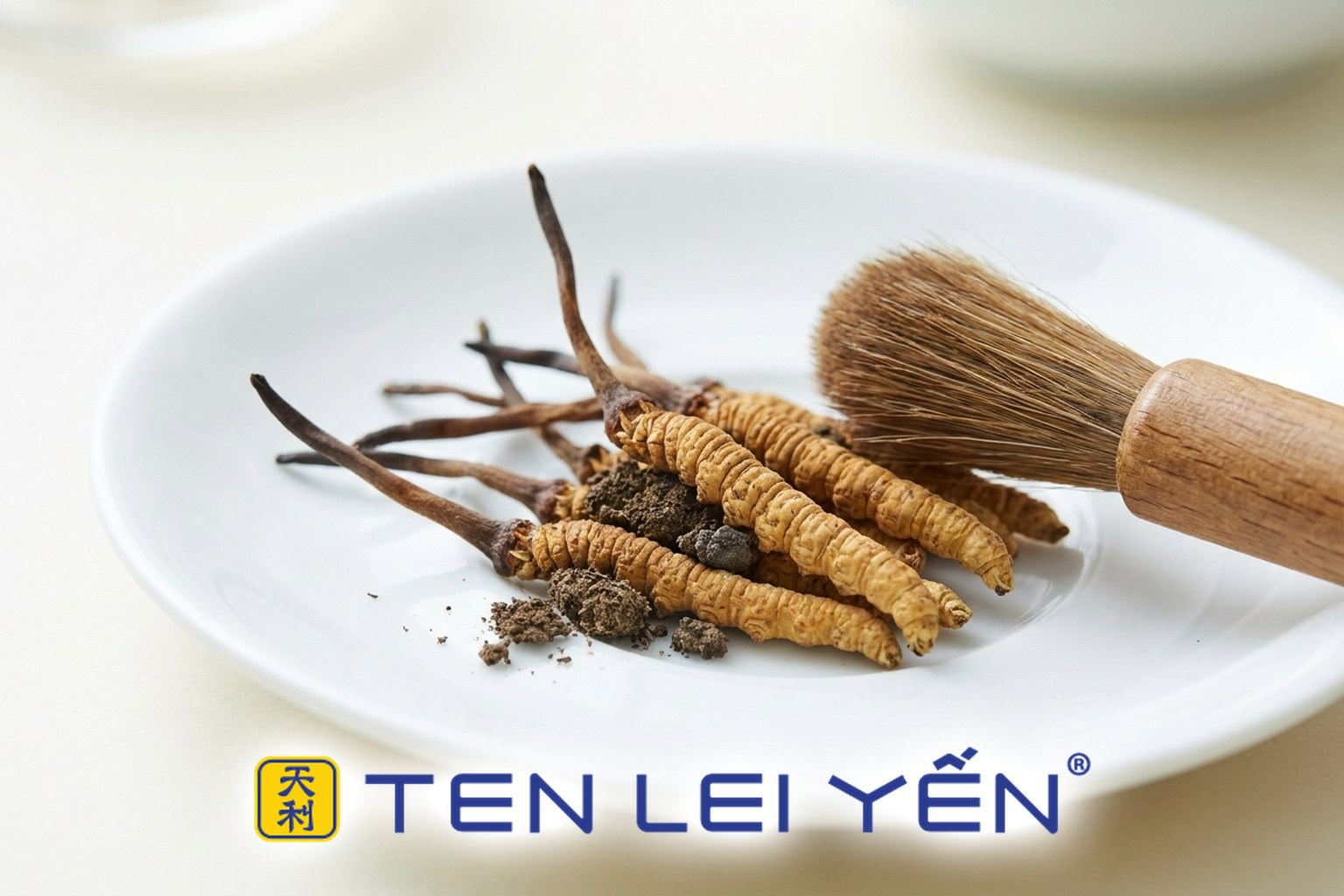
If your wild cordyceps arrives with a little earthy soil clinging to it, that is normal, and often a good sign. Wild cordyceps is dug by hand from plateau soil, and reputable sellers brush it only lightly rather than scrubbing or polishing it. A modest amount of natural soil is part of an unprocessed, genuine wild product; you simply clean it off at home before cooking.
Key takeaways
- A little soil on wild cordyceps is normal for a hand-dug, unprocessed product.
- Heavily polished or spotless pieces can hide damage or added weight.
- Judge quality by the body and stalk, not by how clean a piece looks.
- Rinse and lightly brush cordyceps just before cooking.

Why the soil is there
Wild cordyceps grows in the ground, with the caterpillar body buried in soil and only the stalk showing. When it is dug out by hand, fine earth naturally clings to the ridged body. Honest sellers remove the loose soil and leave the rest, because aggressive washing or brushing can break the delicate stalk and rub away the natural surface.
When "too clean" is a warning
Some pieces are scrubbed, polished, or even coated to look pristine, and that can be a way to hide broken stalks, cracks, or filler used to add weight. A little soil in the ridges is often more reassuring than a suspiciously flawless surface. Always look past the dirt to the actual piece: a plump, firm caterpillar body with an attached stalk. For what to look at, see our guide to reading a wild cordyceps piece.
What to check instead of cleanliness
Judge quality by the body and stalk, not by how spotless the piece looks: a full, firm, tan-golden body; a single dark stalk that is attached and not longer than the body; and few broken pieces. For more on grades, see how wild cordyceps is graded.
How to clean it before cooking
Cleaning is simple. Just before cooking, brush each piece gently with a soft brush to loosen surface soil, then rinse quickly under cool running water. Do not soak it for long or scrub hard. Then use it in a double-boiled soup or broth as usual. Browse our wild cordyceps selection for hand-sorted pieces.