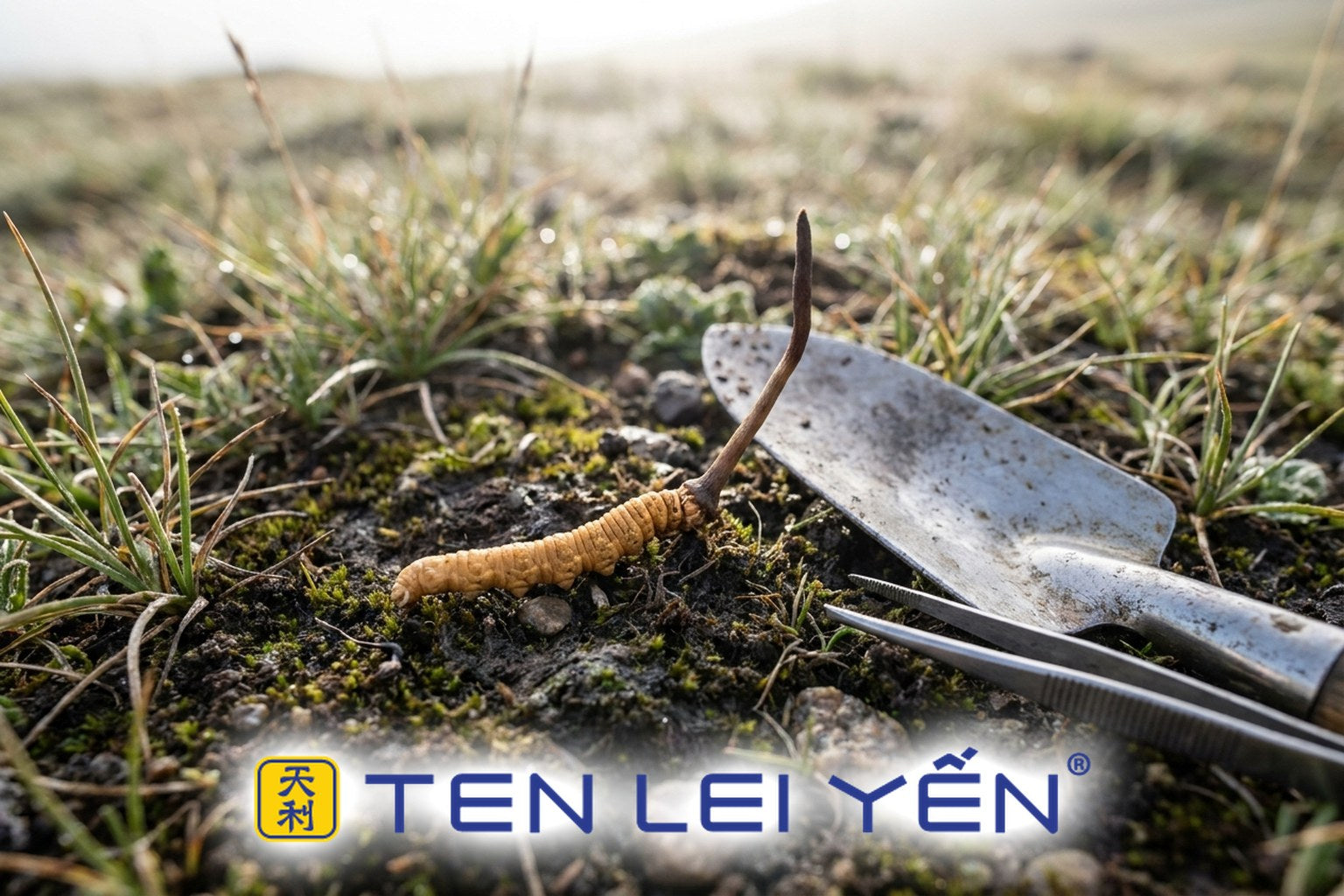
Wild cordyceps is harvested entirely by hand, one piece at a time, on the high grasslands of the Tibetan plateau. Each spring, families walk the slopes searching for a thin dark stalk poking above the soil, then dig carefully around it to lift the whole caterpillar-and-stalk out intact. There is no machinery and no shortcut, which is a major reason wild cordyceps stays rare and costly.
Key takeaways
- Wild cordyceps is gathered by hand, never farmed or machine-harvested.
- Harvest happens in spring, when the stalk emerges above the soil.
- Each piece is dug out carefully to keep the body and stalk connected.
- The slow, seasonal labor is a core reason for its high price.

Finding it on the plateau
Wild cordyceps grows at roughly 3,000 to 5,000 meters on the Tibetan plateau. In spring, the fungus sends up a slender dark stalk only a few centimeters tall from the head of the buried caterpillar. Spotting it means walking slowly, often on hands and knees, scanning the short alpine grass for that thin stalk, patient and tiring work at high altitude.
Digging it out by hand
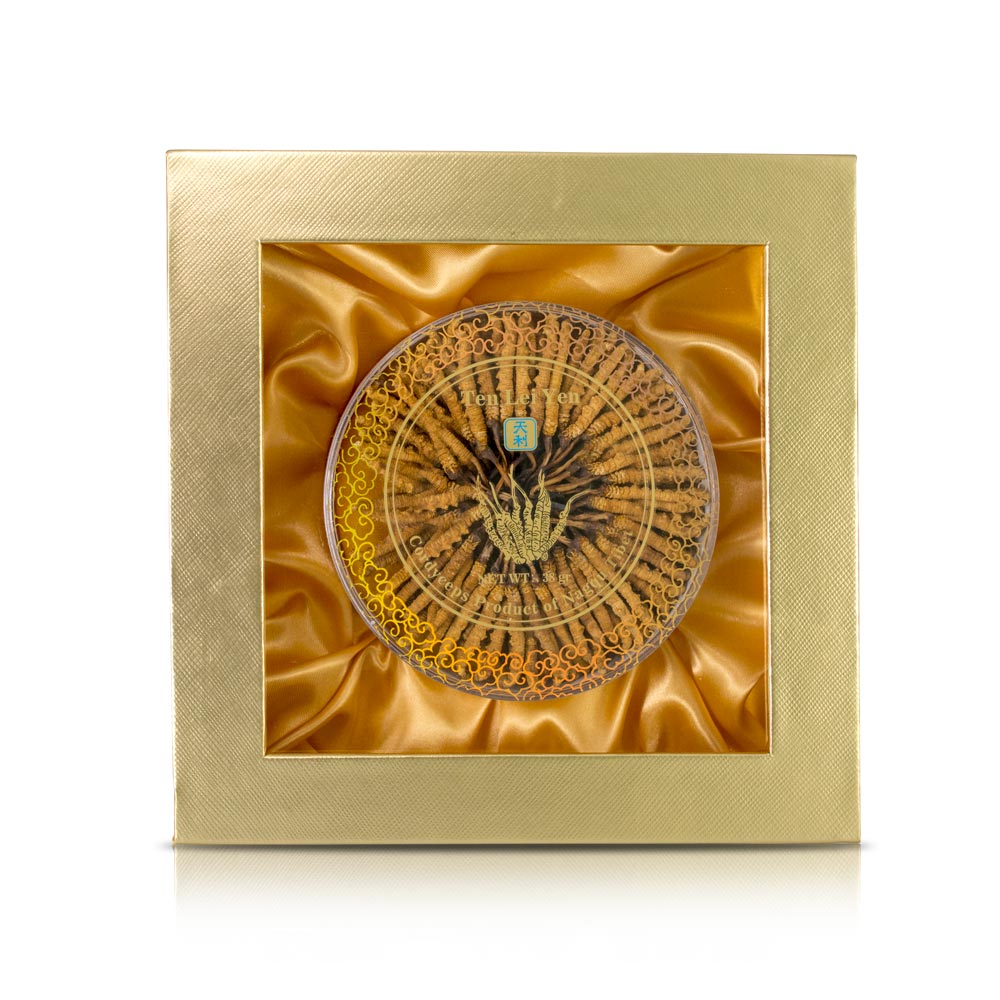
Once a stalk is found, the harvester loosens the soil around it with a small hand tool and lifts the whole specimen out gently. The goal is to keep the tan-golden caterpillar body and the darker stalk attached and unbroken, because whole, intact pieces are graded higher. Rushing or pulling snaps the stalk and lowers the value. For what those parts are, see our guide to reading a wild cordyceps piece.
Brushing and sorting
Fresh from the ground, each piece carries soil on the body. Harvesters brush off loose earth by hand and let the pieces dry, then sort them by size and condition. Much of the natural soil is left lightly in place rather than scrubbed away, which is normal for an unprocessed wild product.
Why hand-harvesting matters for buyers
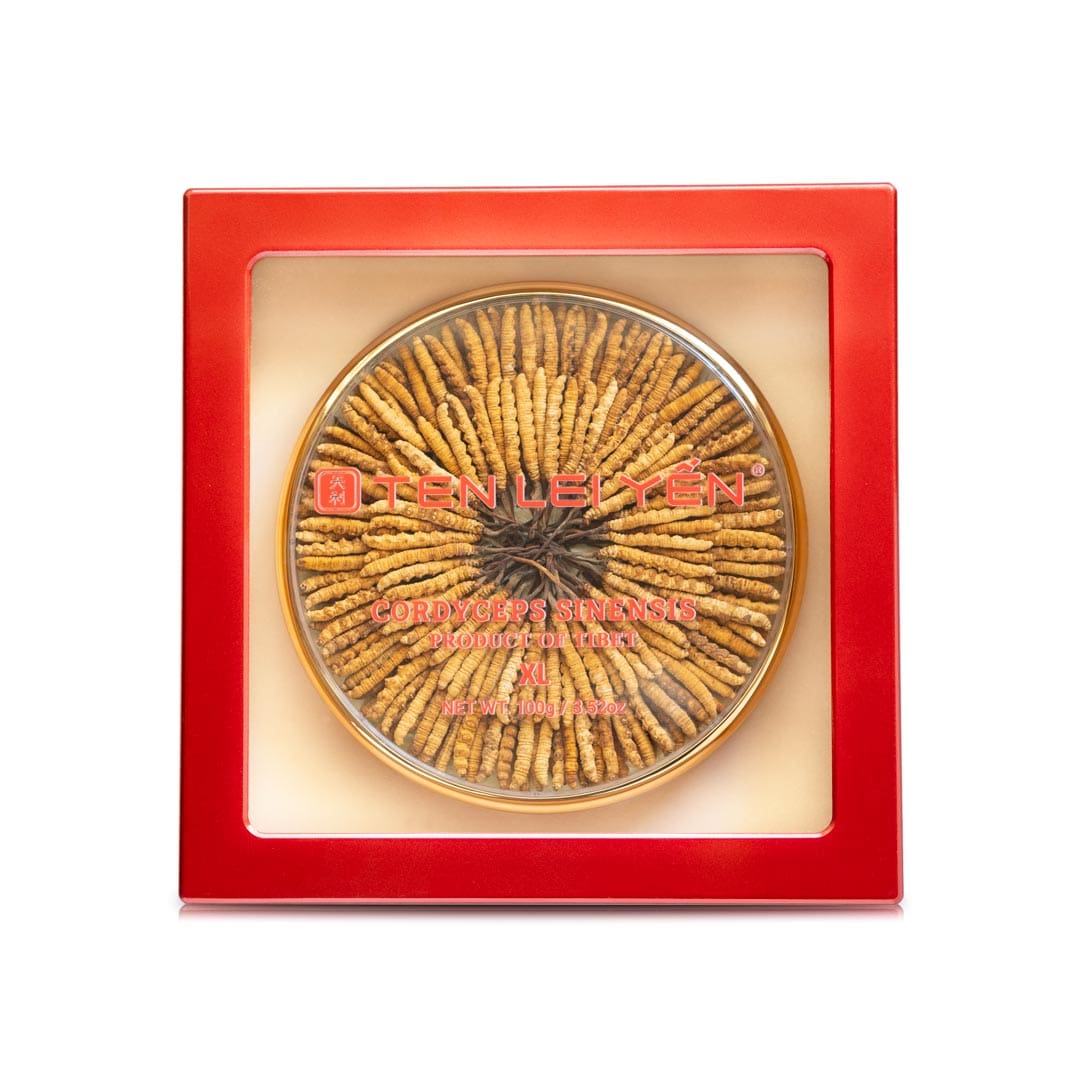
Because every piece is found and dug individually during a short season, supply is naturally limited and labor-intensive. That is why wild cordyceps is sold by the gram and priced well above cultivated types. Explore our wild cordyceps selection to see graded, sorted pieces.
Frequently asked questions
Is wild cordyceps farmed?
No. True wild cordyceps is hand-gathered on the plateau. Only some other cordyceps types are cultivated.
When is it harvested?
Mainly in spring, once the stalk emerges above the soil after the snow recedes.
Why is hand-harvesting so slow?
Each piece must be spotted and dug individually at high altitude, without any machinery.