By Alina @ TLY
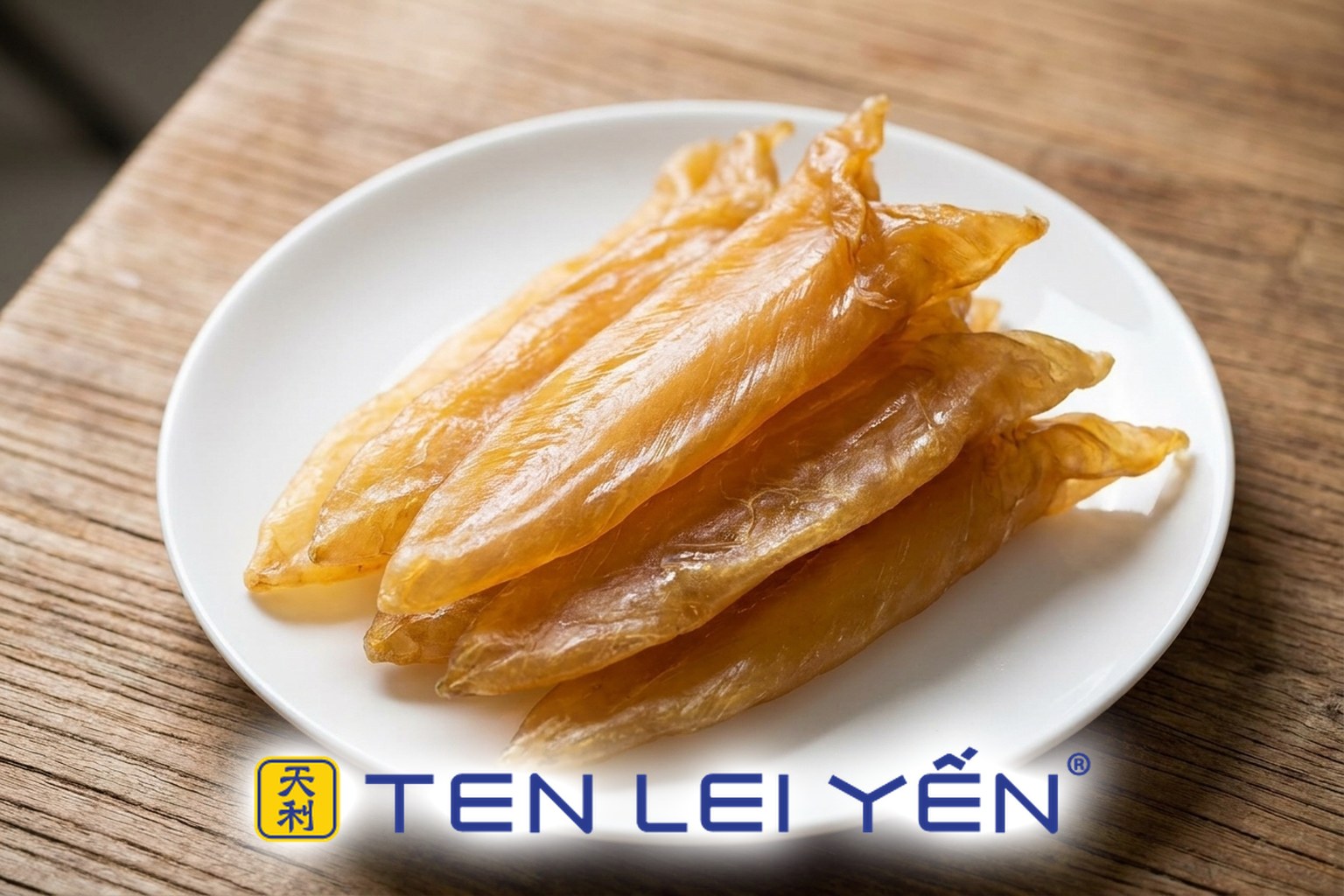
Fish maw is the dried swim bladder of certain large fish — the internal, gas-filled organ that helps a fish control its buoyancy in the water. Once it is removed, cleaned, and dried, that organ becomes a pale amber sheet or blade with a smooth, silky lengthwise grain, turning soft and gelatinous once soaked and cooked. It is not a fin, a stomach lining, or a piece of skin; it is specifically the swim bladder.
Key Takeaways
- Fish maw is the dried swim bladder of large fish, most commonly from the croaker (drum) family.
- The bladder is removed, cleaned of tissue, shaped, and then dried until firm, lightweight, and leathery, with deep lengthwise wrinkles.
- On its own, dried fish maw has very little flavor — its appeal is texture, not taste.
- Fish maw is sold in different shapes (tube and flat sheet) depending on how it was shaped before drying; that comparison is covered separately.
- Dried fish maw needs to be soaked, and often deep-fried or dry-toasted to puff it up, before it becomes tender enough to cook with.
What Part of the Fish Is Fish Maw?
Every fish that has one uses its swim bladder the same way: as an internal gas-filled sac that lets the fish adjust its depth in the water without constantly swimming up or down. The organ sits inside the body cavity, above the digestive tract and below the spine. When a fish is processed, this bladder is removed intact, which is why the dried product often keeps a rounded, pouch-like or tube-like shape rather than looking flat like a fillet.
Which Fish Species Are Used?
Fish maw sold for cooking generally comes from large fish in the croaker, or drum, family (Sciaenidae), since these species tend to have bigger, thicker swim bladders that hold their shape well once dried. Other large fish are used in some regions as well. A few historically prized croaker species are now rare or protected, so most fish maw sold commercially today comes from more abundant croaker and other large fish. A transparent seller will describe the species and origin on the packaging rather than leaving it vague.
How Is Fish Maw Made? From Fish to Dried Sheet
1. Extraction
The swim bladder is carefully removed from the fish so the pouch stays intact rather than tearing.
2. Cleaning
The raw bladder is trimmed of any attached tissue, membranes, or residue, then rinsed thoroughly.
3. Shaping
Depending on the producer, the cleaned bladder may be flattened into a sheet, rolled into a tube, or left closer to its natural pouch shape before drying.
4. Drying
The shaped bladder is sun-dried or dried with controlled heat until fully dehydrated. This step can take several days, and it is what turns the soft, translucent raw bladder into the firm, golden-amber, silky-grained product sold as dried fish maw.

What Does Fish Maw Taste and Feel Like?
Dried, raw fish maw is nearly odorless and close to flavorless. Its value in cooking comes almost entirely from texture: once properly soaked and cooked, it turns soft, springy, and slightly gelatinous, and it absorbs the flavor of whatever broth or sauce it is cooked in. This is why fish maw is almost always simmered, braised, or thickened into soup rather than eaten plain.
Fish Maw at a Glance
| Attribute | Detail |
|---|---|
| Part of the fish | Swim bladder (gas-filled buoyancy organ) |
| Common source | Croaker/drum family fish, among other large fish |
| Raw appearance | Pale, soft, translucent |
| Dried appearance | Golden-amber, firm, smooth with a fine lengthwise grain once processed |
| Flavor | Very mild to neutral |
| Texture after cooking | Soft, springy, gelatinous |
| Common shapes | Tube and flat sheet (see our tube vs. flat guide) |
Frequently Asked Questions
What is the difference between fish maw and fish skin?
Fish skin is the outer covering of the fish. Fish maw is an entirely different, internal organ — the swim bladder — with a different texture once dried and cooked.
Do all fish have a usable maw?
Most bony fish have a swim bladder, but only certain larger species produce a bladder thick and large enough to be worth harvesting, cleaning, and drying for the market.
To see how shape affects cooking use, read our guide on tube vs. flat fish maw. For help judging quality once you are ready to buy, see how to choose good fish maw. Browse fish maw and other options in our seafood collection, including fish maw tube, 213 grams and fish maw flat, 213 grams.