By Alina @ TLY
Fish maw is the dried swim bladder of several different fish, and the species behind a given piece is the single biggest reason two pieces of fish maw can look, cook, and cost so differently. Croaker, eel, sturgeon-family fish, catfish, and ling are the species most commonly dried into the fish maw sold today.
Key Takeaways
- Fish maw comes from several species, not one — croaker, eel, sturgeon-family fish, catfish, and ling are the most common
- Species size and swim-bladder shape decide whether a dried piece ends up thick or thin
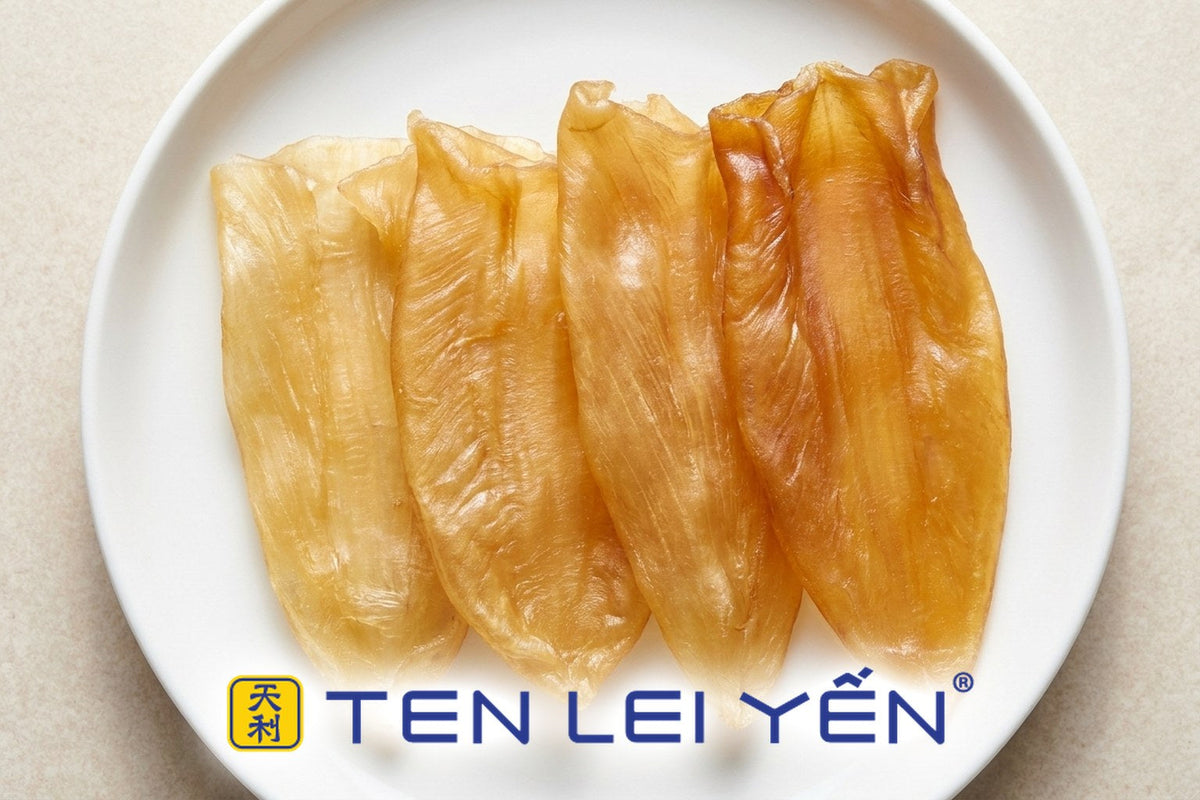
- Color ranges from pale straw to deep amber depending on the species and how it was dried
- Thicker, larger-species maw needs a longer soak and simmer than thin, smaller-species maw
- Price tracks species rarity and size — large wild croaker maw sits at the top, smaller farmed species lower down
The Species Behind Fish Maw
Croaker
Croaker (family Sciaenidae) produce some of the most sought-after fish maw. Large wild croaker yield thick, substantial pieces that hold their shape through long double-boiling, and their scarcity keeps prices high.
Eel
Eel maw tends to be slimmer and more delicate, with a lighter color. It softens quickly once soaked, which makes it a common choice for lighter, faster-cooking preparations.
Sturgeon-family fish
Farmed sturgeon-family fish have become a significant source of fish maw in recent years, yielding broad, substantial pieces at a more accessible price point than wild croaker.
Catfish
Catfish maw is widely farmed and generally more affordable. It is thinner than croaker maw and cooks relatively quickly once soaked.
Ling
Ling, often sourced from cold Southern Hemisphere waters, produces firm, well-regarded maw that holds its texture well through braising and soup cookery.

How Species Shapes Thickness, Color, Cook Time, and Price
A larger fish produces a larger swim bladder, and a larger swim bladder dries into a thicker piece of maw. Thickness is the main variable driving both cook time and price: a thick piece needs a longer soak and a longer simmer to soften all the way through, while a thin piece is ready sooner. Color varies by species and by how the maw was dried and aged, ranging from pale straw to deep amber. Because thicker, larger-species maw takes longer to produce and process, and because some species are scarcer than others, price generally rises with both size and species rarity.
Tube-Cut vs Flat-Cut
Beyond species, fish maw is also sold by how it is cut and shaped. Tube-cut pieces keep a rounded, cylindrical form that holds together well through long double-boiled soups, while flat-cut pieces are pressed into broader, thinner sheets that soften faster and take on braising sauce readily. Choosing between the two is mostly a matter of the dish and the cooking method rather than one being better than the other.

For more on how species and size drive price, see what makes one piece of fish maw cost more than another, and for prep basics see how to soak fish maw properly. Shop tube-cut fish maw, flat-cut fish maw, or browse the full seafood collection.