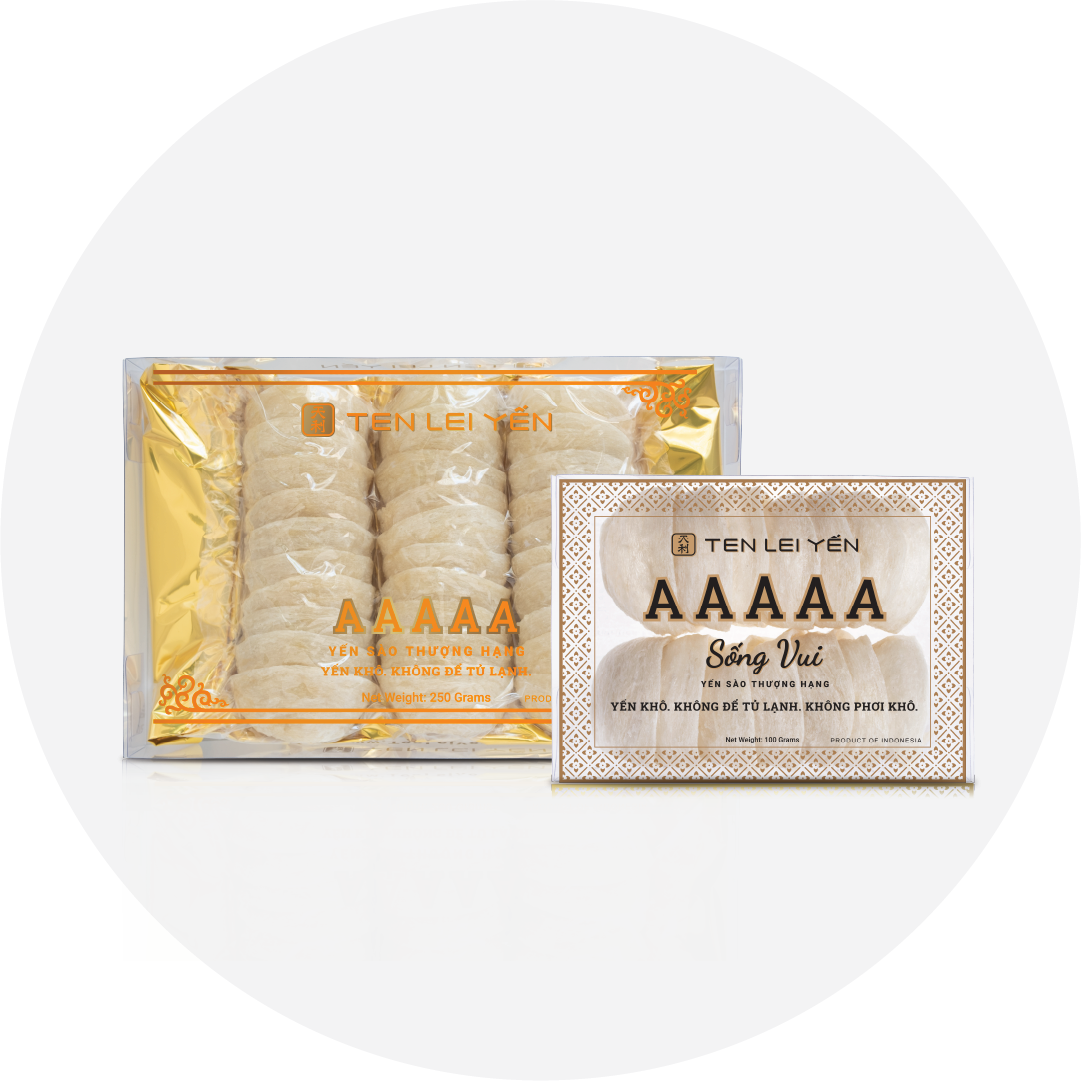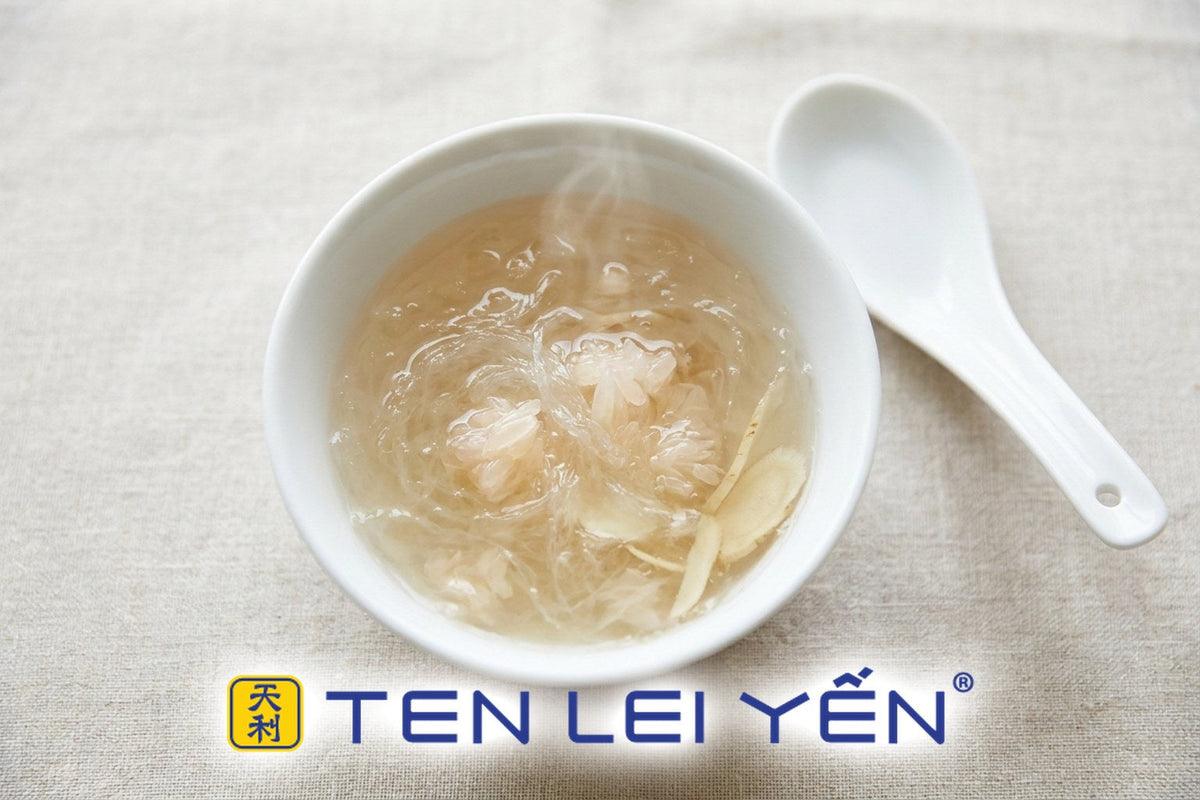
A warm bird's nest with pomelo and ginseng for cool mornings is a double-boiled sweet nest bowl served hot, not chilled: soaked white bird's nest and a few thin ginseng slices double-boil for about 40 minutes, and fresh pomelo segments, fully cleaned of their bitter white pith, are folded in at the very end so they warm through without cooking down. It's built for the shift into autumn, when a cold fruit-and-nest bowl feels like the wrong season.
- Soak the dried nest 4–6 hours or overnight; it expands 3–4 times its dry weight during double-boiling.
- Double-boil the nest with ginseng for about 40 minutes, then add the pomelo only in the last minute so it warms through rather than simmers.
- Removing every trace of pith and inner membrane from each pomelo segment is what keeps the bowl from turning bitter.
- A standard serving is 3–5 g dry nest; a whole-nest bowl (one whole nest) covers 2–4 standard servings.
- This bowl is served warm, not chilled — an autumn morning recipe, not a summer dessert.

Regular price
$800
Sale price
$725
Why Warm, Not Chilled, for Autumn
Ten Lei Yen has a long back-catalogue of chilled fruit-and-nest bowls built for hot weather, but this one is not that. As mornings turn cooler, a small warm bowl of nest and ginseng, finished with pomelo, fits the season better than a bowl over ice. The pomelo is folded in while the nest is still hot from the double boil, then served right away.
Ingredients for One Whole-Nest Bowl
1 whole dried white bird's nest (5A grade, about 8–9 g dry), or 6–10 g dry nest as two standard servings; ½ pomelo, segments fully peeled of pith and membrane, torn into small pieces (about 150 g flesh); 4–5 thin slices ginseng root (about 4 g); 500 ml water; monk fruit sweetener, to taste (optional — no sugar is added).
Keeping the Pomelo From Turning Bitter
Pomelo's bitterness comes almost entirely from the white pith and the thin membrane around each segment, not from the fruit itself. Peel the pomelo and separate it into segments, then score along one side of each segment's membrane and peel it back, pulling the flesh out in small clusters — removing the membrane completely is the single most important step. Add the pomelo only after the nest has finished double-boiling, off the heat, and serve immediately rather than letting the finished bowl sit warm for a long stretch; prolonged heat draws out bitterness from any residual pith, even in trace amounts.

Method: Soak, Double-Boil, Finish With Pomelo
Soak the nest 4–6 hours, or overnight, in cool water, then drain and pick it clean of any small feathers or specks. Place the nest, ginseng slices, and water in a heatproof white porcelain bowl, cover, and set it inside a larger pot with 2–3 cm of gently simmering water. Double-boil for about 40 minutes, until the nest strands turn translucent. Remove from the heat, fold in the cleaned pomelo pieces, and let the bowl sit covered for one minute to warm through — do not return it to the heat. Sweeten to taste with monk fruit sweetener if using, and serve immediately in warmed bowls.
Serving on a Cool Morning
This bowl is sized for one or two people before or alongside a light breakfast, when the room and the morning air have both turned a little cooler. Warm porcelain bowls hold the heat longer than a cold glass would, which matters here — the whole point is a bowl that stays comfortably warm through the first few spoonfuls.
Frequently Asked Questions
Can I use ginger instead of ginseng?
No. This is a sweet nest preparation, and ginseng is the aromatic used in every sweet bird's-nest recipe at Ten Lei Yen; ginger is reserved for savoury dishes.
What's the difference between a standard serving and a whole-nest bowl?
A standard serving is 3–5 g of dry nest, sized for a daily dessert course. A whole-nest bowl uses one full nest — about 8–9 g dry for a 5A piece — and is generous enough to cover 2–4 standard servings.
Related reading: Warm Bird's Nest with Fuyu Persimmon, Double-Boiled, A Seasonal Calendar for Bird's Nest, Bird's Nest with Lotus Seeds and Lily Bulb, Double-Boiled, and Roasted Chestnut and Bird's Nest, Double-Boiled with Ginseng. Shop 5A bird's nest.
Alina @ TLY