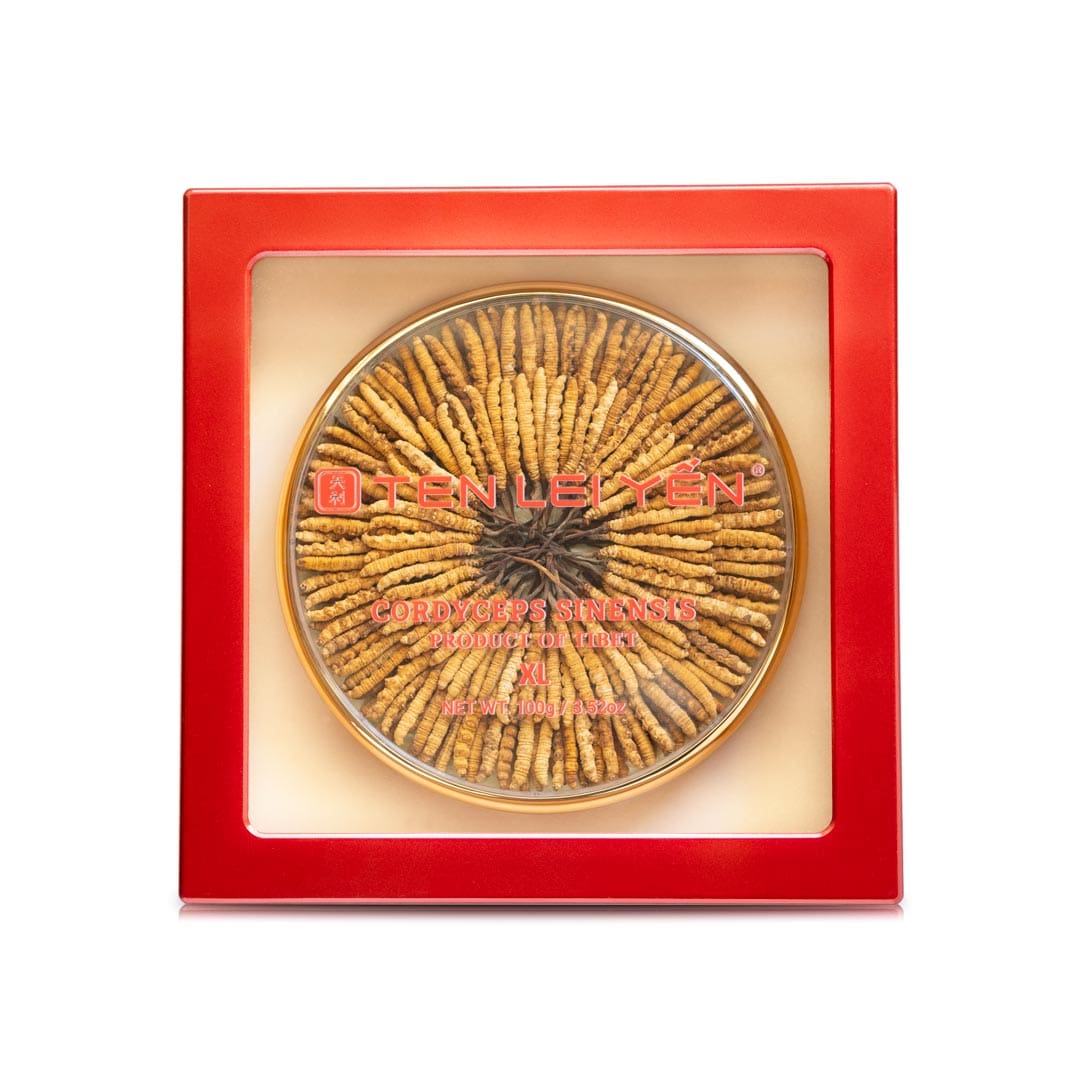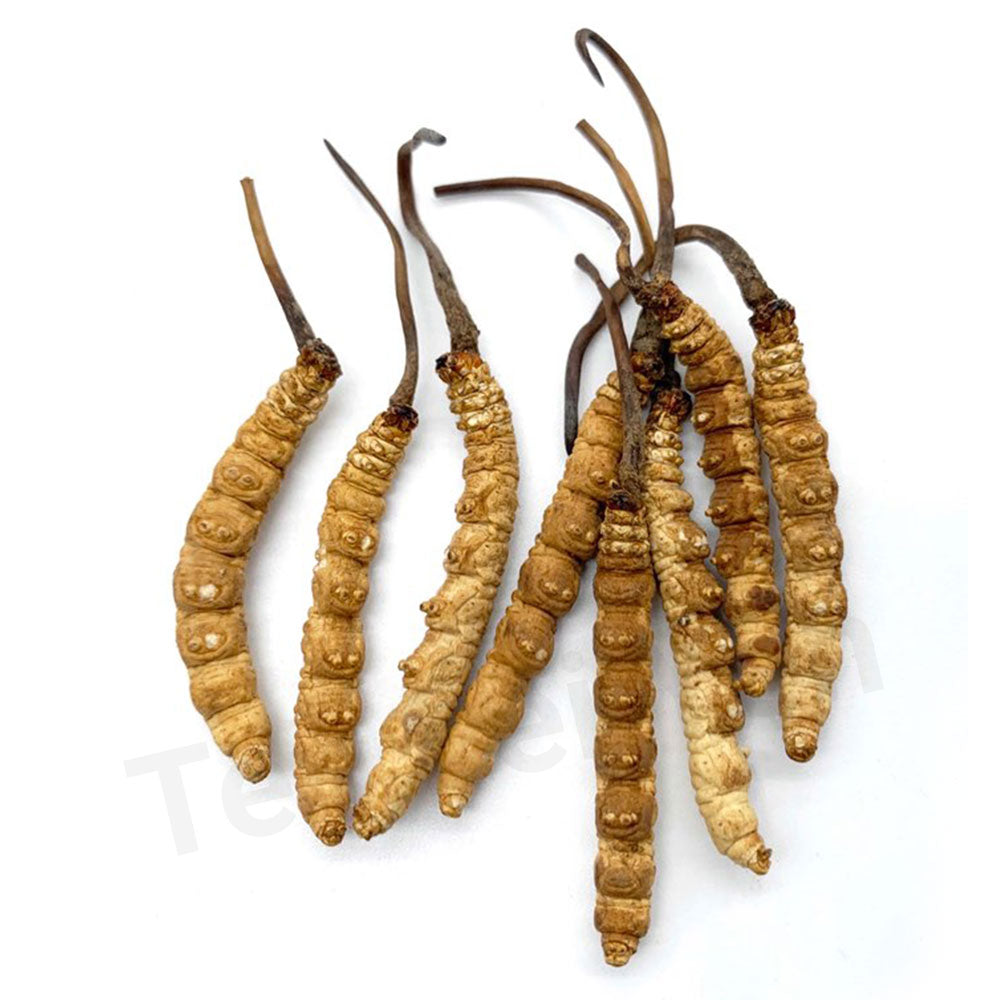
A single piece of wild cordyceps has two joined parts: a caterpillar-shaped body and a slender dark stalk that grows from its head. Learning to see these two parts, and how they relate, is the easiest way to read a piece. Wild cordyceps (Cordyceps sinensis, 冬虫夏草) forms in nature when a fungus grows through a moth larva underground; the body you see is the former caterpillar, and the stalk is the fungal part that grows up out of it.
Key takeaways
- Every wild cordyceps piece is a caterpillar-shaped body plus a single dark stalk.
- The body is the former moth larva, tan to golden brown, with visible segments and rows of tiny legs.
- The stalk, the fungal part, is darker, slender, and grows from the head end.
- Buyers like a plump body and a stalk that is not longer than the body.
The caterpillar body
The larger, ringed part is the body of the moth larva that the fungus grew through. In a good dried piece it stays intact and keeps its shape, usually tan to golden brown and about 3 to 4 cm long. Look closely and you can see the segmented rings around the body and rows of tiny legs; usually about eight pairs are visible on a well-formed piece. A plump, firm body with clear segments points to a mature, well-preserved specimen.
The stalk
Growing from the head end is a single slender stalk, the fungal fruiting body. It is darker than the body, brown to nearly black when dried, thinner, and often longer than the body itself, sometimes 4 to 10 cm. The stalk is what gives cordyceps its “winter worm, summer grass” description: the worm-like body below, the grass-like stalk above. Ideally it stays attached and whole rather than snapped off.

How the two parts signal quality
Buyers read the two parts together. A plump, intact body with clear segments is valued; a thin or shriveled body is not. The stalk matters too: pieces where the stalk is short and neat, no longer than the body, are graded higher, because a very long stalk means proportionally less of the prized body. Whole pieces with both parts cleanly attached are worth more than fragments. For how these traits set the grade and price, see how wild cordyceps is graded.
How to tell it apart from cordyceps militaris
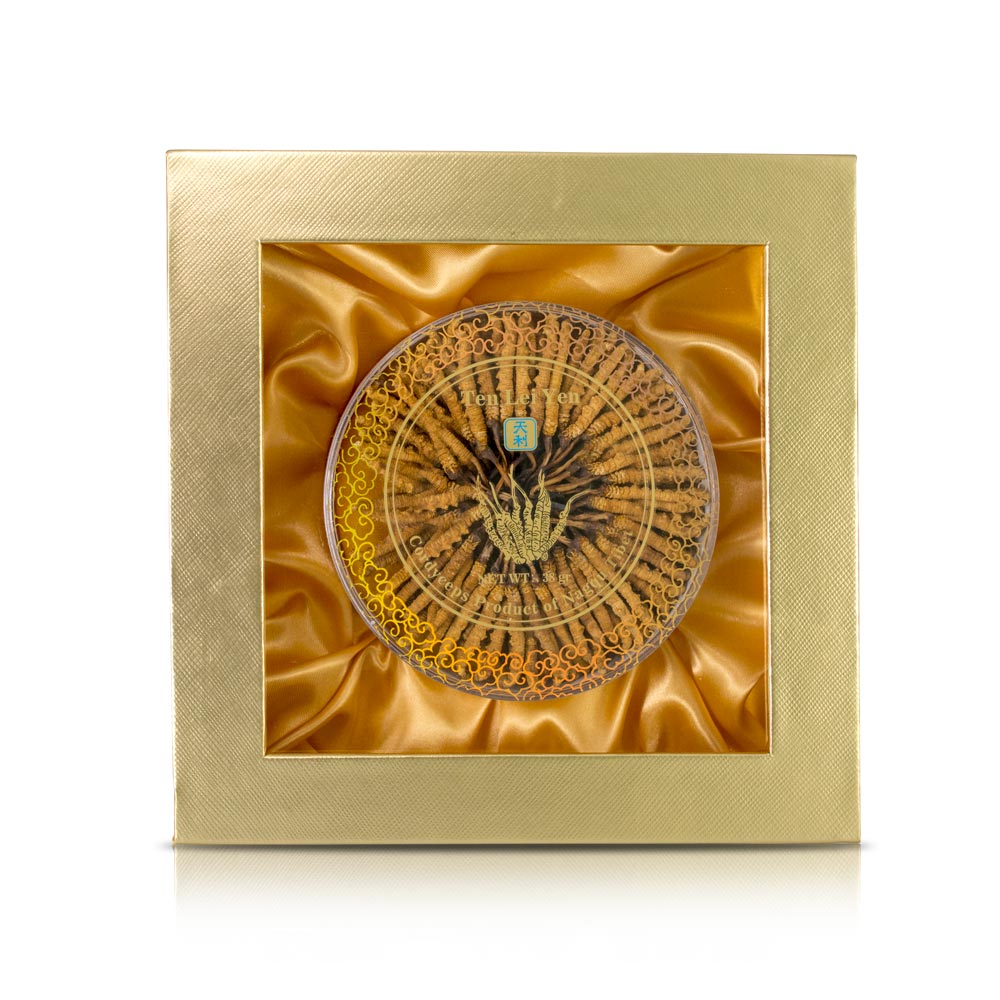
Wild Cordyceps sinensis always has that caterpillar body plus a stalk. Cordyceps militaris (虫草花), the cultivated “cordyceps flower,” looks completely different: it is a cluster of slender orange-gold clubs with no caterpillar at all, grown on a grain substrate. If a “cordyceps” has no caterpillar body, it is not wild sinensis. Ten Lei Yen offers whole wild cordyceps from Nagqu, Tibet, alongside cultivated cordyceps.
By Alina @ TLY