Serving Wild Cordyceps to Guests: Portioning and Presentation
By Alina @ TLY
Here's the short answer from the Ten Lei Yen team: when hosting with wild cordyceps, most hosts portion three to five whole pieces per guest into a small individual bowl, rather than passing around one large shared plate. It's typically presented near the soup or broth course, with the caterpillar body and single stalk left whole and visible.
In practice, that means each guest gets an individual portion of whole pieces — typically 3–5 per person — instead of a communal plate. Small white porcelain bowls or shallow dishes work better than one big platter, since intactness is easier to see up close. The cordyceps usually shows up near the soup or broth course, either simmered into a shared pot or portioned alongside it, and the pieces stay whole, with the caterpillar body and single stalk visible rather than broken or crumbled. Most hosts portion from a central serving dish into individual bowls tableside instead of pre-plating everything in the kitchen.
For a family dinner, 3–4 whole pieces per person is typical. At a more formal gathering, it's usually 4–6 whole pieces per person, plated individually.
If the cordyceps goes into a shared communal pot, it isn't pre-portioned at all; it's divided evenly tableside.
What to Serve It In
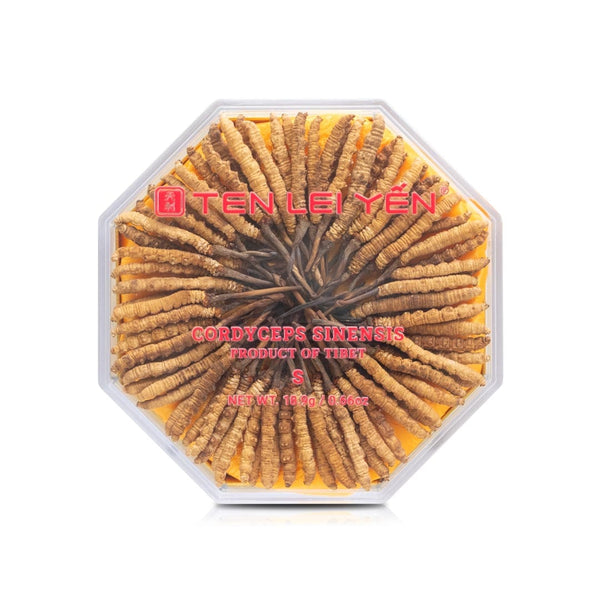
Small individual bowls or shallow dishes are the standard choice, rather than one large communal platter. At this scale, guests can see each piece clearly — the segmented body and its single dark stalk — which is part of the appeal of serving it whole rather than chopped or ground.
When in the Meal It Appears
Wild cordyceps most often appears near the soup or broth course, either simmered directly into a shared pot that's then ladled out, or portioned onto the table as a small side dish alongside that course. It's rarely the first or the last thing served.
Presenting Whole Pieces
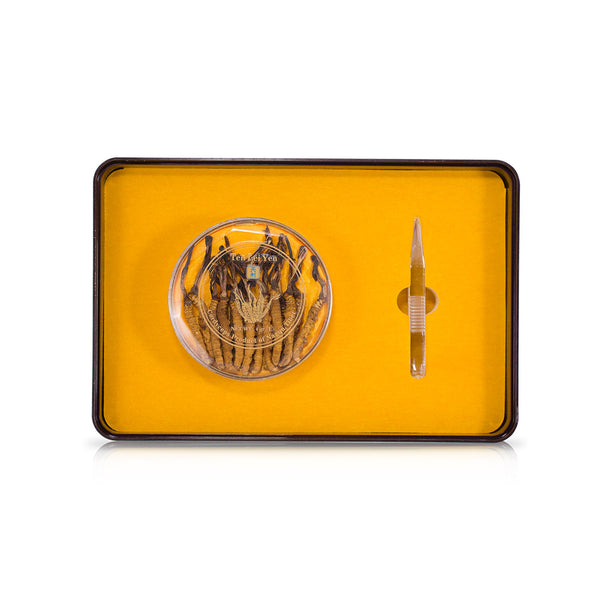
Serving pieces whole, rather than broken or crumbled, is the standard presentation for guests. A host will often use a small pair of tongs or chopsticks to move pieces from a central serving dish onto each guest's individual bowl, keeping the shape of each piece intact.
Tableside vs Pre-Plated
Portioning at the table, in front of guests, is common for wild cordyceps, since it lets the host present the ingredient itself before it disappears into a bowl of broth. Pre-plating in the kitchen is simpler for larger groups, but loses that moment of presentation.



 or