By Alina @ TLY
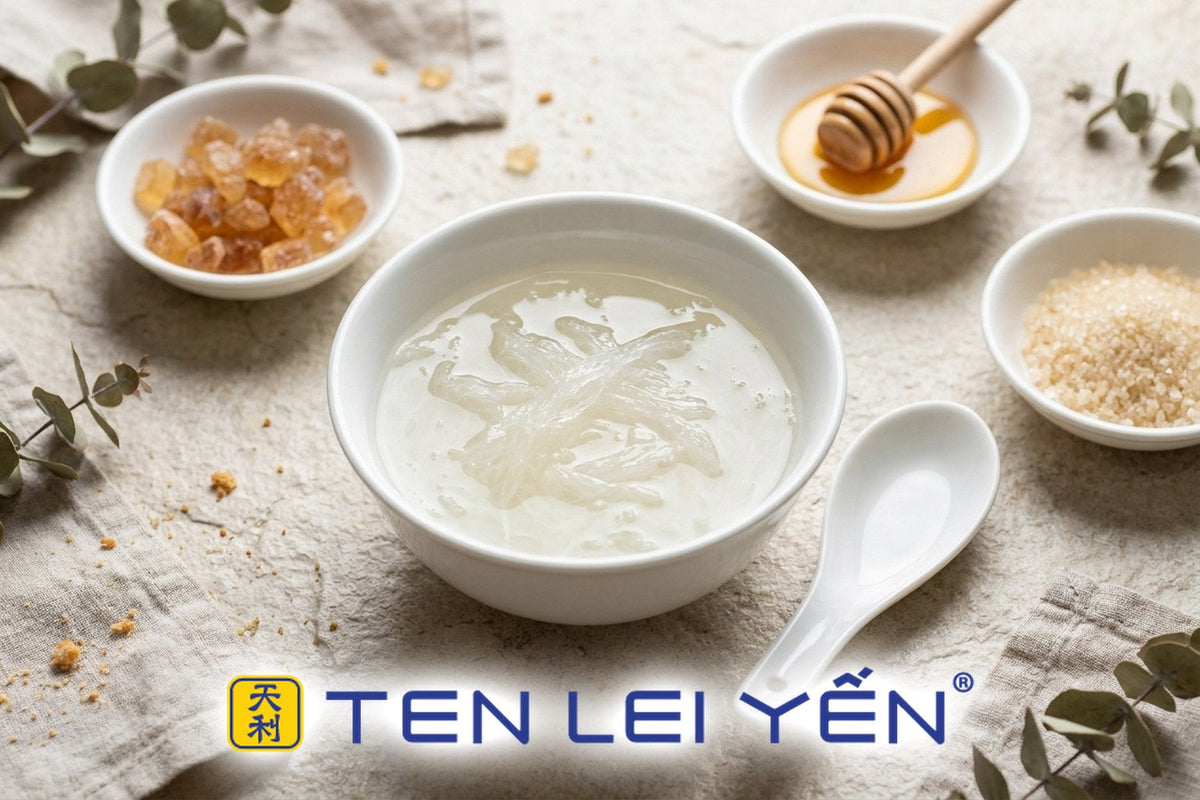
Rock sugar, honey, and monk fruit each change a bowl of bird's nest differently: rock sugar gives a clean, neutral sweetness that stays out of the way, honey adds its own distinct floral note, monk fruit gives sweetness with almost no added flavor of its own, and leaving it unsweetened lets the nest's own delicate taste stand alone. Which one to use is really a question of taste, not a rule.
Key Takeaways
- Rock sugar is the classic choice — add it in the last 5-10 minutes of double-boiling so it dissolves fully without a long cook.
- Honey is best stirred in after the nest is off the heat, once it has cooled slightly, since prolonged heat changes its flavor.
- Monk fruit sweetener can be added toward the end of cooking or after, and carries sweetness with very little flavor of its own.
- Serving bird's nest unsweetened is common, especially with higher grades, so the nest's natural taste comes through on its own.
- However you sweeten it, taste and adjust gradually — a delicate bowl of nest is easy to over-sweeten.

Rock Sugar: The Classic Choice

Rock sugar (yellow or white) is the traditional sweetener for double-boiled bird's nest because it dissolves cleanly and its flavor is neutral rather than floral or caramel-forward, so it doesn't compete with the nest's own taste. Add a few small pieces during the last 5-10 minutes of the double-boil, then cover briefly so the sugar has time to dissolve fully into the liquid before serving. Start with less than you think you need — rock sugar is easy to add more of, harder to take back out.
Honey: Add It After the Heat
Honey brings its own floral character, but it doesn't hold up well to sustained heat — a long double-boil can flatten or change its flavor. The better approach is to double-boil the nest unsweetened, let it cool for a few minutes off the heat, and then stir the honey in once the bowl is warm rather than hot. This keeps honey's flavor intact and lets you taste and adjust as you go.
Monk Fruit: Sweetness With a Light Touch
Monk fruit sweetener carries sweetness with very little flavor of its own, which makes it a good option when you want the nest's taste to lead. It can go in during the last few minutes of double-boiling or be stirred in afterward, similar to rock sugar — start with a small amount, taste, and add more only if needed, since a little goes a long way. Several of our seasonal recipes, like this creamy bird's nest and soy milk bowl, are written to be sweetened this way.
Serving It Unsweetened
Skipping a sweetener entirely is a common preference, particularly with higher grades where the nest's own delicate, faintly savory-sweet taste is the point. An unsweetened bowl also gives you more room to pair the nest with other autumn ingredients — persimmon, pear, or a light broth — without competing flavors. If you're unsure, start unsweetened and add sugar, honey, or monk fruit gradually until it tastes right to you.
A Few Practical Notes
Whichever sweetener you choose, add it gradually and taste as you go rather than measuring by habit — bowls, grades, and personal preference all vary. As the evenings cool this time of year, a warm double-boiled bowl with a light hand on the sweetener is an easy way to close out a meal. For the full double-boiling method, see our guide on why bird's nest is double-boiled, and browse more seasonal ideas in our low-sugar bird's nest with monk fruit recipe.