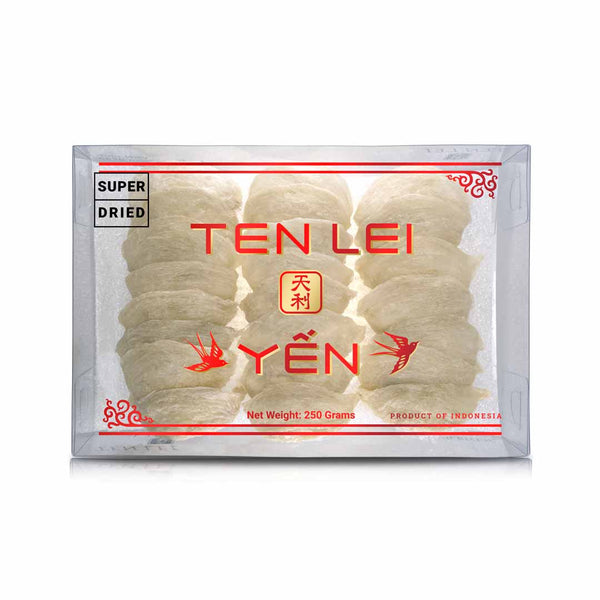
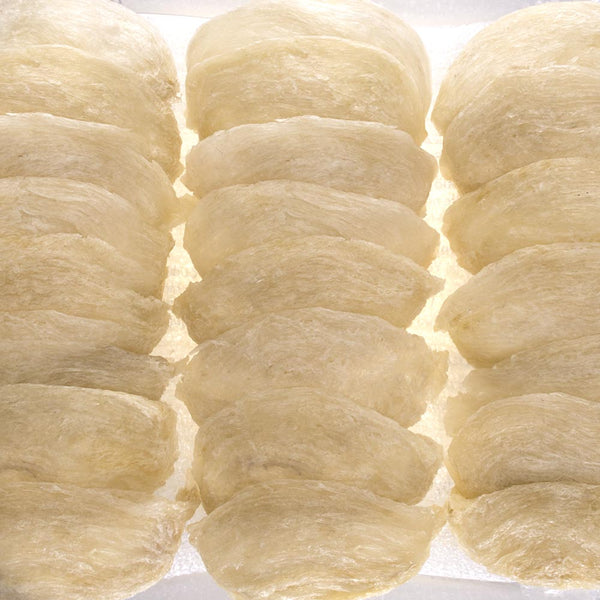
Bird's nest is double-boiled because the method uses gentle, indirect heat that never lets the nest touch a scorching pot. The covered vessel sits inside a larger pot of simmering water, so the bird's nest cooks in a soft, even warmth. This protects the fine translucent strands, keeps the texture silky rather than mushy, and lets the delicate flavor come through without any harsh scorching. In Cantonese kitchens this technique is called 隔水炖; in Vietnamese, chưng cách thủy. It's the traditional way to prepare bird's nest, and it's the method we use ourselves at Ten Lei Yen.
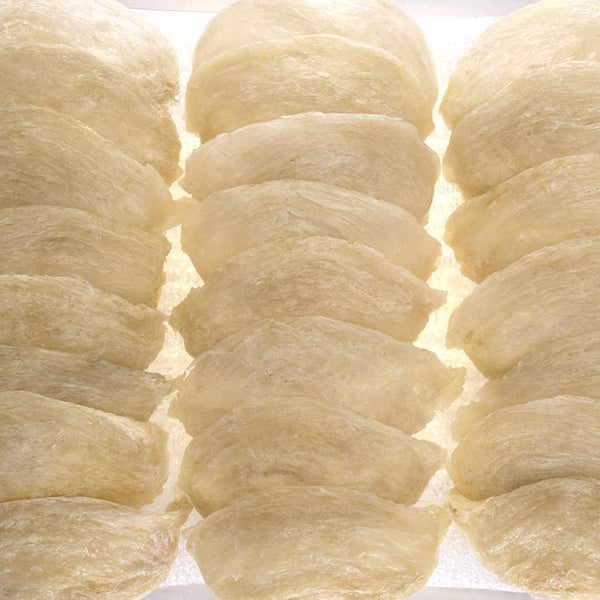
Put simply, double-boiling means setting the bird's nest in a covered bowl inside a pot of simmering water, so the heat stays gentle and indirect. That soft, even warmth protects the fine strands and keeps the texture tender instead of overcooked, which is where it parts ways with direct boiling: there, high heat hits the nest straight on and can break the delicate strands down. Our own routine is short. We soak the dry nest, rinse it, then double-boil it with water and rock sugar for about 40 minutes. One dry nest is roughly 8 to 14 grams — one whole-nest bowl, about 2 to 4 standard servings of 3-5 g each — and soaked nest expands to about 3 to 4 times its dry size.
What double-boiling actually is
Double-boiling, or 隔水炖 / chưng cách thủy, is a two-vessel setup. You put the bird's nest, water, and any flavoring into a small covered bowl. That bowl then rests inside a larger pot that holds simmering water. The bird's nest never sits directly over the flame. Instead, the surrounding hot water passes its warmth through the walls of the inner bowl. The result is a controlled, capped temperature that hovers gently rather than spiking.
Why the gentle indirect heat suits bird's nest
Cooked bird's nest is made of fine, wispy, translucent strands. Those strands are delicate. When heat is too aggressive, they can fray, dissolve, or turn slack. Double-boiling avoids that in a few ways. The heat is even, so no single spot gets hotter than the rest. There is no direct contact with a hot metal base, so nothing scorches or sticks. And because water tops out at a simmer, the temperature stays controlled from start to finish. The strands hold their shape, the syrup stays clear, and the texture ends up soft yet distinct.

How it differs from direct boiling
With direct boiling, the nest goes straight into a pot on the burner and the full force of the heat hits it. Water churns, the base of the pot runs hot, and the fine strands take the brunt of it. That rolling, high heat is fine for tougher ingredients, but for something as delicate as bird's nest it can turn the strands soft and shapeless and cloud the syrup. Double-boiling trades that intensity for patience, and the texture is the payoff.
Side by side, the difference is easy to see. Direct boiling uses high, direct, rolling heat, and the strands get agitated and can turn soft and shapeless. Double-boiling uses gentle, indirect, steady heat, and the strands stay whole and silky.
Our method, step by step
Here's how we prepare it. First, soak the dry nest in clean cool water for 4 to 6 hours, or overnight, until it's fully expanded; soaked nest grows to about 3 to 4 times its dry size. Next, rinse the softened nest gently and lift away anything you don't want.
Then double-boil the nest with water and rock sugar in a covered bowl set inside a pot of simmering water for about 40 minutes. Rock sugar is the classic pairing, a little ginseng is a traditional addition if you want it, and red dates are popular too — it really comes down to taste. Enjoy it warm, or chill it and serve it cold.
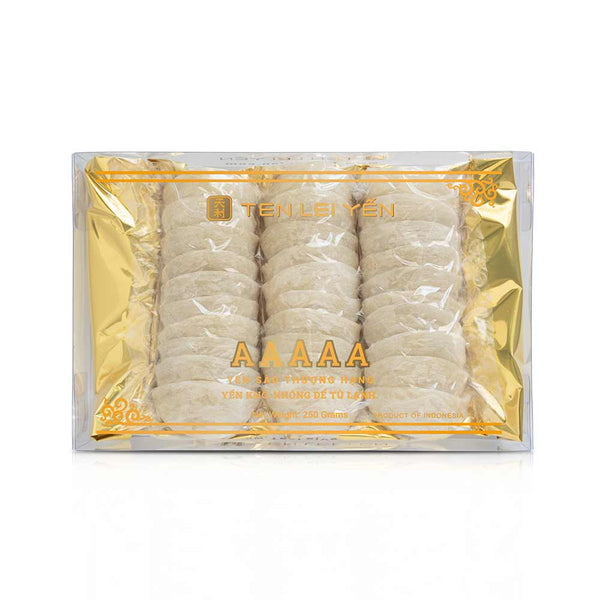
One dry nest is roughly 8 to 14 grams, which makes one whole-nest bowl — about 2 to 4 standard servings of 3-5 g each. Our Blue Label, Red Label, and 5A grade nests, as well as our Specialty Nest selection, all prepare the same gentle way. If you prefer skipping the soak, our ready-to-serve bird's nest drink is already prepared for you. For recipe ideas using this method, see our ginseng bird's nest and milk bird's nest recipes, or read how to serve bird's nest in summer for chilled options.
What vessels work
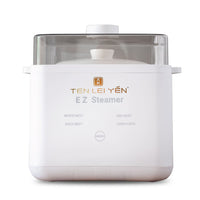
You have two easy options. The classic setup is a lidded ceramic or porcelain bowl placed inside any pot deep enough to hold water partway up its side. The other option is a dedicated double-boiler or a slow double-boil pot, which does the same job hands-off — browse these in our Yen Steamer collection. Either way, the key is the lid on the inner vessel and a steady simmer in the outer pot.
A few practical tips
Keep the water in the outer pot at a gentle simmer, not a hard rolling boil. Fill the inner bowl only part way, since the contents move a little as they warm. Add the rock sugar as the method describes so the syrup stays clear. And if you're cooking a longer batch, check the water level in the outer pot and top it up with hot water if needed.




 or
 or