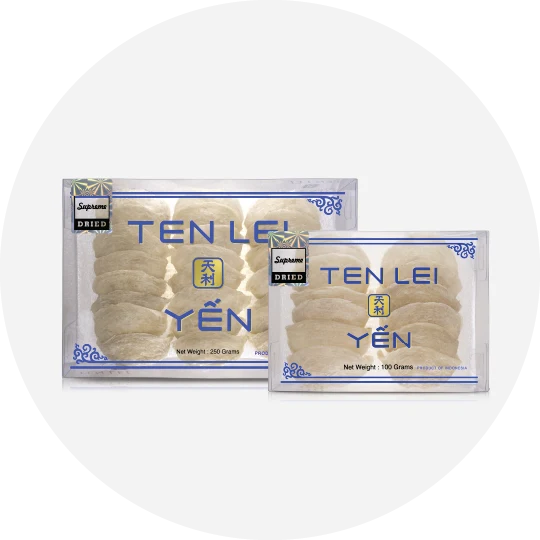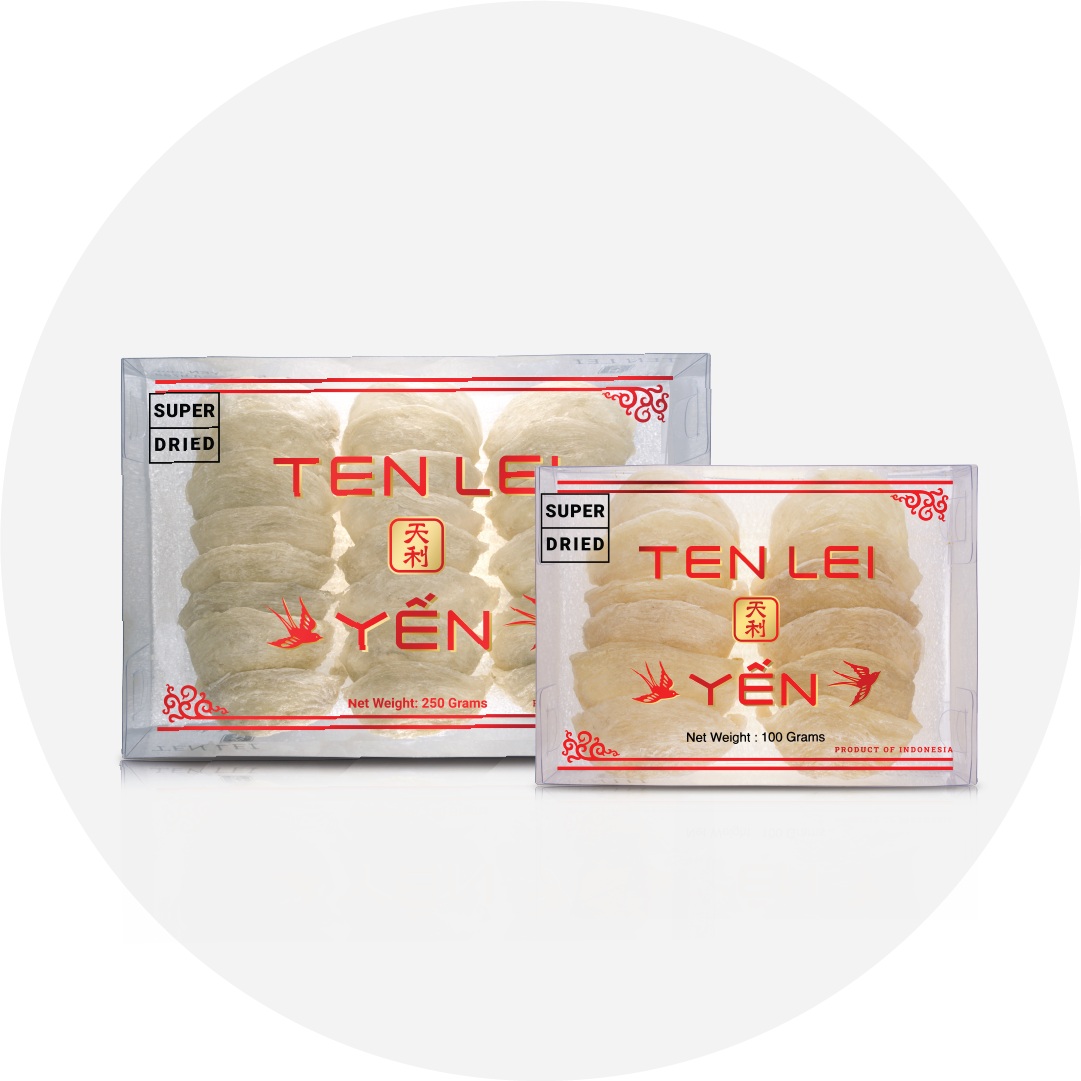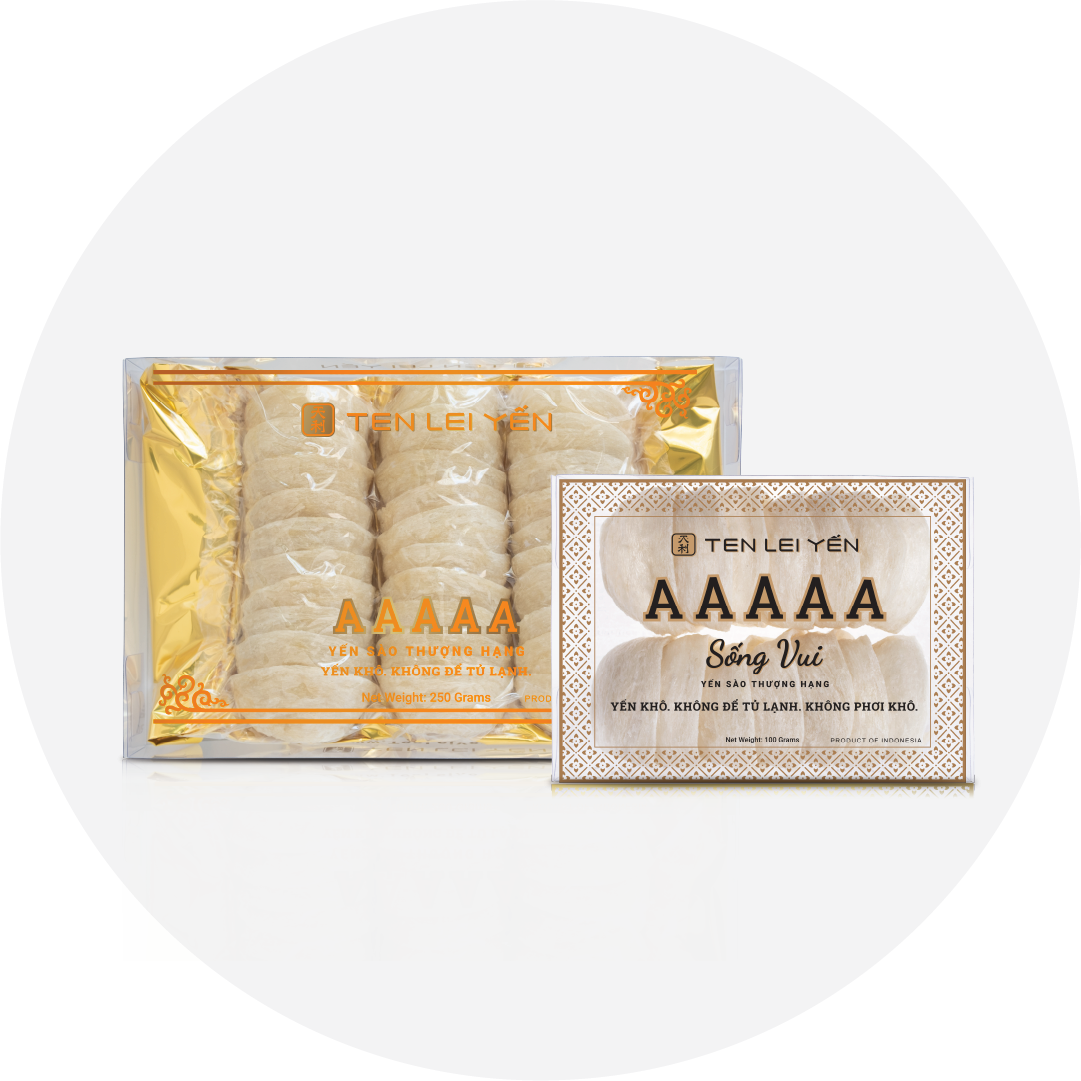
Four things determine whether a bird’s nest purchase is right for you: the grade system, what color indicates, whole cup versus broken, and where the nest comes from. This guide covers each in plain language, with Ten Lei Yen’s product line as the working example.
Quick answers
Grade: S-Grade (Supreme / Super) is the highest tier — finest strand integrity, most uniform color. A-Grade is genuine quality with more natural variation in strand length and cup shape.
Color: White is most common. Golden is thicker and rarer. Red is the rarest and most traditionally prized.
Form: Whole cup is the classic presentation. Broken nest is equally authentic, easier to prepare, and noticeably more affordable.
Origin: Indonesia is the world’s largest producer of consistently clean farmed swiftlet nests. Ten Lei Yen sources exclusively from Indonesia.
What is edible bird’s nest?
Edible bird’s nest is the hardened saliva of cave swiftlets (Aerodramus fuciphagus), shaped into a shallow half-cup by the bird pressing strands of its own salivary protein against a cave wall or swiftlet-house rafter. Those strands interlock into an open fibrous lattice. After harvest, the nest is cleaned to remove feathers and debris, dried, sorted by grade and color, and packed for sale.
In traditional Chinese culinary culture, edible bird’s nest has been a prized ingredient for centuries — a centerpiece of double-boiled desserts, clear soups, and the gifting culture surrounding Lunar New Year and other celebrations. Ten Lei Yen has specialized in edible bird’s nest and Cordyceps sinensis since 2007, based in Westminster, California in the heart of Little Saigon.
The grade system: S-Grade vs A-Grade
There is no single universal grading standard across the bird’s nest industry — each retailer defines their own tiers. At Ten Lei Yen, two grades cover the entire product line.
S-Grade — Blue Label Supreme and Red Label Super
S-Grade is the highest tier. It applies to two product lines:
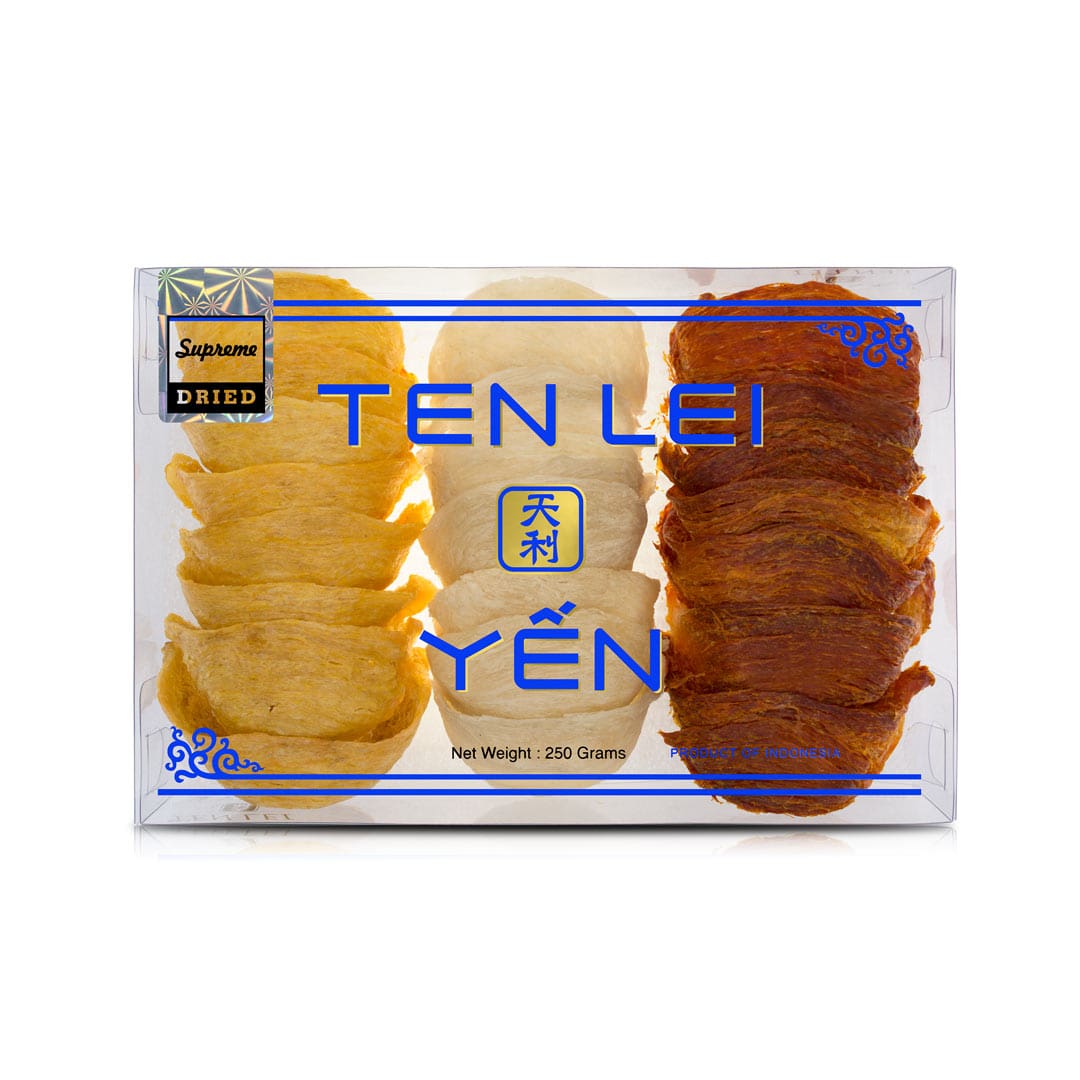
- Blue Label Supreme — whole-cup nests in white, golden, and red varieties
- Red Label Super — broken-nest format in White Broken Medium and White Broken Large
What S-Grade means in practice:
- Longer, more intact strands with minimal fracture
- Consistent natural ivory or amber color without significant discoloration
- A clean cup shape showing the natural half-dome the swiftlet built
- Even rehydration: strands separate and expand uniformly during preparation
S-Grade is the right choice for gifting, formal presentation, or any occasion where visual quality and texture matter. It is the finest product we carry.
A-Grade — TLY 5A and specialty lines
A-Grade covers genuine quality bird’s nest that falls outside S-Grade — primarily due to more natural variation in strand length, cup shape, or color uniformity, not in authenticity, origin, or cleaning standard. Our A-Grade lines include TLY 5A White and specialty formats.
For everyday double-boiling, regular household use, and cooking, A-Grade delivers the same result as S-Grade. The visual difference is in presentation before preparation, not in the bowl afterward.
Shop Blue Label Supreme — S-Grade whole cup
Shop Red Label Super — S-Grade broken nest
Color: white, golden, and red bird’s nest
White bird’s nest
White bird’s nest is the most widely available variety. Nests appear off-white to ivory in their natural dried state — the result of swiftlet species that build in typical environmental conditions without the mineral influence that produces color. After light cleaning, the nest retains its natural pale strands and slight translucency.
White nest is the standard for double-boiled desserts with rock sugar or honey, clear soups, and most traditional preparations. After cooking, the flavor is mild with a subtle oceanic quality; the texture is silky with distinct individual strands.
Golden bird’s nest
Golden bird’s nest develops its amber-to-gold color through natural processes in specific cave environments — most commonly attributed to the mineral composition of cave walls and air, which affects the nest’s exterior as it forms over time. This color cannot be replicated artificially without altering the nest’s physical structure.
Golden nests tend toward firmer texture and thicker strands compared to white. The mouthfeel after preparation is more substantial. Golden nests are rarer than white and priced accordingly. Ten Lei Yen carries golden nests in the Blue Label Supreme line.
Red bird’s nest
Red bird’s nest — known in Chinese as 血燕 (xuè yàn) — is the rarest color variety. The deep rust-to-red coloration develops naturally in a small number of specific cave locations under particular mineral and environmental conditions. Because genuine red nests form in so few places, supply is extremely limited relative to white or golden.
A significant proportion of "red bird’s nest" on the market is artificially colored or misrepresented. Genuine red nests command a substantial premium — pricing dramatically below market norms for red nest is a quality signal worth taking seriously. Ten Lei Yen sources red nests from verified suppliers and carries them in limited quantities in the Blue Label and Specialty lines.
Shop Specialty Nest — golden and red varieties
Whole cup versus broken nest
A dried bird’s nest in its natural form is a shallow, irregular half-cup — the shape of the structure the swiftlet built against a surface. The two small feet at each end show where it was anchored. Strands form an open lattice, and the cup is slightly uneven and asymmetrical — natural, not molded.
In the market, two forms are sold:
Whole cup
The nest is kept largely intact through cleaning, drying, and packaging, preserving the half-dome or boat shape. A quality whole cup shows the characteristic natural shape, visible fibrous lattice, and the slightly irregular appearance of something built without a mold. Whole cup is the traditional gifting format — it is associated with care and effort, and it looks the part.
Broken (fragment)
Broken nest consists of nests that fractured during harvest, transport, or processing. The strands are unchanged; only the cup shape is compromised. Broken nest typically sells at a significant discount to whole cup of equivalent grade — often 30–50% less — because it does not meet the visual standard for gifting or formal presentation.
For cooking and regular household use, broken and whole cup nest are interchangeable. Both prepare the same way and produce the same result in the bowl. Ten Lei Yen’s Red Label Super broken nest line — available in White Broken Medium and White Broken Large — is designed for households that prepare bird’s nest regularly and want S-Grade quality without the whole-cup premium.
Shop Red Label Super — broken nest S-Grade
Origin: Indonesia
Ten Lei Yen’s edible bird’s nest comes from Indonesia, which has a well-established swiftlet farming industry. Origin matters for buyers who care about traceability and supply consistency.
Indonesian bird’s nest — Ten Lei Yen’s source
Indonesia is the world’s largest producer of farmed edible bird’s nest, accounting for an estimated 60–70% of global supply. Indonesian swiftlet-house farming — known locally as sarang burung walet — benefits from decades of operational expertise, purpose-built facilities, and a robust export quality system. Farmed Indonesian nests tend to be consistently cleaner at harvest, and swiftlet-house conditions produce more uniform strand quality and cup shape compared to wild-cave collection.
Ten Lei Yen sources exclusively from Indonesian-farmed nests. We have maintained direct supplier relationships in Indonesia since the business launched in 2007. Every product in our line reflects that sourcing: consistent cleaning, reliable grade, and full traceability to origin.
What matters in practice is what supplier you trust and what product you can verify.
What to look for when buying

- Visible strand definition. Authentic dried bird’s nest has a clear interwoven fibrous lattice with individual strands visible and distinct. The dry nest is not smooth, paste-like, or uniformly dense — it looks like a tightly woven, slightly translucent mesh of natural protein fibers, with small visible gaps between strands.
- Natural color, not bright white. White nests are off-white to ivory — not bleached. Unnaturally bright-white nests may have been processed to remove discoloration, which can also compromise strand integrity. Golden nests should show natural variation in amber hue, not a uniform artificial orange.
- Origin and species labeling. A reputable seller states the country of origin and ideally the farming method (swiftlet house vs. wild cave). If origin is absent from the label, ask before buying.
- 250 g as your baseline purchase size. 250 g yields roughly 50–83 standard servings (3–5 g each), or one whole-nest bowl per nest in the box — enough to evaluate the product meaningfully and compare across batches. Smaller quantities do not give you a representative sample.
- Price appropriate to the category. S-Grade whole-cup white bird’s nest requires careful harvest, cleaning, and sorting — the price reflects that. Whole-cup nests priced dramatically below market norms should prompt questions about sourcing and grade.
What to watch out for
- Unnaturally bright-white nests at unusually low prices. Natural bird’s nest is off-white. Bright bleached-white can indicate aggressive processing that may compromise the strand structure.
- No visible strand lattice in the dry nest. If the dry product looks smooth, paste-like, or lacks a distinct strand structure, it may be heavily processed or adulterated.
- No origin information on the label. A seller who cannot tell you where the nest came from is a transparency gap worth weighing before purchase.
- Red nests at low prices. Genuine red bird’s nest is rare and commands a significant premium. Red nests priced well below that level should prompt questions about how the color was achieved.
- Nests that rehydrate very quickly. Genuine dried bird’s nest requires 4–6 hours (or overnight) of soaking to fully rehydrate. Nests that appear fully expanded in under an hour may have been pre-processed or adulterated.
Ten Lei Yen’s edible bird’s nest collection
Ten Lei Yen carries a focused, sourced-from-Indonesia lineup of edible bird’s nest, available online and at our Westminster, CA store. We have shipped nationwide since 2007. Our full bird’s nest line:
- Blue Label Supreme — S-Grade whole cup. White, golden, and red varieties in 250 g boxes. Our flagship line and the standard choice for gifting.
- Red Label Super — S-Grade broken nest. White Broken in Medium and Large formats, 250 g boxes. S-Grade quality at a significant savings over whole cup.
- TLY 5A White — A-Grade whole cup white nest, 250 g. Consistent quality at a gentler price point than Blue Label, and a strong starting point for new buyers.
- Specialty Nest — Golden and red varieties in small-batch and limited formats.
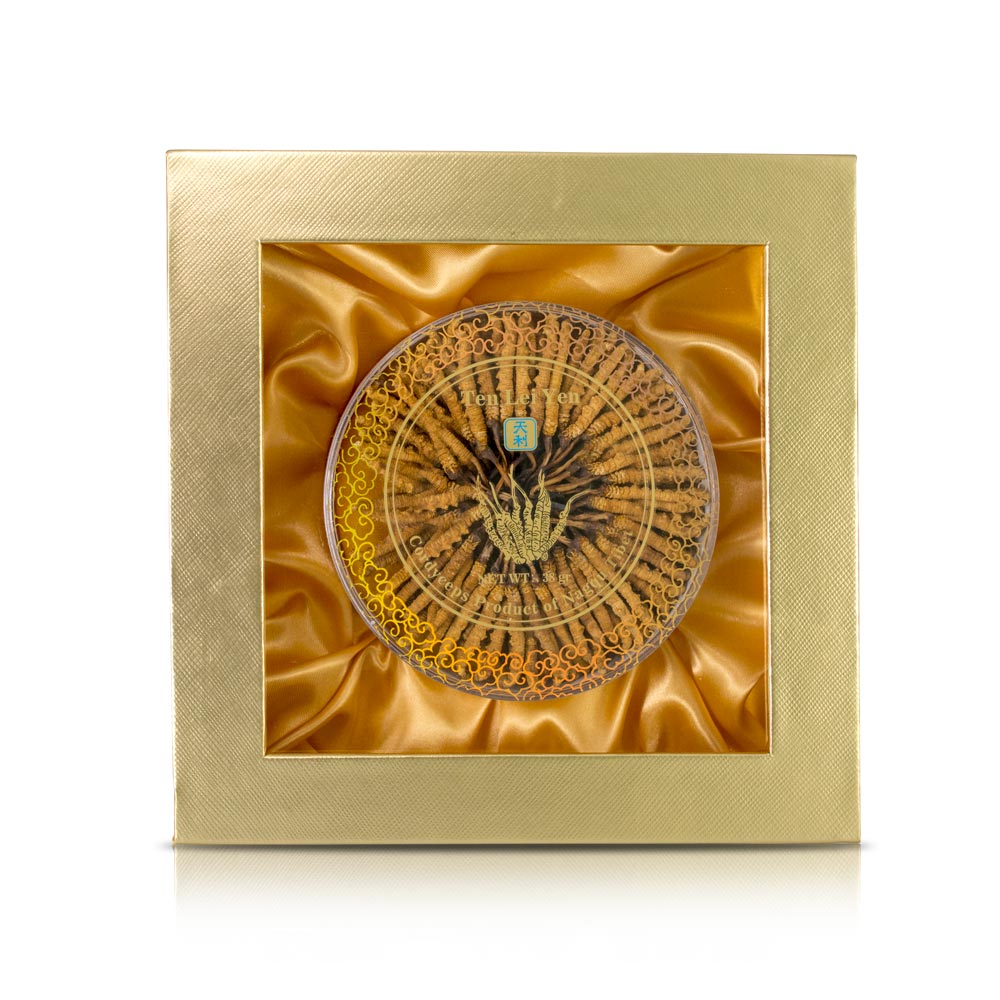
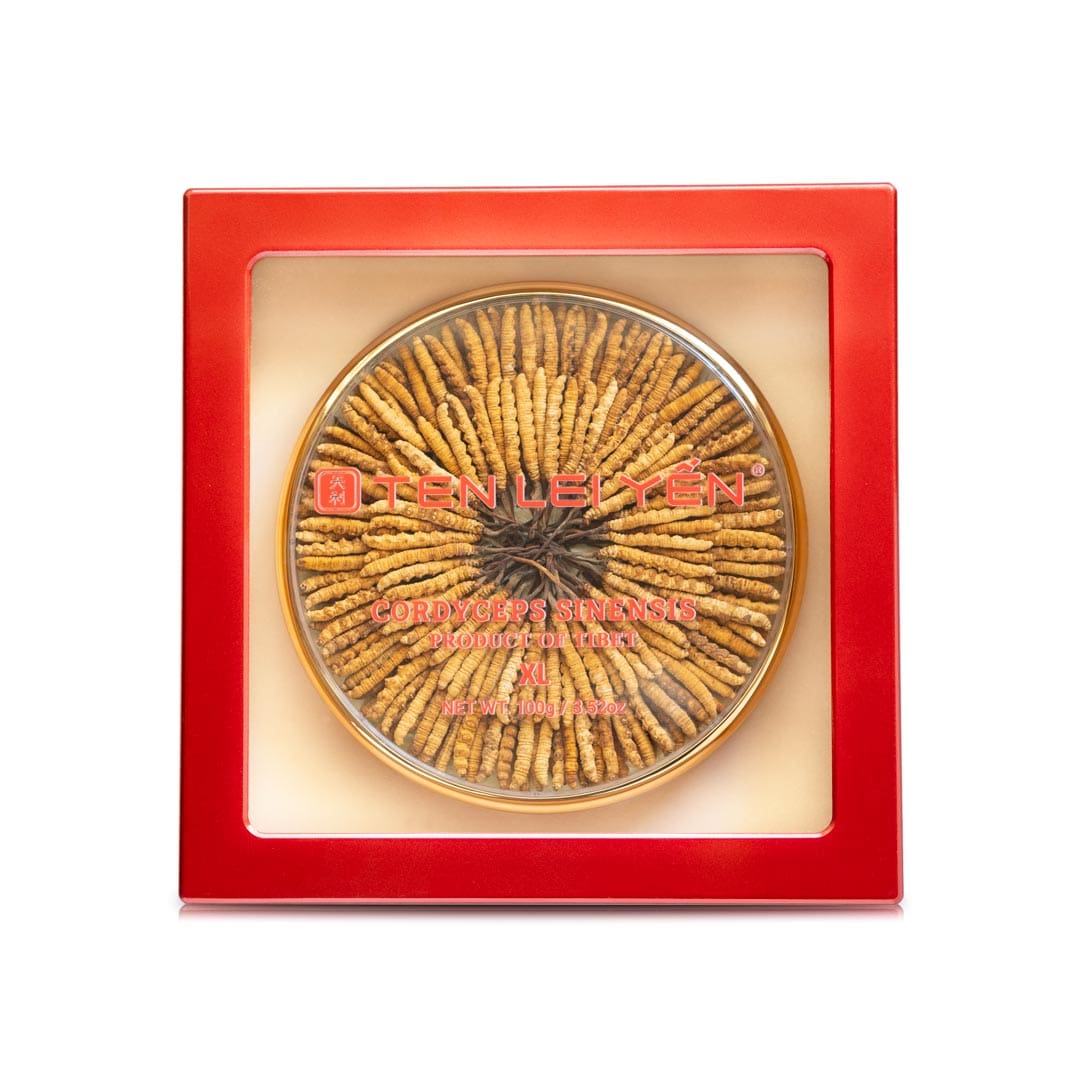
- Wild Cordyceps Sinensis — Tibetan Plateau cordyceps, the other specialty Ten Lei Yen is known for.
The two most purchased items are Blue Label Supreme White 250 g and TLY 5A White 250 g — both available with nationwide shipping. Either is a reliable starting point if you are buying from Ten Lei Yen for the first time.
Frequently asked questions
How much edible bird’s nest should I buy?
250 g is the standard household purchase size, yielding roughly 50–83 standard servings (3–5 g each), or one whole-nest bowl per nest in the box. It is enough to evaluate the product meaningfully and use it regularly. Larger quantities (500 g or 1 kg) are more economical for families that prepare bird’s nest frequently. Ten Lei Yen’s standard retail size is 250 g across all product lines.
Does Ten Lei Yen ship edible bird’s nest nationwide?
Yes. Ten Lei Yen ships edible bird’s nest and Cordyceps sinensis to customers across the United States from our Westminster, California location. We have served customers nationwide since 2007. Orders can be placed at tenleiyen.com.