By Alina @ TLY
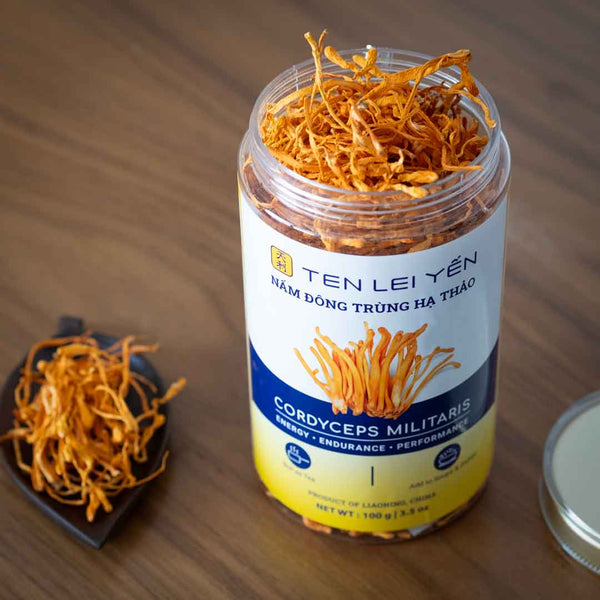
Cordyceps militaris, the orange cordyceps flower, can be grown at home or on a farm because it feeds on grain or a nutrient medium and needs no insect, while wild Cordyceps sinensis can't be grown that way because it only forms inside a living ghost moth caterpillar that spends years underground on the Tibetan plateau. At Ten Lei Yen in Westminster we sell both, and the gap in price between them comes straight from that one fact of biology.
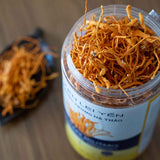
Can you grow cordyceps militaris at home?
Yes. Home growing kits for militaris exist, and the fungus is farmed commercially on grain such as rice or in a liquid nutrient broth. In one university study we read, it was grown on a rice-based medium at about 20°C, in humid air with steady light, and orange fruiting bodies appeared in around 40 days. We don't sell kits or spawn, and this isn't a growing guide, so if you'd like to try it yourself, look for a dedicated mushroom-kit maker. What we can explain is why it works so well.
Why does militaris grow so easily?
Militaris is the sort of fungus that will fruit in a tray or jar as long as it has food, moisture, the right temperature and some light. It doesn't need a living insect, a particular mountain or a particular season, so growers can run it indoors all year at low altitude. That's why cordyceps flower is plentiful, why the stalks come out so uniform, and why a 100 g bag of Cordyceps Militaris Mushroom costs less than even a few grams of wild cordyceps. If you've never seen the dried stalks up close, our guide to what militaris is shows how different they look from the wild piece.
Why can't sinensis be grown the same way?
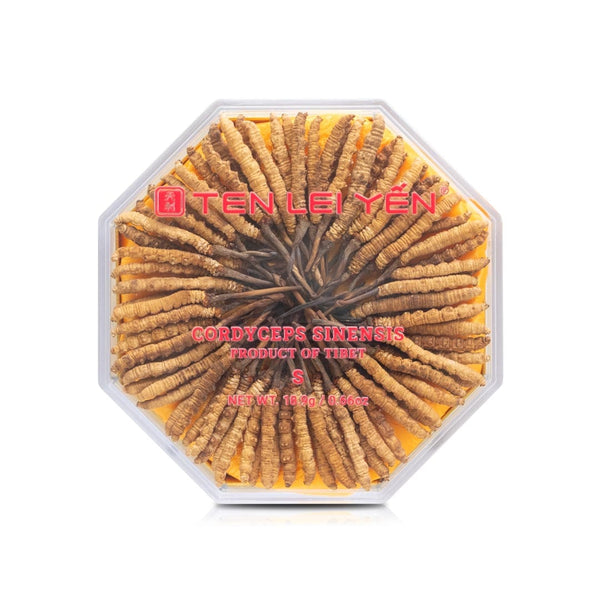
Because sinensis isn't just a fungus. Every piece is a fungus and an insect joined together. The fungus infects the larva of a ghost moth (Thitarodes) living in the soil of alpine meadows, roughly 3,000 to 5,000 metres up on the Tibetan plateau, and in nature that larva spends something like three to five years underground feeding on roots. The fungus grows inside the living caterpillar over months, eventually mummifies it, and then sends one slender stalk up through the soil.
No grain tray reproduces any of that: no moth, no cold alpine soil, no years of waiting, and no way to start a second batch next month. A single wild piece is, in effect, one caterpillar's whole life and its single chance encounter with the fungus. We go through the whole sequence in the moth behind wild cordyceps.
Hasn't anyone managed to farm it?
Researchers in China have, in a limited way. Papers describe rearing ghost moth larvae under controlled conditions, infecting them, and getting fruiting bodies from the mummified larvae, including a 2019 paper in the journal Environmental Entomology in which larvae were injected with the fungus and grew stalks in a low-altitude area. The same papers are frank that problems remain: natural infection rates are low, injecting the larvae is laborious and adds to their deaths, and the fungus grows slowly in the cold. It's a specialist process built around the moth host, run in a facility or on managed farmland, and it looks nothing like a jar on a kitchen shelf.
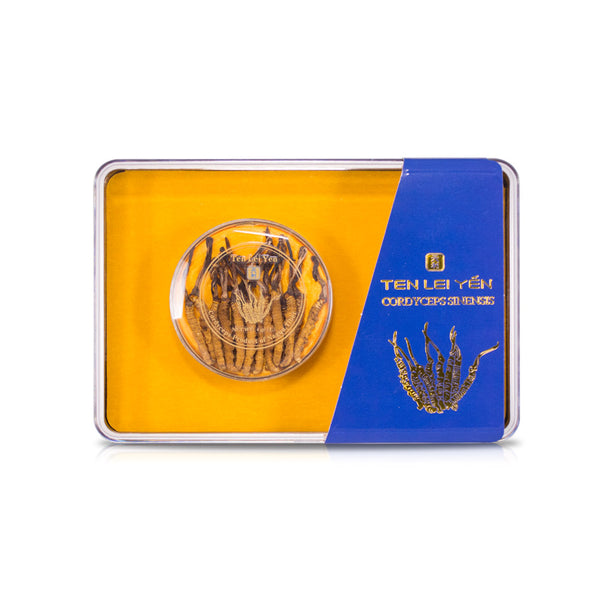
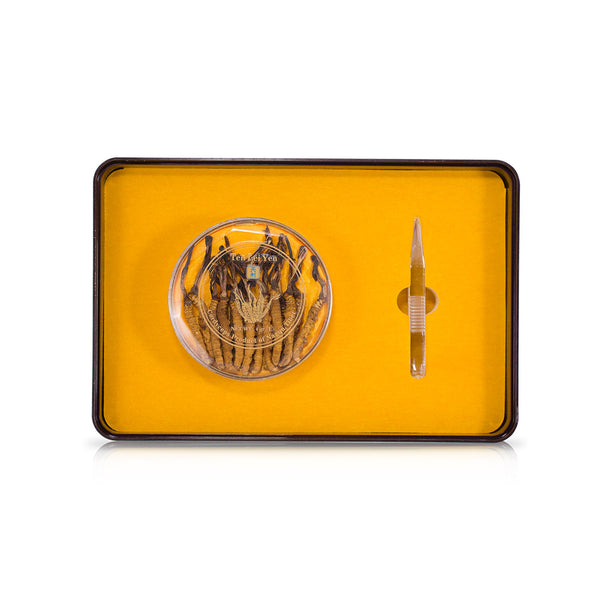
The cultivated Cordyceps sinensis we carry from Tibet is a caterpillar-and-stalk piece too, which tells you it still depends on the host, and it sits between wild and militaris on price for exactly that reason. Our guide to cultivated cordyceps explains the categories.
So why does wild Nagqu cost what it does?
Put the two stories side by side. Militaris takes weeks, a tray and a steady year-round supply. Wild sinensis takes years of larval life, a chance meeting of fungal spore and caterpillar, a short spring season, and every piece dug by hand at altitude. None of that can be rushed, which is why wild Nagqu cordyceps is sold by the gram: just 4 g of the Large costs several times more than a whole 100 g bag of militaris, and the 38 g Large costs many times more again (current prices are in the shop block below). It also explains why sinensis is graded by piece size and completeness, while militaris is simply sold by weight.
They're different species with different looks and different jobs in the pot, so one isn't simply a cheaper version of the other. Come by the shop in Westminster and we'll put a piece of each in your hand.