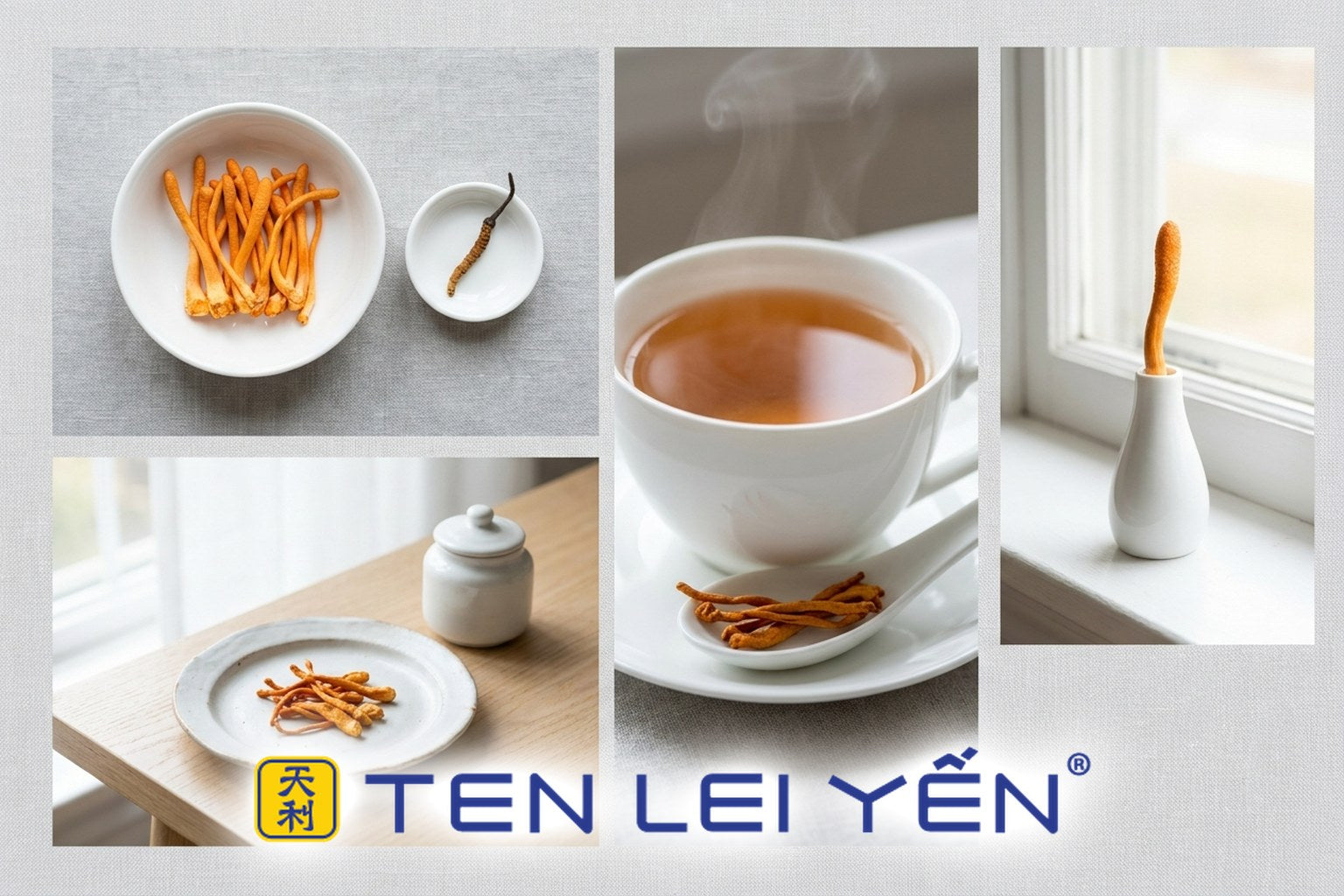
Cordyceps militaris — sold in dried form as cordyceps flower (虫草花) — is a bright-orange, finger-like fungus grown on grain substrates indoors. It belongs to the same genus as the far more expensive wild cordyceps (Cordyceps sinensis), but it is a separate species with a distinctly different appearance, production method, and price point.
- Cordyceps militaris is an orange finger-like cluster; Cordyceps sinensis is a brown caterpillar-and-stalk piece
- Militaris is grown indoors on grain substrates — no caterpillar host required
- Both are used in soups and slow-cooked broths; militaris is far more abundant and affordable
- The two cannot be substituted gram-for-gram — they have different flavours and textures in the bowl
What Does Cordyceps Militaris Look Like?
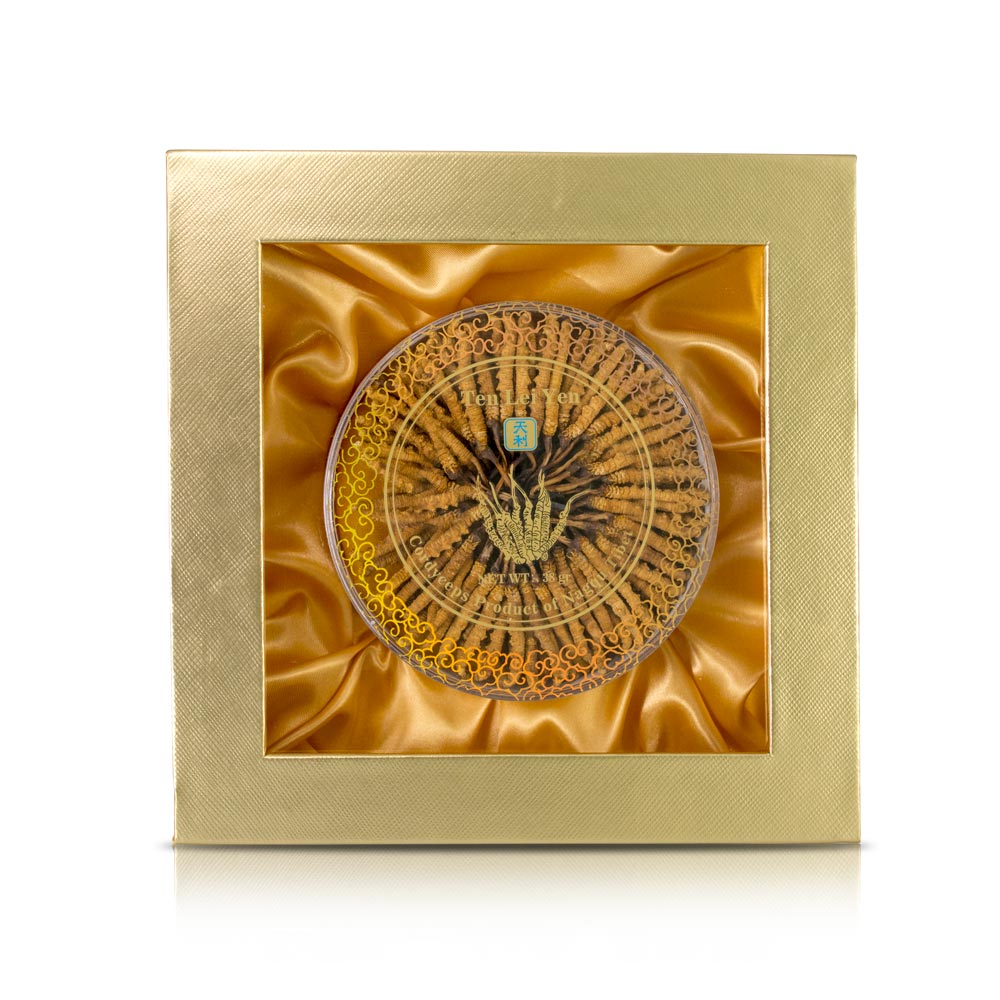
The dried stalks are recognisable by their vivid orange or orange-amber colour and slender club-like shape. They grow in dense clusters from a shared base, and each stalk is typically 3–8 cm long with a thicker swollen tip. In Chinese markets they are sold under the name 虫草花 — literally “worm grass flower” — though no worm or caterpillar is involved in their production.
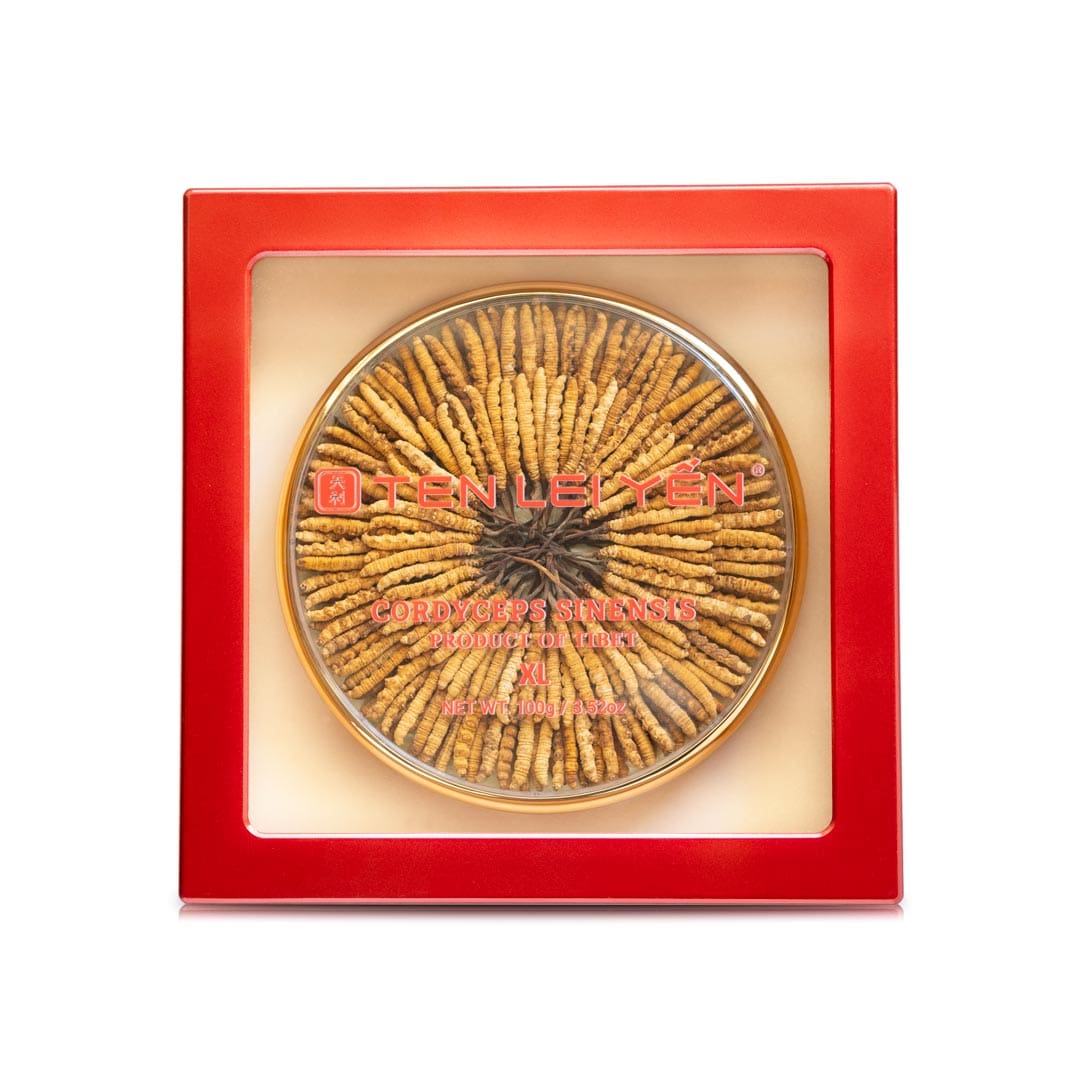
Cordyceps sinensis, by contrast, is a dark-brown piece with two distinct parts: the mummified caterpillar body at the base and a slender, dried fungal stalk emerging from the head. The visual difference between the two is unmistakable once you know what to look for.

How Is Cordyceps Militaris Grown?
Unlike wild Cordyceps sinensis — which requires the parasitised body of a ghost moth caterpillar at high altitude — Cordyceps militaris can be cultivated indoors on simple grain or liquid nutrient substrates. The fungus grows in trays or bottles and produces its characteristic orange stalks within weeks to months, depending on the growing setup. This indoor, year-round production is why militaris is available in large, consistent quantities and at a much lower price than sinensis.
Farms producing high-quality militaris typically control light, temperature, and substrate composition to produce longer stalks and deeper colour. Well-dried militaris should hold its orange colour through storage; stalks that have faded to pale yellow may indicate older stock or poor drying conditions.
Cordyceps Militaris vs. Cordyceps Sinensis: Key Differences
The two species share a genus name but are otherwise quite different as food ingredients. Cordyceps sinensis grows only in the wild (or in closely controlled semi-wild farms at high altitude), requires the caterpillar host organism to develop, and produces the single caterpillar-and-stalk piece that commands premium prices. Militaris requires no host organism, grows on grain substrates in any climate, and sells at a fraction of the price of sinensis.
In the bowl, militaris has a mild, slightly savoury flavour and a tender-to-firm texture. Sinensis has a deeper, earthier taste and holds its texture differently through long cooking. The two are not direct substitutes — they are used in different proportions and for different culinary purposes, even though both appear in similar soup contexts.
How to Use Cordyceps Militaris in Cooking
Dried militaris stalks are rinsed briefly under cool water, then soaked for 10–20 minutes to soften before adding to soups or broths. They work well in clear chicken broth, pork rib soup, and light vegetable stews, where their orange colour brightens the dish and their mild savouriness adds background flavour without competing with the main ingredients.
A typical portion is a small handful — approximately 10–15 grams dry — per pot. They cook relatively quickly compared to dried Cordyceps sinensis and can be added in the last 20–30 minutes of a long braise, or from the beginning in shorter-cook soups. Overcooking can cause the stalks to become mushy, so timing matters more than it does with sinensis.

Browse Ten Lei Yen’s full cordyceps range, including both cultivated Cordyceps sinensis and wild Cordyceps sinensis.
Frequently Asked Questions
What should good quality dried Cordyceps militaris look like?
Look for vivid orange to amber-orange stalks with no discolouration, a dry firm texture (not brittle or powdery), and a clean, earthy aroma. Pale yellow or grey stalks indicate age or poor storage. Stalks of consistent length in a cluster suggest careful growing and drying conditions.