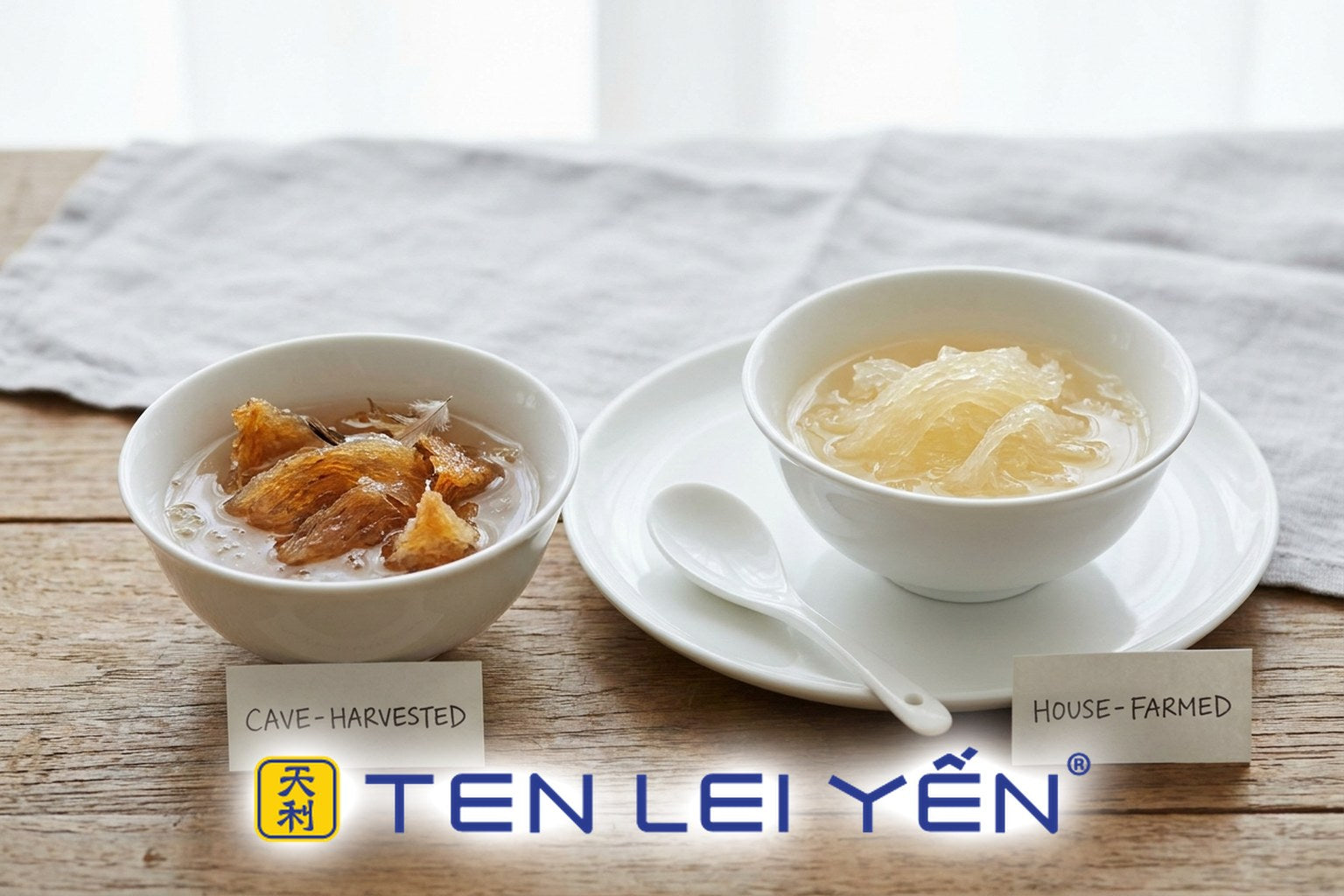
Both cave-harvested and house-farmed edible bird's nest are genuine products made from the same material: the dried saliva nest of swiftlets. The difference is entirely in where and how the birds build their nests — not in whether the product is authentic.
Key Takeaways
- Both types are real edible bird's nest built by swiftlets.
- Cave-harvested nests form in natural limestone caves; house-farmed nests are built inside purpose-built structures where birds nest freely.
- Cave nests tend to be amber or brown; house-farmed nests are typically white or ivory.
- House-farmed nests offer more consistent quality and are more widely available.
- Both types are prepared the same way: soak dry nest in clean water 4–6 hours, then double-boil 40 minutes with water and rock sugar.
Cave-Harvested Bird's Nest
Cave-harvested bird's nest is collected from limestone caves where swiftlets build their nests on cliff walls and cave ceilings. These birds construct their nests entirely from hardened strands of saliva, which dry into the solid, cup-shaped structure used in culinary traditions across Asia.
The cave environment exposes nests to mineral-rich air, trace moisture from cave walls, and organic debris such as feathers and plant matter. As a result, cave nests often take on an amber, brown, or red tint. Some premium dark-amber varieties have historically commanded a high price due to their rarity and striking appearance.
Because cave collection requires climbing equipment, remote access, and significant labour, supply is limited and costs are high. Quality also varies considerably between caves and seasons, as nests are exposed to an uncontrolled outdoor environment. Cleaning cave nests to food-safe standards requires extensive processing to remove embedded debris.
House-Farmed Bird's Nest
House-farmed bird's nest is produced by wild free-flying swiftlets that choose to nest inside purpose-built structures. These buildings are designed to mimic natural cave conditions: kept dark and humid, with swiftlet call recordings to attract birds. Crucially, the birds are never caged or captive — they fly freely and return to the structures to build their nests.
Because nests form inside a managed environment away from cave minerals and debris, house-farmed nests are typically white or ivory in colour. The controlled conditions also mean fewer contaminants during nest formation, simplifying the cleaning and grading process. House-farmed production has expanded significantly in Indonesia, making it the most commercially available form of edible bird's nest worldwide.
Quality within house-farmed production still varies depending on the specific farm, management practices, and grading standards applied at processing. Premium house-farmed nests meeting strict size, shape, and cleanliness criteria are graded and sold at higher price points.
Side-by-Side Comparison
Colour
Cave nests range from amber to deep brown or red, depending on the cave environment. House-farmed nests are predominantly white or ivory. Colour reflects the bird's environment, not the nest's purity or structural quality.
Flavour
Cave nests are sometimes described as having a slightly earthier, more mineral note. House-farmed nests have a milder, more neutral taste that blends cleanly into desserts and soups. In both cases, the characteristic texture — soft, gelatinous strands after cooking — is the defining quality in the finished dish.
Supply and Price
Cave-harvested nests are limited by geography and the difficulty of collection, keeping supply constrained and prices high. House-farmed nests are produced at greater scale, offering more consistent availability. Within each category, price varies by grade: size, shape, cleanliness, and how well the nest holds together after soaking all affect the final price per kilogram.
Grading
Both cave and house-farmed nests are graded before sale. For house-farmed nests, common grade tiers distinguish between whole nests, broken nests, and cleaned fragments. To understand how grading works, see our guide: Bird's Nest Grades Explained: Blue, Red, and 5A Labels.
What TLY Sources
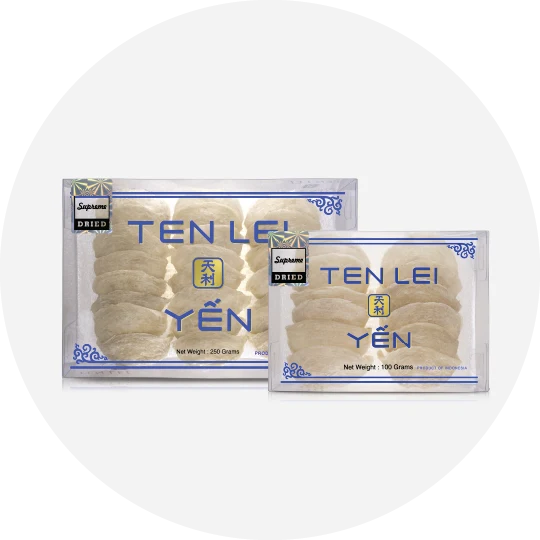
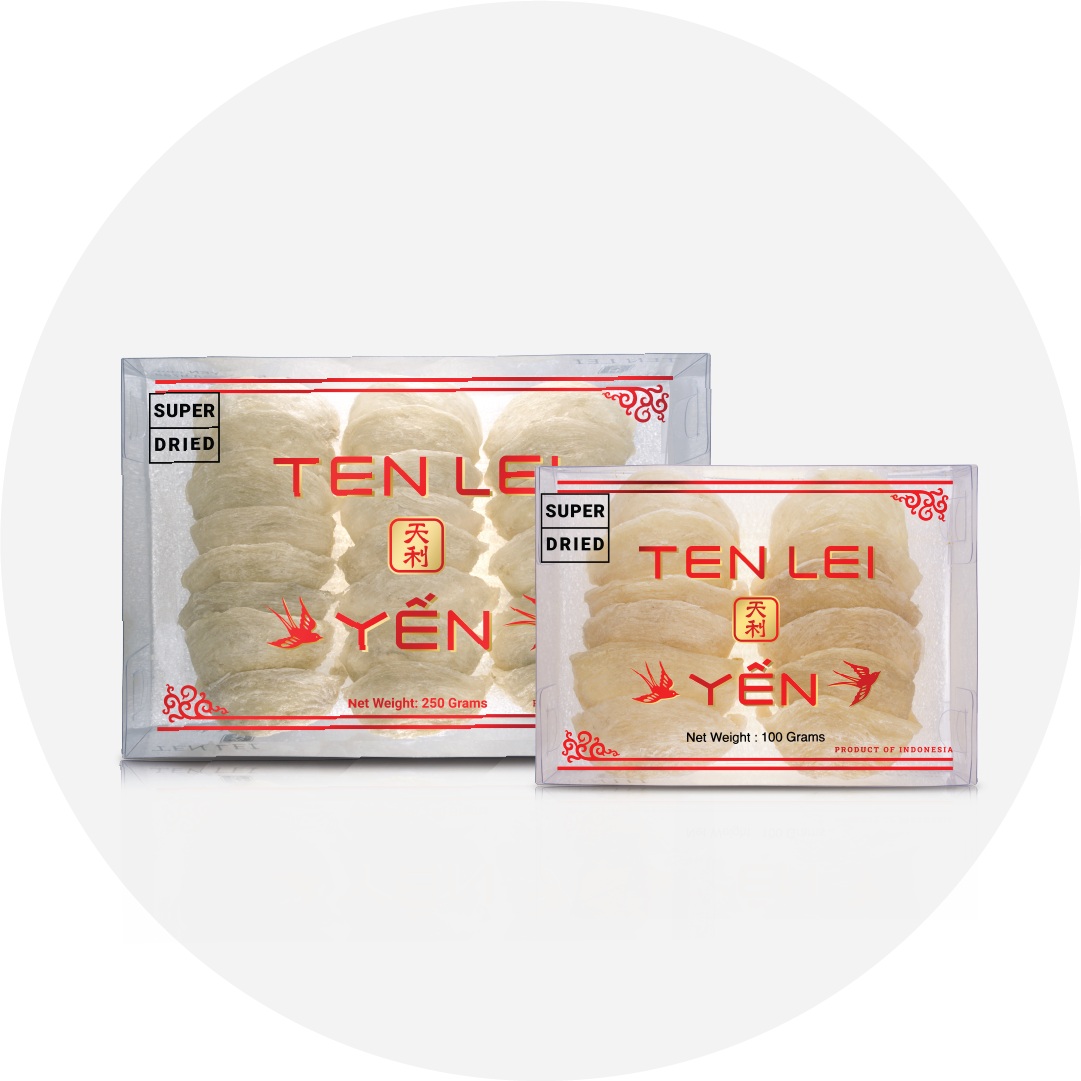
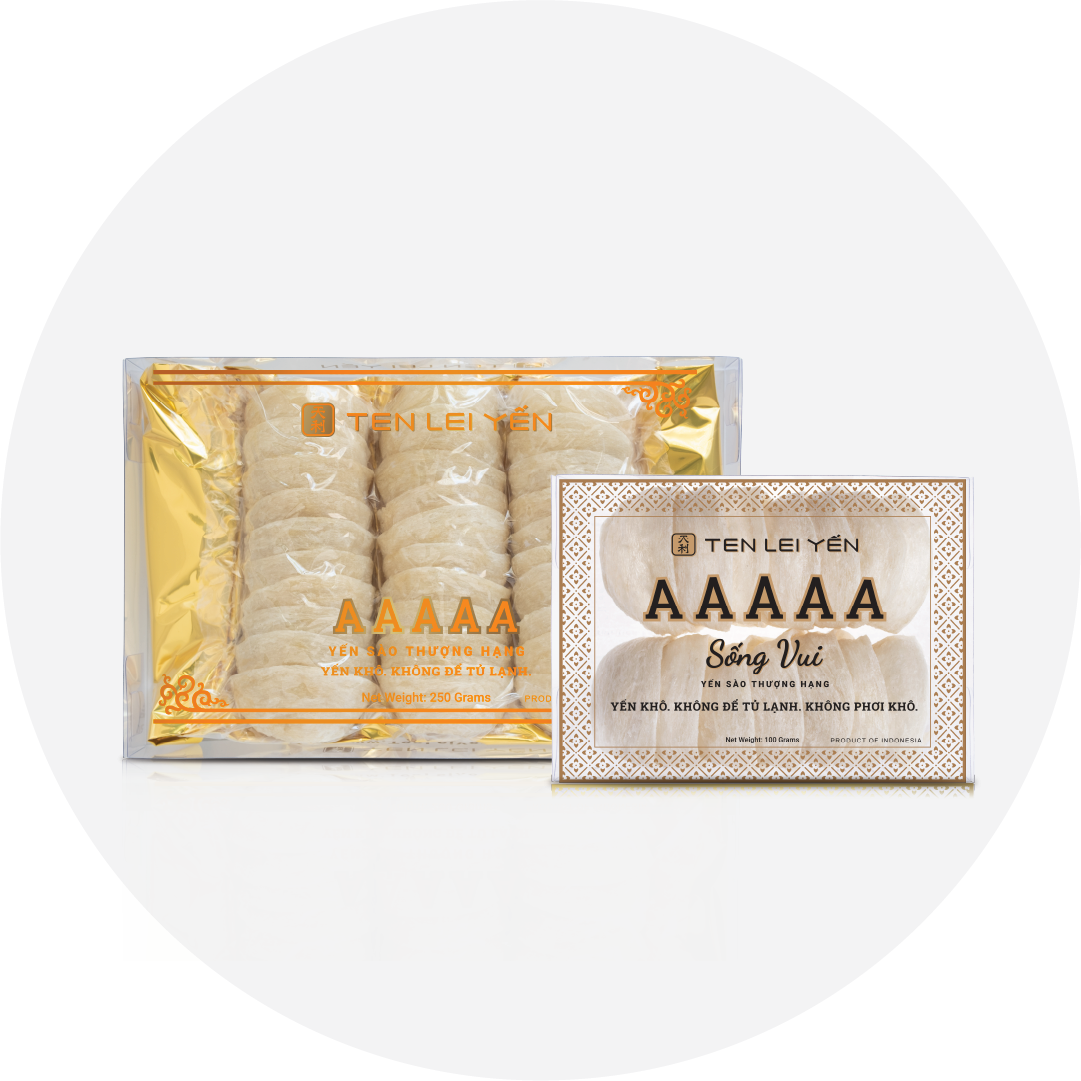
All bird's nest carried by Ten Lei Yen is house-farmed, sourced from swiftlet houses in Indonesia. Our products undergo cleaning and grading before reaching customers. We carry multiple grades to suit different uses and budgets:
- Blue Label — top-grade whole nests, selected for size and uniformity
- Red Label — mid-grade whole nests, consistently clean and well-formed
- TLY 5A — our premium specialty grade
- Specialty Nests — curated selections for specific uses
- Red Label Broken Nest — same Red Label raw material in smaller pieces, ideal for everyday cooking
We source exclusively house-farmed nest for consistent supply, more uniform quality, and a cleaner starting point for processing. We do not currently carry cave-harvested product.
Frequently Asked Questions
Is cave-harvested bird's nest better than house-farmed?
Not necessarily. Both are genuine edible bird's nest. Cave-harvested nests are rarer and often priced higher, but rarity does not equal quality. House-farmed nests from well-managed farms, processed to a high standard, can match or exceed the texture and cleanliness of cave-harvested product.
Why is cave-harvested bird's nest more expensive?
Cave harvesting requires significant labour, specialised equipment, and remote access to cave locations. Supply is naturally limited by geography. House-farmed production operates at greater scale, which contributes to lower per-kilogram prices.
Does colour indicate which type I have?
Colour gives a strong indication: amber or brown nests are typically cave-harvested; white or ivory nests are usually house-farmed. However, colour varies within each type, and some house-farmed nests can be off-white. Your supplier should be able to confirm the source.
How do I prepare cave-harvested and house-farmed bird's nest?
The preparation method is the same for both. Soak dry nest in clean water for 4–6 hours (or overnight). Rinse gently and remove any remaining fine feathers. Double-boil with water and rock sugar for 40 minutes over low to medium heat. One whole dry nest (approximately 8–14 g) yields a generous whole-nest bowl once cooked — about 2–4 standard servings of 3–5 g each.