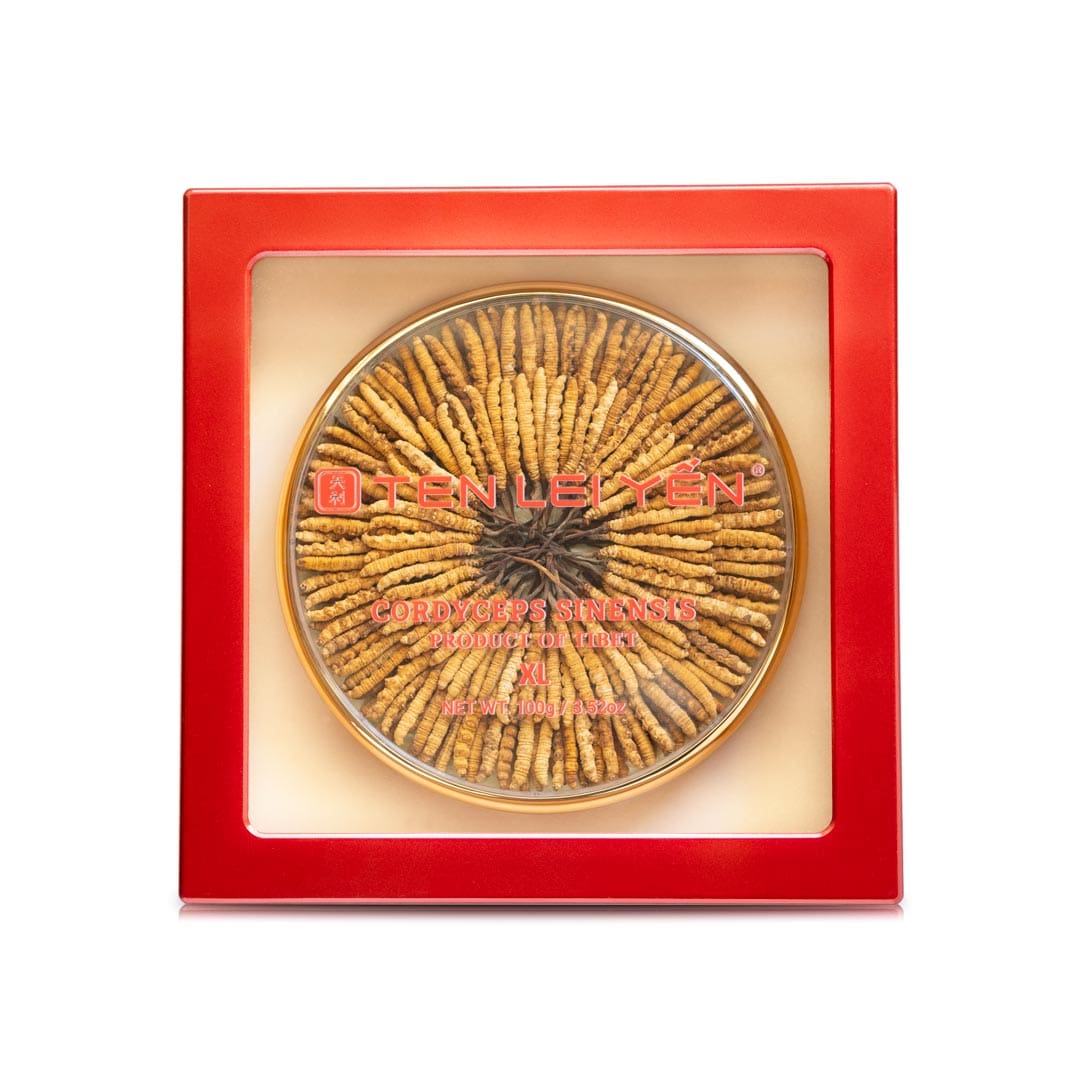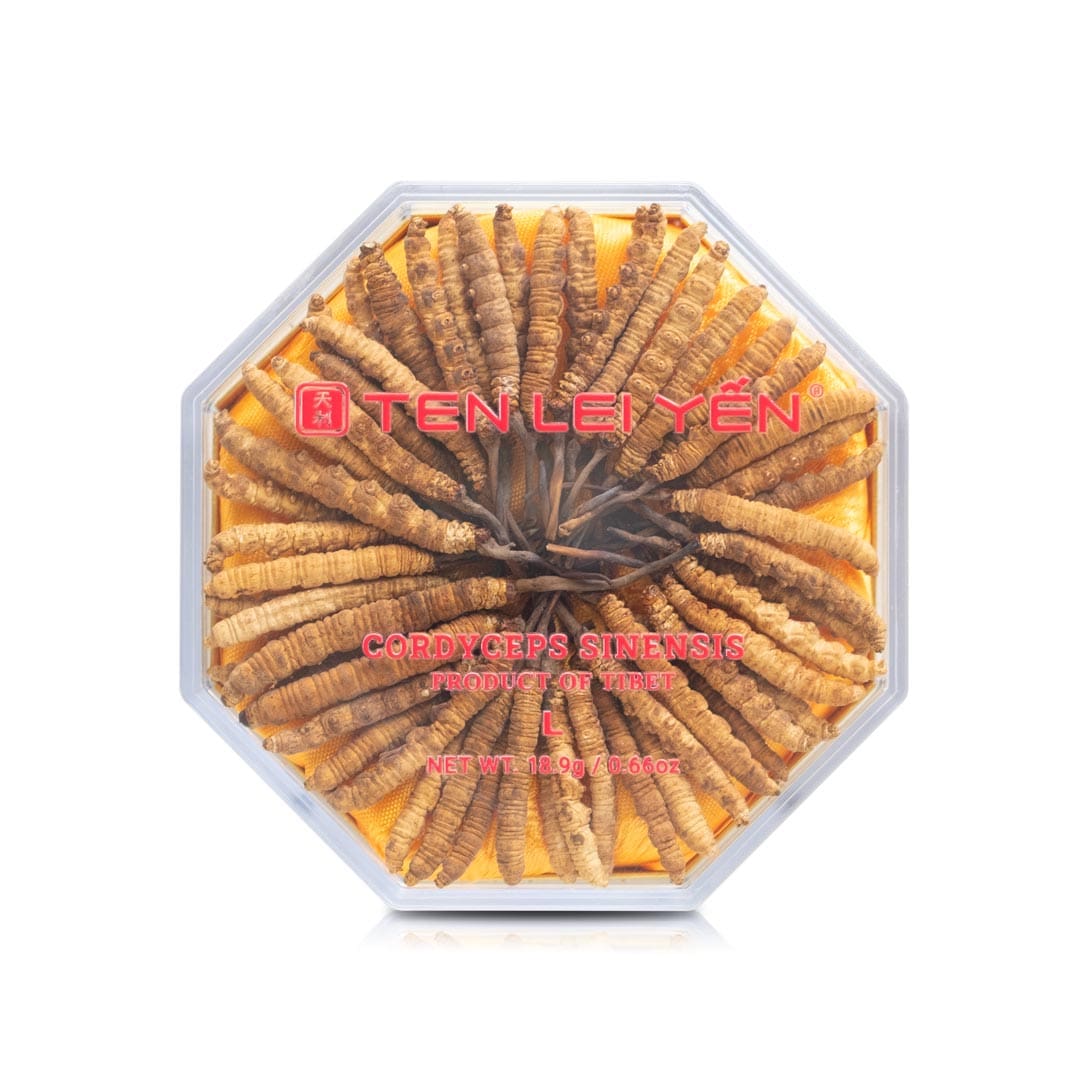
Real Cordyceps sinensis is a caterpillar body joined to a slender, darker stalk — it is light, slightly flexible, and shows fine ring-like wrinkles and rows of tiny legs along the body. Imitations are usually heavier, more brittle, and "too perfect." Knowing a few physical tells helps you recognize genuine pieces and spot the common tricks used to fake them.
Key takeaways
- Real cordyceps is a caterpillar-and-stalk fungus — not a plain mushroom or a smooth stick.
- Genuine pieces are light, almost weightless, and slightly flexible rather than brittle.
- Look for ring-like wrinkles, a rounded head, and rows of small legs on the body.
- Break one open: real cordyceps has pale flesh with a dark thread down the middle.
- Common fakes add weight with inserted wire, or are molded and glued from paste.
What genuine Cordyceps sinensis looks like
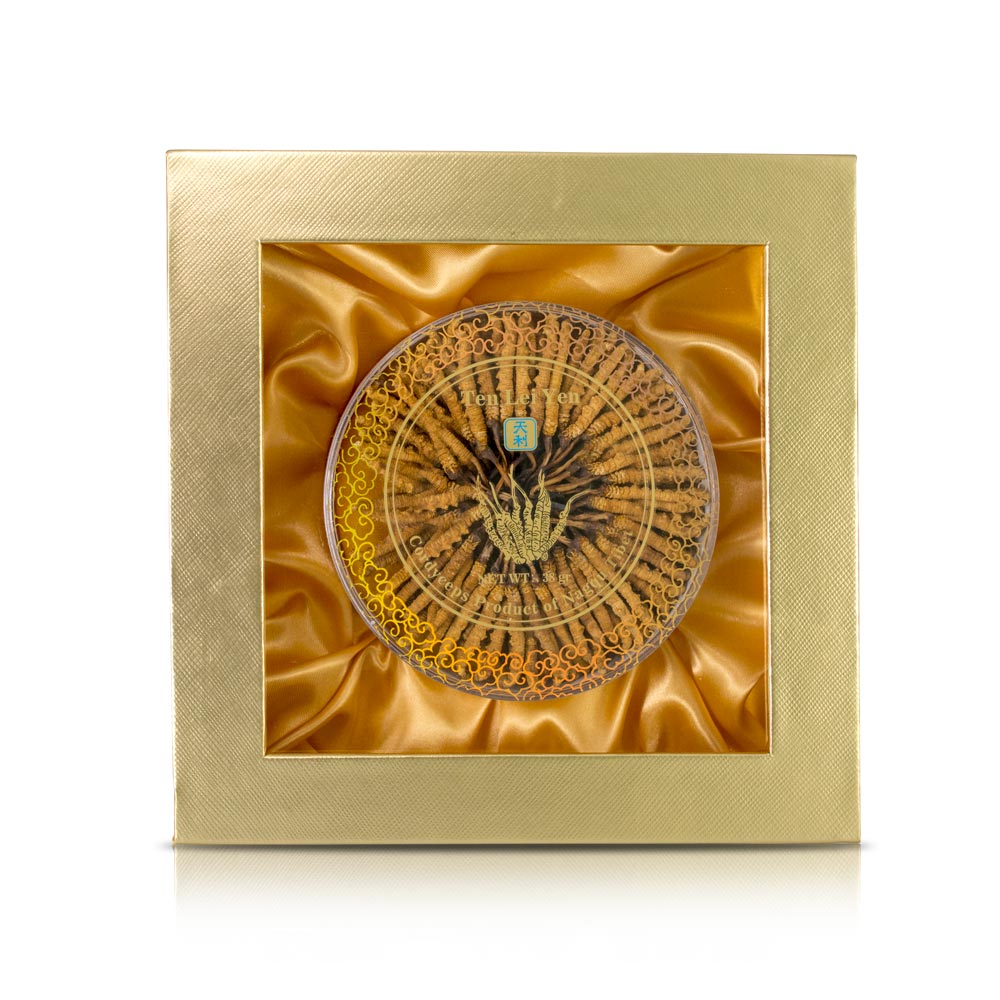
A real piece has two clear parts. The lower part is the caterpillar body — plump, segmented, dark yellow to golden-brown, with a rough surface marked by transverse, ring-like wrinkles. Along the underside you can usually count rows of tiny legs; the pairs near the middle are the easiest to see. From the head grows the second part, the stroma or stalk: a thinner, darker, slightly twisted shoot. The whole piece feels very light, like dried grass, and has a faint earthy, mushroom-like smell.
The break test
If you snap a genuine piece in half, the inside is pale or white flesh with a small dark line running through it. There is no metal, no powdery filler, and no seam where two parts were glued together.

How imitations are faked
Because real cordyceps is valuable and sold by weight, most fakes are designed to add weight or imitate the shape:
- Inserted wire or sticks. Thin metal wires or slivers are pushed inside the body to make a piece heavier. It feels unusually heavy, and the wire turns up when you break it open.
- Weighting with minerals. Pieces are soaked in mineral or alum solutions, or dusted with fine powder, to raise the weight. They may feel damp, gritty, or leave residue.
- Molded and glued pieces. Some fakes are shaped from flour, starch, or other paste, then colored; a stalk may be glued onto an unrelated body. Look for a seam, an unnatural sheen, or a too-uniform shape.
- Look-alike species. Other caterpillar fungi or plant rootlets are sometimes sold as the real thing. They may lack the clear legs, the ring wrinkles, or the right head shape.
Simple checks before you buy
| Check | Genuine cordyceps | Possible imitation |
|---|---|---|
| Weight in hand | Very light, like dried grass | Noticeably heavy or dense |
| Flex | Slightly flexible, springs a little | Stiff and brittle, snaps hard |
| Surface detail | Ring wrinkles, visible legs, rounded head | Smooth, vague, or "too perfect" |
| Broken cross-section | Pale flesh, thin dark line, no filler | Wire, powder, or a glued seam |
| Smell | Faint earthy, mushroom-like | Chemical, musty, or none |
The most reliable safeguard is to buy whole, intact pieces from a seller who is transparent about origin and grade. Explore genuine wild Cordyceps sinensis and cultivated Cordyceps sinensis, and read more in what cordyceps sinensis is and wild vs cultivated cordyceps.
FAQ
Is cordyceps a mushroom?
It is a fungus that grows on a caterpillar, so a real piece shows both the insect body and a fungal stalk — not a plain mushroom cap and stem.