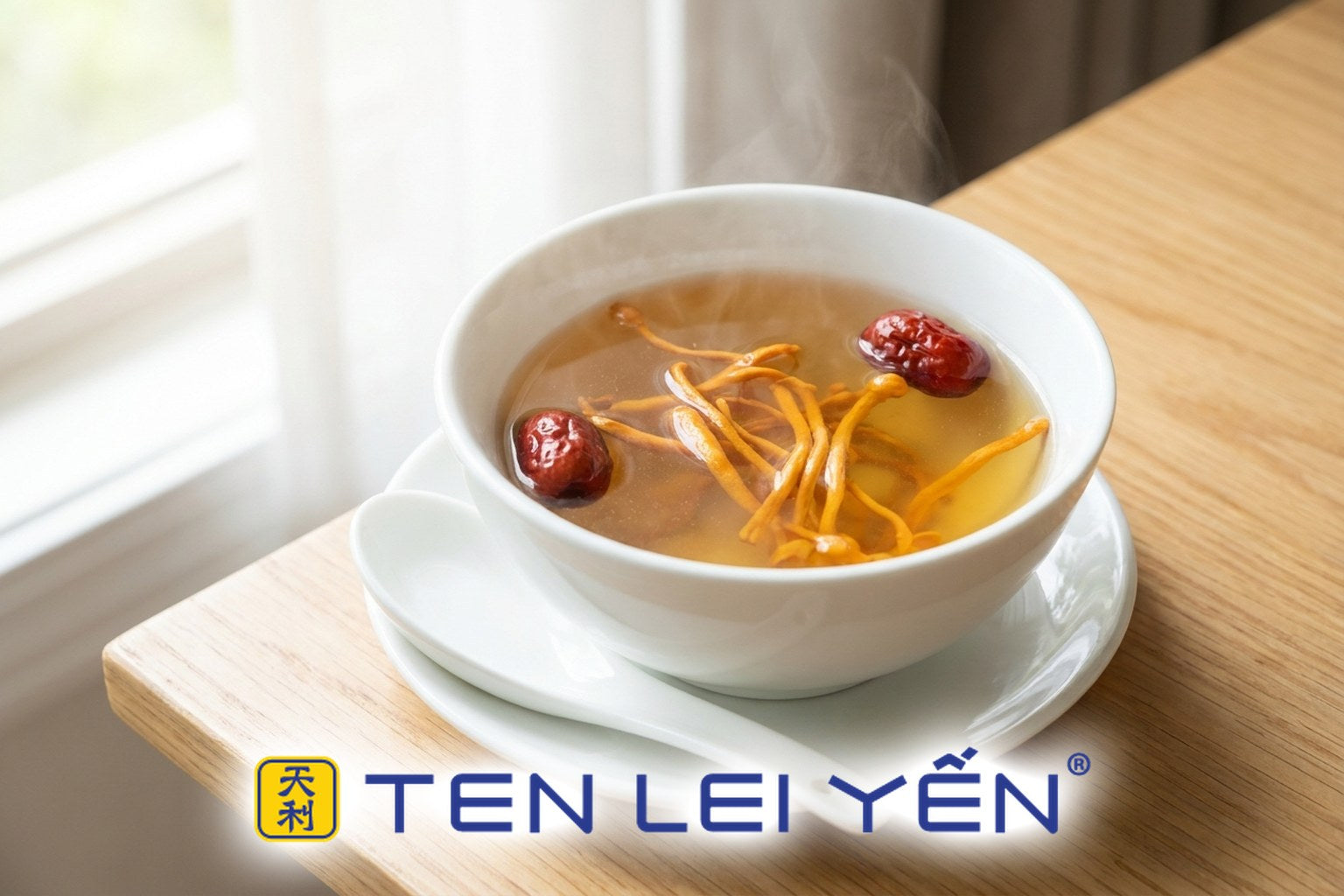
Don't pour out the cordyceps cooking liquid. The broth is where much of the flavor ends up, so when you double-boil or simmer cordyceps, strain and keep the golden broth as a soup base or a warm drink. You can also gently reuse the softened pieces once or twice more before their flavor fades.
Key takeaways
- The cooking broth carries much of the mild, earthy flavor and golden color of cordyceps, so keep it rather than discard it.
- Strain the broth and use it as a base for soups or congee, or sip it warm on its own.
- Softened cordyceps pieces can be steeped or simmered again once or twice, with lighter flavor each round.
- Build a fuller pot by pairing cordyceps with chicken, pork bone, red dates, longan, or goji.
- Refrigerate leftover broth and use it within about 3 days, or freeze it in portions.
Where the Flavor Goes
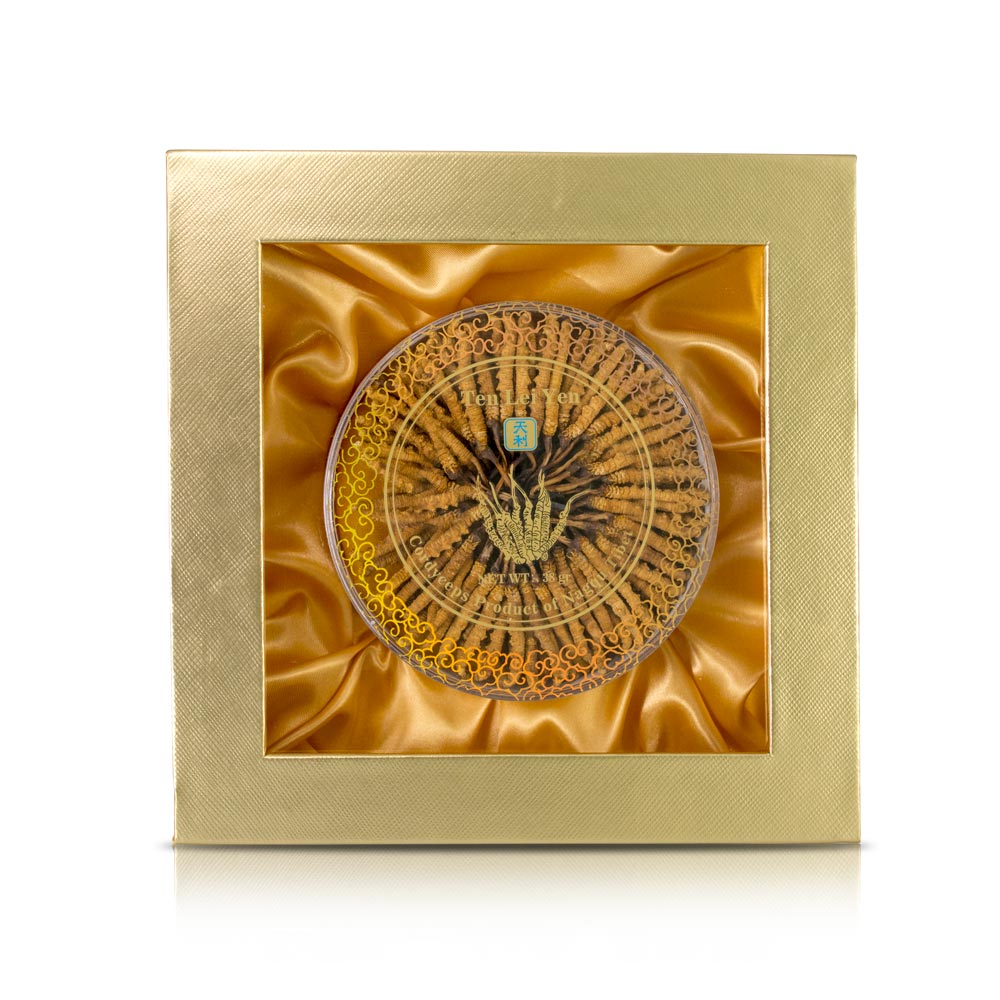
During double-boiling or simmering, cordyceps slowly releases its mild, earthy, faintly sweet flavor and its golden color into the liquid. That means the broth is the payoff, not a byproduct. If you strain and toss the liquid, you are pouring away the very part that carries the most taste. Whether you start from cultivated cordyceps or whole wild cordyceps, the same idea holds: keep the liquid.

Keep and Use the Broth
Once cooking is done, strain the broth to remove any grit or loose fibers, then put it to work. Use it as a base for soups or congee, where it adds a soft golden color and a gentle savory note. You can also simply sip it warm, like a light tea. For a deeper pot, fold the broth into chicken or pork-bone soup near the end of cooking so its flavor carries through. For details on the cooking step itself, see our kitchen guide to cooking cordyceps militaris.
Reuse the Pieces
Both cultivated cordyceps militaris and whole wild cordyceps can be steeped or simmered again once or twice after the first round, with a lighter flavor each time. A simple way to reuse them is in a small infuser bottle with hot water. When you have drawn out what you can, the softened pieces are edible, so eat them rather than discard them. For guidance on amounts and reusing whole wild strands, see how to use whole wild cordyceps.
Build a Bigger Pot
To round out the flavor, pair cordyceps with chicken, pork bone, red dates, longan, or goji. These give the broth a fuller, sweeter-savory body. For a savory pot, a couple of slices of ginger fit right in and warm up the aroma. Adjust to taste and let everything simmer together so the flavors settle.
Store the Leftover Broth
If you have broth left over, let it cool, then refrigerate it and use it within about 3 days. For longer keeping, freeze it in small portions so you can drop a cube or two into future soups. Reheat gently before serving.
By Alina @ TLY