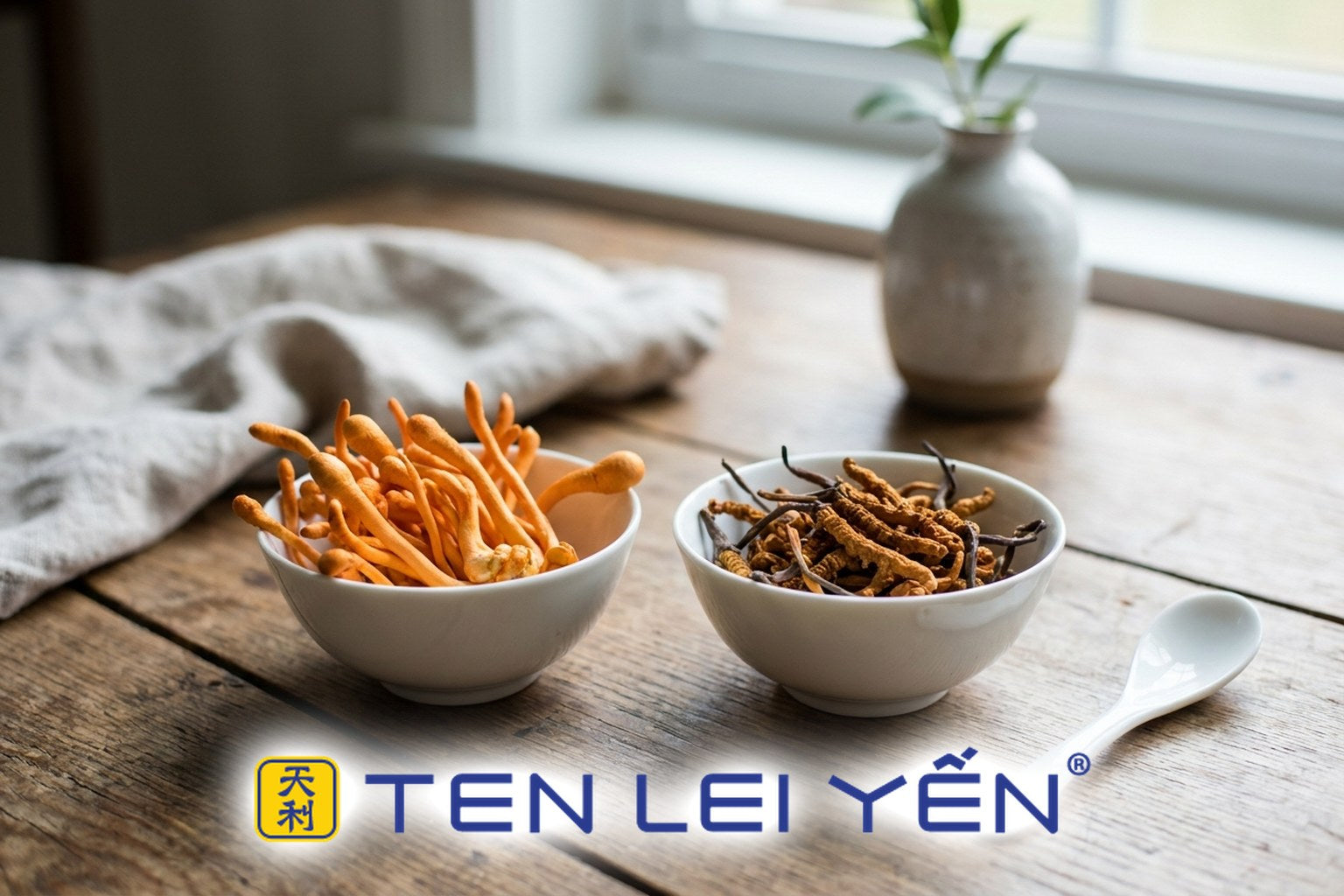
Most cordyceps sold is dried, but fresh cordyceps - usually cultivated cordyceps militaris - shows up at some markets. The practical differences come down to storage, handling, flavor concentration, and how you cook them. Here is a straightforward comparison so you can choose with confidence.
- Dried cordyceps is shelf-stable and travels well; fresh is perishable and local.
- Fresh militaris is bright orange, soft and juicy; dried is firm with a more concentrated aroma.
- Dried whole cordyceps suits double-boiled soups, broths, teas and rice; fresh suits quick cooking added near the end.
- Both taste mild, earthy and savory - fresh a little milder, dried more concentrated.
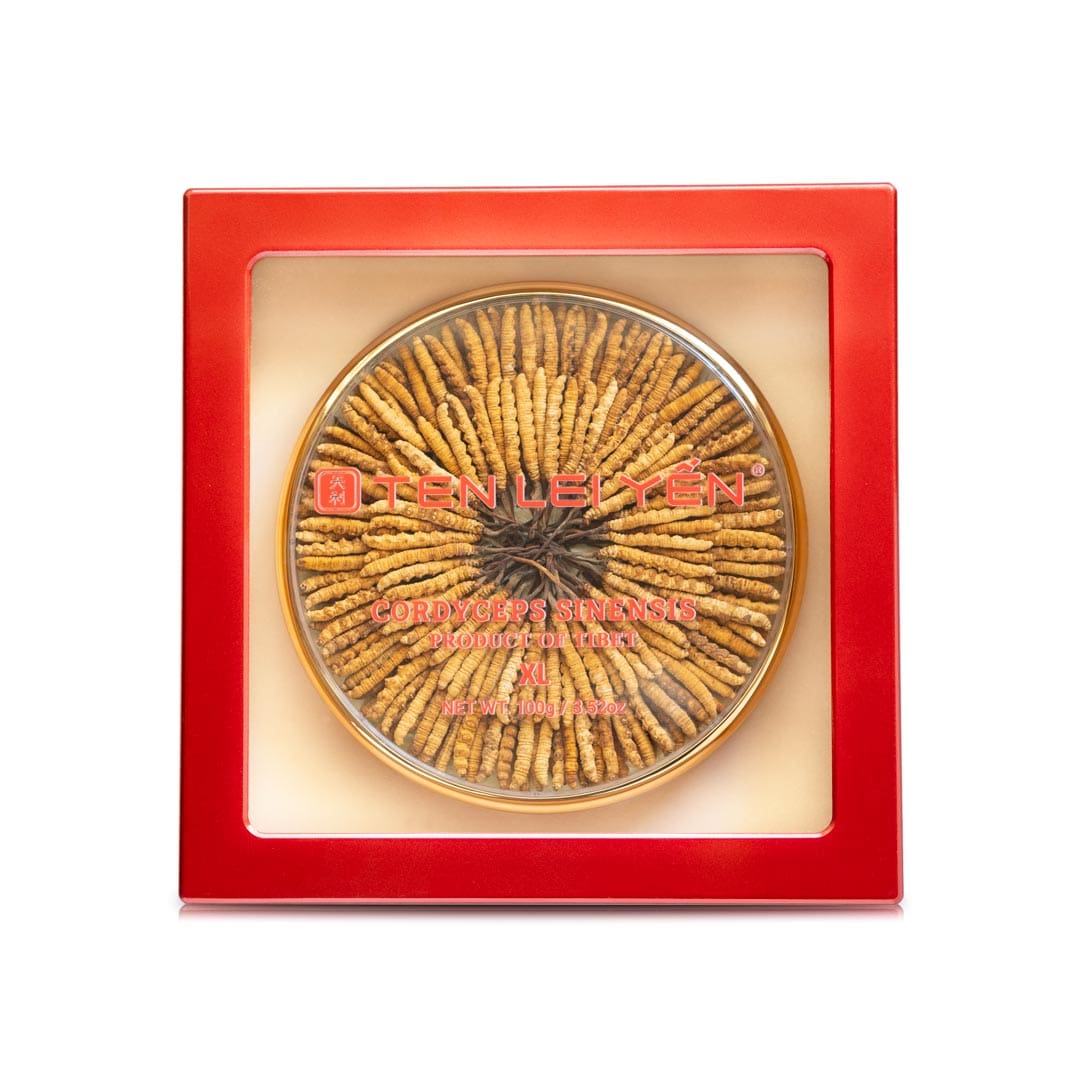
- Ten Lei Yen sells dried wild and cultivated cordyceps for long shelf life.
Fresh vs dried at a glance
| Fresh cordyceps | Dried cordyceps | |
|---|---|---|
| Look | Bright orange, soft, moist | Firm, tan to golden-brown |
| Storage | Refrigerate; use within a few days | Airtight, cool and dry; long shelf life |
| Flavor | Mild, juicy, delicate | Mild, more concentrated aroma |
| Best uses | Quick stir-fries, light soups, added near the end | Double-boiled soups, broths, teas, rice |
| Availability | Local and seasonal | Widely available year-round |

Storage and shelf life
This is the biggest everyday difference. Fresh cordyceps is perishable: keep it refrigerated and use it within a few days. Dried cordyceps, stored airtight in a cool, dry place, keeps for a long time - which is exactly why the market runs on dried. For details, see our guide on keeping dried cordyceps fresh.
Flavor and texture
Both fresh and dried cordyceps taste mild, earthy and gently savory. Fresh militaris is softer and juicier with a lighter flavor. Drying concentrates the aroma, so a small amount of dried cordyceps carries more scent into a pot. Neither is strong or bitter.
How you cook each
Dried whole cordyceps is rinsed, then simmered or steeped so it can slowly release its aroma - think double-boiled soups, broths, teas, and rice dishes. Fresh militaris cooks quickly, so it is usually rinsed and added near the end of a stir-fry or a light soup. If you are working with dried whole pieces, see how to use whole wild cordyceps.
Which should you buy
For most home kitchens, dried is the practical choice: it stores for a long time, is available year-round, and works in the classic double-boiled and simmered dishes. Fresh cordyceps is worth trying if it is local and you will cook it within a few days. To understand the two main types you will see, read the difference between cordyceps sinensis and militaris, then shop Wild Cordyceps and Cultivated Cordyceps.