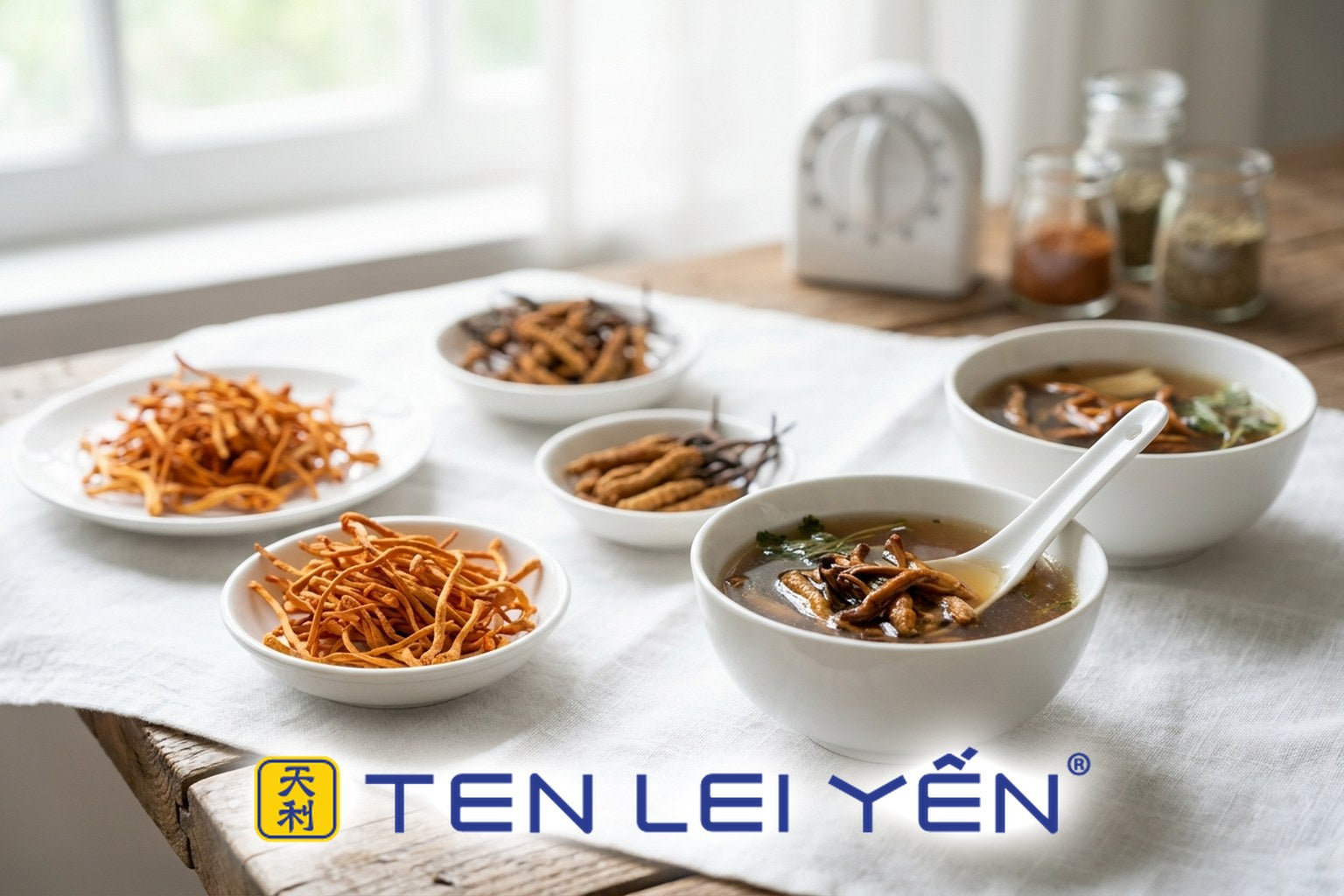
Cordyceps cooks in anything from a few minutes to a couple of hours, depending on how you use it: about 10 to 15 minutes for a hot tea, roughly 40 minutes to 2 hours for a double-boiled soup, the last 20 to 30 minutes of a congee, and just a few minutes in a stir-fry. It does not need long cooking to be edible. Cordyceps simply needs to soften and release its mild, earthy flavor, so the right time depends on the dish around it.
Key takeaways
- Cordyceps only needs to soften and give up its flavor, not cook through like meat.
- Quick tea: steep covered for about 10 to 15 minutes, or cold-steep several hours or overnight.
- Double-boiled soup: about 40 minutes to 2 hours; add cordyceps toward the end so it stays intact.
- Congee: stir it in for the last 20 to 30 minutes.
- Stir-fry: add it in the last few minutes so it keeps a gentle, snappy texture.
A simple timing guide by method
| Method | Rough time | When to add |
|---|---|---|
| Hot tea or infusion | 10 to 15 minutes, covered | From the start |
| Cold-steep tea | Several hours or overnight | From the start, chilled |
| Double-boiled soup | 40 minutes to 2 hours | Toward the end |
| Congee | Last 20 to 30 minutes | Stir in near the end |
| Stir-fry | A few minutes | Last few minutes |

Why the times vary so much
Cordyceps is not something you cook until done the way you would with meat or a root vegetable. It is already dried and ready; cooking is mostly about coaxing it back to a pliable texture and letting its flavor move into the liquid or the dish. A quick steep is enough to make a fragrant cup, while a long, gentle simmer lets the flavor settle into a broth over time.
Quick tea or infusion
For a simple cup, cover cordyceps with just-boiled water and let it steep for about 10 to 15 minutes. If you prefer a smoother, less concentrated drink, cold-steep it in the refrigerator for several hours or overnight. Either way, you can often re-steep the same pieces a second time.
Double-boiled soup
Soups are where cordyceps is most at home, and where longer, gentler cooking is typical. A double-boiled soup usually runs from about 40 minutes to 2 hours. Because the cooking is slow and low, add the cordyceps toward the end of the cook rather than at the very start, so the pieces stay whole and intact instead of breaking down.
Congee
In a pot of congee, stir cordyceps in for the last 20 to 30 minutes. That is long enough for it to soften and flavor the rice porridge without overcooking.
Quick stir-fry
For a stir-fry, cordyceps needs only the last few minutes in the pan. Add it near the end so it warms through and keeps a gentle, snappy bite rather than turning soft.
A note on wild versus cultivated
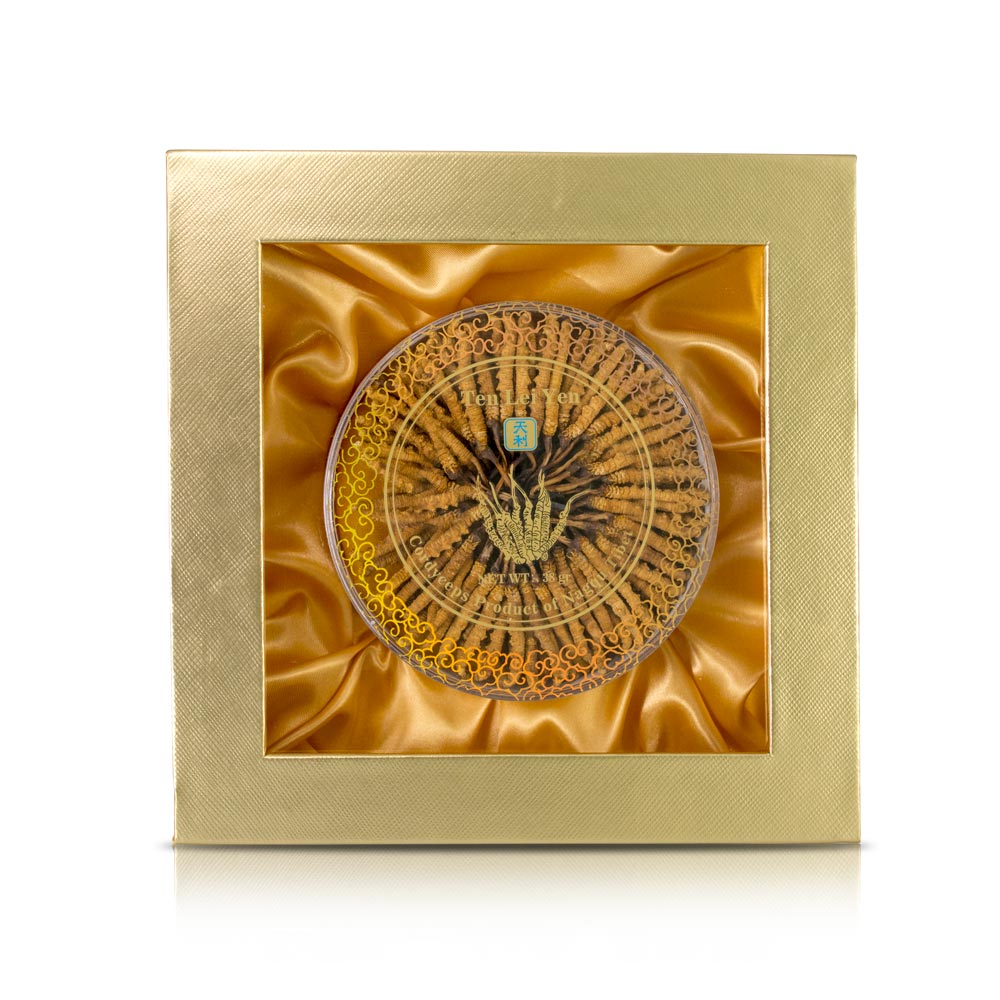
Both wild cordyceps sinensis and cultivated cordyceps (the short orange-gold stalks, sometimes called cordyceps flower) follow the same idea: they need to soften and release flavor, not cook through. Cultivated stalks are a little firmer and take well to quick steeps and stir-fries, while whole wild pieces are a natural fit for slow soups. For more on using whole pieces, see our guide on how to use whole wild cordyceps, and browse our wild cordyceps and cultivated cordyceps.
FAQ
Can you overcook cordyceps?
You will not ruin it, but long, hard boiling can make the pieces soft and cause them to break apart. For soups, add cordyceps toward the end so it keeps its shape.
Do you need to soak cordyceps before cooking?
A brief rinse is usually enough. A short soak can help for a stir-fry, but in soups and teas the cordyceps softens as it cooks or steeps.
By Alina @ TLY