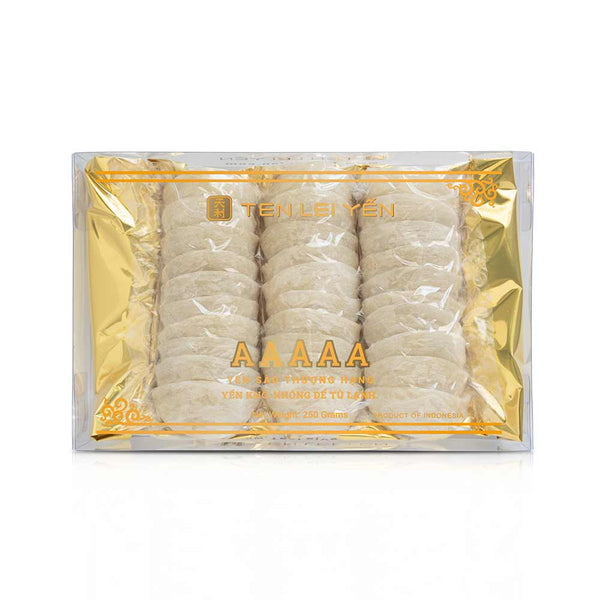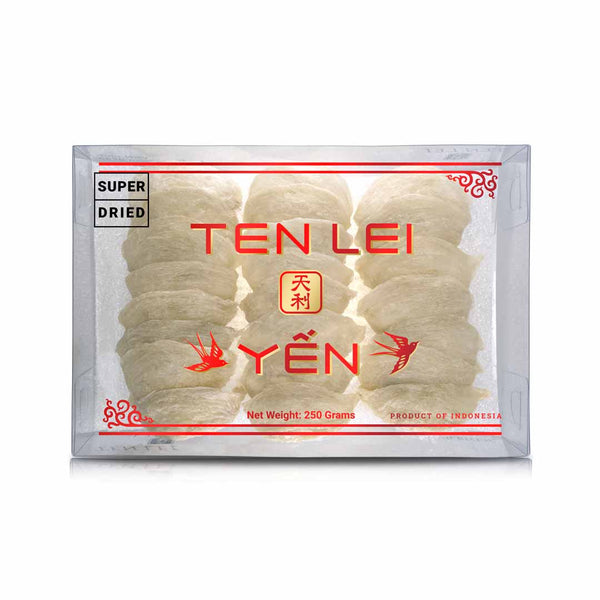
Yes, edible bird's nest is made of bird saliva, and nothing else. At Ten Lei Yen in Westminster's Little Saigon, we sell nest that a small bird called a swiftlet builds entirely from its own hardened saliva, which is why some people jokingly call bird's nest soup "bird spit soup."

Regular price
$800
Sale price
$725
So is bird's nest really bird spit?
It really is. A swiftlet has enlarged glands under its tongue, and during nesting season it produces a sticky saliva that it lays down in thin strands. The strands dry in the air and harden, and layer by layer they form a small cup attached to a wall. There's no trick to it and no hidden ingredient. The nickname is accurate, it's just not the whole story, because the strands are what people have prized for centuries as a delicacy at family tables.
Is it a swallow or a swiftlet?
You'll often see "swallow's nest" on menus and labels, and that's a translation slip. The Chinese name, 燕窝, uses the character for swallow, and English labels carried that word over. In Vietnamese the nest is yến sào, and the bird is chim yến, the swiftlet. Swiftlets and swallows are different birds. The one behind the white nest we carry is the edible-nest swiftlet, Aerodramus fuciphagus, which is the species Indonesia is known for. There are also black-nest swiftlets. Their nests contain feathers worked in with the saliva, so they're a different product with a different look, and that isn't what we stock.
Does the bird use twigs, grass or mud?
No. A white nest is hardened saliva strands only. The bird builds it over several weeks, laying down strand after strand until the cup is deep enough to hold its eggs. If you'd like to see how that looks up close, we wrote about it in how a swiftlet builds, strand by strand.
Where does it come from?
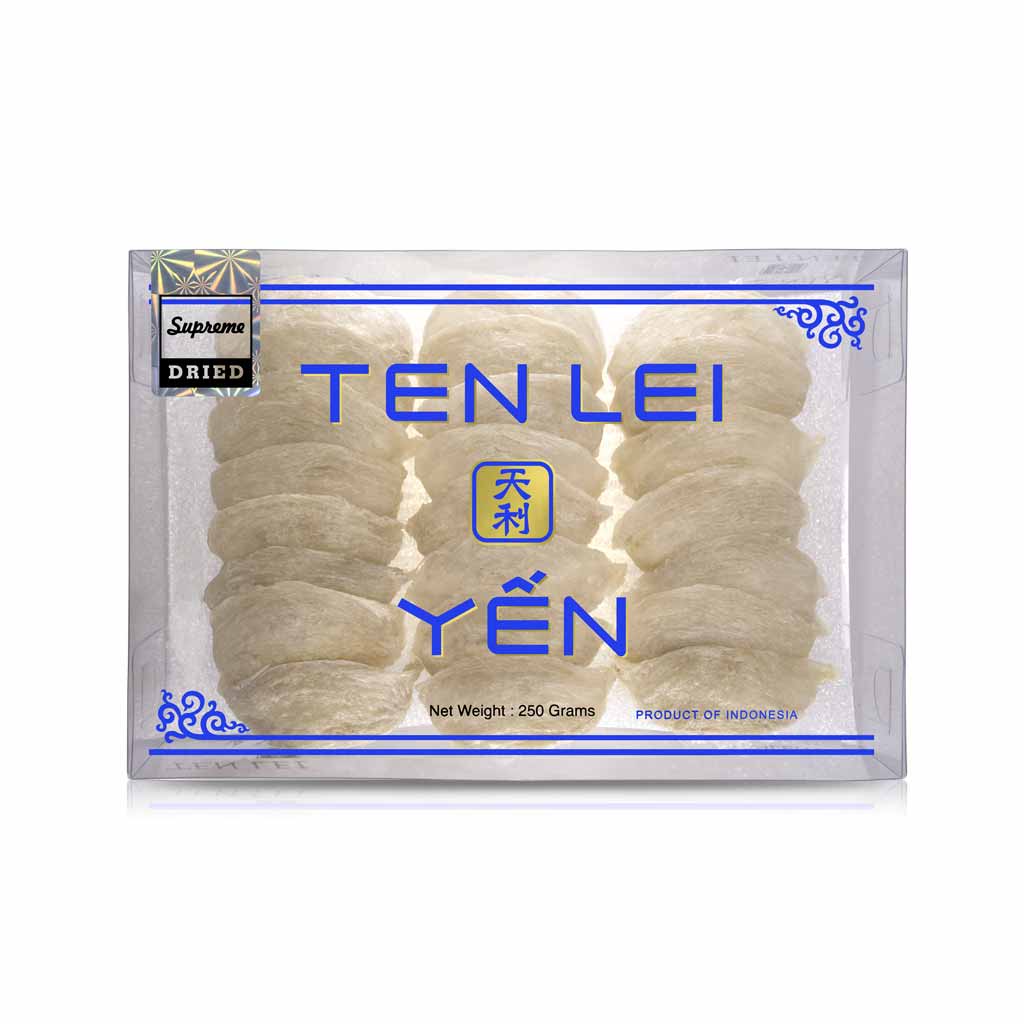
Most of the world's edible nest comes from Southeast Asia, mainly Indonesia, Malaysia, Thailand and Vietnam. Ours is Indonesian. We import it directly and clean it by hand, so what reaches our counter and your doorstep is the same nest we cook with ourselves. Nest from our Blue Label collection is a good place to start if you're curious.

What does it look like, dry and cooked?
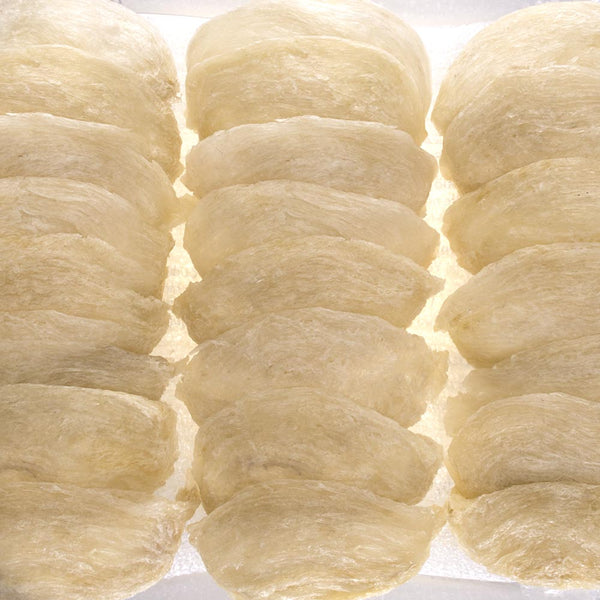
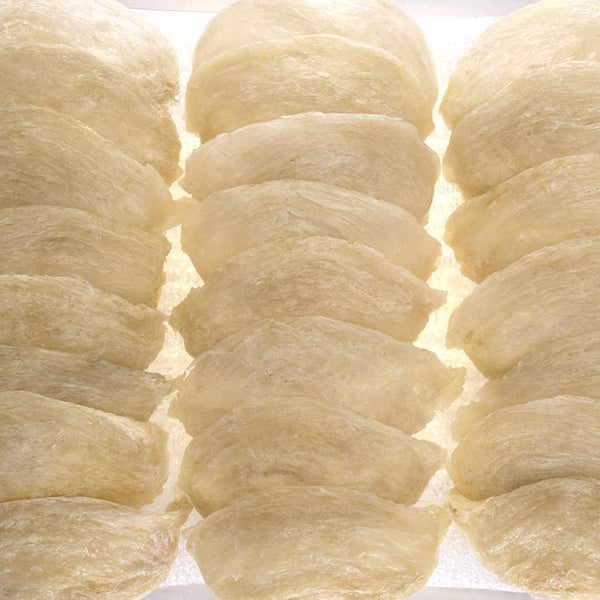
Dry, a nest is a shallow half-cup of fine, ivory-colored strands, pressed together and a little brittle. Most people expect something rough like a twig nest, and they're surprised by how delicate it is. After soaking and gentle cooking, the strands soften into a translucent, silky tangle that looks a bit like clear noodles.
What does it taste like?
Very little, and that's the point. The flavor is mild and faintly like egg white, and the nest takes on whatever it's cooked with, usually rock sugar or a light broth. The texture is the real draw: soft, slightly slippery, with a gentle bite. If you're ready to cook, soak dry nest in cool water for 4 to 6 hours or overnight, then double-boil it for about 40 minutes.
Is it the same as the bottled bird's nest drinks?
It's the same ingredient, but the amount of nest in each serving can be very different. The bottled drinks you see on supermarket and warehouse-store shelves are a ready-to-drink format, while dry nest is the whole, raw ingredient you prepare yourself. We lay out the details in what's actually in a ready-to-drink bird's nest, so we won't repeat it here.
Is it the same as snow fungus or "vegetarian bird's nest"?
No. Snow fungus is a mushroom, sometimes sold under the "vegetarian bird's nest" name because its soft, gelatinous strands resemble nest when cooked. It's a different ingredient from a different source. Our comparison of bird's nest and snow fungus goes through the differences.
Why is a little bit so expensive?
Each nest is tiny, built strand by strand, found in hard-to-reach places, and cleaned by hand to remove fine feathers and debris. A whole nest weighs only a few grams, so a lot of careful work sits behind a small amount. We break that down in why edible bird's nest is so expensive.
We describe our products by what they are, where they come from and how to cook them; questions about diet or medical needs belong with your physician. If you're in Westminster, stop by 9741 Bolsa Ave, Suite 107 and we'll show you a nest up close. Or order from tenleiyen.com and we'll ship it anywhere in the US.



 or
 or