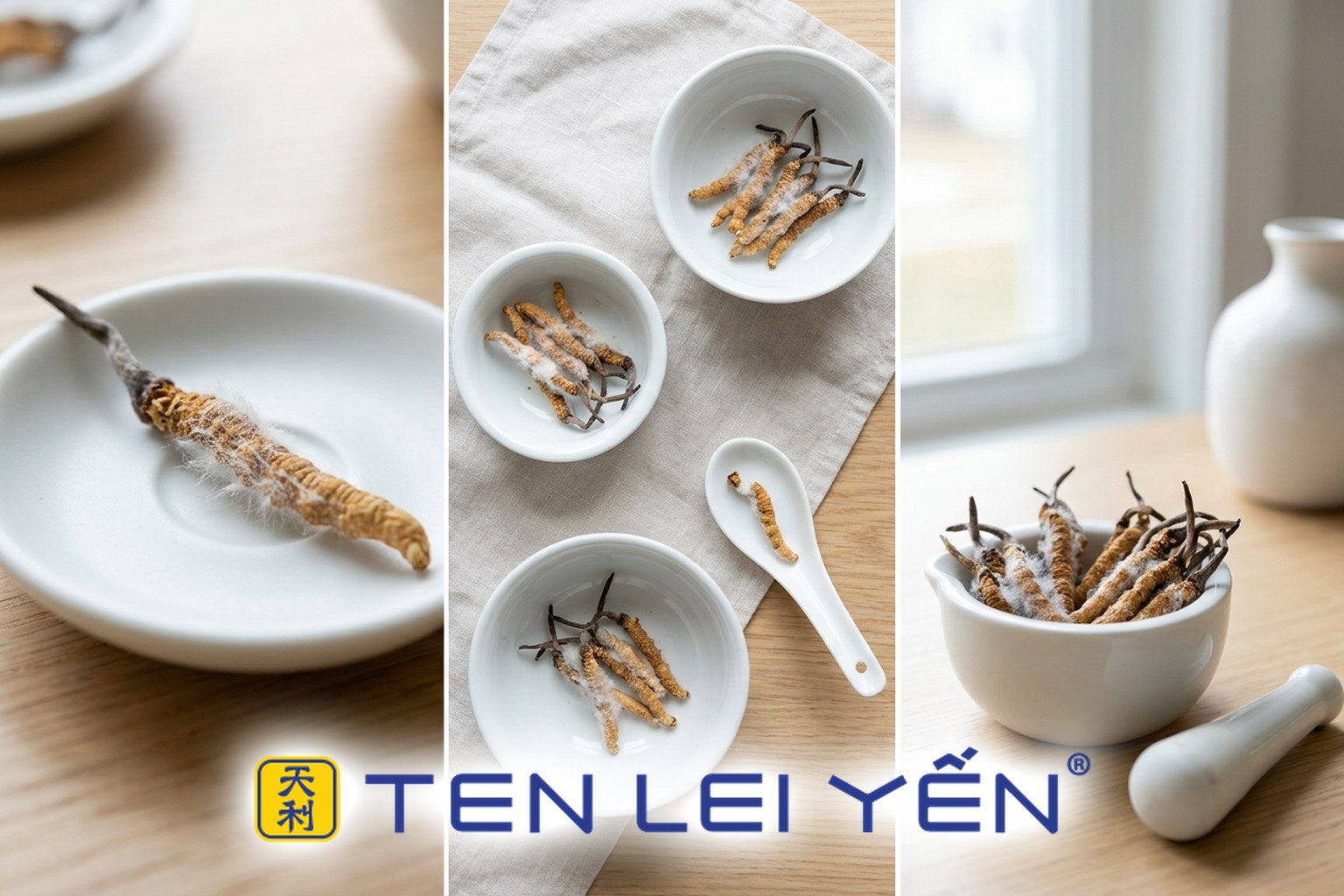
A little pale, dry, cotton-like fuzz on dried cordyceps is usually natural mycelium, not mold. The quick test is color, texture, and smell: white or cream, dry and hair-like, with a mild earthy smell points to mycelium, while green, black, gray, or pink patches that look slimy or smell sour mean mold — and those should be discarded. When in doubt, throw it out.
Key takeaways
- Pale white or cream, dry, cottony fuzz on dried cordyceps is usually the fungus's own mycelium.
- Green, blue-green, black, gray, or pink patches are signs of mold.
- Use three quick checks: color, texture, and smell.
- Mold comes from moisture, age, and poor storage — humid summers are a common trigger.
- When you are not sure, discard it. It is not worth the risk.
What the White Fuzz Usually Is
Cordyceps is a caterpillar-and-stalk fungus, and like any fungus it grows fine, thread-like filaments called mycelium. On cultivated cordyceps militaris and on whole cordyceps, a thin layer of pale, dry, hair-like fuzz can appear near the base or along the stalk, especially after time in cool storage. This growth is the mushroom's own tissue, so a light, even, cream-colored fuzz is generally harmless and does not mean the piece has spoiled.

Mycelium vs Mold: Three Quick Checks
When you spot fuzz, run these three checks before deciding.
| Check | Likely mycelium (fine) | Likely mold (discard) |
|---|---|---|
| Color | White or cream | Green, blue-green, black, gray, or pink |
| Texture | Dry, fluffy, hair-like | Slimy, wet, or matted |
| Smell | Mild, earthy, woodsy | Sour, musty, ammonia-like, or off |
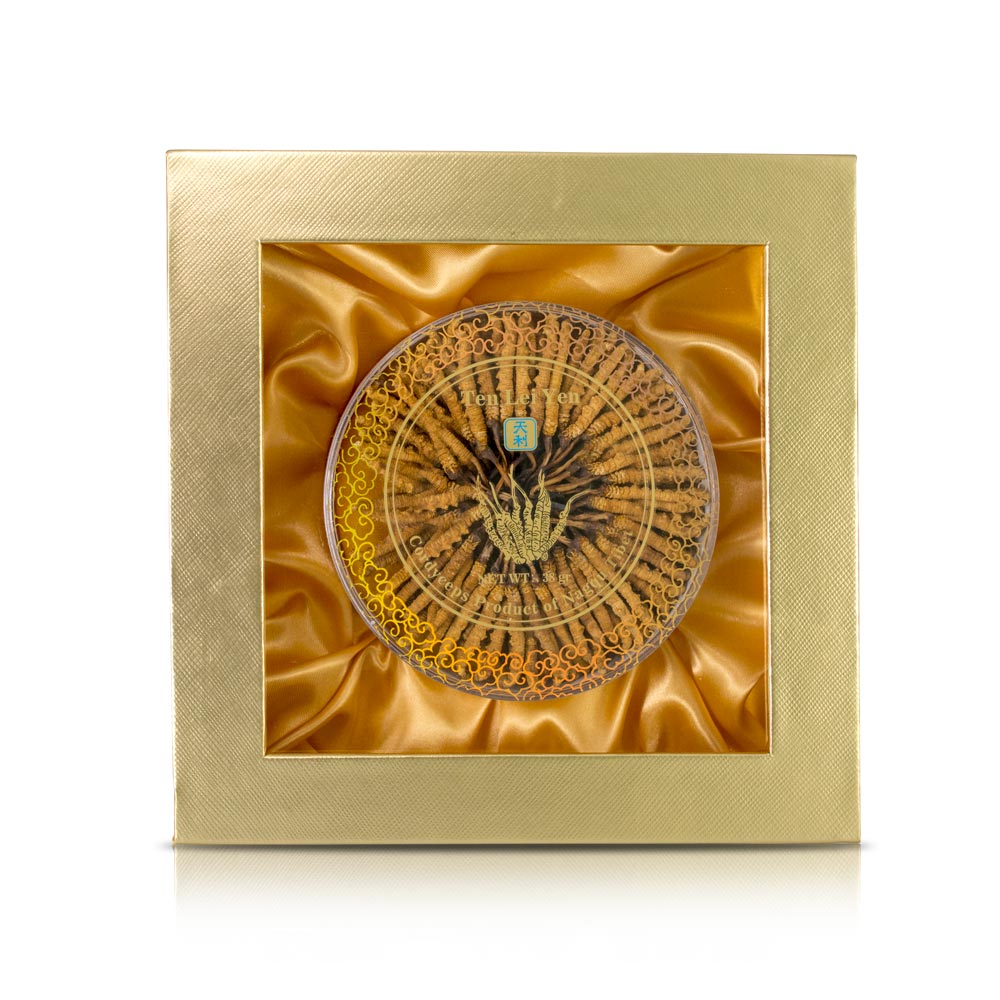
If all three point to white, dry, and mild, you are most likely looking at mycelium. If any one of them shows a colored patch, a slimy surface, or an off smell, treat it as mold. You can read more about what genuine cordyceps looks like to help tell normal features from problems.
What Causes Mold
Mold on dried cordyceps comes down to three things: moisture, age, and poor storage. Dried cordyceps is stable as long as it stays dry, but if humidity creeps into the container the surface can pick up enough moisture for mold spores to take hold. Humid summer conditions are a common trigger, and older pieces that have been stored loosely or opened often are more exposed.
How to Store Cordyceps So It Stays Dry
Keep cordyceps in an airtight container somewhere cool, dark, and dry, away from humidity and direct sunlight. Add a food-safe desiccant packet if you like, and reseal the container promptly after each use. Dried cordyceps keeps well for a long time as long as it stays dry, so the goal is simply to keep moisture out. For a full walkthrough, see our guide on how to store dried cordyceps.
When You're Not Sure
If you cannot tell whether the fuzz is mycelium or mold, err on the side of caution and discard it. It is not worth the risk. This appearance guide is about food safety and what cordyceps looks like, not a substitute for your own judgment — if the color, texture, or smell seems off in any way, throw it out.
Browsing for new stock? Explore our wild cordyceps and cultivated cordyceps collections.
By Alina @ TLY