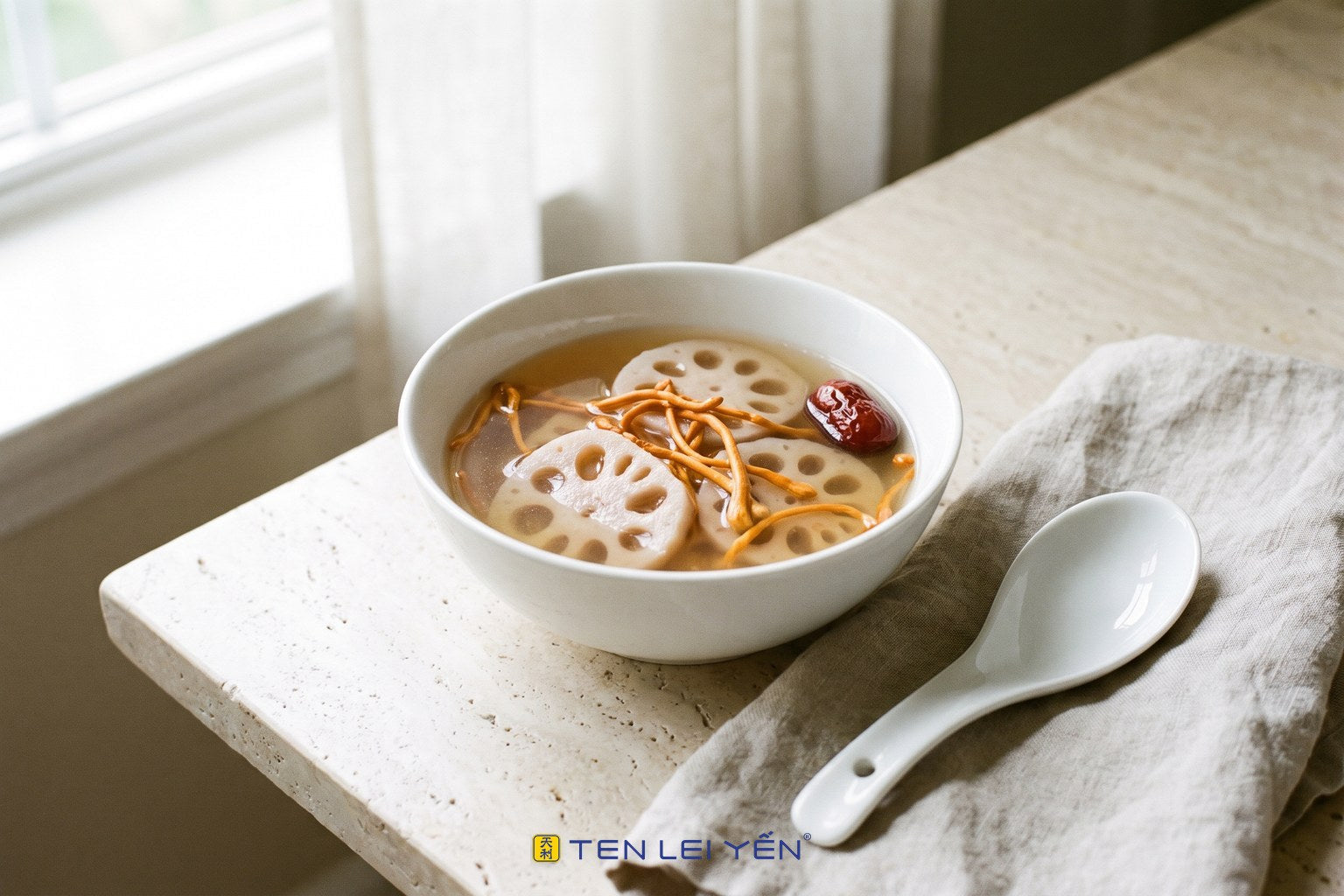
A clear cordyceps and lotus root soup is one of the simplest ways to cook with cordyceps: you simmer sliced lotus root with a little lean pork until the broth turns light and sweet, then add a few cordyceps near the end so they soften without overcooking. It is a gentle, clear-broth soup, no thick sauces or strong seasoning, which makes it comfortable to drink on a warm evening as well as a cool one.
Key takeaways
- Lotus root needs the longest cooking; it simmers roughly 1 to 1.5 hours until tender.
- Add cordyceps toward the end, about the last 20 to 30 minutes, so the slender stalks soften but keep their shape.
- A few slices of lotus root, some lean pork or pork ribs, a small handful of cordyceps, and an optional red date are all you need.
- The finished broth is light and clear with a mild, earthy, savory taste, not heavy or oily.
- Both wild (sinensis) and cultivated (militaris) cordyceps work here; use whichever you have.

What you will need
- 1 medium section of lotus root, peeled and cut into rounds about a quarter-inch thick
- About half a pound of lean pork or a few pork ribs
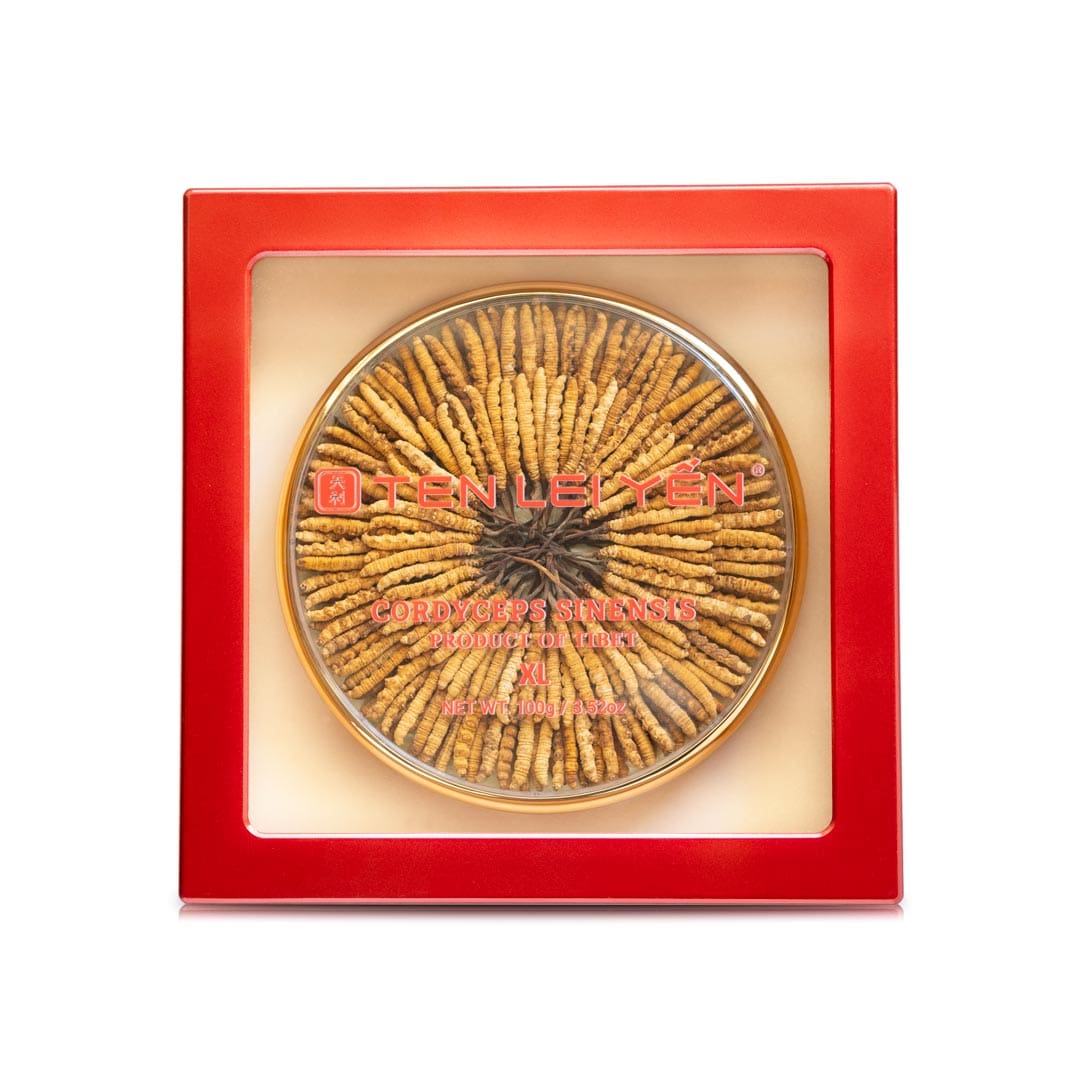
- A small handful of cordyceps (roughly 3 to 5 grams of dried whole stalks, rinsed)
- 1 red date, optional
- 6 to 7 cups water
- Salt, to taste, near the end
How to make it
1. Blanch the pork
Bring a pot of water to a boil, add the pork, and let it bubble for a couple of minutes. Drain and rinse off the foam. This small step keeps the finished broth clear rather than cloudy.
2. Simmer the lotus root and pork
Put the pork and lotus root rounds into a clean pot with 6 to 7 cups of fresh water. Bring to a boil, then lower the heat and simmer gently, partly covered, for about 1 to 1.5 hours. The lotus root should turn tender and the broth should taste faintly sweet.
3. Add the cordyceps
Rinse the cordyceps quickly under cool water first. Add them, along with the red date if using, for the last 20 to 30 minutes of simmering. Keeping the cordyceps to the end lets the stalks soften and release their earthy flavor without being cooked down too far.
4. Season and serve
Taste and add a little salt near the end. Ladle into bowls and serve warm. The cordyceps stalks are soft enough to eat, so there is no need to fish them out.
A double-boiled version
If you prefer a very clear, delicate broth, use a double boiler: place the pork, lotus root, cordyceps, red date, and hot water in a lidded ceramic pot, set it inside a larger pot of simmering water, and let it steam gently for about 2 hours. This slower method keeps the broth especially clean and light.
Notes and swaps
- Lean pork gives a lighter broth; pork ribs give a slightly richer one. Either works.
- Cultivated cordyceps (the short orange-gold militaris stalks, sometimes called cordyceps flower) cook a little faster than wild sinensis pieces; both are added near the end.
- Keep the seasoning minimal so the clear, mild broth stays the focus.
- Leftovers keep in the refrigerator for a day or two; reheat gently.
Want to choose your cordyceps first? Browse wild cordyceps and cultivated cordyceps.
By Alina @ TLY