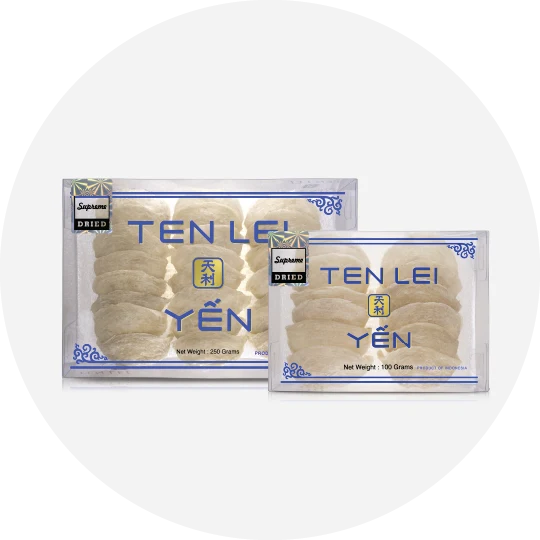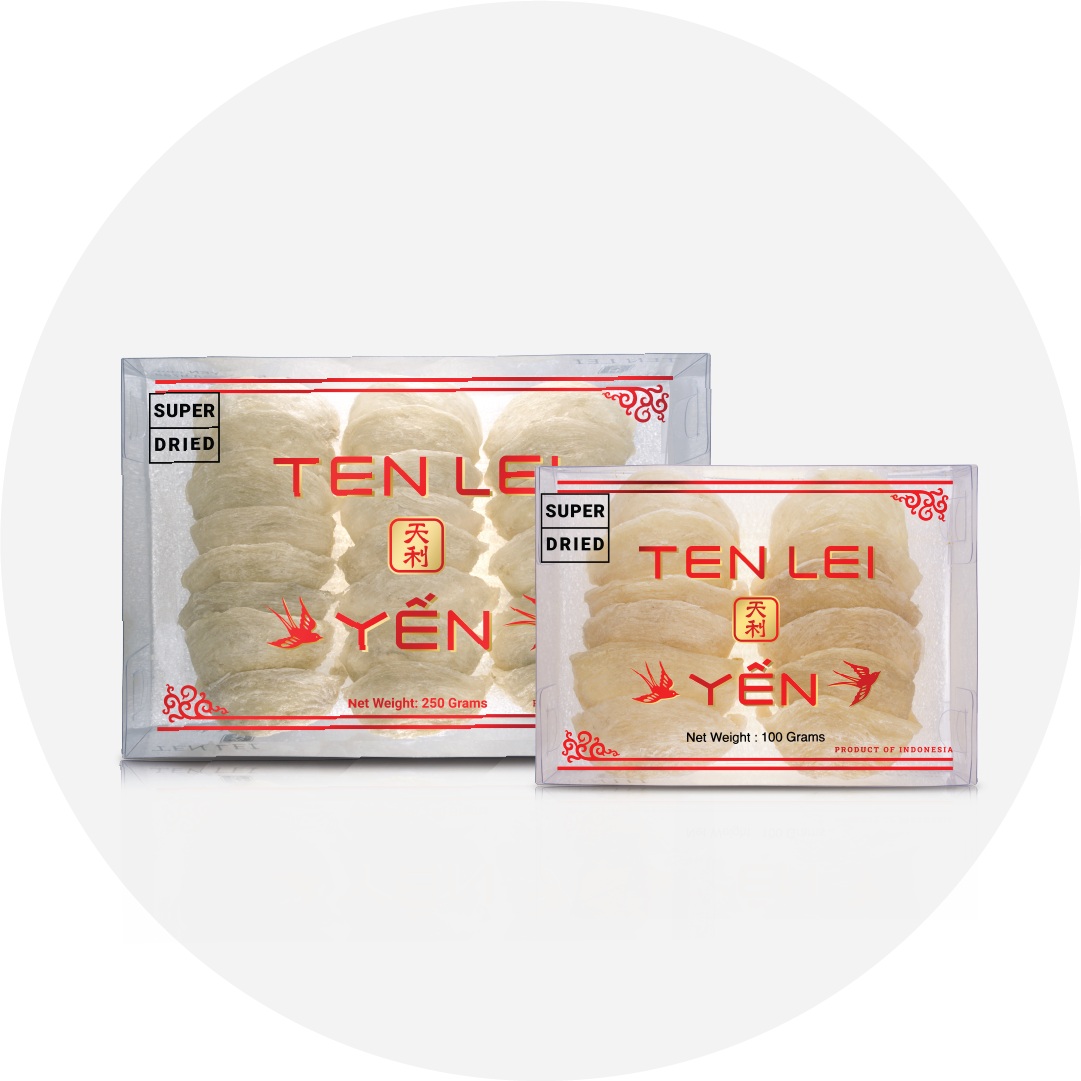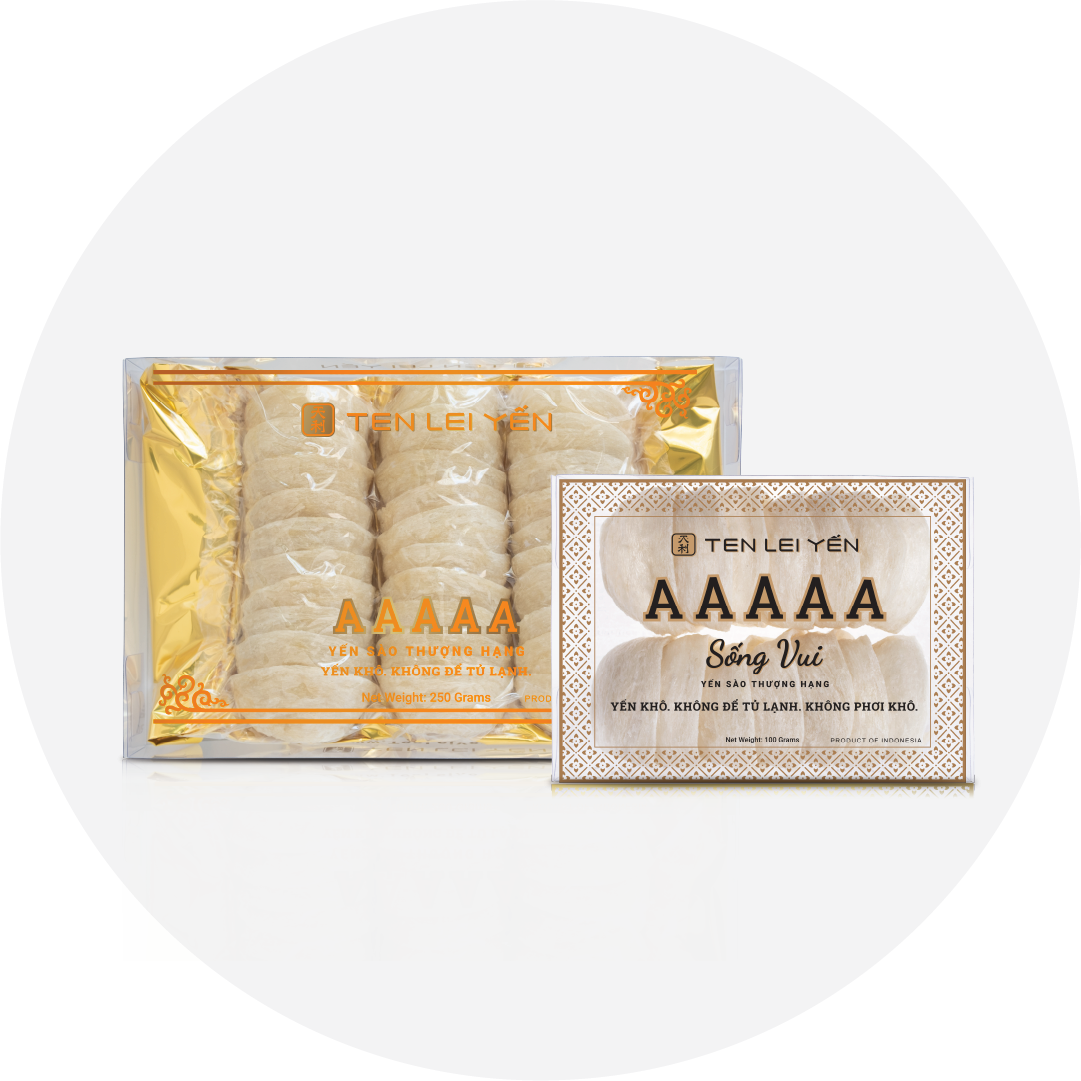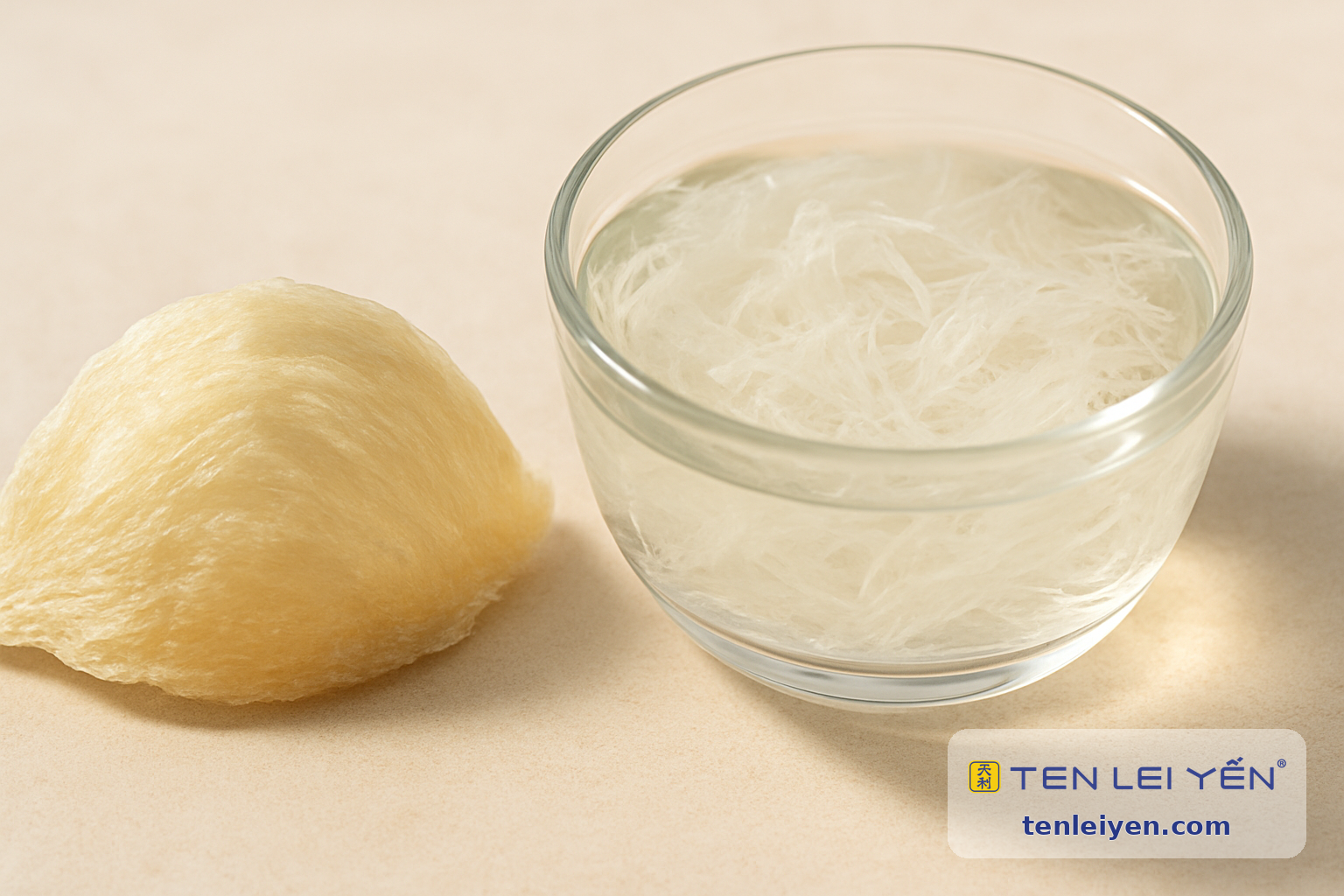
Genuine edible bird's nest has an irregular, natural shape, an ivory to slightly yellowish semi-translucent color, a faint egg-white aroma, and a light, crisp dry texture. When soaked in clean water it expands to roughly three to four times its size and separates into fine, distinct strands while the water stays clear. Overly uniform shapes, an unnaturally bright-white color, strong chemical or fishy odors, and water that turns cloudy are common warning signs. Below is a practical, factual checklist you can use before and after buying.
Key takeaways
- Genuine raw nest is ivory to slightly yellowish, irregular in shape, with a faint egg-white aroma.
- It expands three to four times in clean water and needs hours to soften (4 to 6 hours or overnight).
- A piece that fully softens in 30 to 60 minutes has usually been pre-cooked or heavily processed.
- No single home test is conclusive; favor transparent sellers and use lab testing to verify.

1. Color and luster
Authentic nest is usually ivory white to slightly yellowish with a soft, natural sheen and some color variation between pieces. A uniform, unnaturally bright white can indicate bleaching, while a flat, dull surface with no translucency is another flag. Natural color is rarely perfectly even.
2. Shape and fibers
Real nest is built from fine, interwoven strands and has an irregular cup or boat-like shape. No two pieces look exactly alike, and you may occasionally see tiny feathers caught in the fibers. Pieces that look identical and machine-perfect, or that appear pressed and glued together, deserve closer inspection.
3. Aroma
Dry genuine nest carries a faint egg-white scent that becomes a little more noticeable after soaking, sometimes with mild woody or sea-air notes. A sharp chemical smell, a strong fishy odor, or an oily scent are not characteristic of clean, untreated nest.
4. The soak test and soak time
Place a small piece in clean, room-temperature water. Authentic raw nest gradually expands to about three to four times its dry size and separates into fine, springy strands, while the soaking water stays relatively clear. Many imitations or heavily adulterated pieces show little expansion, break down into a soft paste, or quickly turn the water murky.
How long a nest needs to soak is itself a useful signal. Genuine raw nest is sold uncooked, so it needs several hours to fully soften, typically 4 to 6 hours or overnight, and is then double-boiled to prepare. A piece that fully softens in only 30 minutes to an hour has usually been cooked or heavily processed before sale. Raw, unprocessed nest is what calls for the longer soak and the double-boiling step, so a very short soak time is a reason to ask more questions about how the product was made.
5. Common adulterants to know
Reported adulterants include coralline seaweed, tremella (white fungus), agar, fish bladder, and pork rind, which are added to increase weight or mimic appearance. Some of these can be told apart under a microscope. Other additives are water-soluble and harder to detect at home, such as sugar, hydrolyzed marine collagen, or MSG, which are absorbed into the fibers. This is why no single home test is fully conclusive on its own.
What this means when you buy
Use the checks above together rather than relying on any one of them. Favor sellers who clearly describe the origin, grade, and processing of their nest, who sell edible bird's nest in its natural dry form so you can inspect it, and who are transparent about how it is cleaned. If a price seems far below the market, ask what accounts for the difference. For definitive verification, laboratory testing is the most reliable method.
Related reading
- Dry edible bird's nest vs bottled ready-to-drink
- Chilled edible bird's nest with fresh mango and coconut (recipe)
FAQ
Does a few small feathers mean low quality? Not necessarily. Lightly cleaned natural nest can contain occasional fine feathers, which are removed during soaking and rinsing.
Is whiter always better? No. An unnaturally uniform bright white can be a sign of bleaching rather than higher quality.
Why does genuine nest take hours to soak? Raw, unprocessed nest needs several hours, typically 4 to 6 hours or overnight, to fully soften before double-boiling. A piece that softens in only 30 to 60 minutes has usually been pre-cooked or processed.
Can I fully verify authenticity at home? Home checks can reveal obvious problems, but water-soluble additives may not be detectable without laboratory analysis.