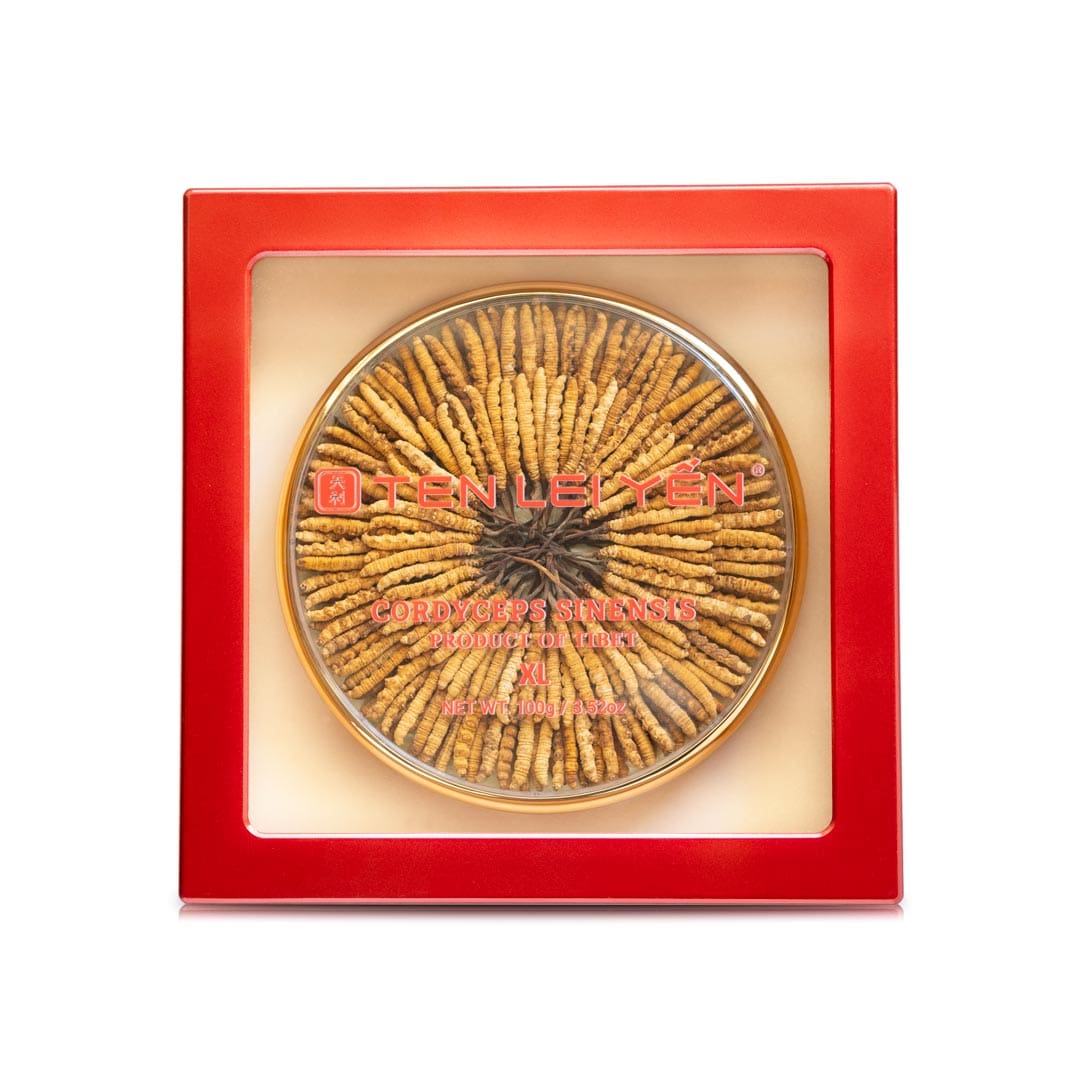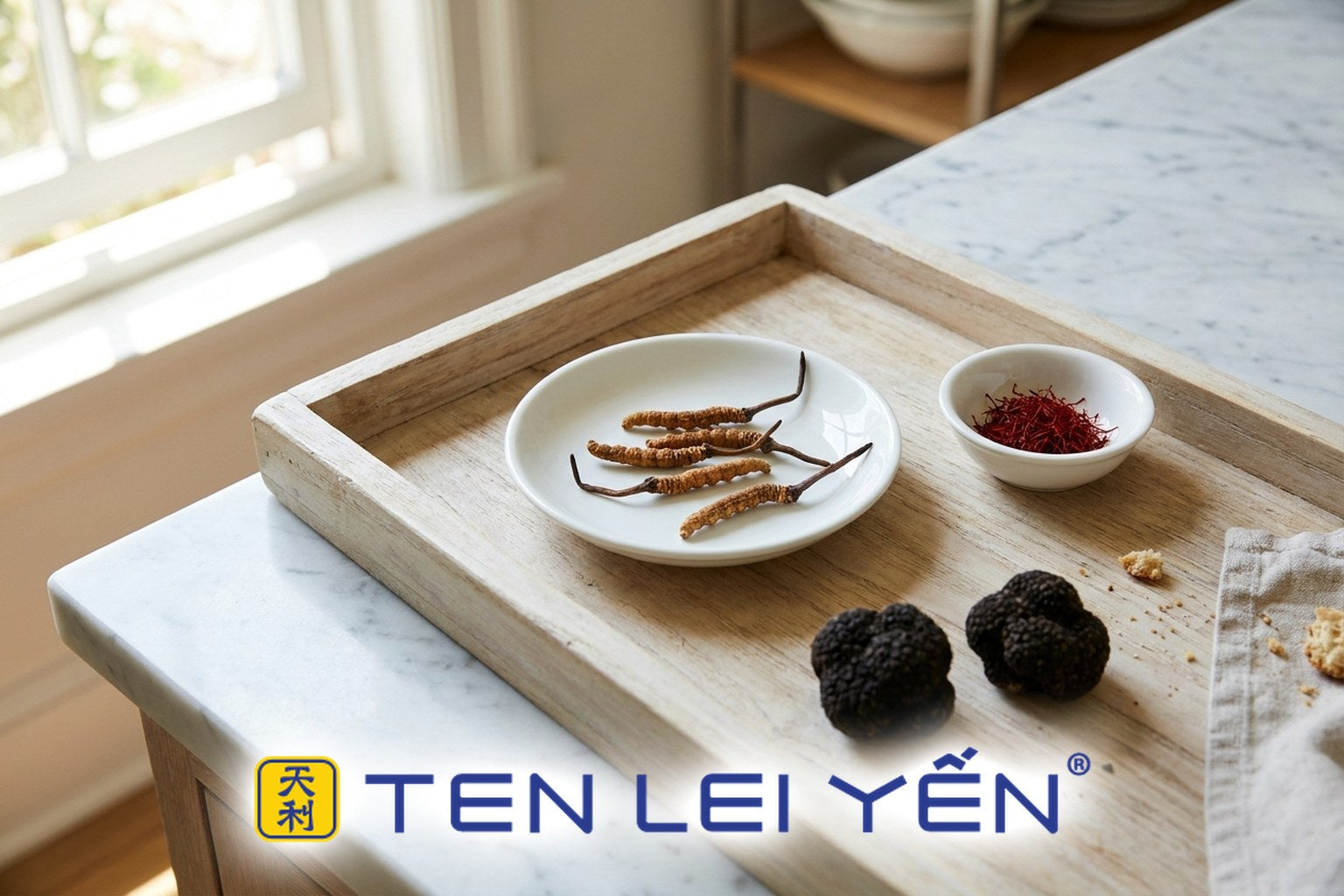
Wild cordyceps belongs to a very small group of foods whose price is driven almost entirely by scarcity — a group that also includes hand-picked saffron threads, wild truffles, and matsutake mushrooms. Unlike most kitchen ingredients, none of these can be reliably farmed at scale: each one has to be found, one piece at a time, in a narrow season and a specific place. That single fact is what pushes wild cordyceps into a market position closer to a luxury commodity than an everyday pantry item.
Key takeaways
- Wild cordyceps, saffron, truffles, and matsutake are all scarce because they resist large-scale farming, not because of any added ingredient or process.
- Wild cordyceps (Cordyceps sinensis) is collected by hand once a year on the Tibetan Plateau, in a window of only a few weeks.
- Reported market prices place wild cordyceps among the most expensive foods sold by weight anywhere in the world.
- Cultivated cordyceps militaris ("cordyceps flower") is a different, farm-grown product and is priced very differently from wild sinensis.
- Origin, grade, and piece count matter more than a single average price when comparing rare ingredients.
What makes an ingredient genuinely rare
Most "premium" foods are rare because of quality grading — a top cut of beef, a first-press olive oil. A smaller category is rare because there is no reliable way to grow more of it on demand. Saffron requires roughly 150,000 hand-picked crocus flowers to yield a single kilogram of dried stigmas. White and black truffles grow wild in symbiosis with specific tree roots and still cannot be reliably cultivated to match wild yields. Matsutake mushrooms refuse large-scale farming entirely and are foraged from forest floors in a short autumn window. Wild cordyceps sits in this same category: it can only be gathered, never grown to order.
How wild cordyceps compares
Wild cordyceps sinensis
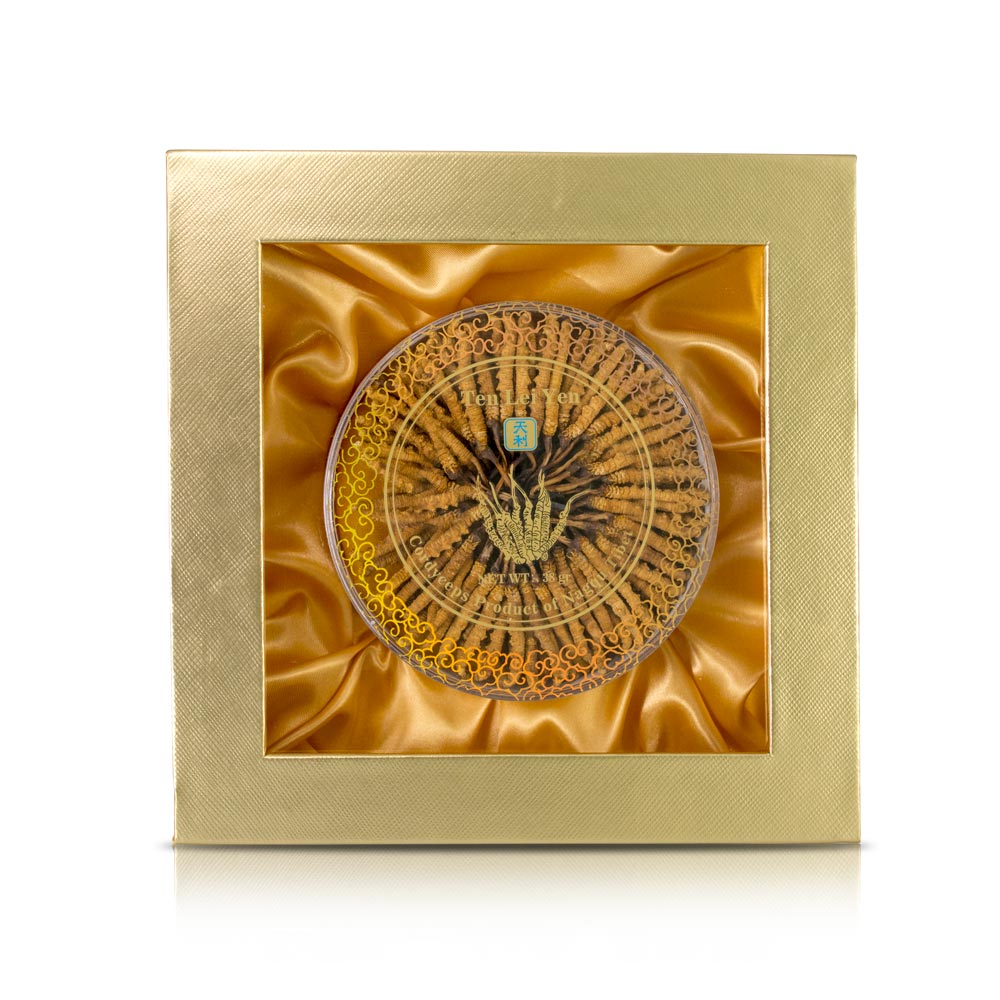
Wild cordyceps forms when a fungus grows inside a moth caterpillar living underground on the high-altitude grasslands of the Tibetan Plateau. Families hand-search the ground for a few weeks each spring, after the snow melts, looking for the fungus's slender stalk breaking the surface. There is one harvest a year, entirely by hand, at elevations above 3,000 meters. Reported market prices for the finest whole pieces run into the tens of thousands of dollars per kilogram, making it one of the most expensive dried foods sold anywhere.
Saffron
Saffron is the dried stigma of the crocus flower, harvested by hand each autumn. Because each flower yields only three tiny threads, and the flowers must be picked the same morning they open, saffron commands a high per-gram price even though the growing regions themselves are not scarce — the labor is the limiting factor.
Truffles
Black and white truffles grow wild underground near the roots of oak and hazel trees and are located with trained dogs. Yields swing sharply from year to year with rainfall and soil conditions, and white truffle in particular has resisted every attempt at reliable cultivation, keeping prices volatile and high in poor seasons.
Matsutake
Matsutake mushrooms grow in a narrow symbiotic relationship with pine forests and cannot be farmed. A strong wild season can bring prices down noticeably, while a poor one sends them climbing — the opposite of a crop that can simply be planted more of.

Why no amount of farming replaces the wild harvest
Cultivated cordyceps militaris — often sold as "cordyceps flower," short orange stalks grown on rice or grain substrate in controlled facilities — is a real and useful product for everyday cooking, but it is a different fungus with a different growing method, and it is priced accordingly. The same divide shows up with saffron (there is no cultivated substitute for hand-picked stigmas), truffles (cultivated truffière orchards exist but wild-forest truffles remain the benchmark), and matsutake (no commercial farming method exists at all). Wild cordyceps sinensis cannot be substituted by a lab-grown or farmed equivalent without becoming a different ingredient entirely.
What this means when you're buying
Because wild cordyceps is graded by size, piece count per unit weight, and how intact each specimen is, two boxes labeled "wild cordyceps" can be priced very differently depending on grade and origin — the same way vintage and region change a bottle of wine, or grade changes the price of saffron. Knowing the origin region and grade of a piece tells you more than a single headline price ever will.
Explore more
Browse our wild cordyceps and cultivated cordyceps collections. For related reading, see Wild Cordyceps Grades: How Size, Count, and Origin Shape the Price, What Is Nagqu?, and When Wild Cordyceps Is Harvested, and Why the Season Is So Short.
Frequently asked questions
Why is wild cordyceps so expensive compared to cultivated cordyceps?
Wild cordyceps sinensis can only be hand-collected once a year on the Tibetan Plateau, while cultivated cordyceps militaris is grown year-round on a substrate in controlled facilities. The difference in supply and labor is what separates their prices.
Is wild cordyceps really priced like saffron or truffles?
By weight, reported market prices for top-grade wild cordyceps are often higher than saffron and comparable to or above premium truffle prices, largely because both are collected by hand in a short window rather than farmed.
Does a higher price always mean a better piece of cordyceps?
Not necessarily on its own — grade, size, piece count, and how intact each specimen is all affect price. Comparing origin and grade side by side gives a clearer picture than price alone.
By Alina @ TLY