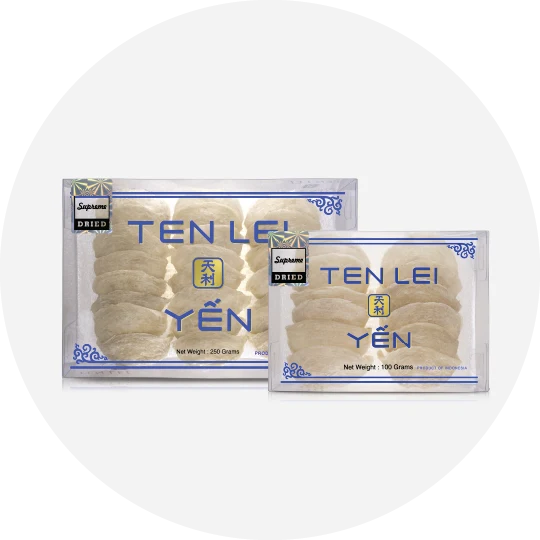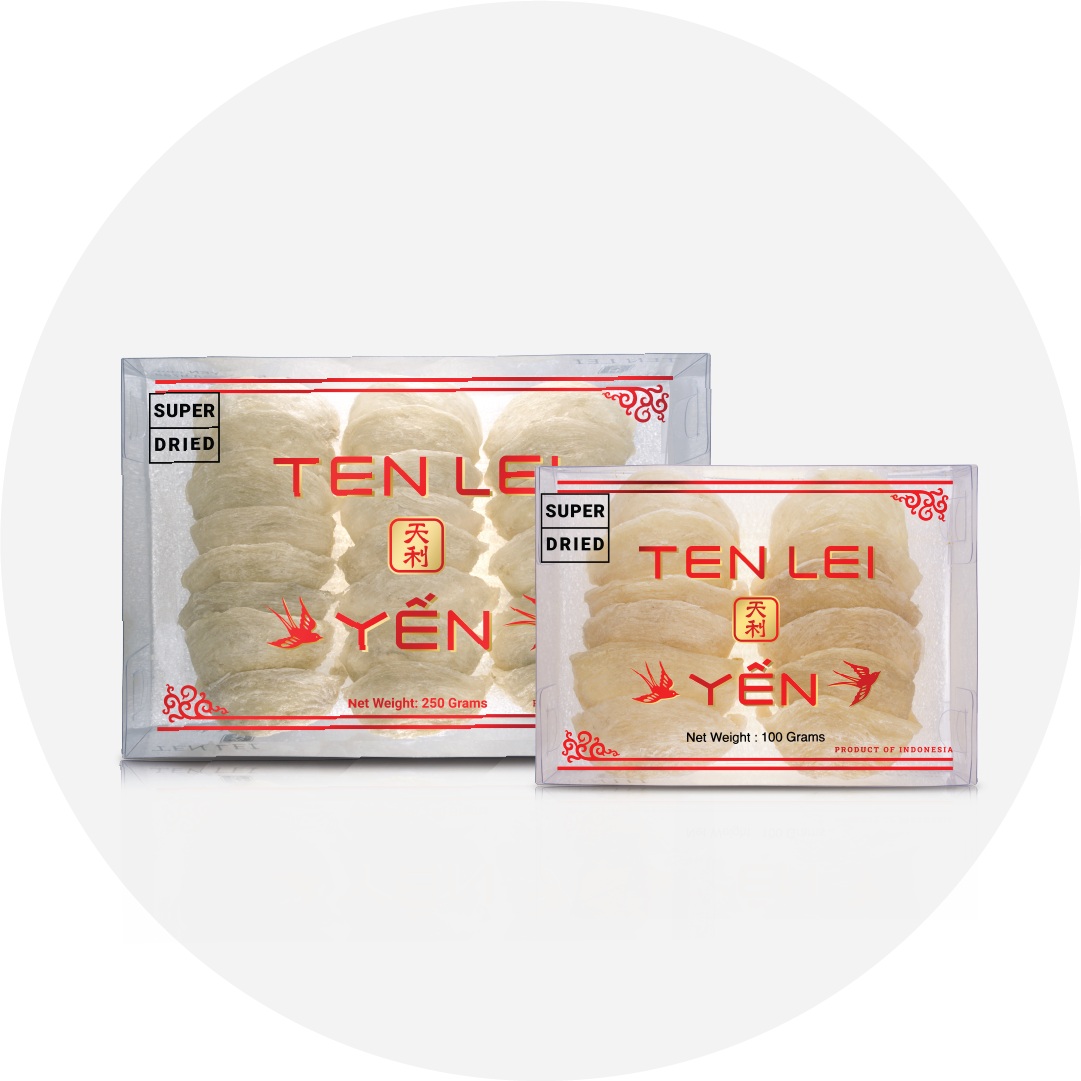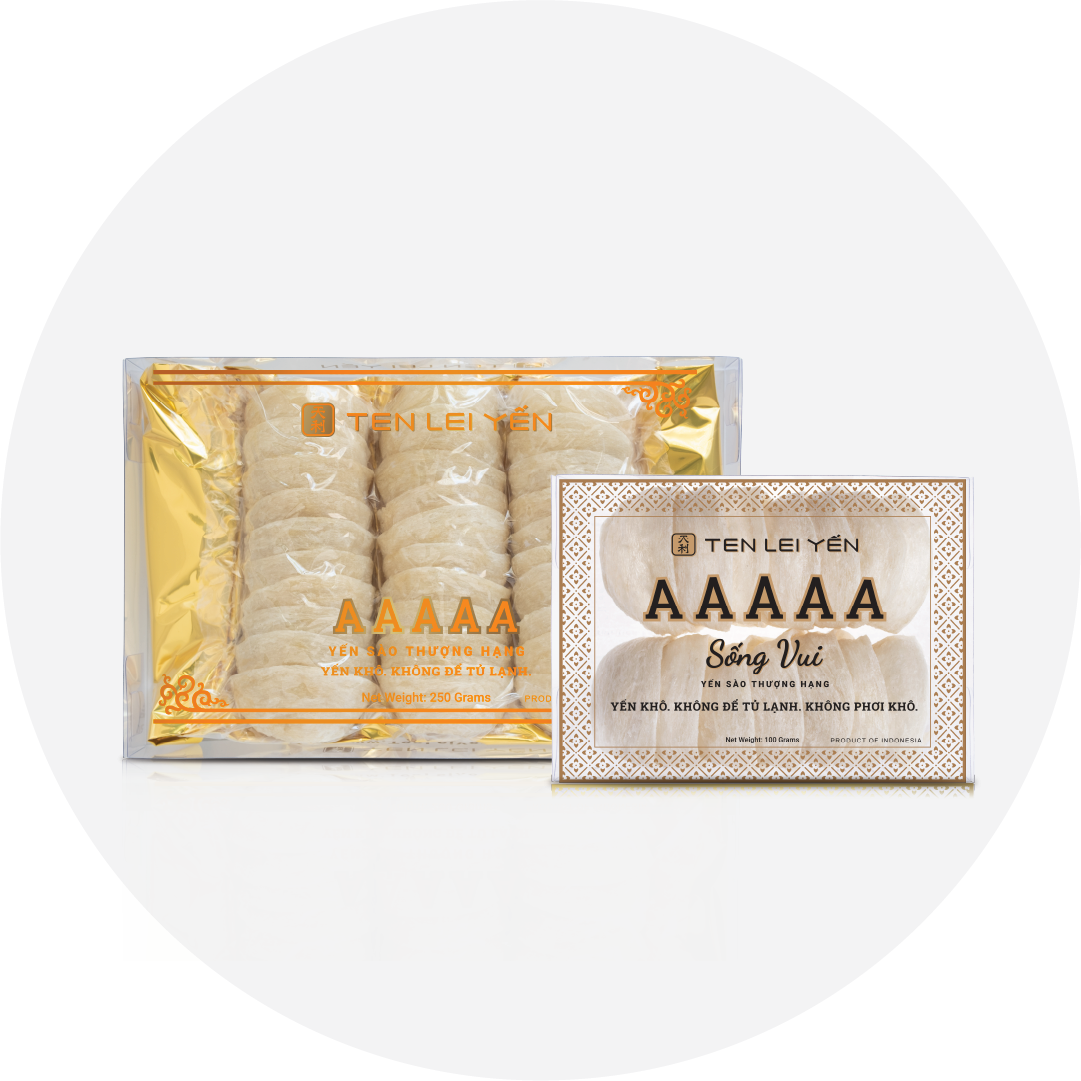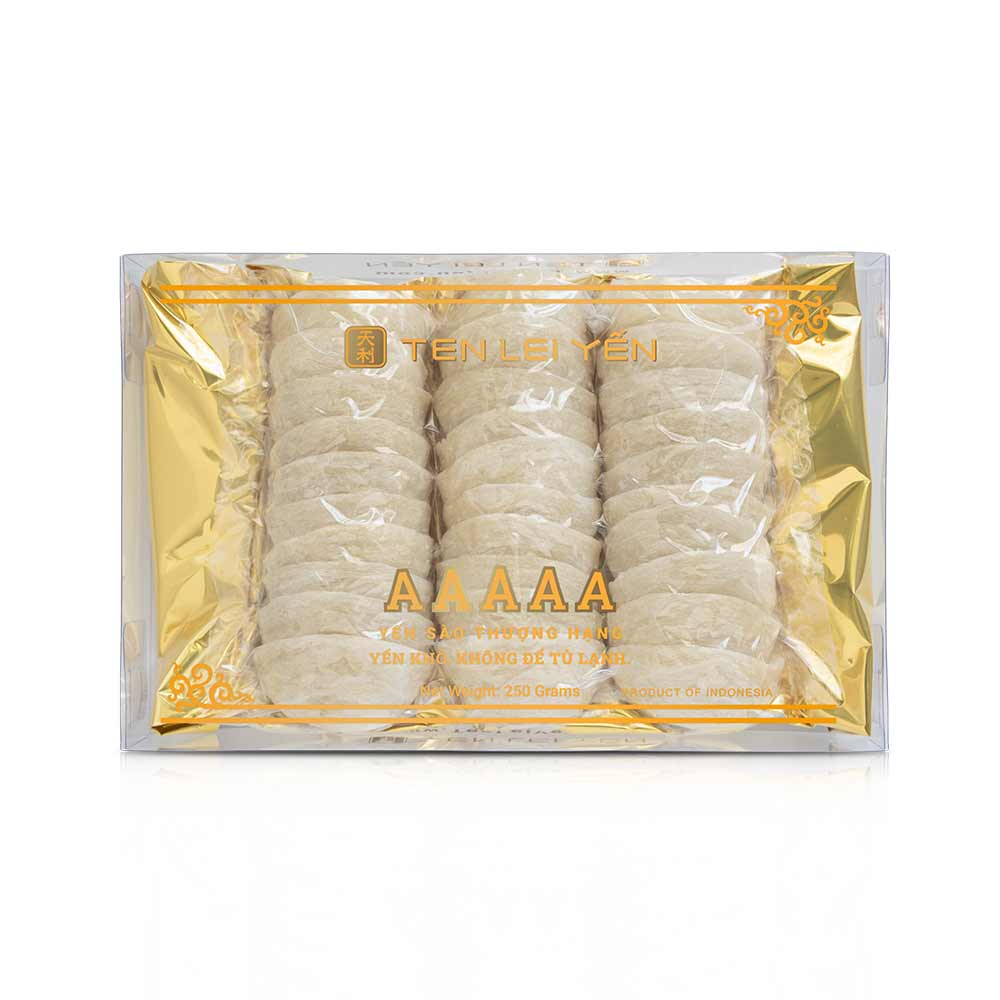
If you have compared bird's nest boxes, you may have noticed that some are labeled 227g and others 250g. Here is the simple explanation: 227g is just 8 ounces converted to grams - an American retail pack size, not a bird's nest measurement. In Hong Kong and Singapore, where bird's nest has been traded for generations, it is sold by the tael and in round metric weights like 100g, 250g, 500g and 1kg. Ten Lei Yen follows that convention, so our boxes are a clean 250g.
- 227g equals 8 ounces (226.8g) - an imperial retail size, not a traditional bird's nest unit.
- Hong Kong and Singapore sell bird's nest by the tael (about 37.5g) and in round metric weights.
- Round weights (100g, 250g, 500g, 1kg) make the price per gram easy to compare and scale cleanly.
- Ten Lei Yen labels every box in grams first - a clean 250g (8.8 oz).
- When you shop, compare the price per gram, not the size of the box.

Where the 227g box comes from
227 grams is exactly 8 ounces (226.8g, rounded). It is an imperial-to-metric conversion used for US retail, where some sellers price and pack in ounces - 1 ounce, 2 ounces, 8 ounces. There is nothing traditional about it; it is simply how an 8-ounce pack reads once the grams are printed on the label. It does not match any unit used in the places where bird's nest has been bought and sold for centuries.
| Weight on the box | What it really is | Price-per-gram math |
|---|---|---|
| 227 g | 8 ounces converted | Awkward |
| 250 g | A quarter-kilogram | Simple |
| 100 g / 500 g / 1 kg | Round metric units | Simple, scales cleanly |
How Hong Kong and Singapore weigh and sell bird's nest
In the established Asian markets, bird's nest is measured two ways. The traditional unit is the tael (兩), about 37.5 grams, still quoted by many houses. Modern retailers use round metric weights - 100g is a standard box, scaling up to 250g, 500g and a full kilogram (often sold as ten 100g boxes). Premium nest is graded by origin, size and colour and presented in gift boxes for special occasions. The common thread is round, meaningful numbers you can actually compare - not an ounce count.
Why round metric weights matter to you
- Easy price comparison. At 250g you can work out the price per gram or per 100g quickly. At 227g the per-gram math is more awkward.
- Clean scaling. 100g, 250g, 500g and 1kg stack neatly, so a bigger gift is just more boxes of the same known weight.
- Clear labeling. A round gram figure shown first tells you the seller is speaking the language of the trade, not relabeling an American retail size.
How Ten Lei Yen does it
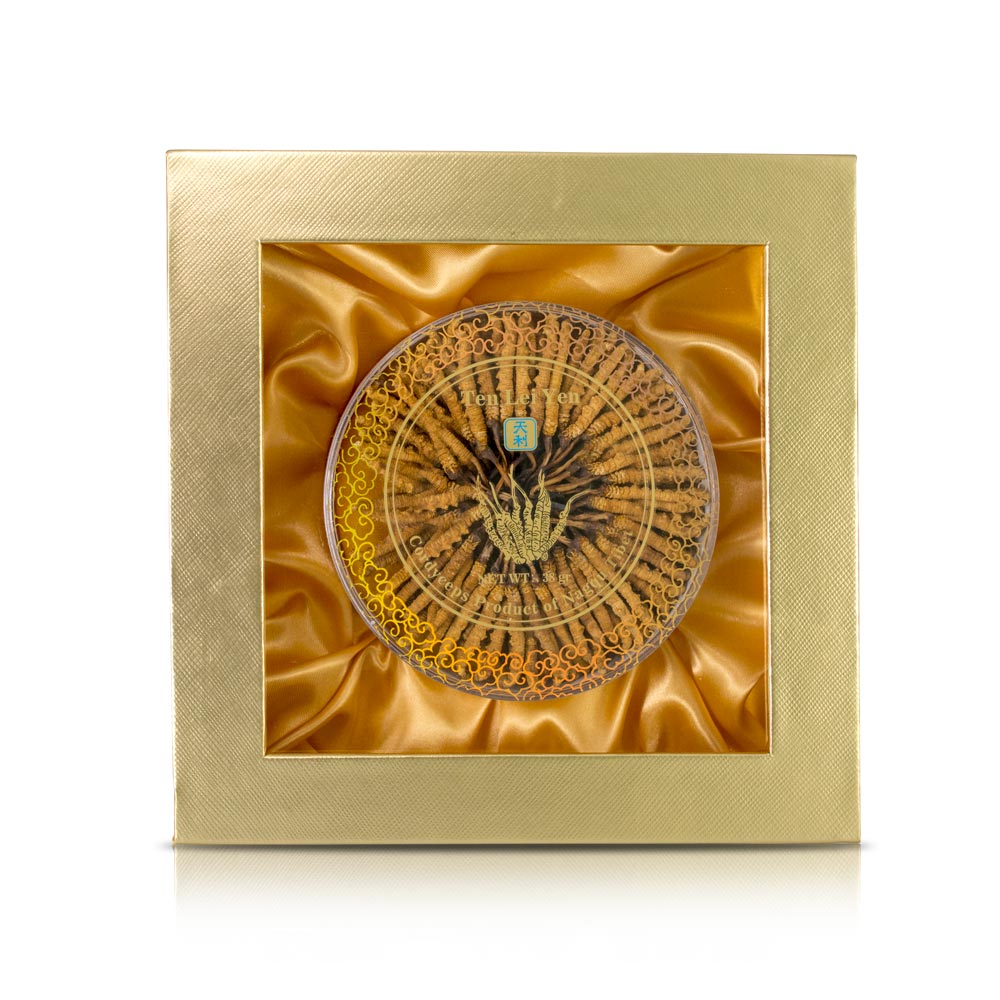
Every Ten Lei Yen box leads with grams: a clean 250g (8.8 oz). Our range is built on round units - 100g and 250g boxes, plus multi-box gift sets (2, 5, 10 and 20 boxes) for larger gifts. A 250g box is a quarter-kilogram: simple to compare, simple to gift, and consistent with how Hong Kong and Singapore have long sold bird's nest. Explore the range in 5A, Red Label, Blue Label and Specialty Nest.
What to check on any bird's nest box
- The weight in grams, shown as a round number.
- The price per gram or per 100g - do the quick division.
- The grade, colour and origin.
- Honest packaging that tells you what is inside.
For more, see how to read a bird's nest label, how to compare value by the piece vs the gram, and our bird's nest buying guide.
FAQ
Is a bigger box always better value?
Not necessarily. Compare the price per gram and buy the grade and size that suit you; a larger gift is simply more boxes of the same known weight.