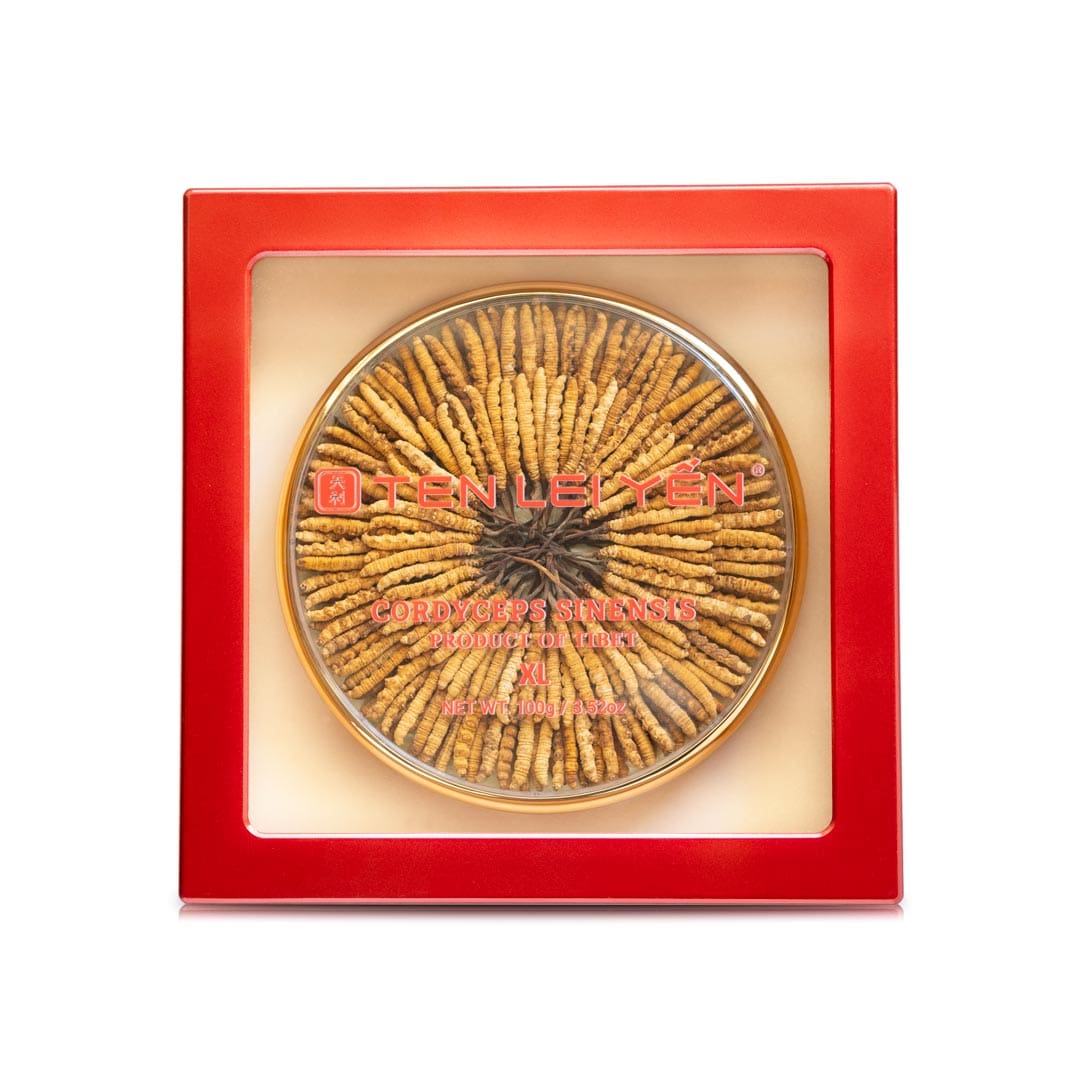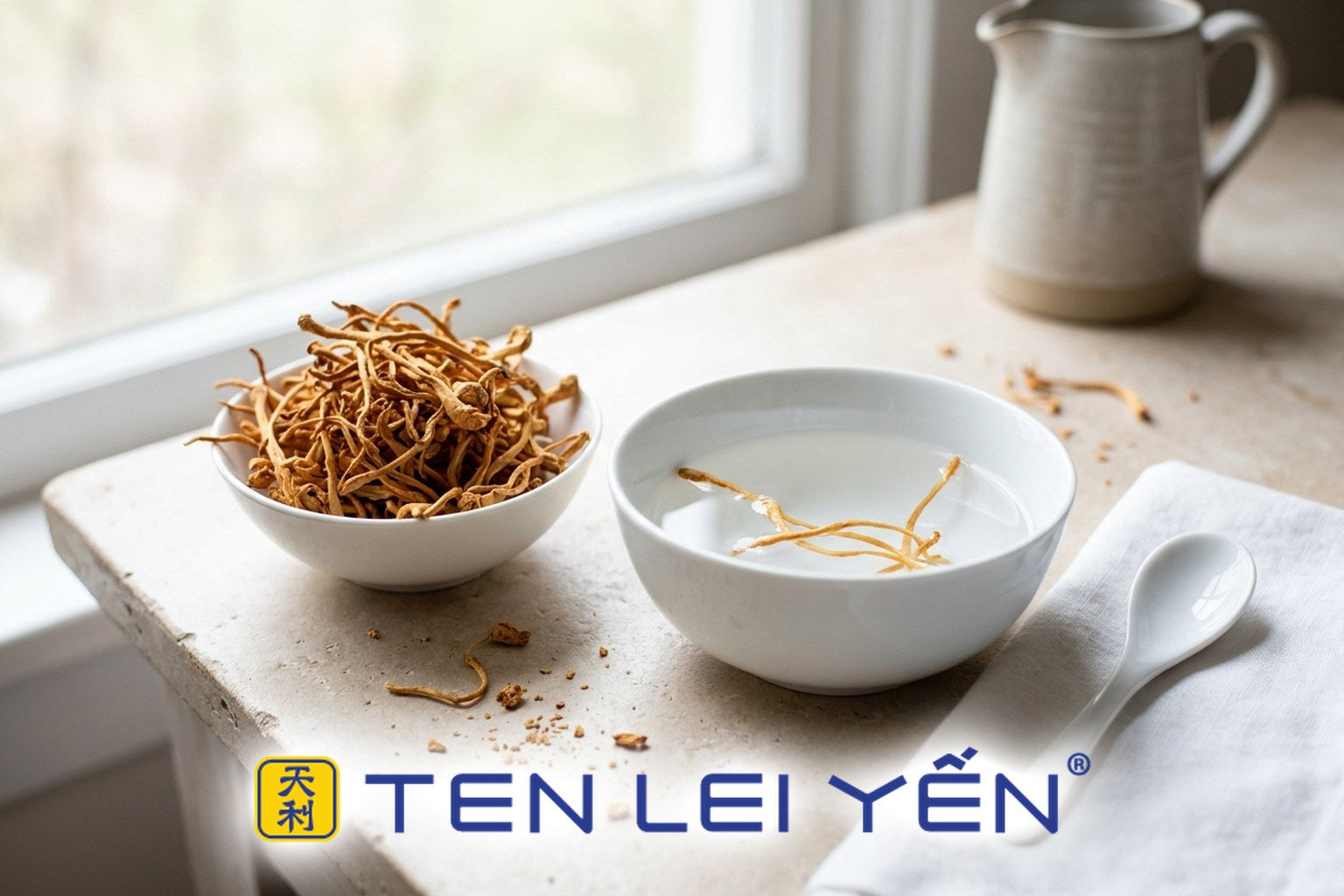
Dried cordyceps needs only a quick, gentle clean before cooking: rinse the pieces briefly in cool water, don’t soak them for long, and pat them dry. The stalks are slender and fragile, so the goal is to lift off any fine dust without waterlogging them or breaking them apart. Add them to the pot near the end of cooking so they keep their shape.
Key takeaways
- Rinse whole dried cordyceps quickly under cool running water — a minute or less is plenty.
- Do not soak for a long time; the fragile stalks waterlog and lose their shape.
- If pieces are very dry, a brief 5-minute soak in cool water helps them soften before cooking.
- Pat dry and check the head and stalk base for any trapped grit.
- Add cordyceps in the last 20–30 minutes of a soup so they stay whole and intact.
Why a gentle clean matters
Wild cordyceps is hand-harvested from high mountain grassland and dried whole, so a piece can carry a little fine soil around the head or the base of the stalk. A quick rinse lifts that off. Because each piece is small and brittle, rough handling or a long soak can break the caterpillar-shaped body away from its slender stalk, so keep the whole process brief and gentle.
Step by step
1. Rinse quickly
Hold the cordyceps under cool running water, or swirl them in a bowl of cool water, for under a minute. Cool water is best; there is no need to scrub.
2. Soak only if needed
If the pieces are very dry or stiff, give them a short 5-minute soak in cool water to soften slightly. Avoid a long soak — the fragile stalks absorb water quickly and can go limp or fall apart.
3. Drain and pat dry
Drain the cordyceps and pat them dry with a clean cloth or paper towel. Inspect the head and the base of the stalk and rub away any last specks of grit.

When to add them to the pot
Add whole cordyceps in the last 20–30 minutes of a soup or double-boil so they hydrate gently and hold their shape rather than disintegrating. After cooking, the softened pieces are eaten along with the dish. Rinsed cordyceps can even be simmered a second time in another pot. For amounts, timing, and reuse, see how to use whole wild cordyceps, and put it to work in our cordyceps chicken soup.
What about cultivated cordyceps (militaris)?
Cultivated cordyceps militaris — the bright orange, finger-like stalks — is cleaned the same way: a brief cool rinse, no long soak, then added toward the end of cooking. Browse both in wild cordyceps and cultivated cordyceps.
Do and don’t
| Do | Don’t |
|---|---|
| Rinse quickly in cool water | Scrub hard or use hot water |
| Soak only briefly if very dry | Soak for a long time |
| Add near the end of cooking | Boil hard from the start |