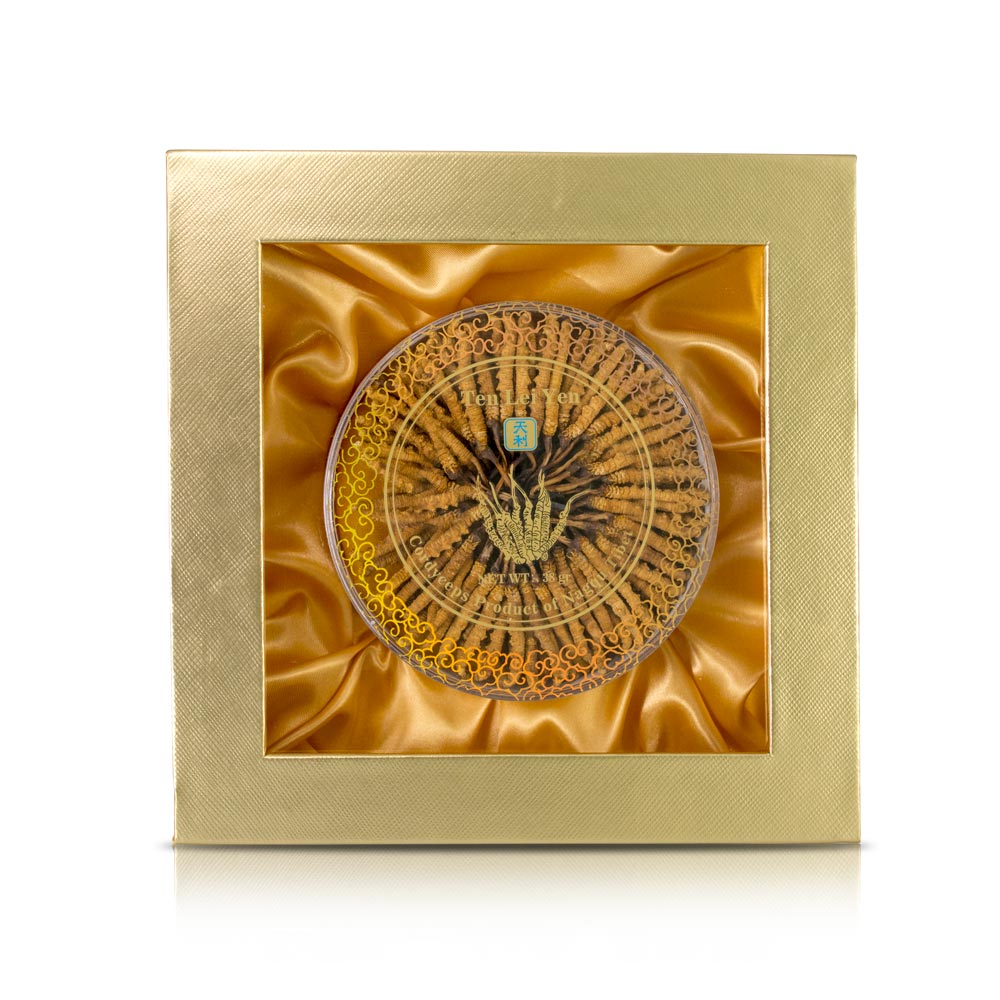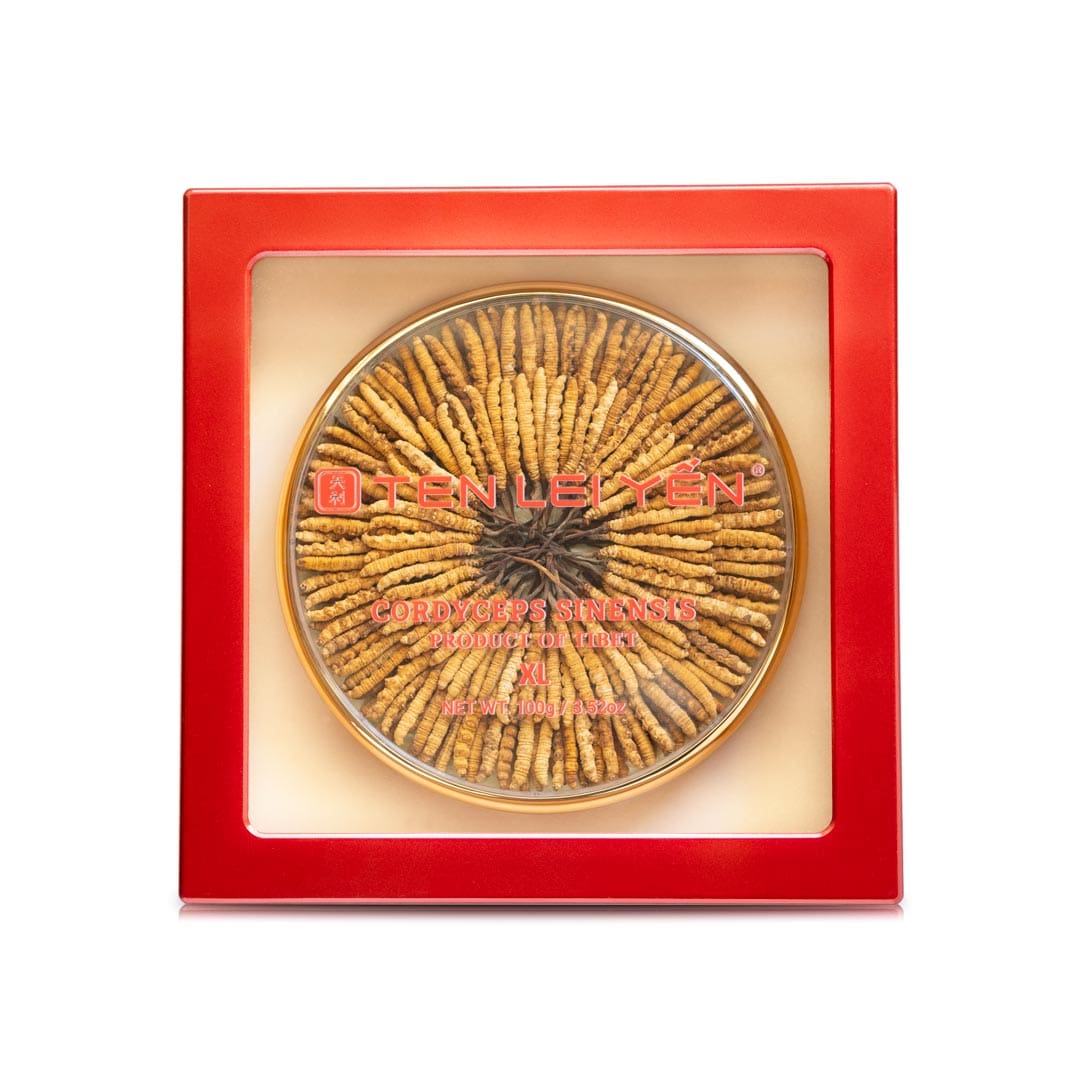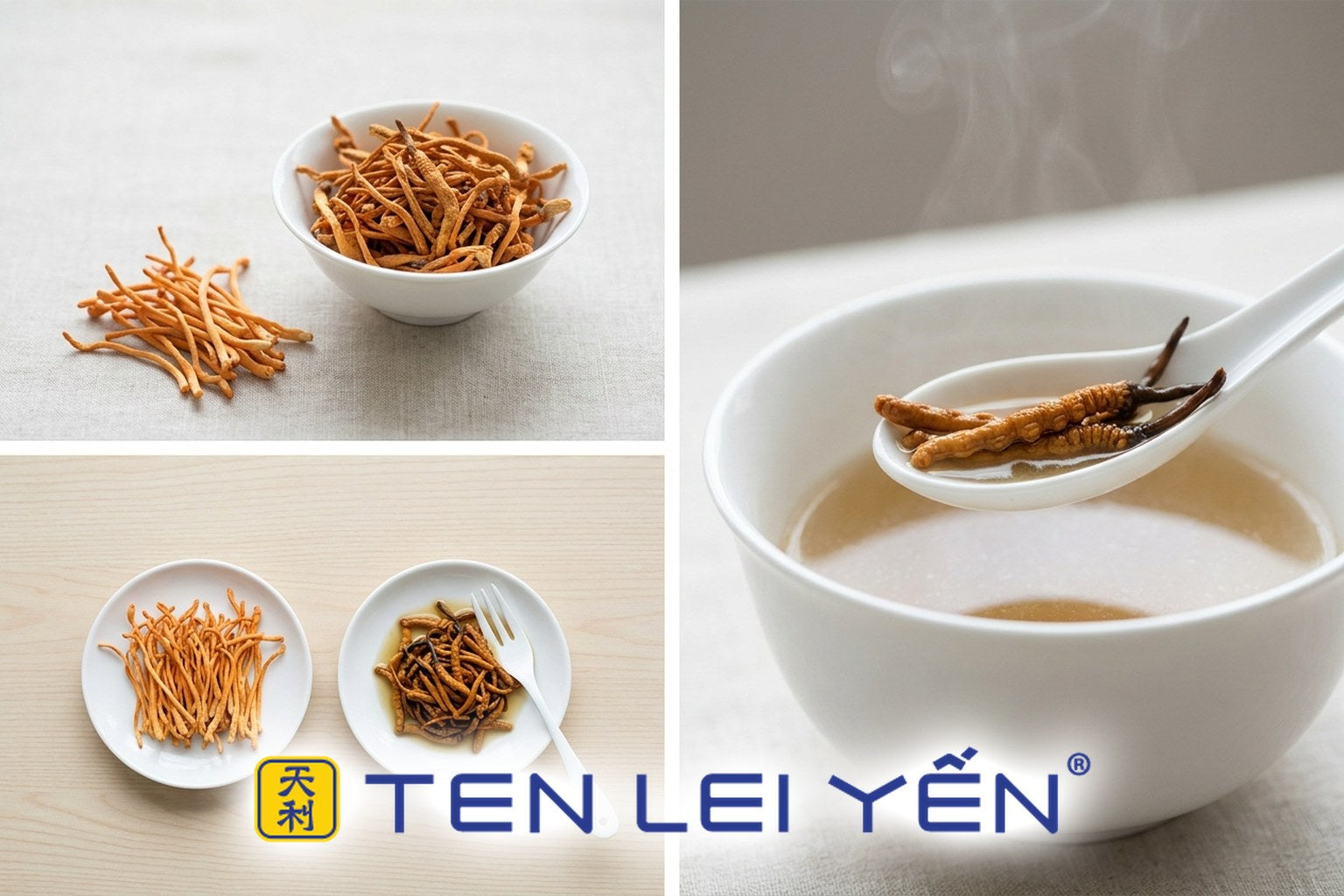
Dried cordyceps is meant to be cooked or steeped, not eaten raw and dry. Straight from the package it is tough and woody, with little flavor to give. Simmering it in soup, double-boiling it, or steeping it as a tea softens the slender stalks and draws out their mild, earthy, savory taste. So while you technically can nibble a piece dry, it is not how cordyceps is meant to be enjoyed.
Key takeaways
- Dried cordyceps is hard and woody dry; cooking or steeping softens it and releases its earthy flavor.
- It is sold dried because drying is how the pieces are preserved and shipped without spoiling.
- Always rinse it briefly under cool water before you cook or steep it.
- The three easy ways to use it are double-boiling, simmering in soup, and steeping as a tea.
- Once softened, the pieces are tender enough to eat, or you can simply drink the broth or tea.

Why cordyceps is sold dried
Cordyceps is sold dried for the same reason as many prized ingredients: drying preserves it. Fresh cordyceps is delicate and would not last on a shelf or survive shipping. Drying draws out the moisture so the pieces keep for a long time when stored cool and dry, and it concentrates their character. The trade-off is that dried pieces are firm and woody, which is exactly why they are prepared with water and gentle heat rather than eaten as they are.
Rinse it first
Before cooking or steeping, give the cordyceps a quick rinse under cool running water to remove any surface dust. There is no need for a long soak; a brief rinse is enough. Then it is ready to go into the pot or the cup.
The three easy ways to prepare it
Double-boiling
Place the rinsed cordyceps in a lidded ceramic pot with water, or with a little chicken or pork, set it inside a larger pot of simmering water, and let it steam gently. This slow, indirect heat gives a clean, clear broth and softens the pieces fully.
Simmering in soup
Add cordyceps to a pot of soup toward the end of cooking, usually the last 20 to 30 minutes. That is long enough to soften the stalks and let their flavor into the broth without cooking them down too far.
Steeping as a tea
For the simplest cup, steep the rinsed cordyceps in just-boiled water, covered, for about 10 to 15 minutes. The water takes on a light golden color and an earthy aroma. You can top up the same pieces with more hot water for a second, milder cup.
Do you eat the pieces or just drink the broth?
Either way works. After cooking or a long steep, the cordyceps pieces soften and become tender enough to eat, and many people do eat them along with the soup. If you would rather not, simply drink the broth or tea and leave the pieces behind. Neither approach is wrong; it comes down to preference.
For amounts and timing with whole pieces, see how to use whole wild cordyceps. To choose your cordyceps, browse wild cordyceps and cultivated cordyceps.
By Alina @ TLY