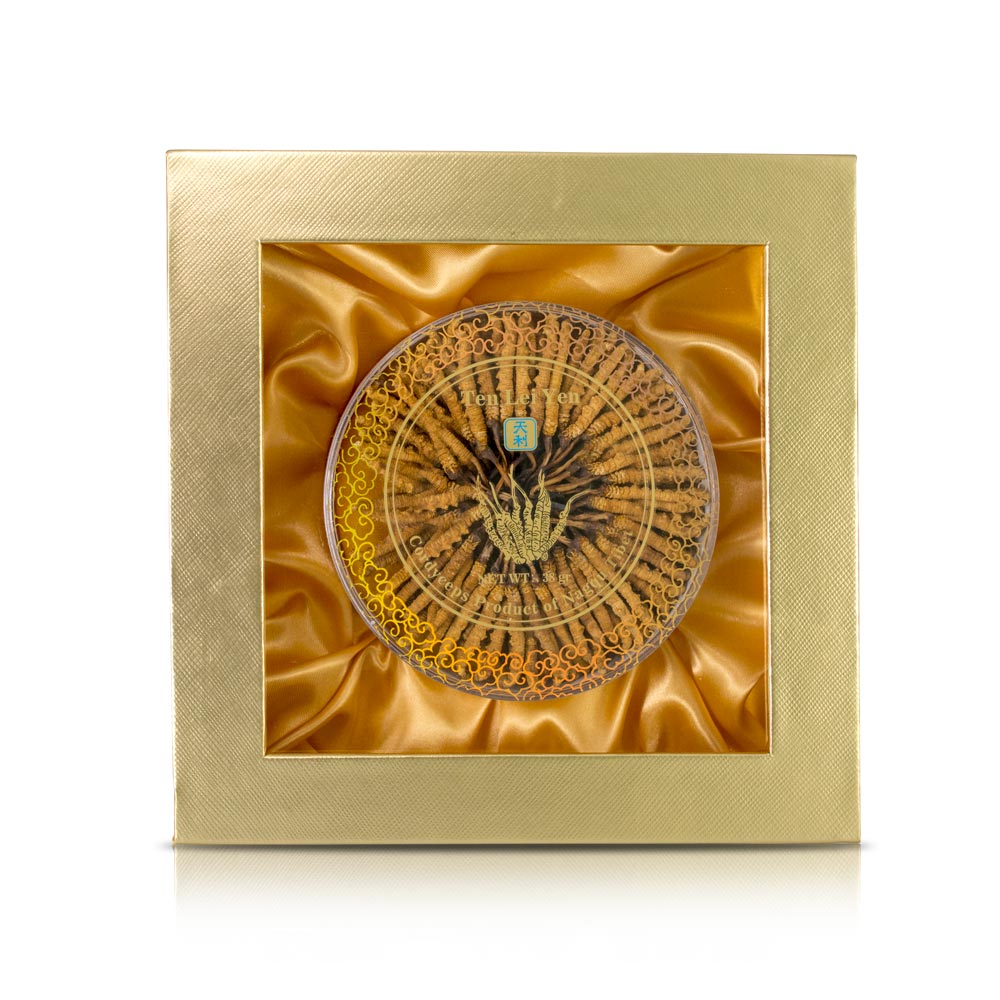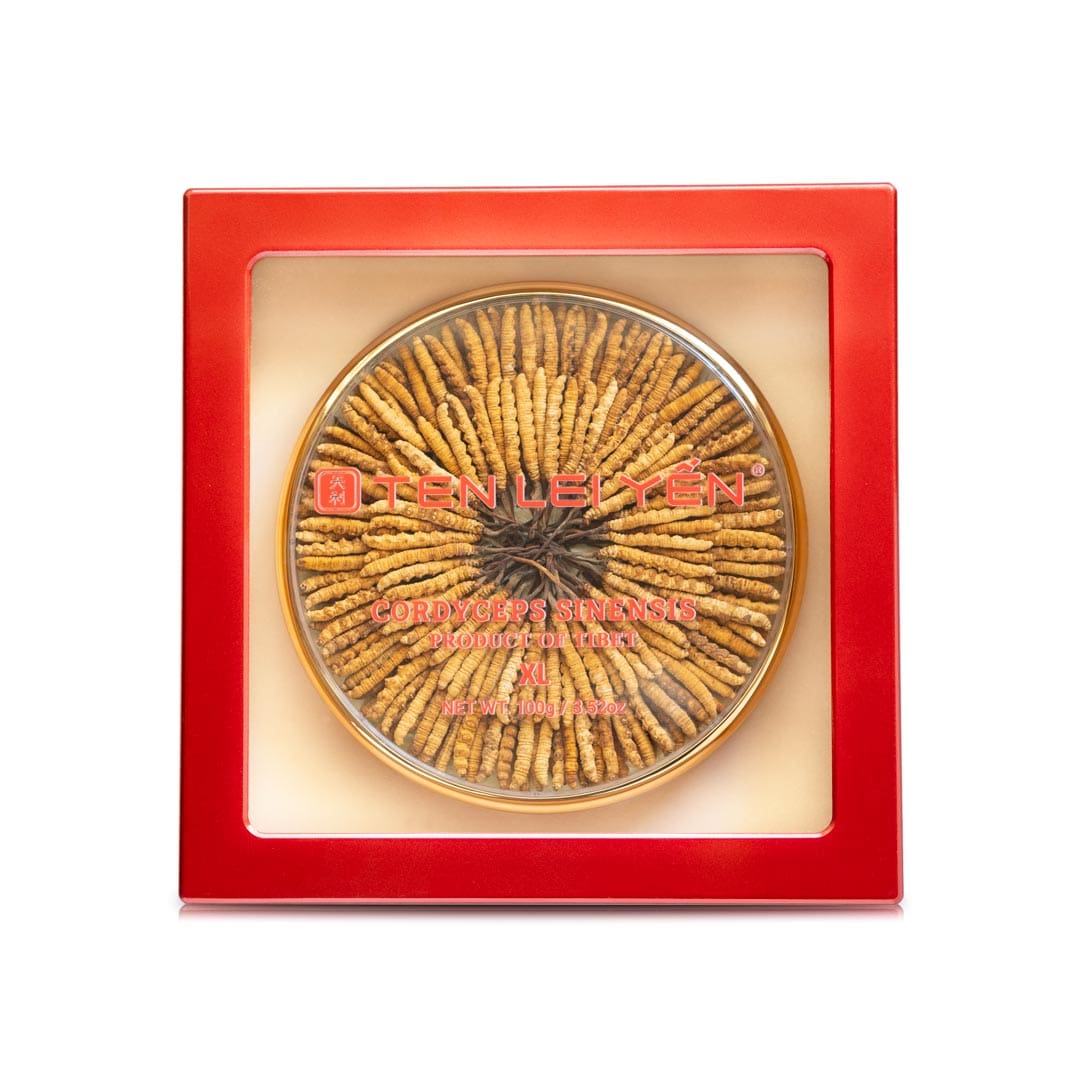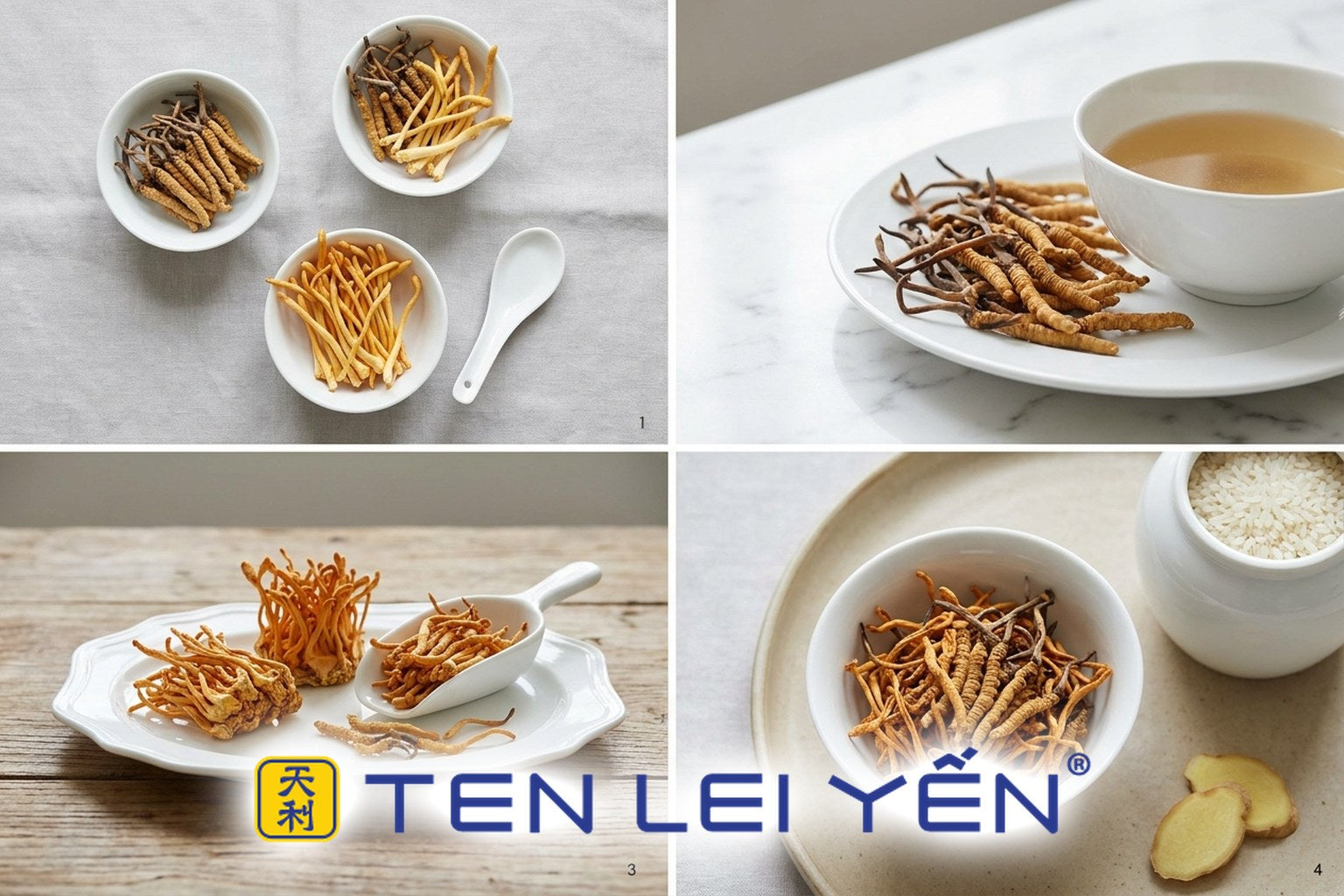
If you want to cook with cordyceps — in soups, broths, congee, or teas — look for whole, intact dried pieces rather than powders or capsules. Most cordyceps sold online is aimed at the supplement shelf, but for the kitchen you want the whole dried fungus: it holds up in a long simmer, looks beautiful in the pot, and lets you judge quality with your own eyes.
Key takeaways
- For cooking, choose whole dried cordyceps, not powder or capsules — whole pieces suit soups, broths, and teas.
- Look for intact, two-part specimens: a caterpillar-shaped body with a slender darker stalk (for wild sinensis), or firm orange-gold stalks (for cultivated militaris, the "cordyceps flower").
- They should be clean, fully dry, and free of any musty or off smell.
- Buy from a seller that shows real photos, states the type and origin, and sells culinary whole cordyceps rather than only supplements.

Whole cordyceps vs. powder and capsules
Powders and capsules are made for swallowing, not cooking — you cannot simmer them into a clear broth or float them in a soup. Whole dried cordyceps is the culinary form: you add a few pieces to a double-boiled soup, a chicken or pork broth, congee, or a tea, and they soften and release flavor over time. Whole pieces also let you see exactly what you are getting.
What quality looks like
Wild cordyceps (sinensis)
A genuine wild specimen is two parts fused together: a segmented, caterpillar-shaped body, golden-brown to tan and leathery, with a single slender, darker stalk growing from the head. Whole pieces typically run about 2 to 6 cm long. Look for intact specimens rather than broken fragments or "wholes" that look molded or unnaturally uniform.
Cultivated cordyceps militaris (the "cordyceps flower")
Militaris is grown as clusters of firm, bright orange-gold stalks, usually a couple of centimeters long. Good ones are dry, springy rather than crumbly, and evenly colored. This is the everyday, affordable form for soups and teas.
Signs to check before you buy
- Whole and intact. Prefer whole pieces you can inspect; be cautious of "whole" specimens that look reconstituted or suspiciously identical.
- Clean and dry. Good cordyceps is fully dried, not damp or sticky, with little visible dirt.
- Smell. It should smell mild and earthy — not musty, sour, or chemical.
- Clear labeling. The type (wild sinensis or cultivated militaris), the origin, and the size or grade should be stated plainly.
- Real photos and a transparent seller. Look for actual product photos and a seller who offers whole culinary cordyceps, not just capsules and extracts.
How much to keep on hand
Cordyceps is used a little at a time — a few pieces per pot — so a small amount goes a long way. Because it is sold by the gram, you can start with a modest amount and buy more once you know how you like to cook with it. Store it sealed in a cool, dry place.
Frequently asked questions
Wild or cultivated cordyceps for cooking?
Both work in the kitchen. Cultivated militaris (the "cordyceps flower") is the affordable everyday choice for soups and teas; whole wild cordyceps is rarer and pricier. Choose based on your budget and the dish.
How should I store cordyceps?
Keep it sealed in a cool, dry place away from moisture and light. Whole dried cordyceps keeps well for a long time when stored properly.
New to cooking with it? See how to use whole wild cordyceps and browse our wild and cultivated cordyceps.
By Alina @ TLY