A cordyceps double-boil needs two separate amounts of water, and getting either one wrong changes the result: too much water in the inner vessel gives a thin, watery broth, while too little in the outer pot risks scorching. As a starting ratio, use about 60–80 ml of water in the inner vessel for every gram of cordyceps, and keep the outer pot filled to roughly halfway up the inner vessel's sides throughout the cook.
Key Takeaways
- Inner-vessel ratio: about 60–80 ml of water per gram of cordyceps for a broth meant to be sipped on its own.
- Too much water dilutes flavor and color; too little concentrates it and risks the vessel running dry.
- The outer pot's water level matters more than people expect — it should sit around halfway up the inner vessel and never be allowed to boil away.
- Top up the outer pot with hot water, not cold, to avoid interrupting the simmer.
- Finished liquid should be clear and pale gold to amber, never cloudy or scorched-smelling.
Two Different Waters, Two Different Jobs
A double-boil uses water in two places that do completely different work. The water inside the vessel with the cordyceps becomes the broth — it is the one ratio that determines flavor strength. The water in the outer pot never touches the cordyceps at all; its only job is to carry gentle, even heat to the inner vessel for the full length of the cook. Confusing the two, or topping up the wrong one, is the most common reason a double-boil comes out too thin, too strong, or scorched.
Concrete Ratios by Weight
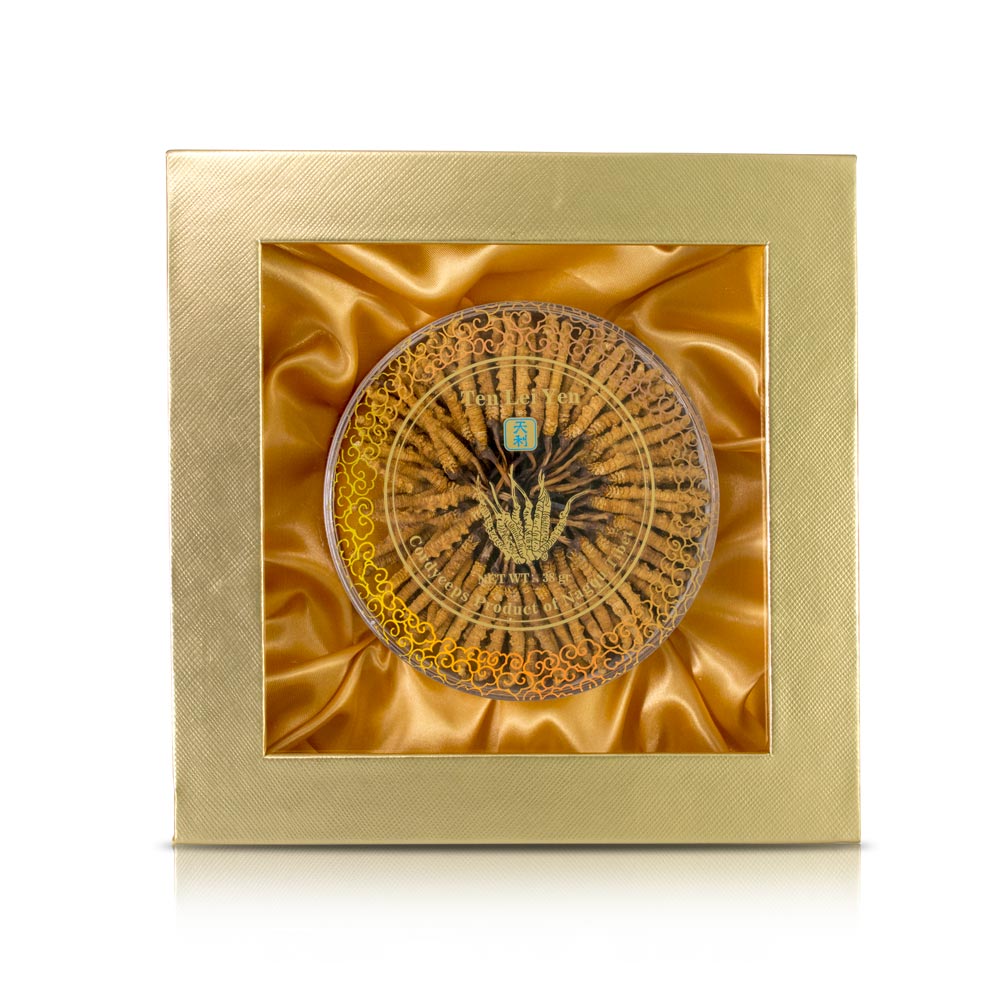
For a broth meant to be sipped on its own, 60–80 ml of water per gram of cordyceps is a workable starting point — closer to 60 ml for a stronger, more concentrated cup, closer to 80 ml for a gentler one. Scaled to Ten Lei Yen's own pack sizes: a 3.78 g pack suits roughly 250–300 ml, enough for one cup. An 18.9 g pack suits roughly 1.2–1.5 liters, enough for a small family pot. A 37.8 g pack suits roughly 2.3–3 liters, enough for a full gathering. If the cordyceps is going into a larger soup with chicken or other ingredients, you can use less added water and let the other ingredients contribute their own liquid.

Why the Outer Pot's Water Level Matters More Than Expected
It is easy to assume the outer pot is a minor detail, but it is the entire mechanism keeping the heat indirect. Fill it so the water sits about halfway up the sides of the inner vessel — enough that it will not evaporate away before the cook is finished, but not so full it risks splashing into the inner vessel or boiling over. On any cook past an hour, check the level partway through. If it has dropped by more than a couple of centimeters, top it up.
Topping Up Mid-Cook
Always top up the outer pot with water that is already hot or simmering, never cold straight from the tap. Cold water drops the temperature of the whole setup, which slows the cook and can shock a ceramic or porcelain vessel. Keep a small kettle of hot water on standby for long cooks rather than reaching for the cold tap.
What the Finished Liquid Should Look Like
A correctly proportioned double-boil finishes clear rather than cloudy, in a color that ranges from pale gold to light amber depending on the cook time and what else is in the pot. It should taste distinctly of the cordyceps without being thin, and there should be no scorched or bitter note. If the liquid tastes weak after the full cook time, the fix next time is less added water, not more time. If anything smells scorched, the outer pot ran low.
Frequently Asked Questions
Can I reuse the cordyceps for a second, lighter batch?
Some cooks do run a lighter second batch with fresh water after the pieces have softened, though the second broth will be noticeably weaker than the first.
Alina @ TLY
Related reading: Double-Boiling Cordyceps in the EZ Steamer: A Setup Guide, Why Ten Lei Yen's Cordyceps Packs Weigh 3.78 g, 18.9 g and 37.8 g, and How Wild Cordyceps Is Graded. Browse wild cordyceps.