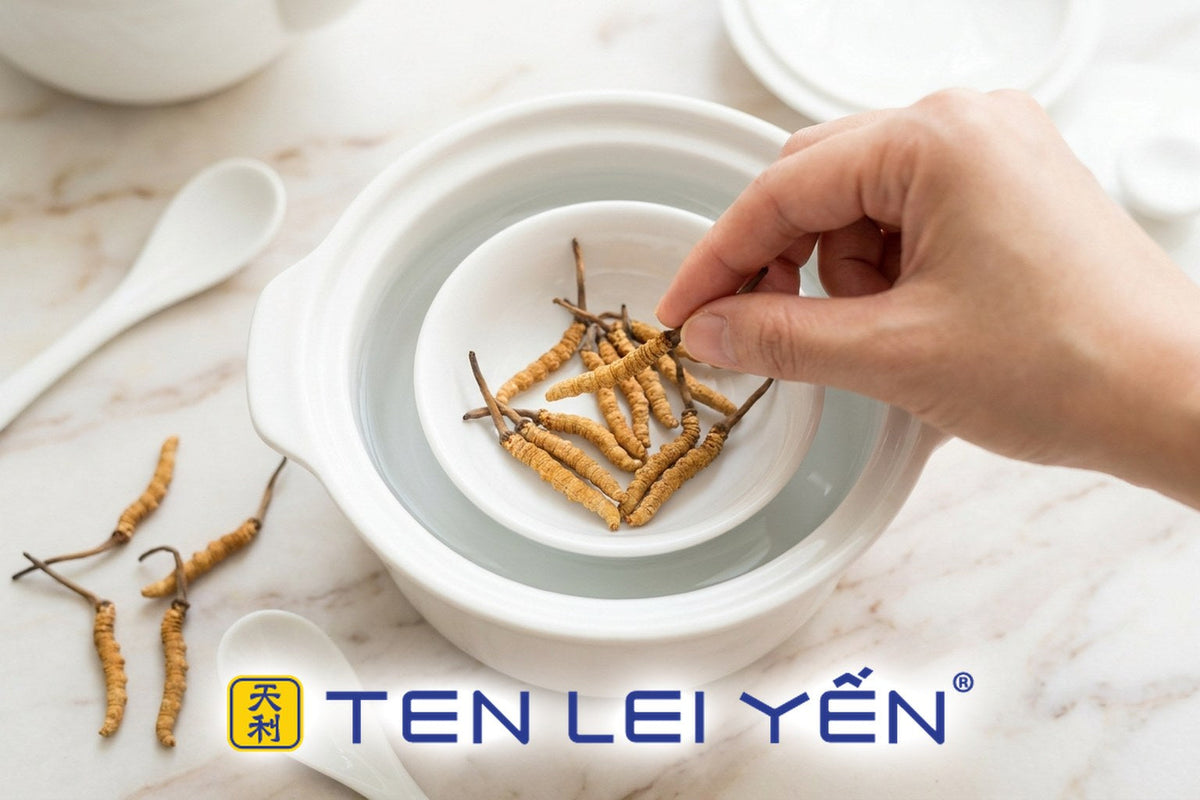
A double-boil setup for cordyceps is simple once laid out: a porcelain vessel holding the cordyceps and water sits inside a larger pot of simmering water, covered, for roughly 60 to 90 minutes. The Ten Lei Yen EZ Steamer builds this two-vessel setup into one unit, so the water levels and gentle heat are handled for you — you are only deciding how many pieces go in and how long to let it run.
Key Takeaways
- The EZ Steamer holds an inner vessel of cordyceps and water inside an outer water bath — the traditional double-boil, built into one unit.
- Fill the inner vessel so water sits about 1–2 cm above the cordyceps; fill the outer chamber to the fill line, never past it.
- A single-serving load is 3–5 g of cordyceps; a family-size load scales up from there.
- Wild cordyceps sinensis runs 60–90 minutes; smaller or cultivated pieces can finish closer to 45–60 minutes.
- Finished broth should be clear and pale gold, with the pieces settled and no scorched smell.
What the EZ Steamer Setup Looks Like
The EZ Steamer follows the same principle cooks have used for generations: indirect heat, so the cordyceps never touches a direct flame or a hard boil. An inner porcelain vessel holds the cordyceps and its cooking water. That vessel sits inside the steamer's outer chamber, which holds a separate body of water that does the actual boiling. Gentle heat surrounds the inner vessel; the liquid inside it never goes past a slow simmer. That is the whole method — the EZ Steamer just removes the guesswork of balancing two pots on a stovetop.
Water Levels: Inner Vessel and Outer Chamber
Two water levels matter, and they are not the same thing. Inside the vessel, add just enough water to sit 1–2 cm above the cordyceps once it settles — enough to fully submerge the pieces and leave room for the liquid to reduce slightly without exposing them. In the outer chamber, fill to the marked line, usually somewhere around the halfway mark on the inner vessel's height. Under-filling the outer chamber is the more common mistake: if it runs low partway through a long cook, the unit can run dry and the gentle heat turns into direct, scorching heat against the inner vessel.
How Many Pieces, and How to Load the Vessel
For a single serving, 3–5 g of cordyceps is a practical amount — a small handful of wild sinensis pieces, or a slightly fuller handful of smaller cultivated pieces. Rinse briefly under cool water before loading; wild sinensis does not need a soak. Lay the pieces in the bottom of the vessel first, then add water, rather than pouring water in and dropping pieces on top — this keeps them from floating against the lid and cooking unevenly. For a larger batch, scale the pieces and water up together rather than adding more water to the same amount of cordyceps.
Timing: How Long to Run the Steamer
Wild cordyceps sinensis is dense and calls for a longer, slower cook — 60 to 90 minutes is standard, and the extra time lets the pieces soften fully and the liquid take on their aroma and color. Smaller cultivated pieces or a lighter tea-style preparation can finish in 45 to 60 minutes. Check the outer chamber's water level around the halfway point on any cook past an hour, and top up with hot water if it has dropped noticeably — cold water slows the whole cook down and stresses the vessel.

Reading the Finished Broth
A properly double-boiled batch looks clear, not cloudy, in a pale gold to light amber color depending on how long it ran. The pieces themselves should have softened and settled to the bottom rather than staying rigid. There should be no scorched or bitter smell — a sign the outer water ran low. If the liquid still tastes thin after the full time, it usually means too little cordyceps for the water rather than a timing problem.
Frequently Asked Questions
Do I need to soak cordyceps before double-boiling it?
No. Unlike bird's nest, wild cordyceps sinensis skips the soak — a brief rinse under cool water is enough before it goes into the inner vessel.
Can I use the EZ Steamer for both wild and cultivated cordyceps?
Yes, the setup is identical; only timing changes. Wild sinensis wants the fuller 60–90 minute range, while smaller cultivated pieces finish sooner.
Alina @ TLY
Related reading: Cordyceps and Water: How Much Liquid a Double-Boil Needs, The Caterpillar and the Stalk, and How Wild Cordyceps Is Graded. Browse wild cordyceps or cultivated cordyceps.