By Alina @ TLY
Say it "KOR-dih-seps sy-NEN-sis". It's also written Ophiocordyceps sinensis, dōng chóng xià cǎo (冬虫夏草) in Chinese, đông trùng hạ thảo in Vietnamese, yartsa gunbu in Tibetan and "caterpillar fungus" in English, and they all point to the same wild fungus, with one Vietnamese catch that we explain below. At Ten Lei Yen in Westminster we hear all of those words across the counter, so here is how each one sounds and who tends to use it.

How do you pronounce Cordyceps sinensis?
Cordyceps is "KOR-dih-seps", with the stress on the first syllable and a soft s in the middle. Sinensis is the Latin word for "from China", so it sounds like "sy-NEN-sis", the same ending you hear in the tea plant Camellia sinensis. Plenty of people stress the words slightly differently, and nobody at our counter minds. If you're unsure, saying "cordyceps" and pointing at the piece works perfectly well.
Why do some labels say Ophiocordyceps instead?
Because scientists renamed it. Until 2007 the genus Cordyceps held more than 400 species, and a DNA-based study split it into several genera. The wild caterpillar fungus moved to Ophiocordyceps, pronounced "oh-fee-oh-KOR-dih-seps", while the name Cordyceps stayed with the genus built around Cordyceps militaris, the orange species. So "Cordyceps sinensis" is the older name that most shops and customers still use, and "Ophiocordyceps sinensis" is the current scientific one. Either is correct for the same product.
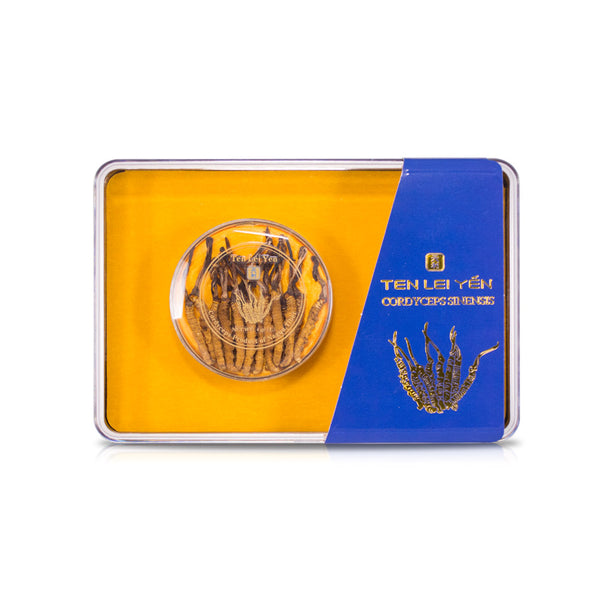
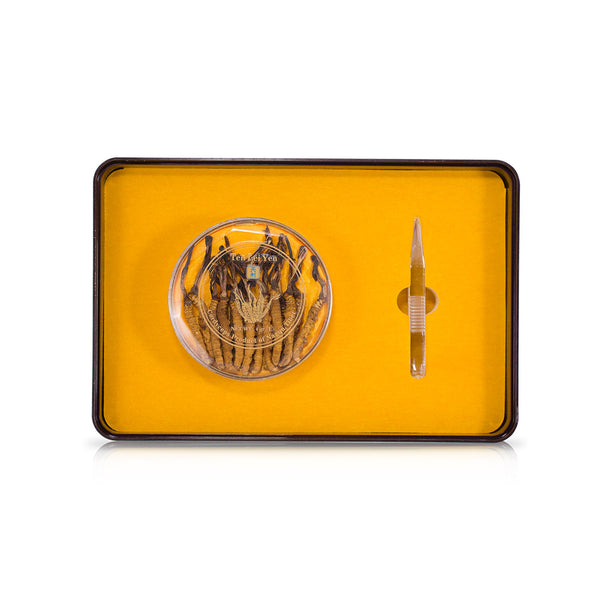
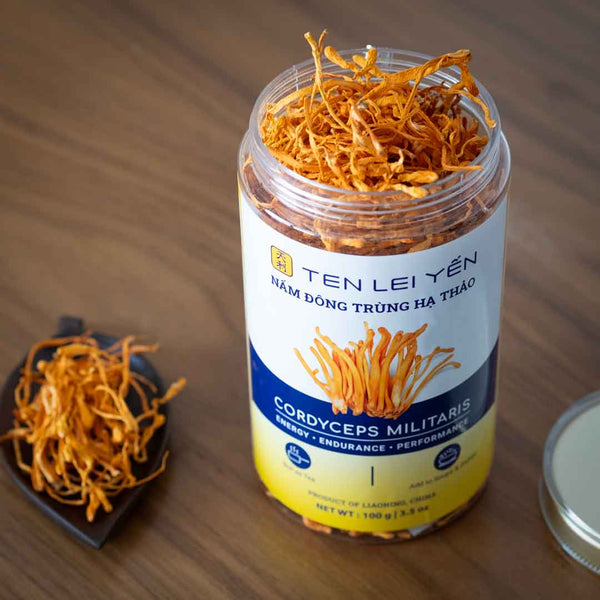
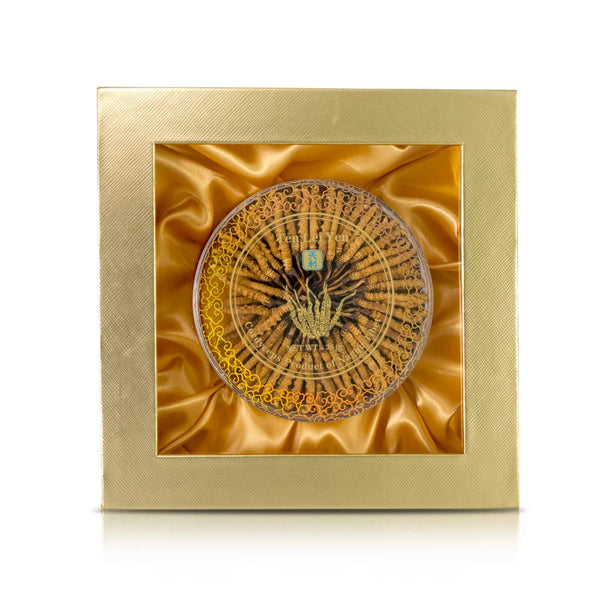
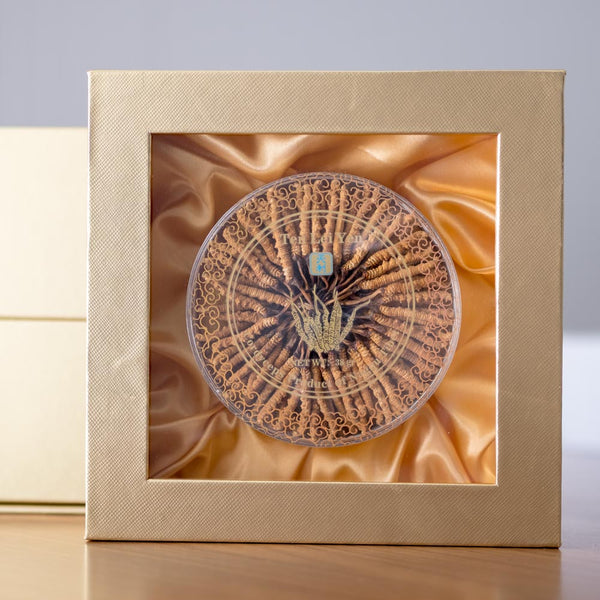
The wild one is a fungus that has grown out of a ghost moth caterpillar, so a real piece has a tan caterpillar body with a single slender dark stalk. Cordyceps militaris grows on grain and looks like a pile of orange fingers. The word cordyceps covers a large group of fungi that grow on insects and other small creatures, and these two quite different members of it both turn up under that one name, which is exactly why the names get tangled. We lay out the differences in militaris versus sinensis.
How do you say it in Chinese?
冬虫夏草 is dōng chóng xià cǎo in Mandarin, roughly "dohng chohng shyah tsow". The tones matter a little here: dōng is high and level, chóng rises, xià falls sharply, and cǎo dips down and back up. In Cantonese, which many of our Westminster customers speak, it is dung1 cung4 haa6 cou2, close to "dung chung ha cho". Japanese uses the same four characters, read tōchūkasō. For short, most people say 虫草, chóngcǎo, and the orange cordyceps flower is 虫草花, chóngcǎohuā. If you're curious about what the four characters mean, we've covered it in our article on winter worm, summer grass.
How do you say đông trùng hạ thảo?
It's the Vietnamese reading of the same four characters, said something like "dohng chroong hah tau". Northern speakers say the tr in trùng like ch, and many Southern speakers pronounce it a touch harder, so you'll hear both at our counter. One thing to know: in Vietnam the same phrase is very often used for the orange, cultivated cordyceps militaris, not only for the wild caterpillar piece. If a Vietnamese customer asks us for đông trùng hạ thảo, we usually ask whether they mean the orange stalks or the caterpillar-and-stalk piece, and that one question settles it.
What do yartsa gunbu and "Tibetan cordyceps" mean?
Yartsa gunbu is the Tibetan name, and it's the oldest of the names that survive in writing. In English letters it sounds like "YAR-tsa GOON-boo", with "yar" rhyming with "far". In Nepal you'll see it spelled yarsagumba. "Tibetan cordyceps" isn't a separate species; it simply means the same wild Cordyceps sinensis, usually named for where it was picked. Ours comes from Nagqu, in northern Tibet.
What name do customers use in the shop?
In our experience most Vietnamese customers say đông trùng hạ thảo, most Chinese customers say 虫草 for the whole piece and 虫草花 for the orange flower, and English speakers just say cordyceps. "Caterpillar fungus" is the plain English name, though the "caterpillar" is really a ghost moth larva. Whatever word you bring, we'll put the piece in your hand and name the species, because that is the quickest way to be sure you and we mean the same thing.


 or