Cordyceps is called winter worm, summer grass - dong chong xia cao (冬虫夏草) in Chinese, from the Tibetan name yartsa gunbu - because that phrase describes its life cycle. In winter it exists as a caterpillar underground; by summer a slender fungal stalk grows out of the caterpillar's head and rises above the soil. It is neither purely animal nor plant, but a pairing of a fungus and a caterpillar.
- The name 'winter worm, summer grass' is a literal description of the life cycle, written 冬虫夏草 (dong chong xia cao).
- It comes from the older Tibetan name yartsa gunbu, meaning summer-grass, winter-worm.
- A fungus, Ophiocordyceps sinensis, grows on the larva of a ghost moth.
- Winter: a dormant caterpillar underground. Summer: a dark stalk sprouts above ground.
- The finished specimen is the caterpillar body plus the stalk, joined together.

What the name means
Break the four characters down: dong (winter), chong (worm or insect), xia (summer), and cao (grass) - put together, 'winter worm, summer grass'. It captures how the same specimen looks like a caterpillar in one season and a blade of grass in another. The Chinese name is itself a translation of the older Tibetan yartsa gunbu.
The life cycle, step by step
1. A fungus meets a caterpillar
High on the Tibetan Plateau, the larva of a ghost moth (genus Thitarodes) lives in the soil. Spores of the fungus Ophiocordyceps sinensis settle on the larva.
2. Winter: the 'worm'
The fungus colonizes the caterpillar, which stays underground through the cold months. Outwardly it still looks like a caterpillar - the 'winter worm'.
3. Summer: the 'grass'
As the ground warms, the fungus sends up a thin, dark, finger-like stalk (the stroma) from the caterpillar's head. It pushes above the soil surface and looks like a sprig of grass - the 'summer grass'.
4. Harvest
Collectors hand-dig the joined caterpillar-and-stalk in late spring and early summer, after the snow melts and before the stalk matures.
Why the appearance matters when buying
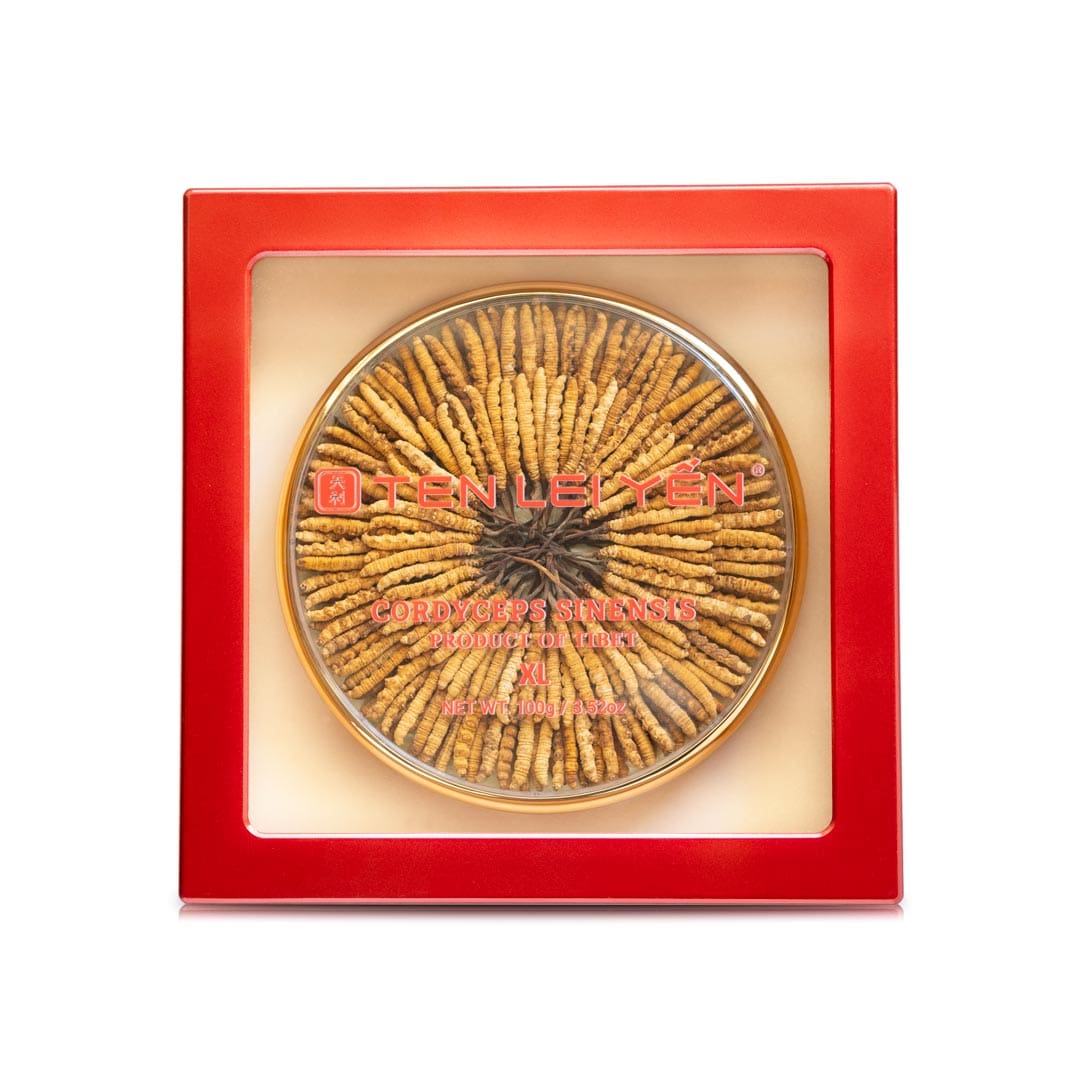
Because real cordyceps is this caterpillar-plus-stalk pairing, genuine pieces show a segmented caterpillar body with rows of tiny legs and a single dark stalk. Knowing what the name means helps you recognize the real thing. See our guide to what real cordyceps looks like, and browse wild cordyceps.
Wild vs cultivated
Wild Cordyceps sinensis follows this exact cycle on the plateau. Cultivated cordyceps - including cordyceps militaris, the orange 'cordyceps flower' - is grown on a prepared substrate without a caterpillar host. For more, read where wild cordyceps comes from and what cordyceps militaris is.
Frequently asked questions
What animal does it grow on?
The larva of a ghost moth (genus Thitarodes, also called Hepialus) living in the soil of the Tibetan Plateau.