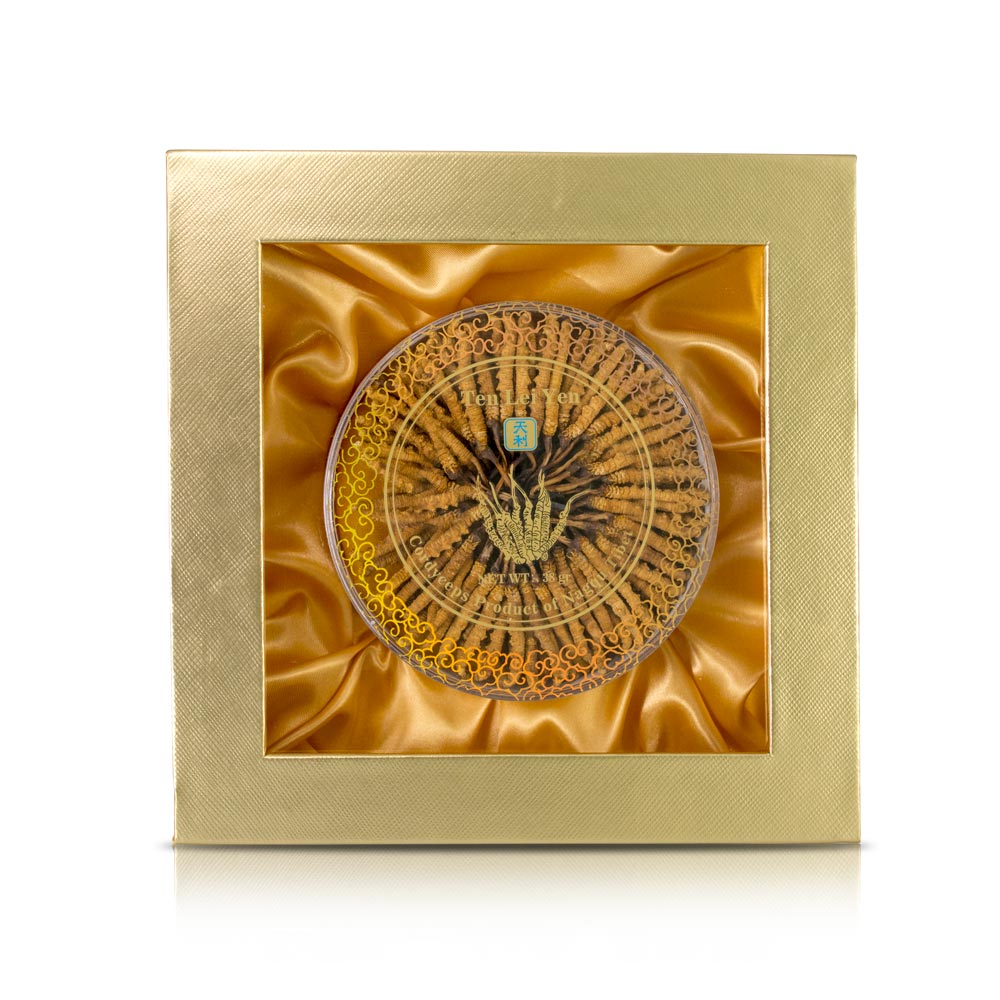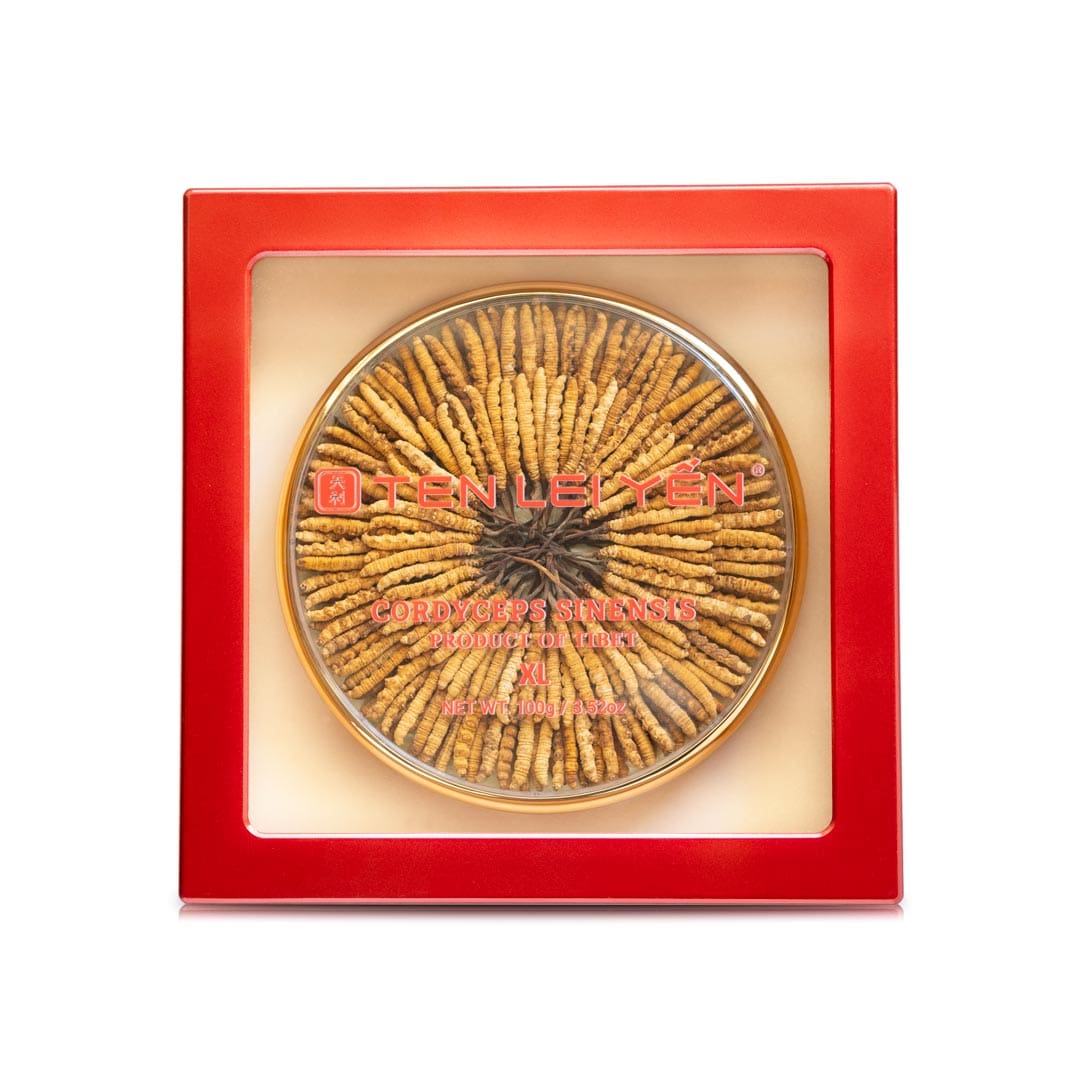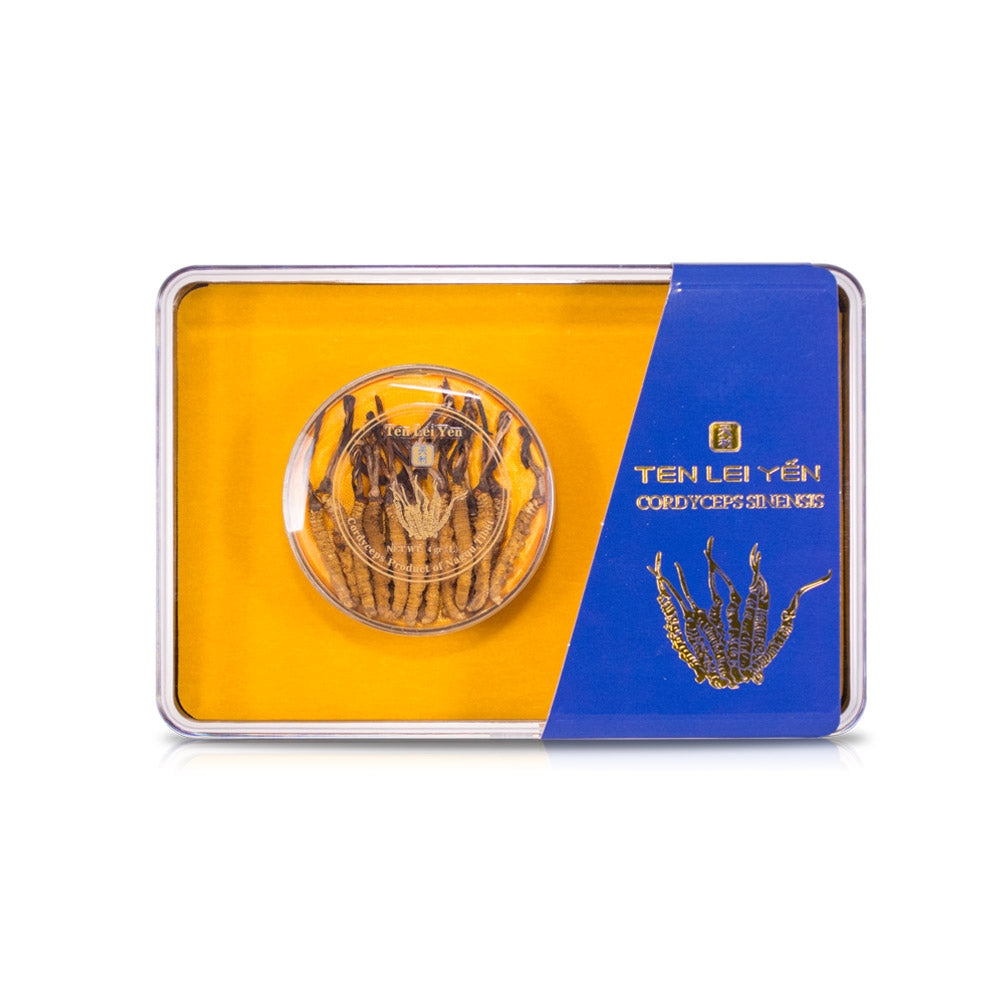
Wild cordyceps comes from the high-altitude meadows of the Tibetan Plateau and the Himalayan highlands, roughly 3,000 to 5,000 meters above sea level. Each piece is a fungus that grew from a caterpillar larva in the soil, which is why a real specimen has a caterpillar-shaped body joined to a slender, dark stalk. It is collected by hand over a short season, and that combination of remote geography, a narrow harvest window, and one-by-one picking is exactly why wild cordyceps is so scarce.
Key takeaways
- Wild cordyceps grows only in high meadows of the Tibetan Plateau and Himalayas, roughly 3,000-5,000 meters up.
- Each piece is a fungus that grew from a ghost-moth caterpillar larva, so it has a caterpillar-shaped body and a slender dark stalk.
- The harvest is short — roughly late spring to early summer, after the snow melts — and every piece is dug by hand.
- Nagqu in northern Tibet is among the most prized origins.
- Limited geography, a short season, and hand-collection are why wild cordyceps is naturally scarce and costly.

Where it grows
Wild cordyceps is found only in cold, high-altitude grasslands — the Tibetan Plateau and neighboring Himalayan ranges, generally between about 3,000 and 5,000 meters in elevation. Northern Tibet's Nagqu region, sitting above roughly 4,500 meters on the Qiangtang grassland, is one of the most sought-after origins, thanks to its mix of strong sunlight, monsoon rains, and seasonal snow. The plant cannot be willed into existence elsewhere; it belongs to that specific, thin-air environment.
How it forms
Cordyceps sinensis is not a plant and not a simple mushroom. It begins when a fungus infects the larva of a ghost moth living underground. The fungus gradually takes over the caterpillar's body, and the following spring a slim, dark fruiting stalk pushes up through the soil. What harvesters collect is that whole structure: the caterpillar-shaped body with the stalk attached. This is why an authentic piece always shows both parts — a detail we cover in what real cordyceps looks like.
The harvest
The collecting season is short — roughly late spring into early summer, often described as the weeks just after the snow melts. During this window, herder families travel to the high pastures and camp there, scanning the ground for the tiny stalks poking above the grass. Each piece is dug out carefully by hand with a small tool so that the caterpillar body and stalk stay intact, because broken or incomplete pieces are worth less. It is slow, painstaking work done one specimen at a time.
Why it's rare and prized
Put those facts together and the scarcity explains itself: wild cordyceps only grows in a narrow band of high-altitude terrain, it can only be gathered during a brief season, and it has to be found and dug individually rather than farmed in rows. Supply is naturally limited, and intact, clean pieces from prized origins are limited further still. For centuries it has been treasured in Chinese culinary tradition as a premium delicacy, and that long-standing demand, set against a small natural supply, is what keeps wild cordyceps among the most valuable natural ingredients by weight.
How it's graded after harvest
Once collected and dried, cordyceps is sorted by size, by how many pieces it takes to make a gram, by how clean and intact the specimens are, and by origin. Larger, fuller, cleaner pieces from regions like Nagqu command the highest grades. We break this down in wild cordyceps grades, and you can compare farmed and wild material in wild vs cultivated cordyceps.
Explore hand-harvested pieces in our Wild Cordyceps collection, or see Cultivated Cordyceps for a more available option.