Price per Kilo, per Ounce, per Tael: Comparing Any Bird's Nest Quote
Sellers quote bird's nest per kilo, ounce, pound, tael or box. Here is how to turn any quote into a price per gram, with worked examples, and how to check it against grade, cleanliness and moisture.
By Alina @ TLY
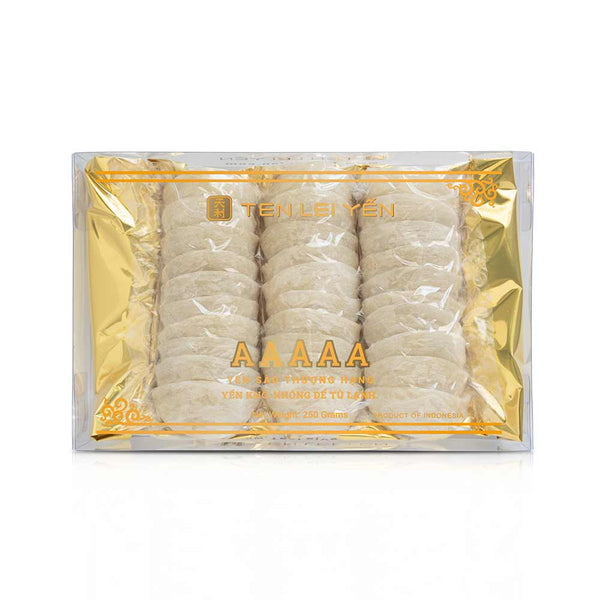
The quickest way to compare any bird's nest quote is to turn it into a price per gram: divide the price by the weight in grams, whatever unit the seller used. A kilo is 1,000 g, an ounce is 28.35 g, a pound is 453.6 g, and a Hong Kong tael is about 37.8 g. At Ten Lei Yen in Westminster, in the middle of Little Saigon, our 5A White 250 g box at its regular price of $540 comes to $2.16 a gram, which is $2,160 a kilo, about $61.24 an ounce, or about $81.65 a tael.
Customers ask us all the time how much swiftlet nests are worth, and the honest first answer is that it depends on which unit you're hearing. Wholesale buyers talk in kilos. American importers think in ounces and pounds. Hong Kong and Singapore dealers have always spoken in taels. Retail shelves price by the box. None of that is dishonest on its own, but a figure of $2,160 a kilo and a figure of $61 an ounce can describe exactly the same nest, and they look nothing alike on a screen. Until both are reduced to the same unit, you're not really comparing anything.
How do the units convert?
Start with the metric ones, because everything else hangs off them. One kilo is 1,000 g, which is 2.2 pounds or 35.3 ounces. One pound is 453.6 g, or 16 ounces, and one ounce is 28.35 g. That makes our 250 g box 8.8 oz, and it explains why some packs sold by the ounce come out at 227 g, which is a plain 8 oz. We covered that difference in 227g or 250g? How Bird's Nest Is Really Weighed and Sold.
The tael is older. In Hong Kong and Singapore it is about 37.8 g, and sixteen of them make a catty of roughly 605 g. In mainland China the same word means exactly 50 g, and in Taiwan it is 37.5 g. If a quote says “per tael” without saying which one, ask. Our guide What Is a Tael? How Bird's Nest Has Always Been Weighed has the history.
How much is a lạng of bird's nest?
Our Vietnamese customers often ask for a price per lạng, and this is the unit most likely to trip you up. In everyday shopping in Vietnam today, a lạng means 100 g. The old lạng, which is the same unit as the tael, was about 37.8 g, and the gold lượng is 37.5 g. So “tổ yến giá bao nhiêu 1 lạng” can describe a weight that differs by nearly three times depending on who is speaking. Ask the seller to say it in grams.
On a 100 g basis, our 5A White works out to $216 per 100 g at the 250 g box rate. Our 100 g box is priced at $260, which is $2.60 a gram. A smaller pack usually costs more per gram, and that is worth knowing when you're deciding between sizes.
How do you turn any quote into a price per gram?
Divide the price by the grams. For a kilo, divide by 1,000. For an ounce, divide by 28.35. For a pound, divide by 453.6. For a Hong Kong tael, divide by 37.8. Say a seller quotes $90 an ounce: 90 divided by 28.35 is about $3.17 a gram. Once you have that figure, you can set any two quotes side by side.
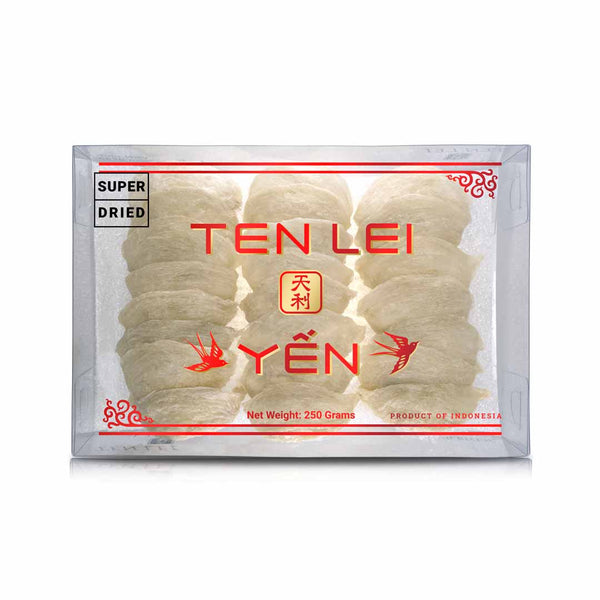
Here are our own regular prices as worked examples. Red Label Super Dried White at $650 for 250 g is $2.60 a gram, or about $73.71 an ounce and $98.28 a tael. Blue Label Supreme White at $800 for 250 g is $3.20 a gram, about $90.72 an ounce, $120.96 a tael and $1,452 a pound. So whole white nest in our lineup runs from $2.16 to $3.20 a gram, and the difference is grade, not unit. For the wider picture on ounce and pound pricing, see How Much Does Bird's Nest Cost per Ounce or per Pound?
Is the lowest price per gram always the better deal?
No, and this is where a per-gram figure stops and your own judgment starts. First, check the grade and whether the pieces are whole. A whole cup and a bag of broken pieces can share a weight and still be different things.
Second, check how clean it is. A raw nest, what Vietnamese buyers call yến thô, is weighed with its feathers and debris still in it, and those are picked out later. A raw price per gram and a cleaned price per gram aren't the same kind of number. If the quote is for raw nest, ask how much usable nest you can expect after cleaning, and weigh that against the per-gram price. Our piece on raw, semi-cleaned and fully cleaned nest explains the trade-off.
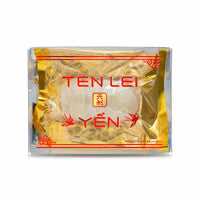
Third, check the weight itself. Water has weight, so a nest that is damp weighs more than a dry one and gives you less nest for the same money. Ask for the net dry weight, and look for it printed on the pack. Ours says “Net Weight: 250 Grams” on the clear pouch, so you can read it before you open anything.
Once the quote is in grams and you've asked those three questions, you're comparing like with like. Come by the shop in Westminster and we'll do the arithmetic with you at the counter.





 or
 or