By Alina @ TLY
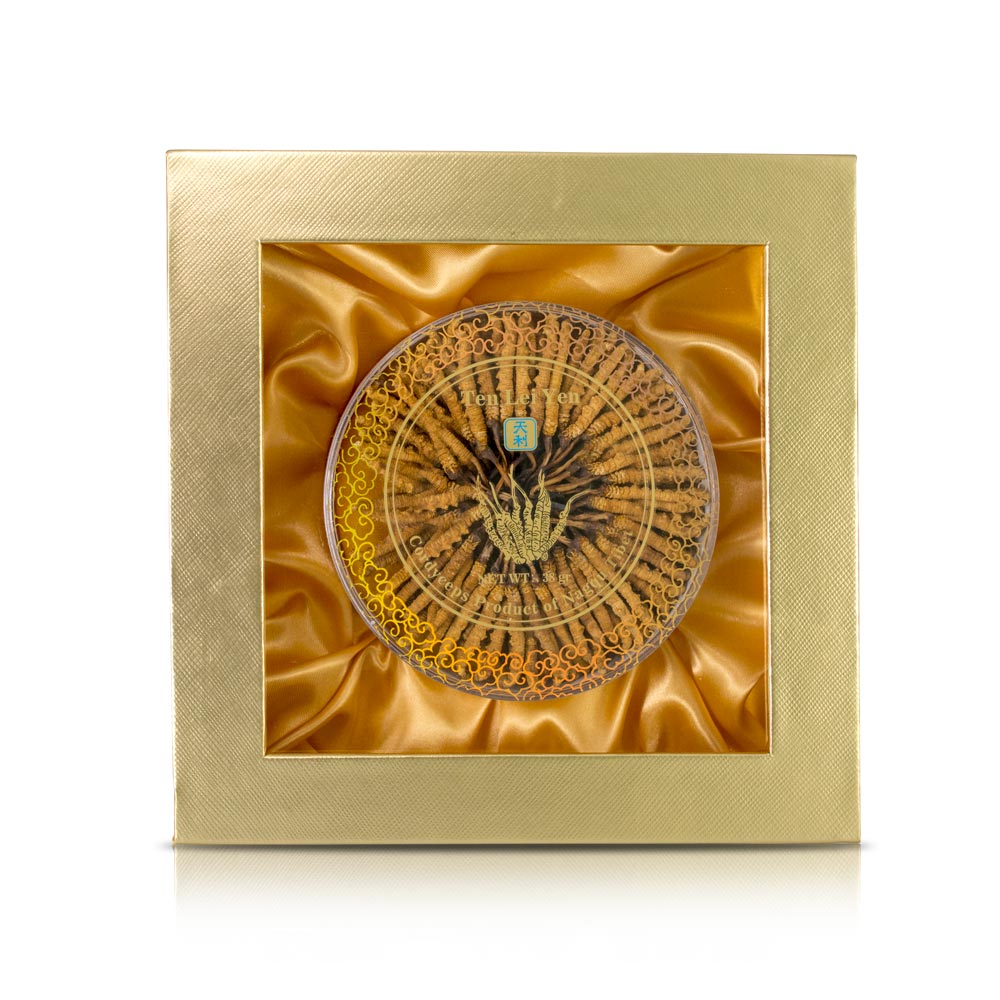
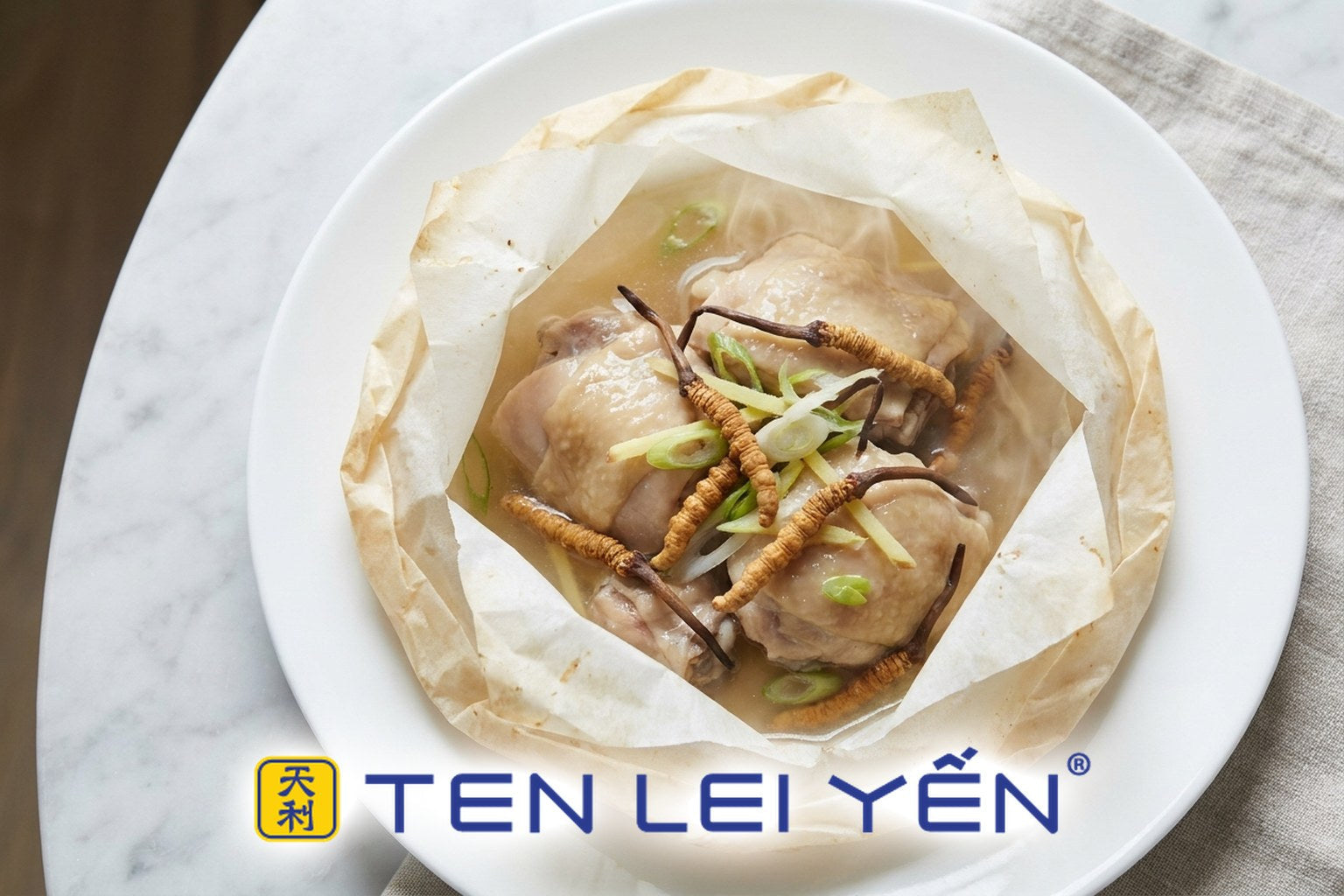
Chicken pieces and whole wild cordyceps are sealed together inside a parchment paper packet and steamed as one unit, so the aroma released by both ingredients stays trapped inside instead of escaping into an open pot. This is a distinct technique from a double-boiled soup: there is no broth to strain and no double boiler, just a sealed parcel and steady steam.
Key Takeaways
- The technique is parchment-sealed steaming (en papillote), not double-boiling.
- Chicken pieces and whole wild cordyceps go into the same sealed packet and cook together in their own trapped steam.
- A well-crimped parchment seal is what keeps the aroma and juices inside the packet.
- The packet is opened tableside so the released steam and aroma are part of the presentation.
- Ginger and scallion are optional aromatics, not required for the technique to work.

What Makes This Different from a Double-Boiled Soup?
A double-boiled preparation simmers chicken and wild cordyceps for hours inside a covered vessel set in a larger pot of water, producing a clear, concentrated broth. This parchment method is faster and drier: the packet holds only a small amount of liquid, generated mostly by the chicken itself as it steams, and the wild cordyceps rehydrates gently in that captured moisture rather than in a large volume of broth. The finished dish is closer to a fragrant, moist chicken plate than a soup.
How the Parchment Seal Works
A square or heart of parchment paper is folded around the chicken pieces and whole wild cordyceps, then the edges are folded and crimped tightly enough to hold in steam without letting it escape. As the packet steams, moisture released by the chicken turns to vapor inside the sealed paper, cooking the contents gently while carrying the aroma of the ginger and cordyceps through the meat rather than out into the steamer.
Step by Step
1. Prepare the Packet
Cut a large square of parchment paper. Place seasoned chicken pieces in the center, along with whole wild cordyceps and a few thin slices of ginger.
2. Seal It Tightly
Bring the corners or edges of the parchment together over the filling and fold and crimp them firmly, leaving a little room inside for steam to circulate.
3. Steam
Set the sealed packet in a steamer basket over simmering water and steam until the chicken is fully cooked through, usually 20 to 25 minutes depending on the size of the pieces.
4. Open at the Table
Carry the packet to the table and open it there so the steam and aroma release right as it is served.

Frequently Asked Questions
Can I use chicken thighs instead of a whole cut-up bird?
Yes, bone-in chicken thighs or drumsticks work well and hold moisture through the steaming time.
Do I need to soak the wild cordyceps before adding it to the packet?
A brief rinse is enough; the steam inside the sealed packet does the rest of the rehydrating as the dish cooks.
An Alternate Preparation
Prefer a broth-style dish instead? See our double-boiled wild cordyceps and chicken soup, the traditional way.
Explore wild cordyceps or cultivated cordyceps in our shop.