
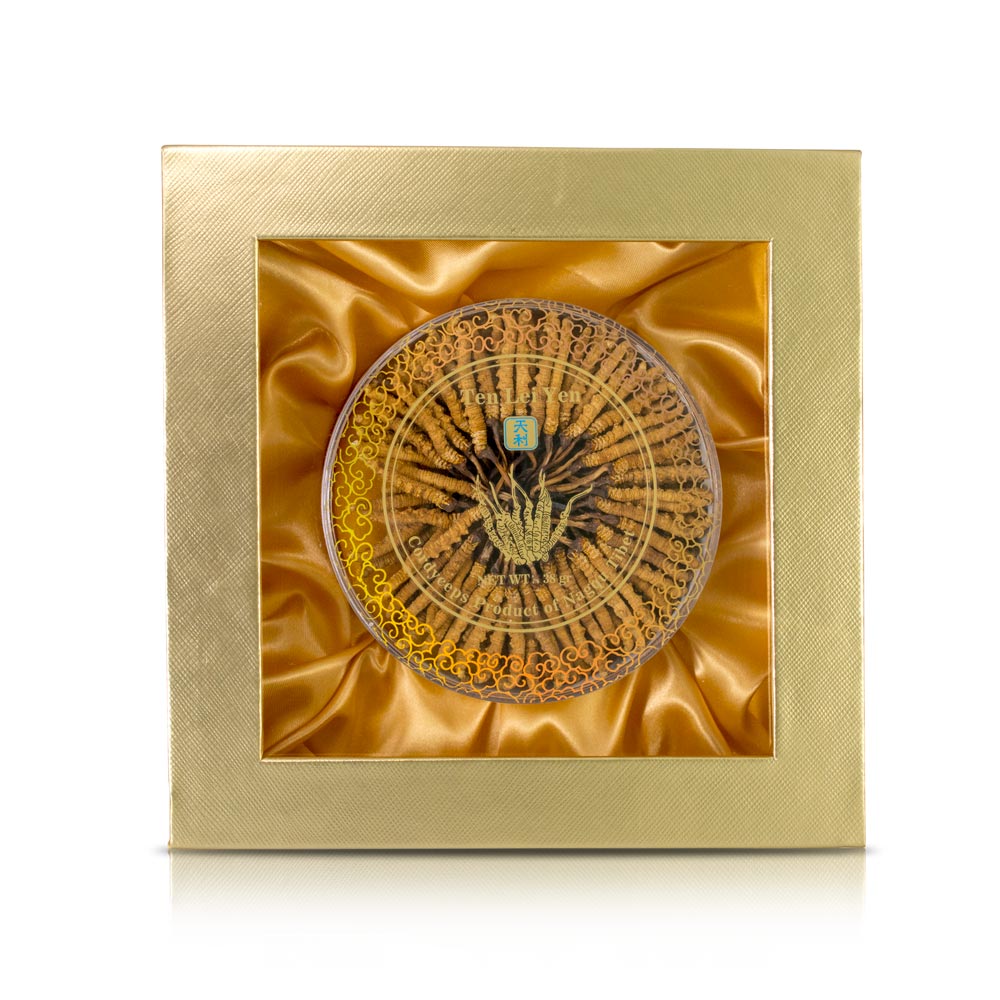
Yes, the cordyceps in The Last of Us is based on a real fungus, but only on a real fungus that attacks insects, mainly ants, and not people. Here at Ten Lei Yen in Westminster's Little Saigon, we sell a different cordyceps entirely, the one that has been cooked in Chinese and Tibetan kitchens for centuries, so we get asked about the show a lot.


Regular price
$245
Sale price
$220.50
Is cordyceps a real fungus?
It is. Cordyceps is a name for a large group of fungi that live as parasites on insects and other arthropods. Mycologists have described hundreds of them, and several are now placed in related genera, Ophiocordyceps being the one you hear about most. They grow on moths, beetles, wasps, spiders and ants, and each one has its own preferred victim. So yes, cordyceps is a parasite in the biological sense, a fungus that feeds on a living host. That's the true part of the story the game and show are built on.
What does it really do to an ant?
The "zombie ant" fungus is Ophiocordyceps unilateralis, studied mostly in tropical forests on carpenter ants. A spore lands on an ant and works its way in. The fungus spreads through the ant's body, and in the final hours the ant leaves its usual path, climbs a plant stem and clamps its jaws onto a leaf or twig. Researchers who have looked closely say the fungus seems to act on the ant's muscles more than on its brain. The ant dies there. A thin stalk then grows out from the back of its head, and spores fall from it onto the forest floor, where other ants walk.
Notice what is different from the show. The real fungus makes one stalk, not tendrils out of a mouth, and each species tends to target one kind of ant. Nothing like it spreads among people.
Could cordyceps infect humans, or evolve to?
Mycologists are fairly consistent here. These fungi are extremely host-specific, tuned over a very long time to one insect's body chemistry and behavior. Our bodies run warm, around 98.6 degrees Fahrenheit, and most insect-attacking fungi do not grow well at that temperature. Mammals are also very different hosts from insects. No Ophiocordyceps is known to infect a person. Evolution is never something anyone can promise about, but scientists who study these fungi describe the jump from ants to people as a very long way.
Is the cordyceps people cook with the same one?
Not the same species, and not the one in the show. The wild cordyceps on our shelves is Ophiocordyceps sinensis. Traders still call it Cordyceps sinensis, its name until it was moved to a new genus in 2007. It grows on the larva of a ghost moth in the high grasslands of the Tibetan Plateau, roughly 3,500 to 5,000 meters up. The fungus overtakes the buried caterpillar, and a single stalk rises through the soil in spring. People dig it up by hand around May and June. We tell the whole story in the ghost moth behind wild cordyceps.
The orange, club-shaped cordyceps you see sold as "cordyceps flower" is a third thing, Cordyceps militaris, a farmed species. We compare the two in Cordyceps sinensis vs. militaris.
What does the real thing look like?
Nothing like the show. A good wild piece is a tan, segmented caterpillar body usually 3 to 5 centimeters long, with one slender, darker stalk growing from the head end. It is dry, light and fairly stiff. It looks more like a dried twig attached to a small grub than anything frightening. If you would like to know what to look for, what real cordyceps looks like goes through it piece by piece.
Is it okay to cook with cordyceps?
Cordyceps has been a food ingredient in Chinese and Tibetan kitchens for centuries, and it is handled like any dried ingredient. Cooks rinse the whole pieces, and most often double-boil them gently in a soup, often with chicken. We have a walkthrough in double-boiled wild cordyceps chicken soup. We describe our products by what they are, where they come from and how to cook them; questions about diet or medical needs belong with your physician.
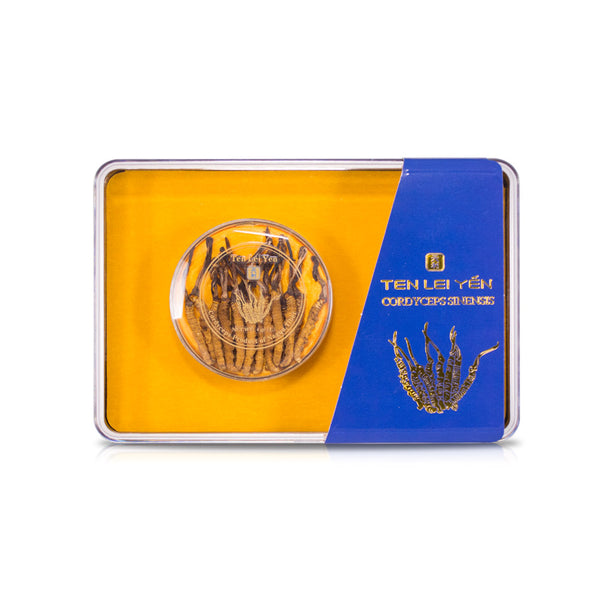
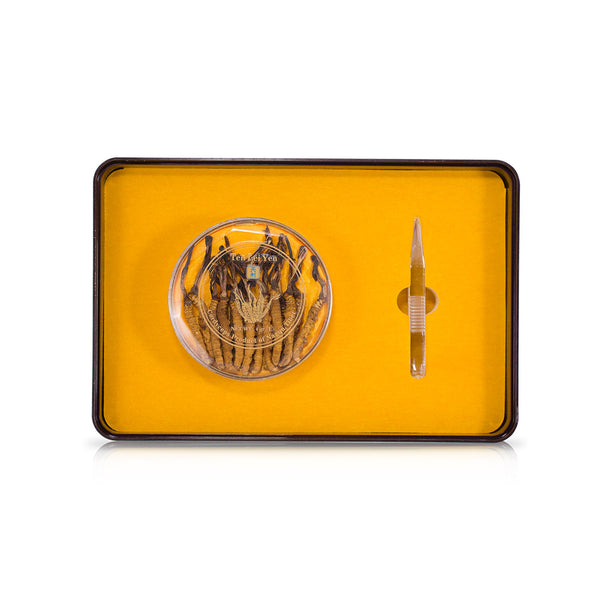
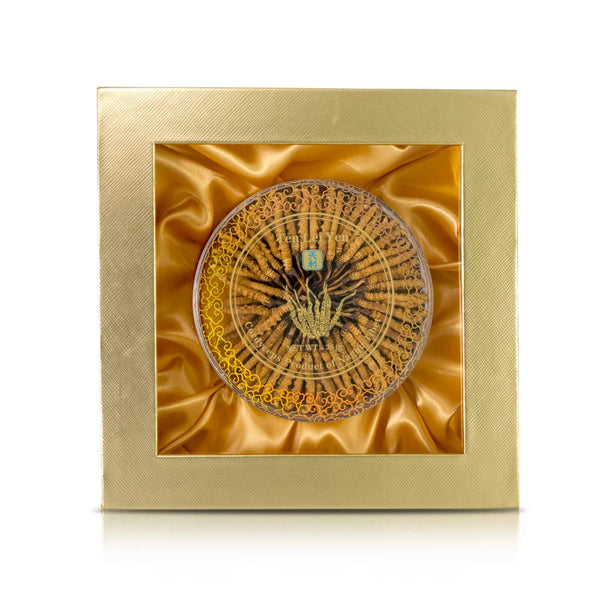
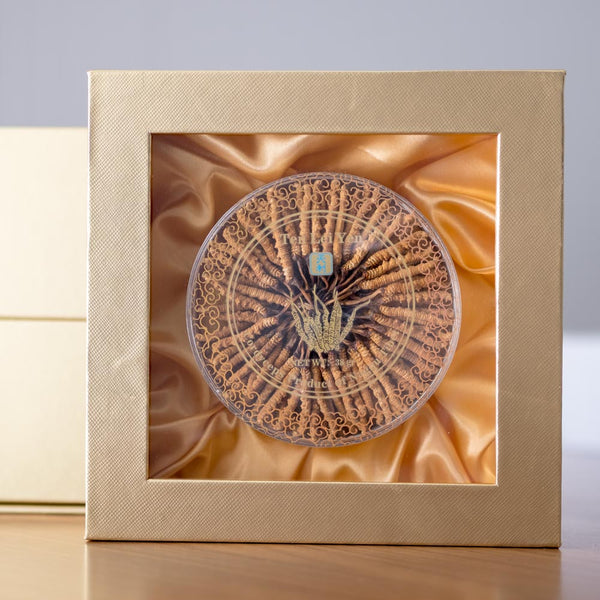
We carry whole pieces only, from our wild cordyceps from Nagqu, Tibet, and our cultivated Cordyceps sinensis line, also from Tibet. No powders or capsules. The wild pieces come in 4 g, 8 g, 19 g and 38 g packs, so you can start small.
Where does "winter worm, summer grass" come from?
It is the Chinese name, dong chong xia cao. To the people who first found it, the creature looked like a worm in winter, buried in the ground, and like a blade of grass by summer, when the stalk showed above the soil. It is a good description of the real life cycle.
Is the cordyceps you sell still alive or growing?
No. Our cordyceps is sold dry, as whole pieces, and it is a dried ingredient like a dried mushroom or a dried root. Nothing is growing on the shelf, and once the pieces go into a pot of soup they are simply cooked.
Do zombie-ant fungi grow anywhere near Orange County?
Related Ophiocordyceps species turn up on ants in humid forests around the world, including parts of the southeastern United States. Southern California's dry climate is not where you would go looking for them, and none of this has anything to do with what we stock at the shop.


 or

