By Alina @ TLY
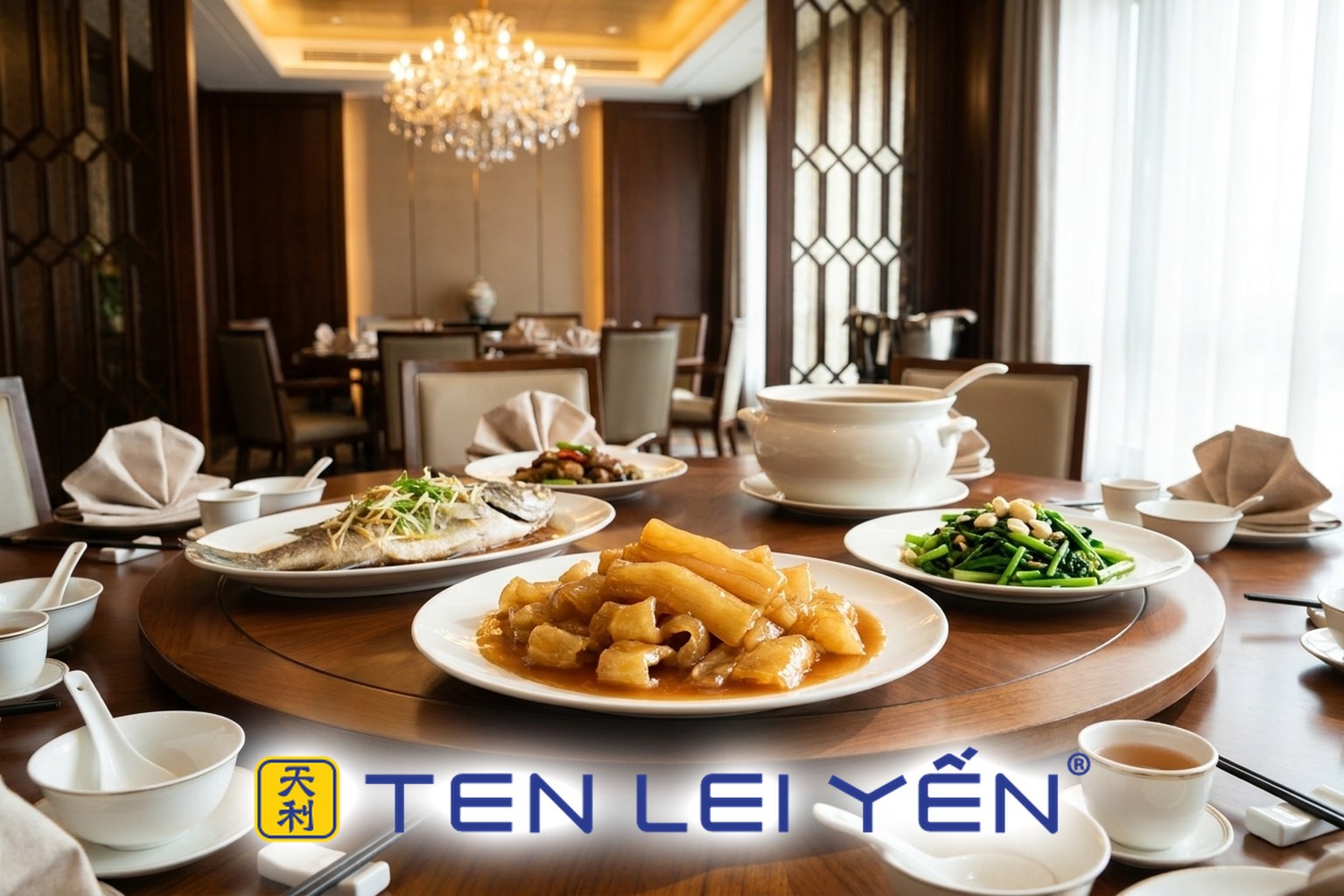
On a formal banquet menu, fish maw typically appears as its own treasured-ingredient course, or folded into the soup course, positioned in the middle of the meal — not as a starter and not as the final dish. Its presence on a menu usually signals a formal, higher-budget occasion, such as a wedding or milestone celebration.
Key Takeaways
- Fish maw is usually served as its own course, or as part of the soup course, roughly mid-banquet.
- It sits alongside other treasured-ingredient dishes such as bird's nest soup, rather than in the stir-fry or vegetable courses.
- A formal Chinese banquet typically runs 8–12 courses; fish maw occupies one of the higher-value courses.
- Its inclusion signals a formal, celebratory meal — weddings, milestone birthdays, and business banquets.
- It's most often served braised in a rich broth or sauce, either as tube cut or flat cut.
What Course Is Fish Maw Served As?
Banquet menus are built around a sequence of courses, each with a role. Fish maw is placed among the courses built around a single prized ingredient — the same slot that might otherwise hold shark fin soup or a bird's nest soup at a banquet that serves those. It's rarely combined into a stir-fry or a mixed vegetable dish; it gets its own bowl and its own moment.
What a Formal Banquet Menu Looks Like
| Course | Typical Dish |
|---|---|
| 1. Cold appetizers | Assorted cold cuts, roast meats |
| 2. Treasured-ingredient / soup course | Braised fish maw, or a bird's nest soup |
| 3. Seafood course | Whole fish, lobster, or abalone |
| 4. Poultry course | Whole roast chicken, duck, or squab |
| 5. Meat course | Roast suckling pig or braised pork |
| 6. Vegetable course | Stir-fried seasonal greens |
| 7. Starch course | Fried rice, noodles, or claypot rice |
| 8. Dessert | Sweet soup or pastries |
What Fish Maw Is Served Alongside
Within its course, fish maw is typically paired with other refined ingredients rather than everyday vegetables — shiitake mushrooms, dried scallop, or a light broth built specifically to carry its texture, since fish maw itself has a mild taste and takes on the flavour of whatever it's braised or simmered in.
Why Its Presence Signals a Formal Meal
Fish maw takes real time and skill to prepare well — a soak overnight, a quick blanch, then a long simmer or braise in a rich broth — and its price reflects that. A banquet menu that includes it is telling guests the host chose a more elaborate, higher-budget spread, the same signal a shark fin or bird's nest course sends.
Tube vs Flat: What Shows Up in This Course
Banquets use both cuts. Tube-cut fish maw holds its shape well in a clear or lightly thickened broth, while flat-cut pieces are often preferred braised, since their broader surface soaks up more of the sauce. Either works in the treasured-ingredient course; the choice usually comes down to the specific dish being served.