You can tell real bird's nest from fake by checking five things: color, shape, aroma, soak behavior and sourcing. Genuine nest is irregular in shape, ivory to slightly yellowish, faintly egg-white in scent and crisp when dry. Soaked in clean water it expands three to four times into fine strands while the water stays clear. That's the checklist we use at Ten Lei Yen, the bird's nest specialist we've run in Westminster, California (Little Saigon) since 2007.
By the Ten Lei Yen team, Westminster, CA.


Regular price
$800
Sale price
$725
How can I tell real bird's nest from fake bird's nest?
No single test settles it, so use the checks together. The signals that point to genuine, minimally processed nest are natural color variation between pieces, a fine interwoven strand structure, a faint egg-white aroma, expansion of three to four times in clean water, and a soak that takes hours rather than minutes. The warning signs are uniform bright-white color, identical machine-perfect shapes, chemical or fishy smells, cloudy soaking water, and a piece that fully softens in under an hour.
Below we take each check in turn, then explain what's commonly added to nest and why home tests have limits.
What does real bird's nest look like?
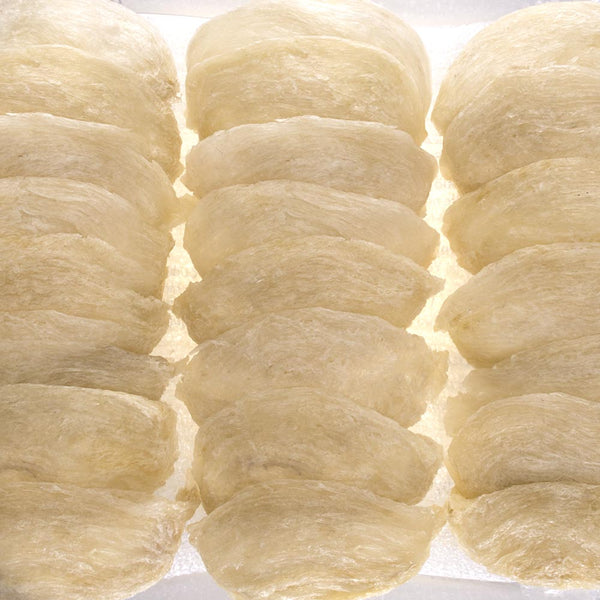
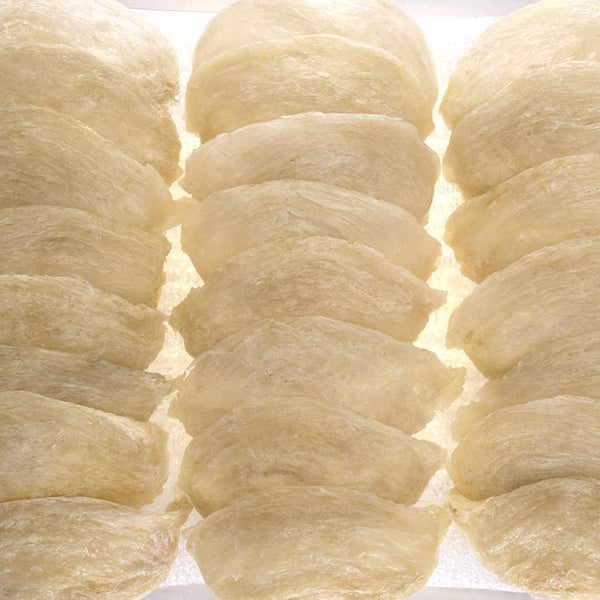
Real nest is ivory white to slightly yellowish with a soft, natural sheen, and the color is rarely perfectly even. It is built from fine, interwoven strands in an irregular cup or boat shape, and no two pieces look exactly alike. You may see tiny feathers caught in the fibers, which are removed when you soak and rinse the nest.
Treat these as flags, not proof of fakery: an unnaturally uniform, bright white; a flat, dull surface with no translucency; and pieces that look identical, machine-pressed or glued together. Whiter isn't better. A perfectly even white can point to bleaching rather than higher quality.
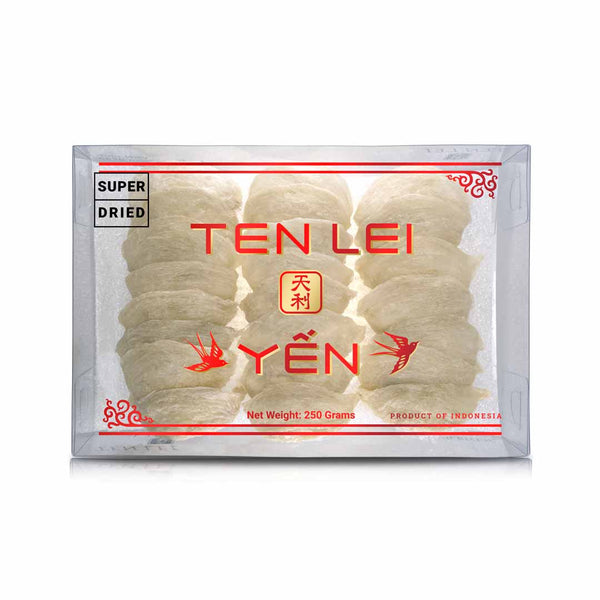
In our Westminster store, customers are shown dry whole nests in clear boxes and encouraged to look for exactly this: natural color variation and fine strand structure. People are often surprised that a premium nest isn't the whitest one in the box.
What does it smell like?
Dry genuine nest carries a faint egg-white scent that becomes a little more noticeable after soaking, sometimes with mild woody or sea-air notes. A sharp chemical smell, a strong fishy odor or an oily scent is not characteristic of clean, untreated nest. Smell the nest dry first, then again after soaking, because a treated nest can smell acceptable in the bag and change in the water.
What happens when you soak it?
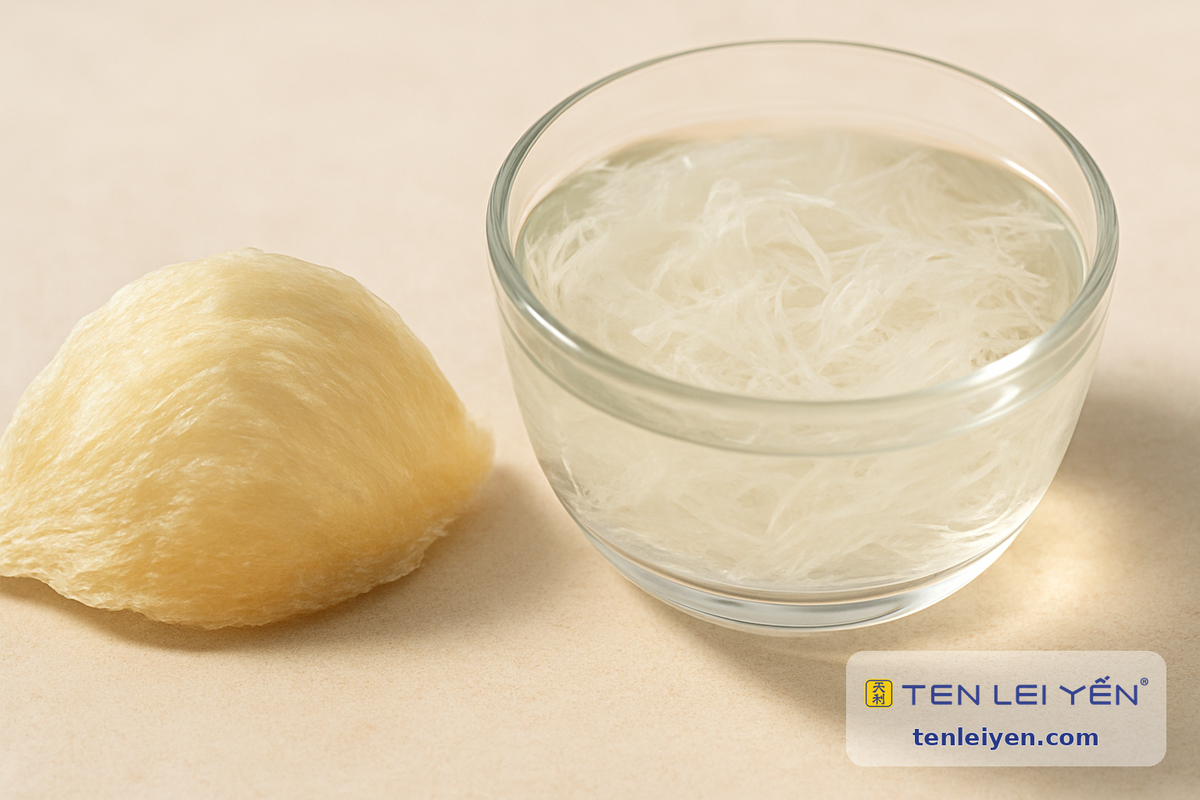
Place a small piece in clean, room-temperature water. Authentic raw nest gradually expands to about three to four times its dry size and separates into fine, springy strands, and the water stays relatively clear. Many imitations and heavily adulterated pieces show little expansion, break down into a soft paste or turn the water murky.
How long the nest needs is itself a signal. Genuine raw nest is sold uncooked, so it needs several hours to soften, typically 4 to 6 hours or overnight, and is then double-boiled for about 40 minutes. A piece that fully softens in 30 to 60 minutes has usually been cooked or heavily processed before sale. That doesn't make it fake, but it's a good reason to ask the seller how it was made.
Put side by side, the five checks look like this. On color, genuine, minimally processed nest is ivory to slightly yellowish and varies between pieces; the warning sign is a uniform, unnaturally bright white, or a flat and dull surface. On shape, look for an irregular cup or boat with fine interwoven strands; be wary of identical, machine-perfect or glued-looking pieces. On aroma, expect a faint egg-white scent with mild woody or sea-air notes, not a chemical, strong fishy or oily smell.
When you soak it, genuine nest expands 3 to 4 times into fine strands in clear water, while the warning sign is little expansion, paste or cloudy water. And on soak time, genuine nest takes 4 to 6 hours or overnight; a piece that's fully soft in 30 to 60 minutes deserves a question.
What are the common adulterants?
Reported adulterants include coralline seaweed, tremella (white fungus), agar, fish bladder and pork rind, which are added to increase weight or mimic the look of nest. Some of these can be told apart from real nest under a microscope.
Other additives are water-soluble and much harder to detect at home, such as sugar, hydrolyzed marine collagen or MSG, which are absorbed into the fibers. That's the main reason no single home test is conclusive: a nest can look right, smell right and still carry something added.
Can you verify authenticity at home?
Home checks can reveal obvious problems, but they cannot rule out water-soluble additives. For definitive verification, laboratory testing is the most reliable method. In practice, the best protection is buying from a seller that sells nest in its natural dry form so you can inspect it, and that is open about origin, grade and cleaning.
If a price is far below the market, ask what accounts for the difference. Nest takes skilled labor to harvest and clean, so a very low price per gram needs an explanation. Our guide to why bird's nest is expensive shows what goes into the price.
How does Ten Lei Yen clean its nest?
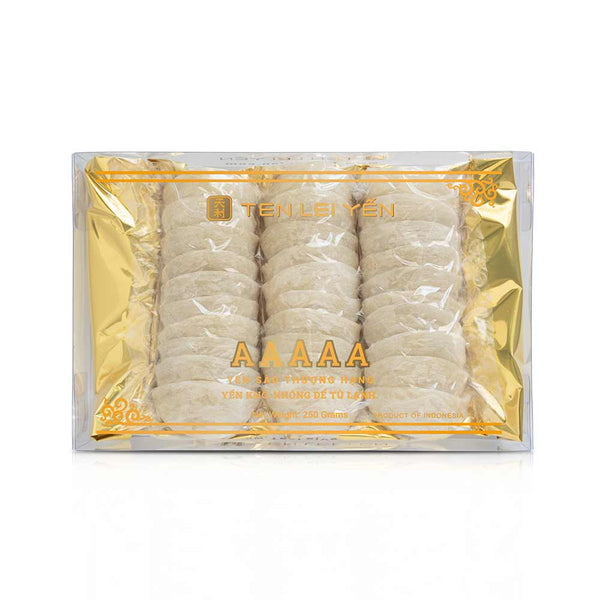
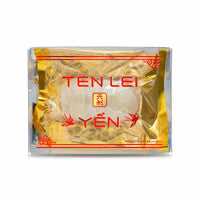
We import Indonesian edible bird's nest directly, hand-clean it and do not bleach it. Because the cleaning is done by hand, small natural variations in color and shape remain in the dry nest, which is what the checks above look for when judging authenticity. We grade the result as Blue Label, Red Label or 5A and sell it by stated net weight in grams.
Ten Lei Yen describes its products by culinary role, origin and grading, not by health outcomes. Questions about bird's nest and your health belong with a physician. If you want to see these signs for yourself, ask to look at a dry whole nest at the store, or compare our product photographs with the checks above.
What should you ask a seller before buying?
Ask five things: where the nest comes from, by country or region; whether it's raw, semi-cleaned or fully cleaned, and how it's cleaned; whether any bleaching, coloring or binding agent is used; what each grade name means, and whether it's applied consistently; and how many grams are in the box, and what the price per gram is.
A seller who answers all five plainly is giving you the information you need to judge the nest. One who avoids them is giving you information too.
Do a few small feathers mean low quality?
Not necessarily. Lightly cleaned genuine nest can contain occasional fine feathers, which are removed during soaking and rinsing.
If you're still deciding what to buy, our guides on how to choose an edible bird's nest brand, how to soak and clean edible bird's nest, dry vs bottled ready-to-drink bird's nest and our edible bird's nest buying guide are good next reads.
To see these signs in person, visit Ten Lei Yen at 9741 Bolsa Ave, Suite 107, Westminster, CA, or browse tenleiyen.com.



 or
 or