Is it legal to buy or bring edible bird's nest into the United States?
It depends on how the nest arrives. Purchasing from a US retailer is generally legal; hand-carrying it across the border is where travelers get into trouble.
Buying inside the US: generally legal. Nest sold by an established US retailer has normally come through commercial import channels before it reaches a shelf or a shipping box. Ten Lei Yen imports its nest commercially under federal import rules and sells it domestically, in our Westminster store and by nationwide shipping.
Carrying it in personal luggage or mailing it to yourself from abroad: restricted. U.S. Customs and Border Protection (CBP) has said in news releases that bird's nests are prohibited in passenger baggage.
This article is general information from a retailer, not legal advice. Rules change, so confirm with CBP or USDA APHIS before you travel.
Why does CBP seize bird's nest from travelers?
Because nests are an animal product, and the agencies treat them as an avian-disease risk. In a 2016 news release, CBP said that bird's nests "can carry Newcastle Disease or the Highly Pathogenic Avian Influenza (H5N1) virus" and are considered likely carriers of infectious diseases, which is why they're prohibited from entry. In a 2021 news release about a seizure at JFK, CBP said bird's nests are prohibited in passenger baggage because they lack the proper documentation and safeguards to ensure they don't pose a risk to U.S. agriculture.
The general rule behind this is broader. CBP states that restricted items include meats, fruits, vegetables, plants, soil and products made from animal or plant materials. Nest harvested overseas and carried in a suitcase has none of the paperwork that a commercial shipment has, so an officer has no way to verify it.
In our Westminster store, a question we often hear from customers back from visiting family is some version of: "I had some nest in my suitcase and it was taken. Was that normal?" Judging by CBP's own published seizure notices, it's a common outcome.
What should travelers declare, and what happens if they don't?
Declare it. CBP states that all travelers entering the United States are required to declare meats, fruits, vegetables, plants, seeds, soil, animals, as well as plant and animal products. That applies to checked bags, carry-ons and vehicles, and travelers answer "yes" to the agricultural question on the CBP declaration form.
If you declare the nest, USDA APHIS says that as long as you declare all agricultural products to CBP, you won't face penalties, even if an inspector determines the items can't enter the country. The nest is most likely taken.
If you don't declare it, CBP states that civil penalties may range up to $1,000 per first-time offense for non-commercial quantities, and commercial quantities are assessed at a much higher rate.
Real seizure cases bear this out. In a 2016 CBP case the nests were seized and destroyed and the traveler was assessed a $300 penalty for failure to declare. In a 2021 case the traveler received a mitigated civil penalty.
The practical lesson is simple: the nest is lost either way, so declaring only protects you from the penalty.
What about bringing bird's nest home from a trip to Vietnam, Indonesia or Malaysia?
Don't pack it. These are the countries where nest is most commonly bought as a souvenir, and the CBP seizure notices we found involve exactly this: nests found in traveler luggage arriving from abroad. Buying a box overseas doesn't change how it's treated at the US border, even if it looks professionally packed and labeled.
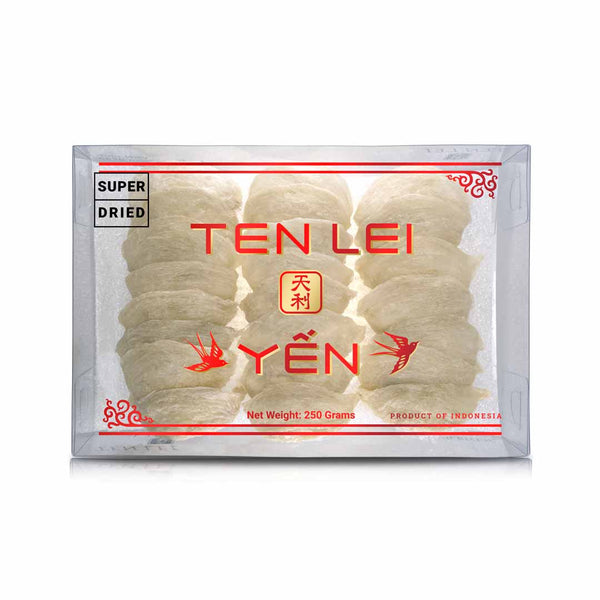
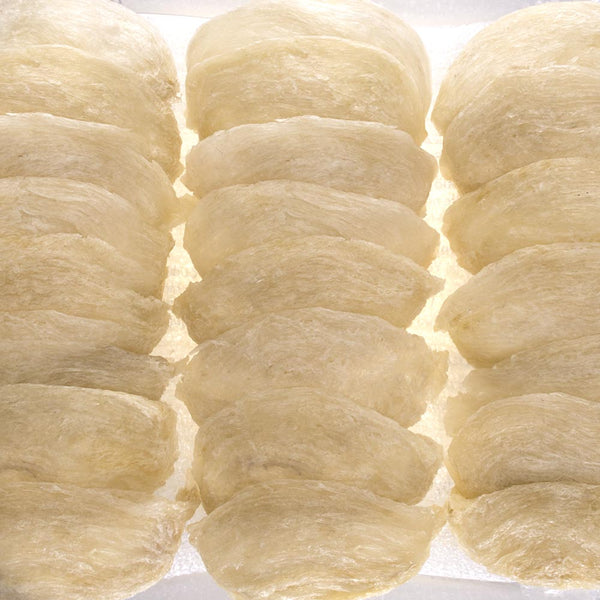
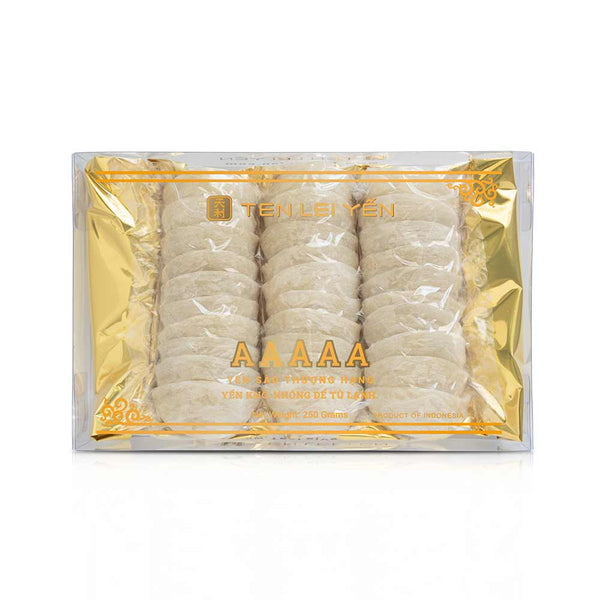
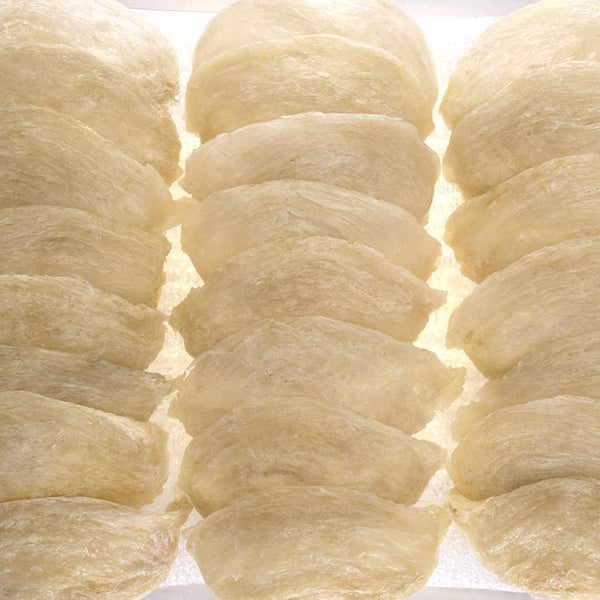
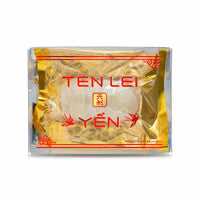
If you want to enjoy nest after a trip, there's an easy workaround. Buy it once you're back. We carry imported Indonesian nest in three product lines: Blue Label, Red Label and 5A, all hand-cleaned and available in 100 g and 250 g boxes.
In the 250 g box, 5A White is $540, or $2.16 per gram. Red Label Super Dried White is $650, or $2.60 per gram. Blue Label Supreme White is $800, or $3.20 per gram.
One standard serving is 3–5 g of dry nest, and one whole nest weighs 8–14 g, which is 2–4 standard servings. See our serving portion guide for details.
How is commercial bird's nest imported legally?
Commercial food imports follow a different process from a traveler's suitcase. The FDA states that importers must make sure facilities that produce, store or otherwise handle the products are registered with FDA, and that prior notice of incoming shipments is provided to FDA. Importers are also responsible for products being safe, sanitary and labeled according to U.S. requirements, and imported food can be inspected at U.S. ports of entry. Animal-origin products can also fall under USDA APHIS import requirements, which is why a commercial shipment carries documentation and a suitcase doesn't.
We're not going to list specific permits or certificates here, because requirements depend on the product and country and change over time. What we can say is that Ten Lei Yen imports commercially under federal import rules and sells domestically, and that's the reason a customer can buy our nest in the United States without any border issue of their own.
Can I ship bird's nest within the US?
Yes. Shipping nest that's already in the United States is ordinary domestic commerce, the same as shipping any other pantry food from one state to another. Ten Lei Yen ships nationwide from tenleiyen.com, and the boxes sold online are the same ones we sell in the store. Orders from outside the country are a different matter and subject to the destination country's rules.
What about canned, bottled or ready-to-drink bird's nest?
The CBP and APHIS pages we reviewed don't single out canned or bottled nest, and we won't guess. What they do say is that animal products must be declared, and that many fresh, dried and some canned meats and meat byproducts are prohibited from entry. Treat any nest product the same way: declare it, and expect that it may not be allowed in. For a comparison of formats once the product is already in the US, see our dry versus bottled comparison.
How can I buy edible bird's nest legally in the United States?
Buy from a US retailer that specializes in it and ask where the nest was imported from. Ten Lei Yen is one of the few US retailers that specializes only in bird's nest and cordyceps. You can visit us at 9741 Bolsa Ave, Suite 107, Westminster, CA 92683 (Mon–Sat 10 AM–5:30 PM, Sun 10 AM–5 PM, phone 714-418-9788) or order at tenleiyen.com. Our guide to buying bird's nest online in the USA lists what to check before you order. If you have questions about the product, we describe it by culinary role, origin and grade rather than health outcomes, and medical questions belong with a physician.
Where can I get a definitive answer for my own trip?
Contact CBP or the USDA APHIS Animal Product Import and Export Team (apie@usda.gov, 301-851-3300) before you travel. We are a retailer, not a regulator, and this article is general information rather than legal advice.
For more background, our bird's nest buying guide and our guide to bird's nest grades: Blue, Red and 5A pick up where this one leaves off, and where to buy edible bird's nest online in the USA covers shopping online.
Where does this information come from?
We drew on two CBP news releases, the 2016 release CBP Finds Bird's Nests in Traveler's Luggage and the 2021 release JFK Seized Swine Meat and Bird's Nest; CBP's pages on bringing agricultural products into the United States and agricultural items for international visitors; USDA APHIS on traveling from another country; and the FDA on importing food products into the United States.
If you're stocking up or just curious, Ten Lei Yen welcomes you at our Westminster store or at tenleiyen.com.




 or
 or