By Alina @ TLY
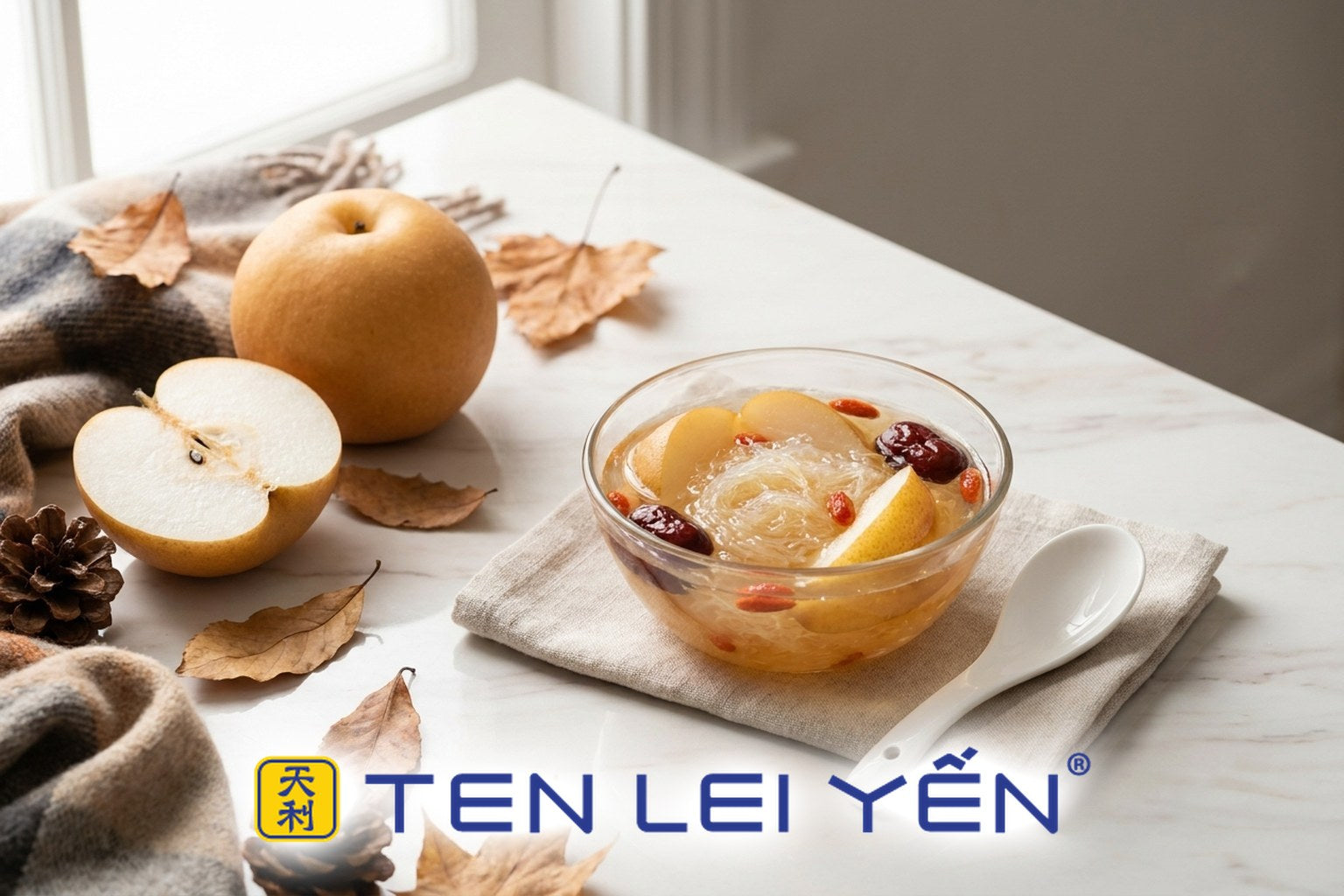
When Asian pears start showing up at the market in late August, it is a small signal that the season is turning — and it is exactly why this bird's nest recipe goes warm again after a summer of chilled bowls. Asian pear (also called nashi, Korean pear, or apple pear) is crisp, juicy, and only lightly sweet, and it holds its shape well in a gentle double-boil with rock sugar or monk fruit, red dates, and a few slices of ginseng.
Key takeaways
- Asian pear (nashi / lê Hàn / 雪梨-style pear) comes into season in the US from late summer into autumn — crisp, juicy, and apple-like, unlike the soft texture of Western pears.
- This is a WARM double-boil, not a chilled bowl — a small seasonal cue that late August is turning toward autumn.
- Soak dry bird's nest 4-6 hours or overnight; each whole dry nest is about 8-14 g — a whole-nest bowl equal to about 2-4 standard servings of 3-5 g each — and expands 3-4 times its dry size once soaked.
- Double-boil about 40 minutes; sweeten with rock sugar (đường phèn / 冰糖) or monk fruit — either works, use whichever you prefer.
- Cooked nest keeps 3-5 days refrigerated; dry nest keeps 2-3 years stored properly.

What Asian Pear Is, and Why It Fits This Time of Year
Asian pear is rounder than a Western pear, with tan-golden to pale-green skin and a texture closer to a crisp apple than a soft Bartlett or Anjou — it stays firm and crunchy even when fully ripe, with a mild, floral sweetness and a light tartness. In the US, its season runs from late summer through autumn, roughly August into October, which makes late August the right moment to bring it into a bird's nest dessert.
Pairing pear with rock sugar is a familiar combination in Chinese and Vietnamese dessert traditions, often built around a small warming aromatic touch and a few red dates for color and depth. We use that same pairing here, adding bird's nest at the end of the double-boil so the delicate strands stay intact.
Asian Pear and Bird's Nest, Double-Boiled
Ingredients (serves 2)
- 1 dry bird's nest (about 8-14 g), soaked 4-6 hours or overnight
- 1 ripe Asian pear, peeled, cored, and cut into chunks
- 4 cups water
- Rock sugar (đường phèn / 冰糖) to taste, OR monk fruit as a sugar substitute — use either, based on preference
- 4-5 red dates (táo đỏ / 红枣), pitted
- A few slices of ginseng (nhân sâm / 人参), optional
- A small handful of goji berries (kỷ tử / 枝杞), optional, for color
Steps
- Soak the dry bird's nest in clean water for 4-6 hours or overnight until fully expanded (roughly 3-4 times its dry size), then rinse gently by hand to remove any fine feathers.
- Peel and core the Asian pear and cut it into bite-sized chunks.
- In a heatproof bowl, combine the pear, red dates, ginseng slices (if using), and water.
- Place the bowl inside a larger pot of simmering water and double-boil for about 40 minutes, until the pear turns tender.
- In the last 10 minutes of double-boiling, add the soaked bird's nest so the strands stay intact, along with rock sugar or monk fruit to taste.
- Stir in the goji berries just before serving, for color.
- Ladle into bowls and serve warm.

Serving Suggestions
Serve this one warm, in small bowls, as the evenings start to cool — good after dinner or as a light afternoon dessert. A few extra pear slices or goji berries on top make a simple garnish. The same recipe can also be cooled and served cold if you would rather ease into the season.
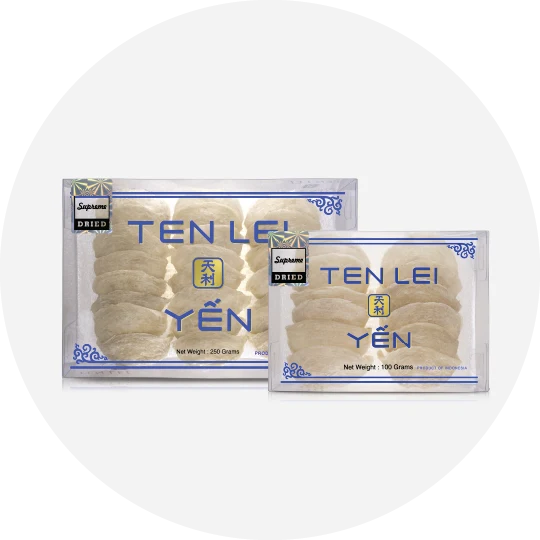
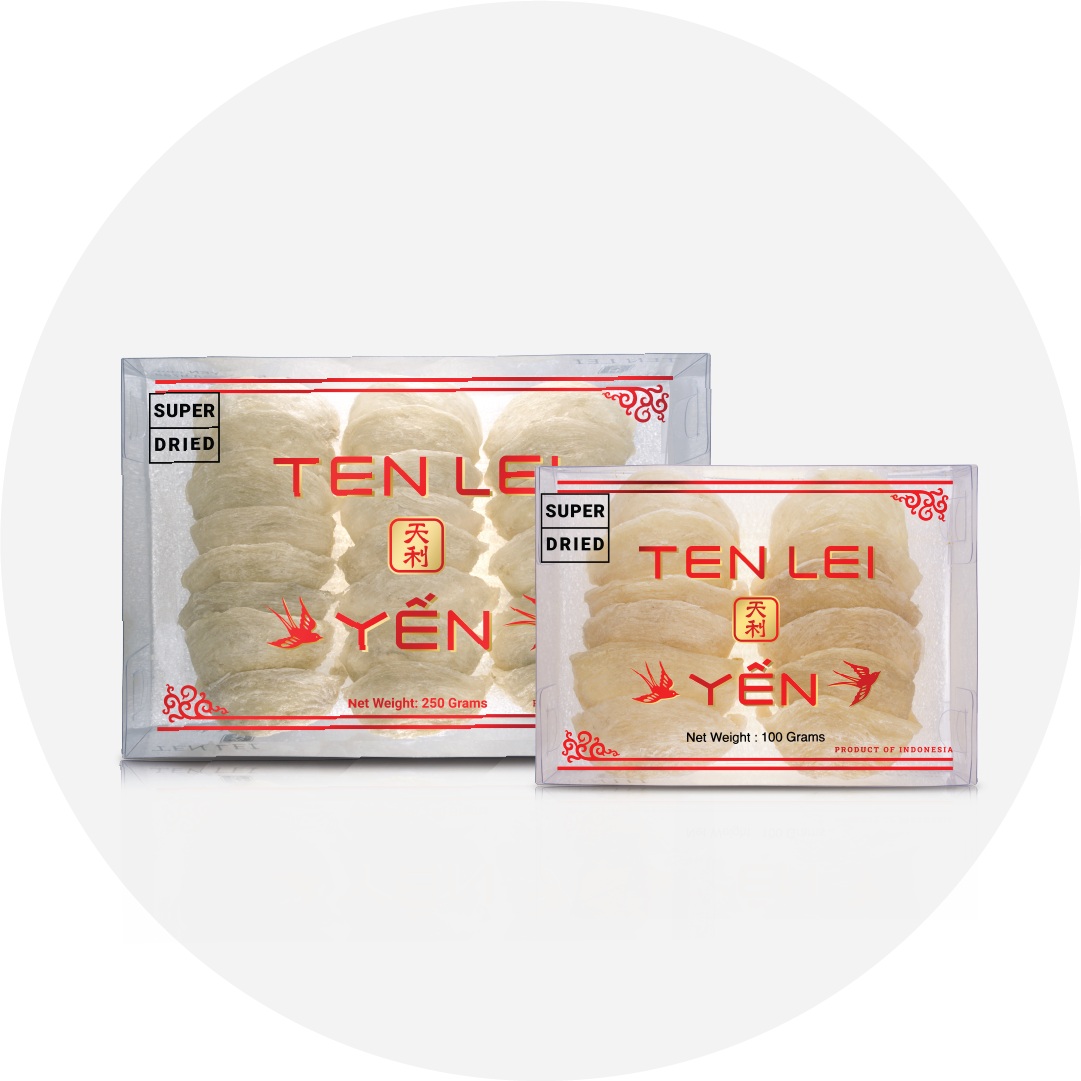
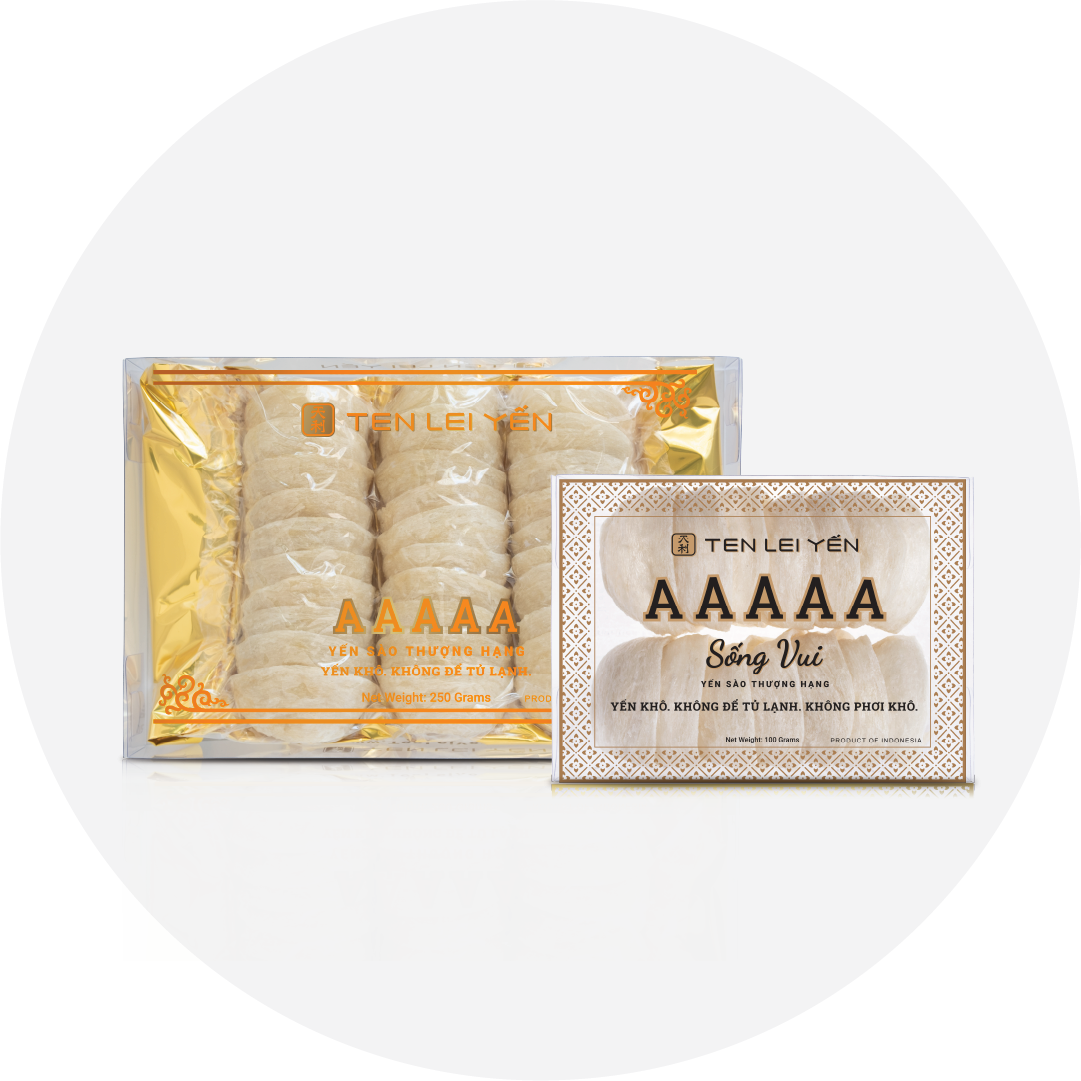
For everyday preparation, our Blue Label and Specialty Nest collections both work well here. For more on the soak-and-double-boil method, see our guides on why bird's nest is double-boiled and how much dried bird's nest expands when soaked.
FAQ
Can I use a regular Western pear instead of Asian pear?
You can, but the texture will be softer once cooked. Asian pear holds a firmer, crisper bite through the double-boil, which is part of what makes it a good match here.
Do I need to add ginseng?
No, it is optional. A few slices add a mild warming note that pairs well with the pear and red dates, but the recipe works fine without it.
Rock sugar or monk fruit — which should I use?
Either works well as the sweetener. Rock sugar (đường phèn / 冰糖) is the traditional choice; monk fruit is a straightforward sugar substitute if you prefer to use less sugar. Choose based on taste preference.