By Alina @ TLY
Fish maw and dried scallop congee is a savory rice porridge built on three steps: soak dried fish maw overnight until pliable, blanch it briefly with ginger and scallion to clean and firm it, then simmer it with dried scallops in a rich broth-based congee until the rice breaks down silky and the scallops shred into threads. The whole process takes patience more than skill, and the payoff is a bowl that tastes like it simmered all day.

Key Takeaways
- Dried fish maw needs a full overnight soak (10-12 hours) before it is workable.
- A quick blanch with ginger and scallion removes any fishy edge and firms the texture before it goes into the pot.
- Dried scallops soak separately, and their soaking liquid becomes part of the congee base for extra depth.
- Congee rice-to-water ratio runs about 1:7 to 1:8 for a silky, spoonable texture.
- Fish maw goes in only for the last 10-15 minutes of simmering so it stays tender, not rubbery.
Ingredients
- 1 piece dried fish maw (tube or flat), soaked overnight
- 8-10 dried scallops, soaked separately for 1-2 hours
- 1 cup jasmine or short-grain rice, rinsed
- 7-8 cups water or light chicken stock, plus reserved scallop-soaking liquid
- 3-4 thin slices fresh ginger
- 2 scallions, one whole for blanching and one thinly sliced for garnish
- Salt and white pepper, to taste
Why Soak Fish Maw Overnight First?
Dried fish maw is hard and rigid straight out of the package. A full overnight soak in cold water, 10-12 hours, lets it absorb water gradually and softens it all the way through without the surface breaking down before the center rehydrates. Skipping ahead to a hot soak can leave the middle of a thick piece stiff even after cooking.
The Quick Blanch: Ginger and Scallion
Once softened, cut the fish maw into bite-size pieces and blanch briefly in simmering water with a few slices of ginger and a whole scallion. This step firms the texture, rinses away any lingering fishy smell, and is one of the few places in fish maw cooking where ginger is a genuine, standard aromatic rather than a health add-in. Two to three minutes is enough; overcooking here toughens the maw before it even reaches the pot.
Building the Congee Base
Rinse the rice and combine it with water or light stock at roughly a 1:7 to 1:8 ratio, along with the strained scallop-soaking liquid for extra savoriness. Bring to a boil, then drop to a gentle simmer, stirring occasionally so the rice doesn't stick, for about 60-75 minutes until the grains break down into a silky, thick porridge. Add the soaked dried scallops partway through, about 30 minutes in, so they have time to soften and shred naturally as they cook.
Simmering Fish Maw and Scallops Together
Fold in the blanched fish maw during the final 10-15 minutes of cooking. Adding it too early makes it rubbery; adding it this late keeps every piece tender and lets it soak up the scallop-rich broth without turning tough. Taste and season with salt and white pepper once the fish maw is in, since the congee base itself should stay only lightly seasoned until this point.

Serving
Ladle into bowls while hot, top with sliced scallion and a pinch of white pepper, and serve immediately. Congee thickens quickly as it cools, so add a splash of hot water or stock when reheating leftovers the next day.

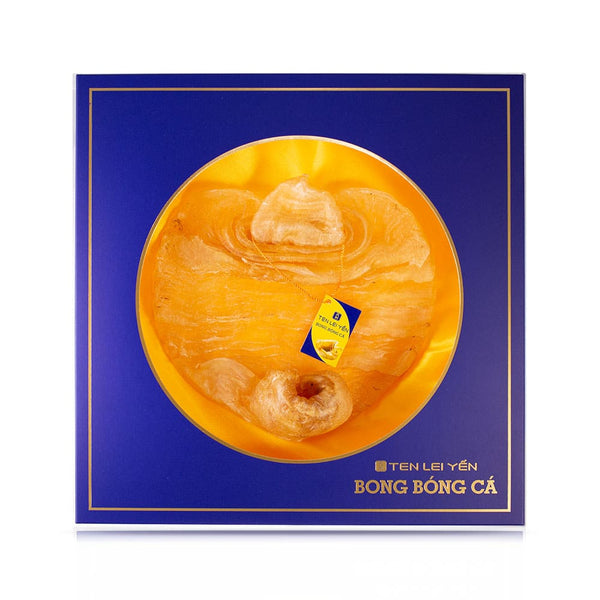
Pick up what you need from our seafood collection, including the Fish Maw Tube, 213g and Fish Maw Flat, 213g to see thickness and form side by side.